Browse "Things"
-
Article
Great Lakes Storm of 1913
The Great Lakes Storm of 1913, also referred to as the “White Hurricane,” the “Big Blow” and the “Freshwater Fury,” was a devastating and deadly storm that occurred over several days in November 1913. It is generally believed to be the worst storm to have ever occurred in the Great Lakes region, and was responsible for the deaths of up to 300 people, the sinking of 12 ships, and the wrecking of at least 19 more. The storm was an example of the “November gale,” also referred to as the “Witch of November,” a unique and intense weather phenomenon that produces hurricane-force winds. In terms of total ships lost and total number of deaths, it is considered one of the worst inland maritime disasters in both Canadian and American history. The storm killed the entire crews of eight ships that were lost on a single day on Lake Huron. Ships sank on every lake in the Great Lakes, except Lake Ontario. American sources have estimated damage caused by the storm exceeded $200 million, adjusted for inflation.
"https://d3d0lqu00lnqvz.cloudfront.net/greatlakesstorm1913/DetroitNews-11-13-1913.jpg" // resources/views/front/categories/view.blade.php
https://d3d0lqu00lnqvz.cloudfront.net/greatlakesstorm1913/DetroitNews-11-13-1913.jpg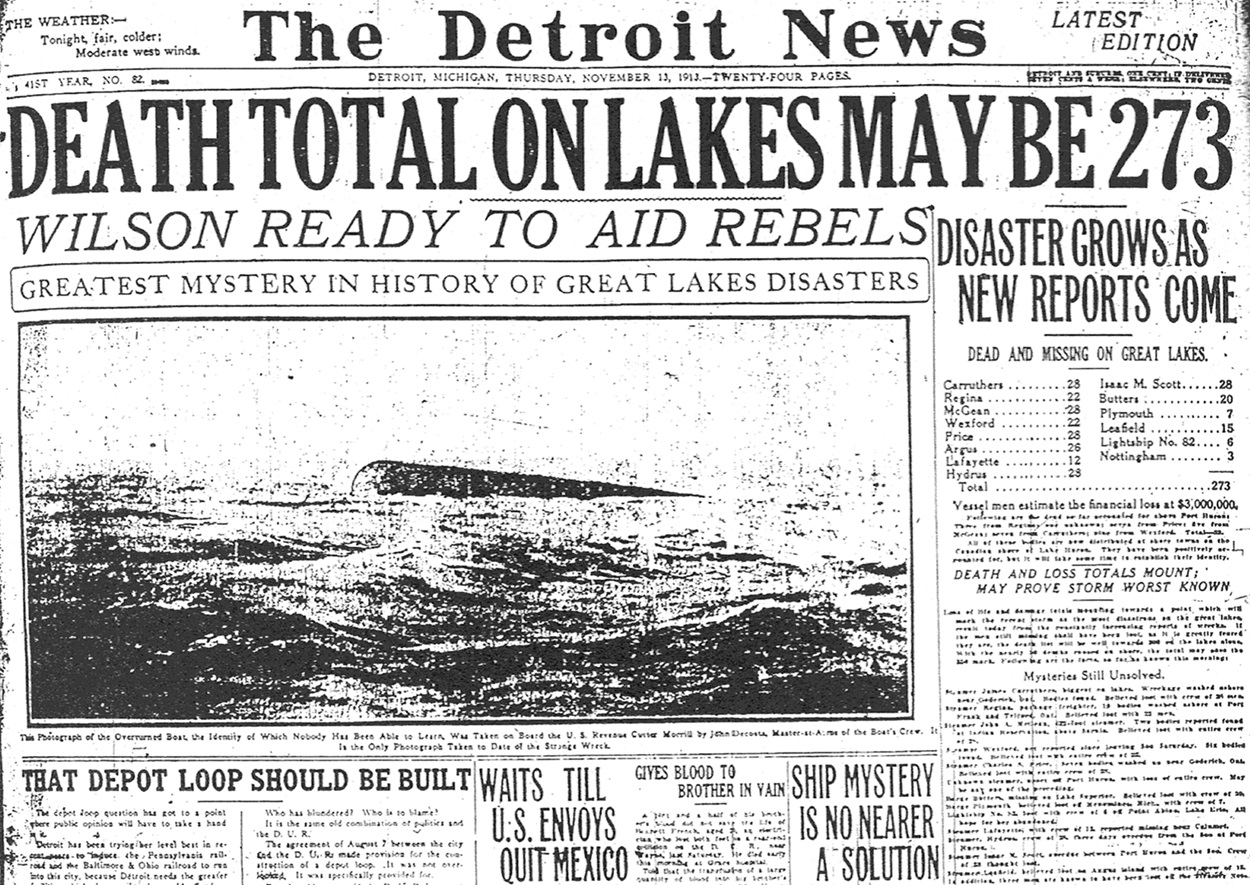
-
Article
Great Seal of Canada
Great Seal of Canada With the creation of the new state of Canada in 1867 a seal was needed for purposes of government. Accordingly, a temporary seal was readied. The intricate work of engraving a permanent seal was completed in England in 1869 and delivered to the governor general.
"https://thecanadianencyclopedia.ca/images/tce_placeholder.jpg?v=e9dca980c9bdb3aa11e832e7ea94f5d9" // resources/views/front/categories/view.blade.php
https://thecanadianencyclopedia.ca/images/tce_placeholder.jpg?v=e9dca980c9bdb3aa11e832e7ea94f5d9
-
Editorial
Great Western Rail Disaster
The following article is an editorial written by The Canadian Encyclopedia staff. Editorials are not usually updated.
"https://d3d0lqu00lnqvz.cloudfront.net/media/media/d0b89dde-a8ae-4d68-8ae3-f47b1ddefbf2.jpg" // resources/views/front/categories/view.blade.php
https://d3d0lqu00lnqvz.cloudfront.net/media/media/d0b89dde-a8ae-4d68-8ae3-f47b1ddefbf2.jpg
-
Article
Great Western Railway
The London and Gore Railroad Co, incorporated 6 May 1834, changed its name to the Great Western Rail Road Co in 1845 and to the Great Western Railway in 1853. Promoted by lawyer-politician Allan Napier MACNAB and more significantly by Hamilton merchants Isaac and Peter Buchanan, R.W.
"https://d3d0lqu00lnqvz.cloudfront.net/media/media/a580af8a-f4ac-492b-a8d0-ab27d566d754.jpg" // resources/views/front/categories/view.blade.php
https://d3d0lqu00lnqvz.cloudfront.net/media/media/a580af8a-f4ac-492b-a8d0-ab27d566d754.jpg
-
Article
Greater Prairie Chicken
The greater prairie chicken (Tympanuchus cupido pinnatus) is a type of grouse. Native to central North America, the greater prairie chicken is extirpated in Canada, but continues to live in parts of the United States, in particular in Kansas, Nebraska and South Dakota. In Canada, the greater prairie chicken lived in southern Alberta, Saskatchewan and Manitoba, as well as in southern and western Ontario. It was first listed as extirpated in 1990. The bird’s disappearance in Canada was due primarily to the conversion of its natural habitat, grassland, to farmland. The greater prairie chicken is culturally significant to Siksika (Blackfoot) and Plains Cree First Nations in Canada, and lives on in their prairie chicken powwow dance.
"https://d3d0lqu00lnqvz.cloudfront.net/media/new_article_images/GreaterPrairieChicken/27234444138_7ee92cae1b_z.jpg" // resources/views/front/categories/view.blade.php
https://d3d0lqu00lnqvz.cloudfront.net/media/new_article_images/GreaterPrairieChicken/27234444138_7ee92cae1b_z.jpg
-
Article
Greater Short-Horned Lizard
The greater short-horned lizard (Phrynosoma hernandesi) is a small to medium sized lizard native to central North America. In Canada, the greater short-horned lizard is found in southwestern Saskatchewan and southeastern Alberta. It is the only species of Phrynosoma that remains in Canada. A second species, the pygmy short-horned lizard (Phrynosoma douglasii), historically lived in southern British Columbia, but appears not to anymore. The greater short-horned lizard faces a number of threats, many poorly understood. Some of these threats include habitat loss and development, and changes to patterns of winter temperatures and snow cover.
"https://d3d0lqu00lnqvz.cloudfront.net/media/new_article_images/GreaterShortHornedLizard/GreaterShortHornedLizard1.jpg" // resources/views/front/categories/view.blade.php
https://d3d0lqu00lnqvz.cloudfront.net/media/new_article_images/GreaterShortHornedLizard/GreaterShortHornedLizard1.jpg
-
Article
Grebe
Grebe is the common name for members of the family Podicipedidae, aquatic birds with almost worldwide distribution. Grebes are generally thought to be most closely related to loons.
"https://d3d0lqu00lnqvz.cloudfront.net/birdclassification/horned-grebe.jpg" // resources/views/front/categories/view.blade.php
https://d3d0lqu00lnqvz.cloudfront.net/birdclassification/horned-grebe.jpg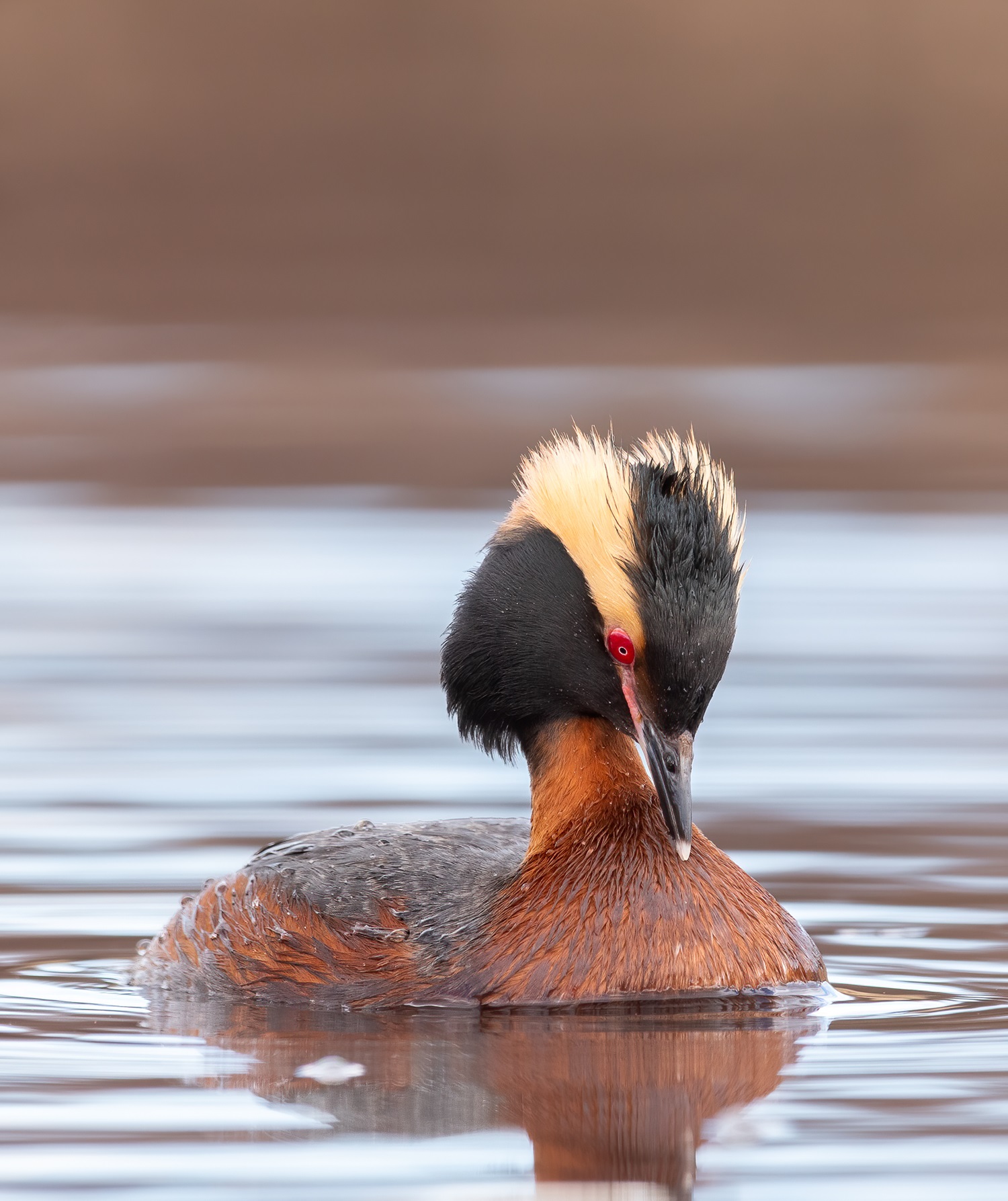
-
Article
Greek Music in Canada
The first Greek immigrants to Canada arrived in 1891. By 1961 there were 56,000 people of Greek origin in Canada; by 1986 177,310. The largest group originated from Peloponnesus, but Macedonia, Crete, and other regions also are represented. The majority profess Greek Orthodoxy.
"https://thecanadianencyclopedia.ca/images/tce_placeholder.jpg?v=e9dca980c9bdb3aa11e832e7ea94f5d9" // resources/views/front/categories/view.blade.php
https://thecanadianencyclopedia.ca/images/tce_placeholder.jpg?v=e9dca980c9bdb3aa11e832e7ea94f5d9
-
Article
Green Bean
There are at least six classes of green bean (Phaseolus vulgaris), and many cultivars (commercial varieties) are available within each class. Common types include the "snap" bean (green or wax) and kidney beans.
"https://d3d0lqu00lnqvz.cloudfront.net/media/media/3d0ac89b-9118-4b98-b4e5-064ff794bf9b.jpg" // resources/views/front/categories/view.blade.php
https://d3d0lqu00lnqvz.cloudfront.net/media/media/3d0ac89b-9118-4b98-b4e5-064ff794bf9b.jpg
-
Article
Green, Blankstein, Russell
Green, Blankstein, Russell (GBR), prominent architectural firm in Winnipeg, founded 1932 by L.J. Green (1899-1969) and Cecil N. Blankstein (b 1908; d 20 June 1989), who were joined 1934 by G.L. Russell (1901-77) and Ralph C. Ham (d 1940).
"https://d3d0lqu00lnqvz.cloudfront.net/media/media/9acc96d9-beeb-4fcc-bb48-1f26bf81a9c8.jpg" // resources/views/front/categories/view.blade.php
https://d3d0lqu00lnqvz.cloudfront.net/media/media/9acc96d9-beeb-4fcc-bb48-1f26bf81a9c8.jpg
-
Macleans
Green Driving Machines
From the outside there was little to distinguish the sleek Toyota Prius from any other car on the streets of Timmins, Ont. But when the driver turned the key, it was clear this was no ordinary sedan. The only sound as the Prius pulled away was the gentle hum of an electric motor.This article was originally published in Maclean's Magazine on July 20, 1998
"https://thecanadianencyclopedia.ca/images/tce_placeholder.jpg?v=e9dca980c9bdb3aa11e832e7ea94f5d9" // resources/views/front/categories/view.blade.php
https://thecanadianencyclopedia.ca/images/tce_placeholder.jpg?v=e9dca980c9bdb3aa11e832e7ea94f5d9
-
Article
Green Fishery
Green Fishery, the COD fishery carried out in Newfoundland and Labrador in which the product is preserved in salt on board the fishing ship to be dried later.
"https://thecanadianencyclopedia.ca/images/tce_placeholder.jpg?v=e9dca980c9bdb3aa11e832e7ea94f5d9" // resources/views/front/categories/view.blade.php
https://thecanadianencyclopedia.ca/images/tce_placeholder.jpg?v=e9dca980c9bdb3aa11e832e7ea94f5d9
-
Article
Green Frog
The green frog (Lithobates clamitans) is a large frog native to Eastern North America. In Canada, it is found throughout the southeastern part of the country and has additionally been introduced to Newfoundland and British Columbia. So long as a permanent body of water is present, green frogs can sometimes be found in urban environments and are fairly tolerant of human activity. This makes them one of the more frequently encountered frog species in Canada. (See also Frog Species in Canada.)
"https://d3d0lqu00lnqvz.cloudfront.net/greenfrog/malegreenfrog.jpg" // resources/views/front/categories/view.blade.php
https://d3d0lqu00lnqvz.cloudfront.net/greenfrog/malegreenfrog.jpg
-
Article
Green Paper
A green paper is a statement by the government, not of policy already determined, but of proposals put before the nation for discussion. Like a white paper, a green paper is an official document sponsored by the Crown. (Traditionally, green papers were printed on green paper to distinguish them from white papers.) A green paper is produced early in the policy-making process, when ministers are still formulating their proposals. Many white papers in Canada have been, in effect, green papers. And at least one green paper — the 1975 Green Paper on Immigration and Population — was released for public debate after the government had already drafted legislation.
"https://thecanadianencyclopedia.ca/images/tce_placeholder.jpg?v=e9dca980c9bdb3aa11e832e7ea94f5d9" // resources/views/front/categories/view.blade.php
https://thecanadianencyclopedia.ca/images/tce_placeholder.jpg?v=e9dca980c9bdb3aa11e832e7ea94f5d9
-
Article
Green Party of Canada
The Green Party of Canada is a federal political party that advocates environmentalism as the key to a sustainable society. It was founded in 1983 and modelled after similar parties in New Zealand and Germany. Elizabeth May became leader of the Green Party in 2006 and has since guided the party in a more centrist direction. She also won the party’s first seat in the House of Commons in 2011. The Green Party has moved from being an obscure fringe party to a serious, if minor, player in Canadian politics. The party was the first in Canada to adopt a co-leadership model. Jonathan Pedneault co-led the federal party with May from 4 February 2025 until his resignation on 30 April 2025, leaving May the sole leader. The federal party currently holds only May’s seat in the House of Commons, while provincial Green parties hold seats in four legislatures.
"https://d3d0lqu00lnqvz.cloudfront.net/Logo_Green_Party_of_Canada_bilingue.svg.png" // resources/views/front/categories/view.blade.php
https://d3d0lqu00lnqvz.cloudfront.net/Logo_Green_Party_of_Canada_bilingue.svg.png