
Browse "Things"
-
Article
Cricket (Insect)
Over 2000 species of true crickets (superfamily Grylloidea) are known worldwide.
"https://d3d0lqu00lnqvz.cloudfront.net/media/media/c5ef359f-9297-49ff-bced-56f49ccd08b6.jpg" // resources/views/front/categories/view.blade.php
https://d3d0lqu00lnqvz.cloudfront.net/media/media/c5ef359f-9297-49ff-bced-56f49ccd08b6.jpg
-
Article
Crime
Crime in modern societies can be defined officially as acts or omissions prohibited by law and punishable by sanctions. Although crime is sometimes viewed broadly as the equivalent of antisocial, immoral and sinful behaviour or as a violation of any important group standard, no act is legally a crime unless prohibited by law. Conceptions of crime vary widely from culture to culture; only treason (disloyalty to the group) and incest are condemned virtually universally, but they were not always treated as crimes.
"https://d3d0lqu00lnqvz.cloudfront.net/media/media/04ee78c9-5b54-46b2-aaaf-652538ef9ff1.jpg" // resources/views/front/categories/view.blade.php
https://d3d0lqu00lnqvz.cloudfront.net/media/media/04ee78c9-5b54-46b2-aaaf-652538ef9ff1.jpg
-
Article
Crimean War
The Crimean War, 1854-56, interrupted a half-century of peace between the European great powers.
"https://thecanadianencyclopedia.ca/images/tce_placeholder.jpg?v=e9dca980c9bdb3aa11e832e7ea94f5d9" // resources/views/front/categories/view.blade.php
https://thecanadianencyclopedia.ca/images/tce_placeholder.jpg?v=e9dca980c9bdb3aa11e832e7ea94f5d9
-
Article
Criminal Capacity
Two main groups of people lack capacity for criminal responsibility - the very young and the mentally disordered.
"https://thecanadianencyclopedia.ca/images/tce_placeholder.jpg?v=e9dca980c9bdb3aa11e832e7ea94f5d9" // resources/views/front/categories/view.blade.php
https://thecanadianencyclopedia.ca/images/tce_placeholder.jpg?v=e9dca980c9bdb3aa11e832e7ea94f5d9
-
Article
Criminal Code of Canada
Canada’s Criminal Code is a federal statute. It was enacted by Parliament in accordance with section 91(27) of the Constitution Act, 1867, which gives the federal government exclusive jurisdiction to legislate criminal offences in Canada. The Criminal Code contains most of the criminal offences that have been created by Parliament. Other criminal offences have been incorporated into other federal statutes. The Code defines the types of conduct that constitute criminal offences. It establishes the kind and degree of punishment that may be imposed for an offence, as well as the procedures to be followed for prosecution.
"https://thecanadianencyclopedia.ca/images/tce_placeholder.jpg?v=e9dca980c9bdb3aa11e832e7ea94f5d9" // resources/views/front/categories/view.blade.php
https://thecanadianencyclopedia.ca/images/tce_placeholder.jpg?v=e9dca980c9bdb3aa11e832e7ea94f5d9
-
Article
Criminal Investigation
Criminal investigation involves the investigation of violations of CRIMINAL LAW.
"https://thecanadianencyclopedia.ca/images/tce_placeholder.jpg?v=e9dca980c9bdb3aa11e832e7ea94f5d9" // resources/views/front/categories/view.blade.php
https://thecanadianencyclopedia.ca/images/tce_placeholder.jpg?v=e9dca980c9bdb3aa11e832e7ea94f5d9
-
Article
Criminal Law
Criminal law, in its widest sense, includes substantive criminal law, the operation of penal institutions, criminal procedure and evidence, and police investigations (see Criminal Investigation). More precisely, the term refers to substantive criminal law - a body of law that prohibits certain kinds of conduct and imposes sanctions for unlawful behaviour.
"https://thecanadianencyclopedia.ca/images/tce_placeholder.jpg?v=e9dca980c9bdb3aa11e832e7ea94f5d9" // resources/views/front/categories/view.blade.php
https://thecanadianencyclopedia.ca/images/tce_placeholder.jpg?v=e9dca980c9bdb3aa11e832e7ea94f5d9
-
Article
Criminal Procedure
Criminal procedure is an integral but distinct part of CRIMINAL LAW in Canada.
"https://thecanadianencyclopedia.ca/images/tce_placeholder.jpg?v=e9dca980c9bdb3aa11e832e7ea94f5d9" // resources/views/front/categories/view.blade.php
https://thecanadianencyclopedia.ca/images/tce_placeholder.jpg?v=e9dca980c9bdb3aa11e832e7ea94f5d9
-
Article
Criminology
Most of the criminological research in Canada has been done at those universities where centres focusing on research have evolved. The Université de Montréal established Canada's first School of Criminology with Denis Szabo in 1960.
"https://d3d0lqu00lnqvz.cloudfront.net/media/media/3db345a4-10ed-4079-a8dd-64108fa40934.jpg" // resources/views/front/categories/view.blade.php
https://d3d0lqu00lnqvz.cloudfront.net/media/media/3db345a4-10ed-4079-a8dd-64108fa40934.jpg
-
Article
Croatian Music in Canada
The first substantial immigration of Croatians to Canada occurred 1918-28 prior to the reconstitution of the union of the provinces of the Serbs, Croats, and Slovenes as Yugoslavia (Croatia declared independence from Yugoslavia 25 Jun 1991).
"https://thecanadianencyclopedia.ca/images/tce_placeholder.jpg?v=e9dca980c9bdb3aa11e832e7ea94f5d9" // resources/views/front/categories/view.blade.php
https://thecanadianencyclopedia.ca/images/tce_placeholder.jpg?v=e9dca980c9bdb3aa11e832e7ea94f5d9
-
Macleans
Croatia Fights Back
"Pay attention ladies and gentlemen, and you will see with your own eyes that our army left the Serb areas untouched.This article was originally published in Maclean's Magazine on August 21, 1995
"https://thecanadianencyclopedia.ca/images/tce_placeholder.jpg?v=e9dca980c9bdb3aa11e832e7ea94f5d9" // resources/views/front/categories/view.blade.php
https://thecanadianencyclopedia.ca/images/tce_placeholder.jpg?v=e9dca980c9bdb3aa11e832e7ea94f5d9
-
Article
Croix de Saint Louis
In Canada Louis-Hector de CALLIERE (1694) was the first to receive the decoration; Louis de Buade de FRONTENAC received it in 1697. The first Canadian chevalier was Pierre Le Moyne d' IBERVILLE (1699). By 1760 some 145 men had been decorated in Canada.
"https://d3d0lqu00lnqvz.cloudfront.net/media/media/22f54a67-0b82-4032-a05c-ab1245eb0f3f.jpg" // resources/views/front/categories/view.blade.php
https://d3d0lqu00lnqvz.cloudfront.net/media/media/22f54a67-0b82-4032-a05c-ab1245eb0f3f.jpg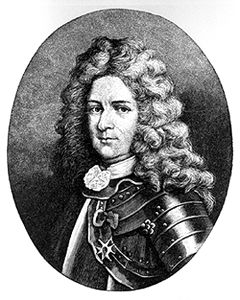
-
Article
Crop Insurance
Crop Insurance An all-risk crop-insurance program is available to Canadian farmers under the authority of the federal Crop Insurance Act (of 1959) and through concurrent and complementary legislation enacted by each province.
"https://thecanadianencyclopedia.ca/images/tce_placeholder.jpg?v=e9dca980c9bdb3aa11e832e7ea94f5d9" // resources/views/front/categories/view.blade.php
https://thecanadianencyclopedia.ca/images/tce_placeholder.jpg?v=e9dca980c9bdb3aa11e832e7ea94f5d9
-
Article
Crop Research
Crop research may be defined as activity directed to making the production, marketing and use of commercial crops more efficient and profitable.
"https://thecanadianencyclopedia.ca/images/tce_placeholder.jpg?v=e9dca980c9bdb3aa11e832e7ea94f5d9" // resources/views/front/categories/view.blade.php
https://thecanadianencyclopedia.ca/images/tce_placeholder.jpg?v=e9dca980c9bdb3aa11e832e7ea94f5d9
-
Article
Crops
Crops are plant species grown for human or animal consumption or for specific uses (such as flax and tobacco). In Canada, most major crops are grown for human or animal consumption.
"https://d3d0lqu00lnqvz.cloudfront.net/media/media/f17f302e-07ae-4656-b689-252cc09a6231.JPG" // resources/views/front/categories/view.blade.php
https://d3d0lqu00lnqvz.cloudfront.net/media/media/f17f302e-07ae-4656-b689-252cc09a6231.JPG