
Browse "Things"
-
Article
Committee for an Independent Canada
The Committee for an Independent Canada (CIC) was conceived by Walter GORDON, Peter NEWMAN and Abraham Rotstein as a citizens' committee to promote Canadian economic and cultural independence. They recruited Jack MCCLELLAND and Claude RYAN as cochairmen and launched the CIC on 17 September 1970.
"https://d3d0lqu00lnqvz.cloudfront.net/media/media/346651f7-0648-43dc-b40f-649d2e4a6e84.jpg" // resources/views/front/categories/view.blade.php
https://d3d0lqu00lnqvz.cloudfront.net/media/media/346651f7-0648-43dc-b40f-649d2e4a6e84.jpg
-
Article
Committee on the Status of Endangered Wildlife in Canada (COSEWIC)
The Committee on the Status of Endangered Wildlife in Canada (COSEWIC) was created in 1977 as a result of a recommendation of a federal-provincial wildlife conference. It arose from the need for a single, official, scientifically sound, national listing of wildlife species at risk. Its mandate is to determine the status, at the national level, of wildlife species, subspecies, varieties and geographically or genetically distinct populations suspected of being imperilled in Canada. In June 2003, the Species at Risk Act formally established COSEWIC as an advisory committee whose status designations are taken into consideration by the federal government when it places species on the legal list.
"https://d3d0lqu00lnqvz.cloudfront.net/media/media/f306f0d1-797a-46a0-af65-29ac4b423e54.jpg" // resources/views/front/categories/view.blade.php
https://d3d0lqu00lnqvz.cloudfront.net/media/media/f306f0d1-797a-46a0-af65-29ac4b423e54.jpg
-
Article
Committees
Parliament has many committees which perform functions that cannot be adequately accomplished in debate or question period.
"https://thecanadianencyclopedia.ca/images/tce_placeholder.jpg?v=e9dca980c9bdb3aa11e832e7ea94f5d9" // resources/views/front/categories/view.blade.php
https://thecanadianencyclopedia.ca/images/tce_placeholder.jpg?v=e9dca980c9bdb3aa11e832e7ea94f5d9
-
Article
Commodities in Canada
In commerce, commodities are interchangeable goods or services. Many natural resources in Canada are viewed as commodities. They are a major source of the country’s wealth. Examples of commodities include a barrel of crude oil, an ounce of gold, or a contract to clear snow during the winter. Commodity products often supply the production of other goods or services. Many are widely traded in futures exchanges (see Commodity Trading).
"https://d3d0lqu00lnqvz.cloudfront.net/media/new_article_images/EconomicsSummaries/dreamstimeextralarge_35143531.jpg" // resources/views/front/categories/view.blade.php
https://d3d0lqu00lnqvz.cloudfront.net/media/new_article_images/EconomicsSummaries/dreamstimeextralarge_35143531.jpg
-
Article
Commodity Inspection and Grading
Commodity Inspection and GradingCanada's AGRICULTURE AND FOOD inspection and grading system has 2 major goals: first, it endeavours to provide standards of quality and grades that are readily recognizable and acceptable in domestic and international commodity and food markets; second, it attempts to encourage concern for safety and nutrition in the processing, distribution and retailing of food products. Both of these objectives contribute to consumer protection. Commodity inspection and grading have a long history in...
"https://thecanadianencyclopedia.ca/images/tce_placeholder.jpg?v=e9dca980c9bdb3aa11e832e7ea94f5d9" // resources/views/front/categories/view.blade.php
https://thecanadianencyclopedia.ca/images/tce_placeholder.jpg?v=e9dca980c9bdb3aa11e832e7ea94f5d9
-
Article
Commodity Trading
Commodity futures markets provide a means for the organized trading of contracts for the delivery of goods at a later date. Today, these include agricultural products, metals, forest products, petroleum products, interest rates and stocks.
"https://thecanadianencyclopedia.ca/images/tce_placeholder.jpg?v=e9dca980c9bdb3aa11e832e7ea94f5d9" // resources/views/front/categories/view.blade.php
https://thecanadianencyclopedia.ca/images/tce_placeholder.jpg?v=e9dca980c9bdb3aa11e832e7ea94f5d9
-
Article
Common Five-Lined Skink
The common five-lined skink (Plestiodon fasciatus) is a relatively small lizard native to Eastern North America. With a distribution spanning more than 2.5 million square kilometres, it is the most widely distributed lizard species in Eastern North America. Due to a combination of threats and historical declines, it is listed as a species at risk under the Canadian Species at Risk Act.
"https://d3d0lqu00lnqvz.cloudfront.net/commonfive-linedskink/Crowley-Five-lined-Skink-Plestiodon-fasciatus-juvenile.jpg" // resources/views/front/categories/view.blade.php
https://d3d0lqu00lnqvz.cloudfront.net/commonfive-linedskink/Crowley-Five-lined-Skink-Plestiodon-fasciatus-juvenile.jpg
-
Article
Common Law in Canada
Common law is the body of laws that has been established by judges, rather than by legislatures or executive decrees. Common law originated in England following the Norman conquest of 1066. It was a time when few laws were codified, but the state wanted to implement a system of governance that would be seen as fair and predictable. In principle, common law courts are bound by precedent. This means that Judges generally apply the same decisions that have been applied to similar cases in the past. This is known as the doctrine of stare decisis, or “to stand by decided matters.” Common law remains dominant in most of the British Commonwealth countries, as well as the United States. However, the practice of common law across these countries varies widely. Common law is used in most of Canada. It stands in contrast to civil law — the body of laws that are written by legislators and applied directly by judges — which is used in Quebec.
"https://d3d0lqu00lnqvz.cloudfront.net/media/media/7ac02b0f-118b-4ccb-b6dc-81f218b68954.jpg" // resources/views/front/categories/view.blade.php
https://d3d0lqu00lnqvz.cloudfront.net/media/media/7ac02b0f-118b-4ccb-b6dc-81f218b68954.jpg
-
Article
Common-Law Unions in Canada
A common-law union occurs when two people live together in a conjugal relationship, generally for at least a year (or more depending on the province in which they reside). Common-law couples in Canada have many of the same legal, parental and financial rights and obligations as married couples.
"https://thecanadianencyclopedia.ca/images/tce_placeholder.jpg?v=e9dca980c9bdb3aa11e832e7ea94f5d9" // resources/views/front/categories/view.blade.php
https://thecanadianencyclopedia.ca/images/tce_placeholder.jpg?v=e9dca980c9bdb3aa11e832e7ea94f5d9
-
Article
Common Minke Whale
The common minke whale (Balaenoptera acutorostrata) is the smallest of the baleen whales but is one of the most abundant baleen whales in the world. The scientific name acutorostrata means “sharp snout,” highlighting the whale’s pointed, bulletlike rostrum. In Canadian waters, there are two distinct common minke whale subspecies: a North Pacific subspecies (Balaenoptera acutorostrata scammoni) and a North Atlantic subspecies (Balaenoptera acutorostrata acutorostrata).
"https://d3d0lqu00lnqvz.cloudfront.net/commonminkewhale/Minke-Whale-2.jpg" // resources/views/front/categories/view.blade.php
https://d3d0lqu00lnqvz.cloudfront.net/commonminkewhale/Minke-Whale-2.jpg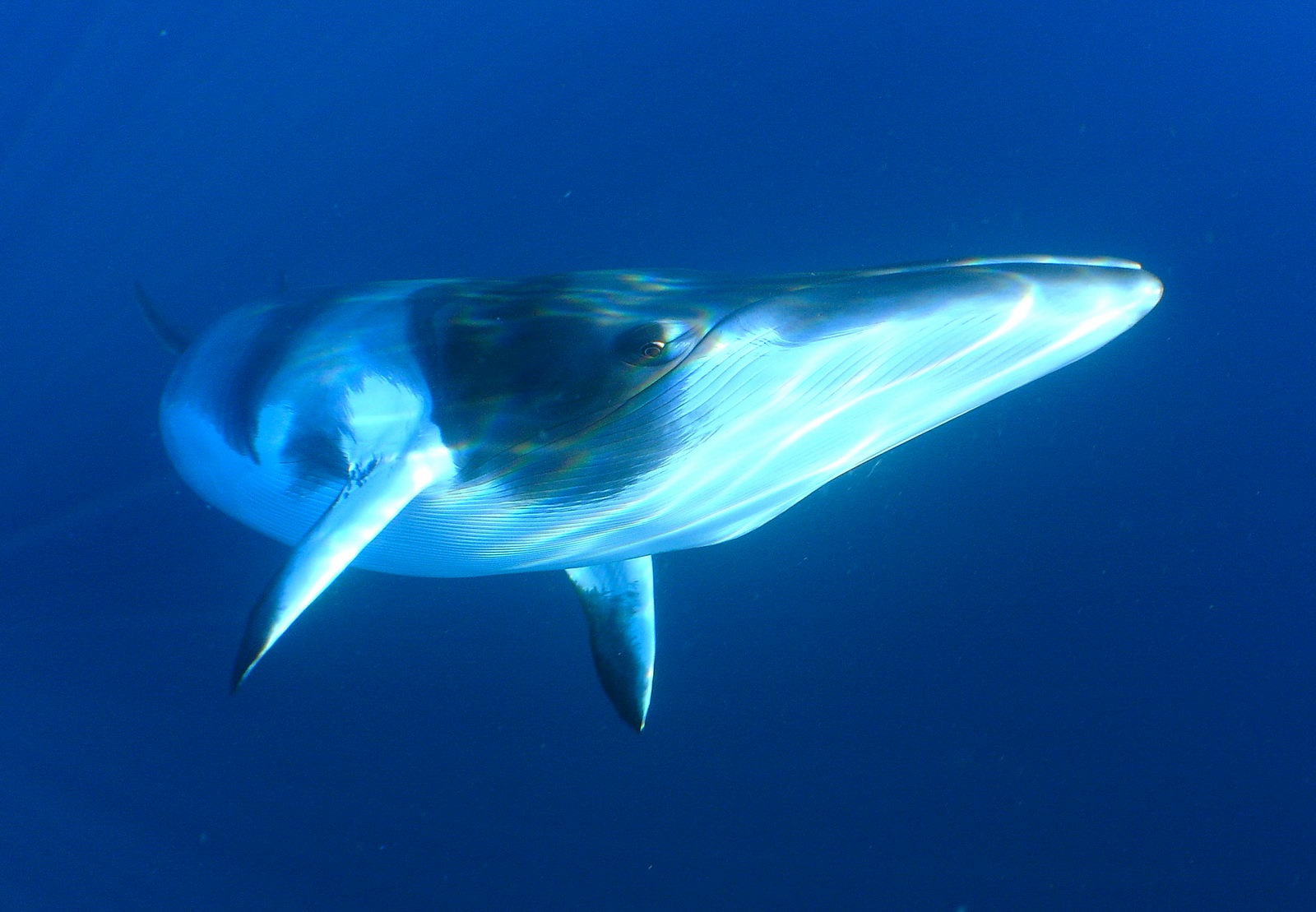
-
Article
Common Watersnake
The common watersnake (Nerodia sipedon) is a medium-sized, non-venomous snake native to North America. Within Canada, it is found in the southern portions of Ontario and Quebec. In the US, its range extends south to Florida and west to Colorado. Of the four officially recognized subspecies, two are found in Canada: the Northern watersnake (Nerodia sipedon sipedon) and the Lake Erie watersnake (Nerodia sipedon insularum). (See also Snake Species in Canada.)
"https://d3d0lqu00lnqvz.cloudfront.net/CommonWatersnake/Watersnake.jpg" // resources/views/front/categories/view.blade.php
https://d3d0lqu00lnqvz.cloudfront.net/CommonWatersnake/Watersnake.jpg
-
Article
Commonwealth
The Commonwealth of Nations is made up of 56 countries, including Canada, that were for the most part once part of the British Empire. They work together on international policy and hold a major sports event every four years. It is one of the world’s oldest political associations of states.
"https://d3d0lqu00lnqvz.cloudfront.net/media/media/2f10ecd8-58d3-4a10-8b33-fa4f1d617d92.jpg" // resources/views/front/categories/view.blade.php
https://d3d0lqu00lnqvz.cloudfront.net/media/media/2f10ecd8-58d3-4a10-8b33-fa4f1d617d92.jpg
-
Article
Commonwealth Games
Since the first British Empire Games were held at Hamilton, Ontario, in August 1930, and attended by 400 competitors representing 11 countries, Canada has been a leading proponent and participant in this quadrennial multi-sport festival.
"https://d3d0lqu00lnqvz.cloudfront.net/media/media/aee92a9d-82b2-4f46-8a2d-1fac7d6512d7.jpg" // resources/views/front/categories/view.blade.php
https://d3d0lqu00lnqvz.cloudfront.net/media/media/aee92a9d-82b2-4f46-8a2d-1fac7d6512d7.jpg
-
Article
Commonwealth of Learning
The Commonwealth of Learning (COL) is an intergovernmental organization that helps developing countries improve access to quality education and training.
"https://d3d0lqu00lnqvz.cloudfront.net/media/media/f973641b-750e-4197-9ba7-dc025d236929.jpg" // resources/views/front/categories/view.blade.php
https://d3d0lqu00lnqvz.cloudfront.net/media/media/f973641b-750e-4197-9ba7-dc025d236929.jpg
-
Article
Communal Properties Act Case
Walter v Attorney-General of Alberta (1965-69) tested the constitutional validity of the Communal Properties Act (1955), which had the effect of restricting the amount of lands that could be owned communally by religious groups such as the HUTTERITES and the DOUKHOBORS.
"https://d3d0lqu00lnqvz.cloudfront.net/media/media/9dde7de9-5182-4dab-a6b3-f141ce3c9272.jpg" // resources/views/front/categories/view.blade.php
https://d3d0lqu00lnqvz.cloudfront.net/media/media/9dde7de9-5182-4dab-a6b3-f141ce3c9272.jpg