
Browse "Politics & Law"
-
Article
Canada and the Iraq War
The Iraq War (2003–11) was fought against Iraq by a coalition of 46 countries led by the United States and the United Kingdom. The decision to go to war was based in part on faulty intelligence and assumptions about the Iraqi manufacture and storage of weapons of mass destruction (WMD). The war was conducted in two phases, a brief conventional one in March and April 2003 and a much longer counterinsurgency operation, which ended in December 2011. Despite American and British pressure, Canadian Prime Minister Jean Chrétien refused to publicly support the war. Ostensibly, this was because there was no United Nations (UN) Security Council resolution authorizing the operation, although several other factors were involved.
"https://d3d0lqu00lnqvz.cloudfront.net/media/media/b3532769-6fc5-4950-bcff-36d917baf2bc.jpg" // resources/views/front/categories/view.blade.php
https://d3d0lqu00lnqvz.cloudfront.net/media/media/b3532769-6fc5-4950-bcff-36d917baf2bc.jpg
-
Article
Canada and the Responsibility to Protect (R2P)
The Responsibility to Protect (R2P) is a non-binding political commitment made by United Nations Member States to protect populations from genocide, crimes against humanity, ethnic cleansing and war crimes. Canadian leadership was instrumental in the establishment of the International Commission on Intervention and State Sovereignty (ICISS) in 2000, which led to the development and eventual adoption of R2P at the 2005 UN World Summit (see also Canada and Peacekeeping).
"https://d3d0lqu00lnqvz.cloudfront.net/media/media/b52c2243-2c08-4941-9163-e8feea5c4cd3.jpg" // resources/views/front/categories/view.blade.php
https://d3d0lqu00lnqvz.cloudfront.net/media/media/b52c2243-2c08-4941-9163-e8feea5c4cd3.jpg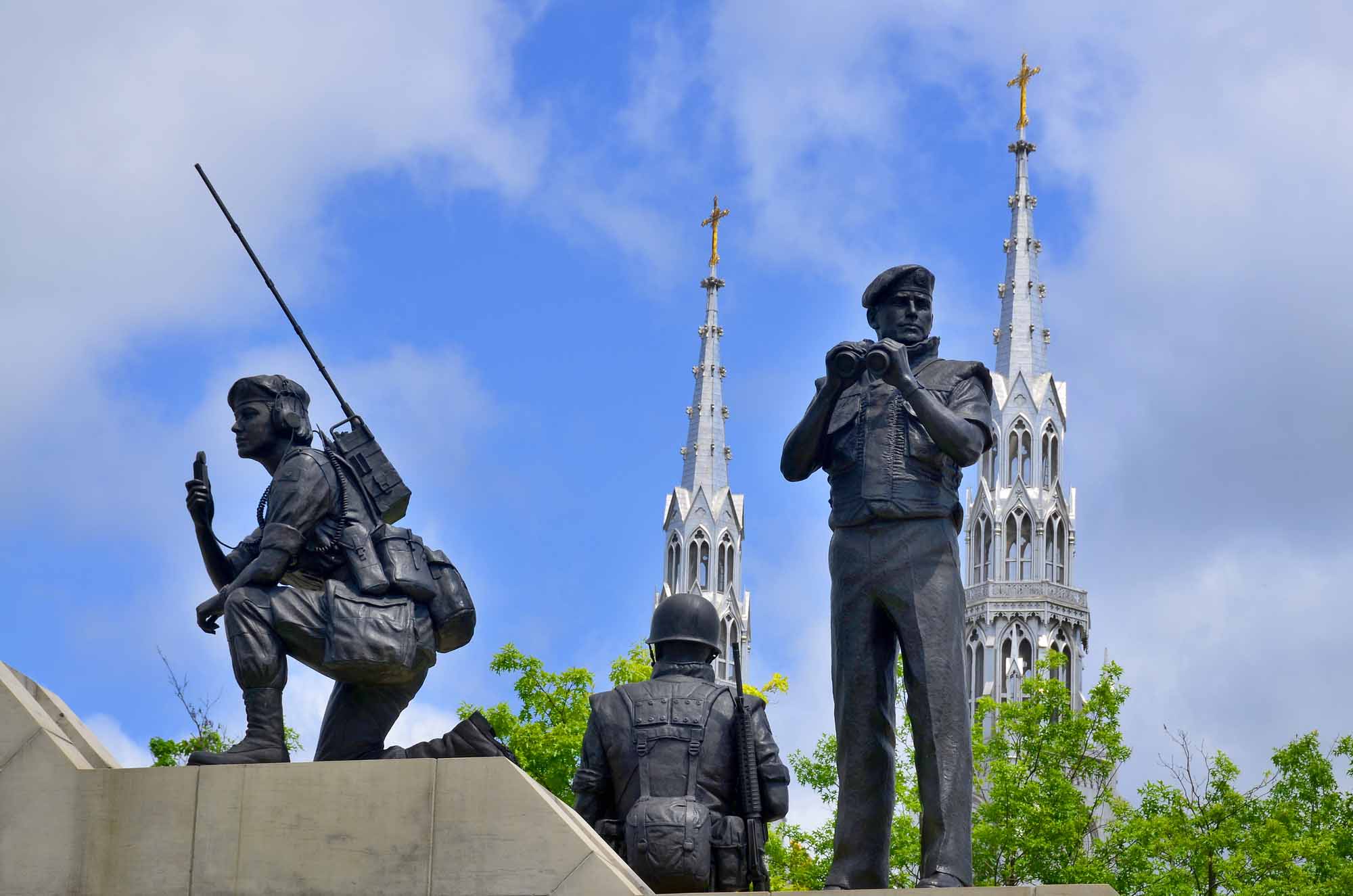
-
Article
Canada and the United States
"The Americans are our best friends whether we like it or not." This statement, uttered in the House of Commons by Robert Thompson, the leader of the Social Credit Party early in the 1960s, perhaps best captures the essence of Canada's complex relationship with its nearest neighbour.
"https://d3d0lqu00lnqvz.cloudfront.net/media/new_article_images/CanadianAmericanRelations/Trump Trudeau 2019 .jpg" // resources/views/front/categories/view.blade.php
https://d3d0lqu00lnqvz.cloudfront.net/media/new_article_images/CanadianAmericanRelations/Trump Trudeau 2019 .jpg -
Macleans
Canada Backsliding on Kyoto Pledges
IT'S A TRUE believer's kind of tale. The day after Canada officially ratified the Kyoto Protocol on CLIMATE CHANGE in December 2002, David Anderson was in New York City to deposit the freshly signed paper with the Treaty Section of the United Nations.This article was originally published in Maclean's Magazine on February 28, 2005
"https://thecanadianencyclopedia.ca/images/tce_placeholder.jpg?v=e9dca980c9bdb3aa11e832e7ea94f5d9" // resources/views/front/categories/view.blade.php
https://thecanadianencyclopedia.ca/images/tce_placeholder.jpg?v=e9dca980c9bdb3aa11e832e7ea94f5d9
-
Article
Canada Committee
Canada Committee, a British parliamentary committee established 2 May 1828 to settle political disputes which were paralysing representative government in Lower Canada and creating difficulties in Upper Canada.
"https://thecanadianencyclopedia.ca/images/tce_placeholder.jpg?v=e9dca980c9bdb3aa11e832e7ea94f5d9" // resources/views/front/categories/view.blade.php
https://thecanadianencyclopedia.ca/images/tce_placeholder.jpg?v=e9dca980c9bdb3aa11e832e7ea94f5d9
-
Article
Canada Company
Canada Company, brainchild of John GALT, established in late 1824 and chartered in 1825 as a land and COLONIZATION COMPANY in Upper Canada. In 1826 the company purchased from the government about 2.5 million acres (1 million ha) of land for $295 000.
"https://d3d0lqu00lnqvz.cloudfront.net/media/media/a03fa073-a395-45c8-a7a3-8ae328595103.jpg" // resources/views/front/categories/view.blade.php
https://d3d0lqu00lnqvz.cloudfront.net/media/media/a03fa073-a395-45c8-a7a3-8ae328595103.jpg
-
Article
Canada Corn Act
Canada Corn Act, passed in 1843 by the British Parliament and applying to all grains, allowed Canadian wheat to enter the British market at a nominal duty, and flour manufactured in Canada at a proportionate rate.
"https://thecanadianencyclopedia.ca/images/tce_placeholder.jpg?v=e9dca980c9bdb3aa11e832e7ea94f5d9" // resources/views/front/categories/view.blade.php
https://thecanadianencyclopedia.ca/images/tce_placeholder.jpg?v=e9dca980c9bdb3aa11e832e7ea94f5d9
-
Article
Canada East
In 1841, Britain united the colonies of Upper and Lower Canada into the Province of Canada. This was in response to the violent rebellions of 1837–38. The Durham Report (1839) laid out the guidelines to create the new colony with the Act of Union in 1840. The Province of Canada was made up of Canada West (formerly Upper Canada) and Canada East (formerly Lower Canada). The two regions were governed jointly until Confederation in 1867. Canada West then became Ontario and Canada East became Quebec.
"https://d3d0lqu00lnqvz.cloudfront.net/media/new_article_images/PoliticsInOntario/Map_Canada_West_East.jpg" // resources/views/front/categories/view.blade.php
https://d3d0lqu00lnqvz.cloudfront.net/media/new_article_images/PoliticsInOntario/Map_Canada_West_East.jpg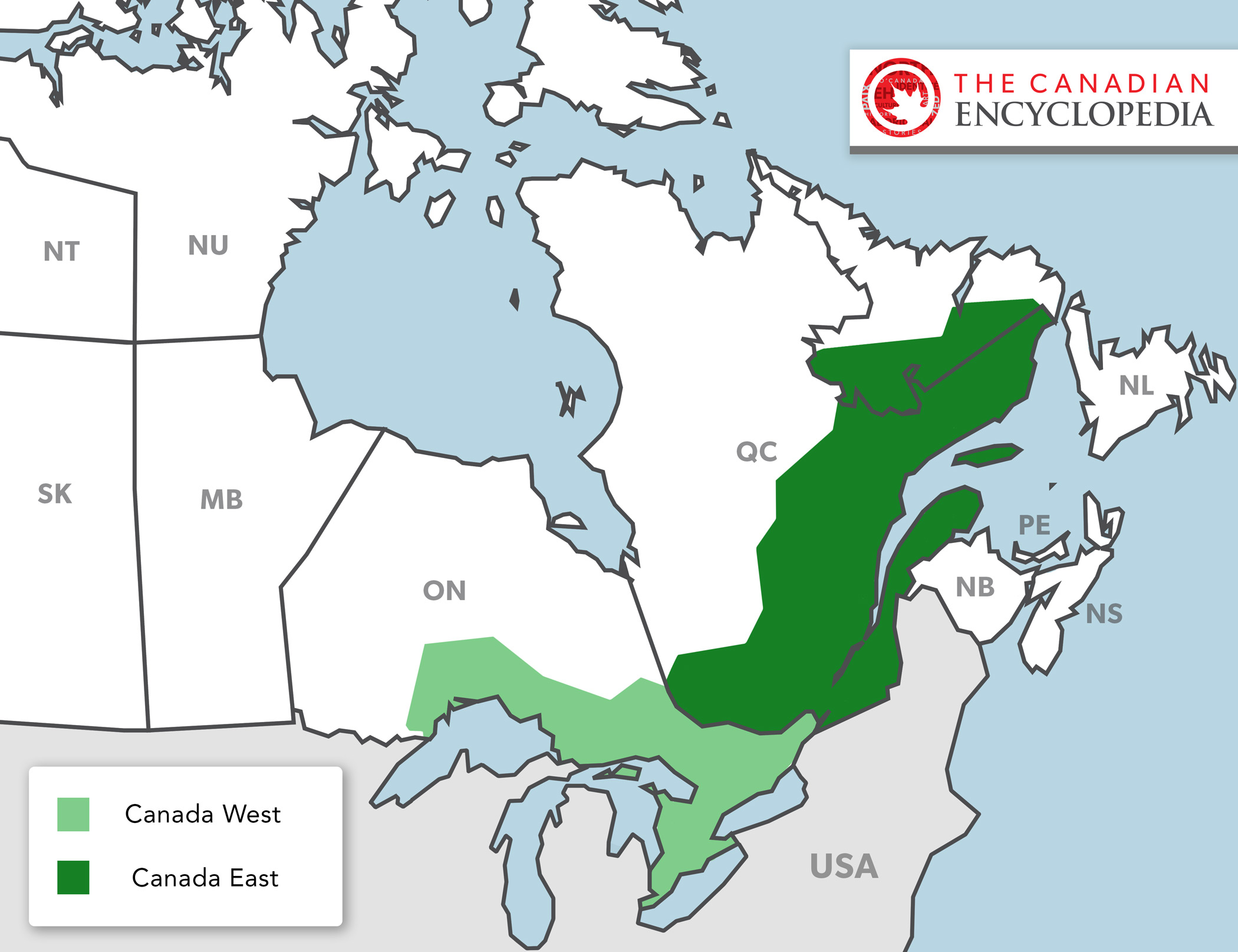
-
Article
Canada First
Canada First, nationalist movement founded 1868 by Ontarians George Denison, Henry Morgan, Charles Mair and William Foster and by Robert Grant Haliburton, a Nova Scotian living in Ottawa.
"https://d3d0lqu00lnqvz.cloudfront.net/media/media/c77c043b-6130-478d-afe6-495c56f807bd.jpg" // resources/views/front/categories/view.blade.php
https://d3d0lqu00lnqvz.cloudfront.net/media/media/c77c043b-6130-478d-afe6-495c56f807bd.jpg
-
Article
Canada House
Canada House, a distinctive symbol of Canadian interests in Britain, located in London's bustling Trafalgar Square.
"https://d3d0lqu00lnqvz.cloudfront.net/media/media/eace665f-b462-4eb7-b033-fa64d5bda978.jpg" // resources/views/front/categories/view.blade.php
https://d3d0lqu00lnqvz.cloudfront.net/media/media/eace665f-b462-4eb7-b033-fa64d5bda978.jpg
-
Macleans
Canada Likely to Join US in War against Iraq
This article was originally published in Maclean’s magazine on September 23, 2002. Partner content is not updated. IT WAS BY MOST ACCOUNTS an uncomfortable meeting when Jean CHRÉTIEN sat down with George W. Bush for 45 minutes in Detroit's Cobo Hall last week.
"https://thecanadianencyclopedia.ca/images/tce_placeholder.jpg?v=e9dca980c9bdb3aa11e832e7ea94f5d9" // resources/views/front/categories/view.blade.php
https://thecanadianencyclopedia.ca/images/tce_placeholder.jpg?v=e9dca980c9bdb3aa11e832e7ea94f5d9
-
Article
Canada-Third World Relations
The decolonization of the European empires after WWII produced many "new nations" and revealed how little economic and social development the colonial system had permitted its wards. The problem of the "Third World" and its "underdevelopment" was thus placed firmly on the global agenda.
"https://thecanadianencyclopedia.ca/images/tce_placeholder.jpg?v=e9dca980c9bdb3aa11e832e7ea94f5d9" // resources/views/front/categories/view.blade.php
https://thecanadianencyclopedia.ca/images/tce_placeholder.jpg?v=e9dca980c9bdb3aa11e832e7ea94f5d9
-
Macleans
Canada-U.S. Relations (Poll)
This article was originally published in Maclean’s magazine on 8 March 1999. Partner content is not updated. "The two leaders, who appeared relaxed with one another and frequently made eye contact, also agreed to work together on the mad cow issue.
"https://thecanadianencyclopedia.ca/images/tce_placeholder.jpg?v=e9dca980c9bdb3aa11e832e7ea94f5d9" // resources/views/front/categories/view.blade.php
https://thecanadianencyclopedia.ca/images/tce_placeholder.jpg?v=e9dca980c9bdb3aa11e832e7ea94f5d9
-
Article
Canada West
In 1841, Britain united the colonies of Upper and Lower Canada into the Province of Canada. This was in response to the violent rebellions of 1837–38. The Durham Report (1839) laid out the guidelines to create the new colony with the Act of Union in 1840. The Province of Canada was made up of Canada West (formerly Upper Canada) and Canada East (formerly Lower Canada). The two regions were governed jointly until Confederation in 1867. Canada West then became Ontario and Canada East became Quebec.
"https://thecanadianencyclopedia.ca/images/tce_placeholder.jpg?v=e9dca980c9bdb3aa11e832e7ea94f5d9" // resources/views/front/categories/view.blade.php
https://thecanadianencyclopedia.ca/images/tce_placeholder.jpg?v=e9dca980c9bdb3aa11e832e7ea94f5d9
-
Macleans
Canada's Anti-Terrorism Act to Be Reviewed
This article was originally published in Maclean’s magazine on October 25, 2004. Partner content is not updated. IN THE FEVERED DAYS following Sept. 11, 2001, media reports that some of the hijackers had entered the U.S. from Canada briefly raised fears that a Canadian connection would be a big part of the story of America's worst terror attacks.
"https://thecanadianencyclopedia.ca/images/tce_placeholder.jpg?v=e9dca980c9bdb3aa11e832e7ea94f5d9" // resources/views/front/categories/view.blade.php
https://thecanadianencyclopedia.ca/images/tce_placeholder.jpg?v=e9dca980c9bdb3aa11e832e7ea94f5d9
