
Browse "Politics & Law"
-
Editorial
Editorial: The Death of the Meech Lake Accord
The following article is an editorial written by The Canadian Encyclopedia staff. Editorials are not usually updated. On a Sunday evening, 3 June 1990, Prime Minister Brian Mulroney and the ten provincial premiers marked the third anniversary of the Meech Lake Accord at a dinner in the architectural splendour of the Canadian Museum of Civilization (now the Canadian Museum of History) in Hull, Quebec.
"https://d3d0lqu00lnqvz.cloudfront.net/media/media/73c1f655-bfcc-4aa6-9251-c0d5c550fde4.jpg" // resources/views/front/categories/view.blade.php
https://d3d0lqu00lnqvz.cloudfront.net/media/media/73c1f655-bfcc-4aa6-9251-c0d5c550fde4.jpg
-
Article
The Donnellys
Early in the morning of 4 Feb 1880, a party of armed men brutally murdered James Donnelly, a farmer living near the village of LUCAN, Ont, his wife Johannah, his sons Thomas and John, and his niece Bridget Donnelly.
"https://thecanadianencyclopedia.ca/images/tce_placeholder.jpg?v=e9dca980c9bdb3aa11e832e7ea94f5d9" // resources/views/front/categories/view.blade.php
https://thecanadianencyclopedia.ca/images/tce_placeholder.jpg?v=e9dca980c9bdb3aa11e832e7ea94f5d9
-
Article
The American Response to the Canadian Rebellions of 1837–38
By December 1837 and January 1838, rebels from Upper and Lower Canada had suffered heavy defeats at the hands of British and Loyalist forces. (See: Rebellion in Lower Canada; Rebellion in Upper Canada.) They fled to the United States to seek financial and military assistance. The American public was aware that there had been armed conflicts in the Canadas. Many were even initially supportive. However, the presence of Canadian rebels on American soil forced many to question American involvement. The growing tensions with Great Britain over the Caroline Affair complicated matters. The creation of the Republic of Texas and the fight over the abolition of slavery were also factors. In January 1838, US President Martin Van Buren took steps to ensure America’s neutrality in the Canadian rebellions.
"https://d3d0lqu00lnqvz.cloudfront.net/media/media/a4abe204-c34a-4e1d-95d4-4b754e7b9598.jpg" // resources/views/front/categories/view.blade.php
https://d3d0lqu00lnqvz.cloudfront.net/media/media/a4abe204-c34a-4e1d-95d4-4b754e7b9598.jpg
-
Article
The Elsie Initiative for Women in Peace Operations
The Elsie Initiative for Women in Peace Operations is a Canadian-led multilateral project aimed at increasing women’s meaningful participation in peace operations. Named after aeronautical engineer and women’s rights pioneer Elsie MacGill, the initiative figures into Canada’s feminist foreign policy and Global Affairs Canada’s commitment to the United Nations’ Women, Peace and Security agenda (see Canada and Peacekeeping).
"https://d3d0lqu00lnqvz.cloudfront.net/media/media/008643e1-8d7f-4f2b-85d8-7c3f94caecd6.png" // resources/views/front/categories/view.blade.php
https://d3d0lqu00lnqvz.cloudfront.net/media/media/008643e1-8d7f-4f2b-85d8-7c3f94caecd6.png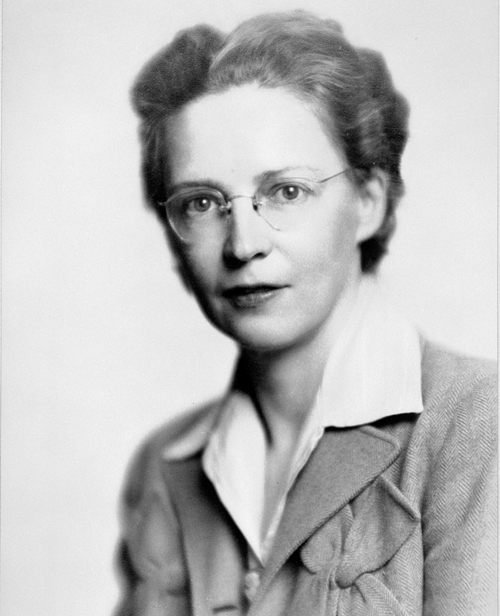
-
Editorial
Editorial: Baldwin, LaFontaine and Responsible Government
The following article is an editorial written by The Canadian Encyclopedia staff. Editorials are not usually updated. The Baldwin–LaFontaine government of 1848 has been called the “great ministry.” In addition to establishing responsible government, it had an incomparable record of legislation. It established a public school system and finalized the founding of the University of Toronto. It set up municipal governments and pacified French-Canadian nationalism after a period of unrest. Responsible government did not transform Canada overnight into a fully developed democracy. But it was an important milestone along the road to political autonomy. Most importantly, it provided an opportunity for French Canadians to find a means for their survival through the British Constitution. The partnership and friendship between Baldwin and LaFontaine were brilliant examples of collaboration that have been all too rare in Canadian history.
"https://d3d0lqu00lnqvz.cloudfront.net/media/media/ba6bdff6-574a-4697-ac95-afdcc5ddfcc9.jpg" // resources/views/front/categories/view.blade.php
https://d3d0lqu00lnqvz.cloudfront.net/media/media/ba6bdff6-574a-4697-ac95-afdcc5ddfcc9.jpg
-
Article
Canadian Film History: 1896 to 1938
Filmmaking is a powerful form of cultural and artistic expression, as well as a highly profitable commercial enterprise. From a practical standpoint, filmmaking is a business involving large sums of money and a complex division of labour. This labour is involved, roughly speaking, in three sectors: production, distribution and exhibition. The history of the Canadian film industry has been one of sporadic achievement accomplished in isolation against great odds. Canadian cinema has existed within an environment where access to capital for production, to the marketplace for distribution and to theatres for exhibition has been extremely difficult. The Canadian film industry, particularly in English Canada, has struggled against the Hollywood entertainment monopoly for the attention of an audience that remains largely indifferent toward the domestic industry. The major distribution and exhibition outlets in Canada have been owned and controlled by foreign interests. The lack of domestic production throughout much of the industry’s history can only be understood against this economic backdrop. This article is one of four that surveys the history of the film industry in Canada. The entire series includes: Canadian Film History: 1896 to 1938; Canadian Film History: 1939 to 1973; Canadian Film History: 1974 to Present; Canadian Film History: Notable Films and Filmmakers 1980 to Present.
"https://d3d0lqu00lnqvz.cloudfront.net/media/media/1f440346-22dd-48de-951f-264baf7a7fc4.jpg" // resources/views/front/categories/view.blade.php
https://d3d0lqu00lnqvz.cloudfront.net/media/media/1f440346-22dd-48de-951f-264baf7a7fc4.jpg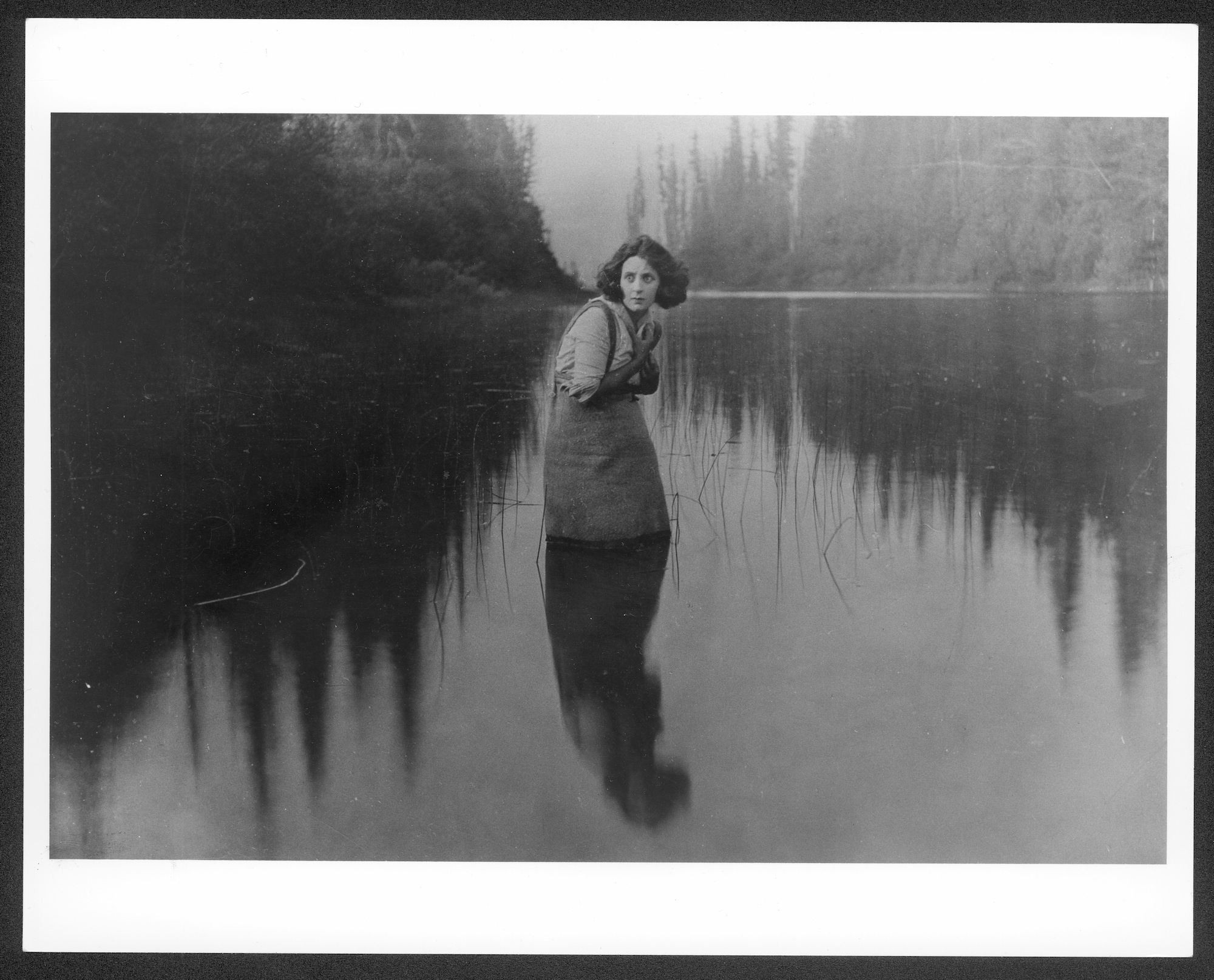
-
Timelines
The Indian Act
The Indian Act is the principal law through which the federal government administers Indian status, local First Nations governments and the management of reserve land and communal monies. The Indian Act does not include Métis or Inuit peoples. The Act came into power on 12 April 1876. It consolidated a number of earlier colonial laws that sought to control and assimilate Indigenous peoples into Euro-Canadian culture. The Indian Act has been amended many times over...
"https://d3d0lqu00lnqvz.cloudfront.net/media/media/cbcd31d1-03f6-4fba-a45d-96ee89c4617d.jpg" // resources/views/front/categories/view.blade.php
https://d3d0lqu00lnqvz.cloudfront.net/media/media/cbcd31d1-03f6-4fba-a45d-96ee89c4617d.jpg
-
Editorial
The Life and Meaning of Everett Klippert
The following article is an editorial written by The Canadian Encyclopedia staff. Editorials are not usually updated. Everett George Klippert (1926–1996) was a popular Calgary bus driver who was jailed for homosexuality from 1960 to 1964, and from 1965 to 1971. An unlikely martyr, he shunned the spotlight. Klippert was once described as “Canada’s most famous homosexual” due to his unjust prison sentences, which ultimately led to the decriminalization of homosexuality in Canada.
"https://d3d0lqu00lnqvz.cloudfront.net/media/media/d5d0ce81-9f5e-4938-8c53-1fdaee0b6c39.jpg" // resources/views/front/categories/view.blade.php
https://d3d0lqu00lnqvz.cloudfront.net/media/media/d5d0ce81-9f5e-4938-8c53-1fdaee0b6c39.jpg
-
Article
The Politics of Cultural Accommodation: Baldwin, LaFontaine and Responsible Government
One of the great, unheralded events in Canadian history took place in September 1841 at an annual feast and ceremony of Illumination at Sharon Temple, meeting place for the Children of Peace.
"https://d3d0lqu00lnqvz.cloudfront.net/Responsible government.png" // resources/views/front/categories/view.blade.php
https://d3d0lqu00lnqvz.cloudfront.net/Responsible government.png
-
Article
The Quebec Act, 1774 (Plain-Language Summary)
In 1759, the British defeated the French on the Plains of Abraham. Soon after, the British took control of Quebec (see also The Conquest of New France.) The Quebec Act of 1774 was passed to gain the loyalty of the French who lived in the Province of Quebec. The Act had serious consequences for Britain’s North American empire. The Quebec Act was one of the direct causes of the American Revolution. (This article is a plain-language summary of The Quebec Act, 1774. If you are interested in reading about this topic in more depth, please see our full-length entry on The Quebec Act, 1774.)
"https://d3d0lqu00lnqvz.cloudfront.net/media/media/bcf0dcc3-ce34-4098-8543-00bcccbaabe0.jpg" // resources/views/front/categories/view.blade.php
https://d3d0lqu00lnqvz.cloudfront.net/media/media/bcf0dcc3-ce34-4098-8543-00bcccbaabe0.jpg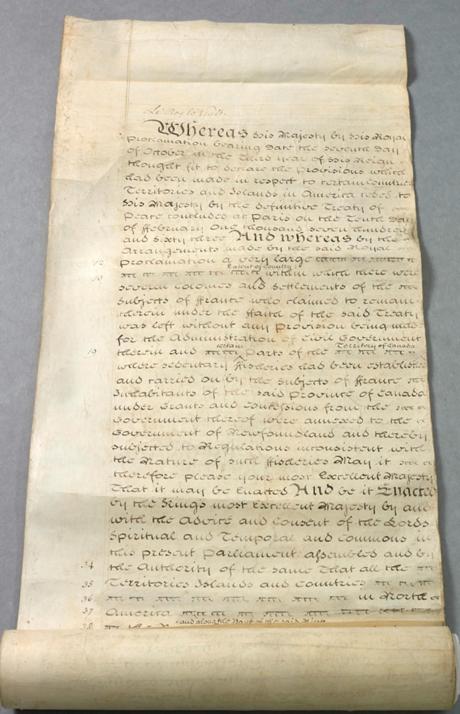
-
Article
Editorial: The Stanley Flag and the “Distinctive Canadian Symbol”
The following article is an editorial written by The Canadian Encyclopedia staff. Editorials are not usually updated. Prime Minister Lester Pearson and John Matheson, one of his Liberal Members of Parliament, are widely considered the fathers of the Canadian flag. Their names were front and centre in 2015 during the tributes and celebrations to mark the 50th anniversary of the flag’s creation. But the role played by George Stanley is often lost in the story of how this iconic symbol came to be.
"https://d3d0lqu00lnqvz.cloudfront.net/media/media/a9adffc5-8796-4968-ac52-ab33df0fe6eb.jpg" // resources/views/front/categories/view.blade.php
https://d3d0lqu00lnqvz.cloudfront.net/media/media/a9adffc5-8796-4968-ac52-ab33df0fe6eb.jpg
-
Editorial
Editorial: John Humphrey, Eleanor Roosevelt and the Universal Declaration of Human Rights
The following article is an editorial written by The Canadian Encyclopedia staff. Editorials are not usually updated. In 1946, John Humphrey became director of the United Nations Division on Human Rights, and Eleanor Roosevelt was named the United States representative to the UN’s Commission on Human Rights. Humphrey was an obscure Canadian law professor. Roosevelt was the world’s most celebrated woman. For two years, they collaborated on the creation of one of the modern world’s great documents: the Universal Declaration of Human Rights. It was adopted on 10 December 1948.
"https://d3d0lqu00lnqvz.cloudfront.net/media/media/6afcc1db-4a9a-4e2f-9a50-ad1981f54caf.jpg" // resources/views/front/categories/view.blade.php
https://d3d0lqu00lnqvz.cloudfront.net/media/media/6afcc1db-4a9a-4e2f-9a50-ad1981f54caf.jpg
-
Article
The Valente Case
The A judge of the Provincial Court of Ontario declared that he had no jurisdiction to hear a case under the Highway Traffic Act of Ontario because he did not preside over an independent court in the sense of s11(d) of the Canadian Charter of Rights and Freedoms.
"https://thecanadianencyclopedia.ca/images/tce_placeholder.jpg?v=e9dca980c9bdb3aa11e832e7ea94f5d9" // resources/views/front/categories/view.blade.php
https://thecanadianencyclopedia.ca/images/tce_placeholder.jpg?v=e9dca980c9bdb3aa11e832e7ea94f5d9
-
Macleans
The war is on
Under attack from all sides, Harper’s cabinet shuffle hints at his plan to come back fightingThis article was originally published in Maclean's Magazine on July 29, 2013
"https://thecanadianencyclopedia.ca/images/tce_placeholder.jpg?v=e9dca980c9bdb3aa11e832e7ea94f5d9" // resources/views/front/categories/view.blade.php
https://thecanadianencyclopedia.ca/images/tce_placeholder.jpg?v=e9dca980c9bdb3aa11e832e7ea94f5d9
-
Article
Think Tank
A think tank is an interdisciplinary body of experts such as scholars or former politicians that crafts opinions on regional, national or international policy and strategic direction, typically related to areas such as commerce, the military, immigration or social welfare.
"https://thecanadianencyclopedia.ca/images/tce_placeholder.jpg?v=e9dca980c9bdb3aa11e832e7ea94f5d9" // resources/views/front/categories/view.blade.php
https://thecanadianencyclopedia.ca/images/tce_placeholder.jpg?v=e9dca980c9bdb3aa11e832e7ea94f5d9