
Browse "Politics & Law"
-
Article
St. Joseph's Island Treaty (No. 11)
The St. Joseph’s Island Treaty of 1798 (also known as Treaty 11 in the Upper Canada numbering system) was an early land agreement between First Nations and British authorities in Upper Canada (later Ontario). It was one of a series of Upper Canada Land Surrenders. The St. Joseph’s Island Treaty encompassed all of St. Joseph’s Island, known as Payentanassin in Anishinaabemowin and today called St. Joseph Island. The 370 km2 island is situated at the northern end of Lake Huron, in the channel between Lakes Huron and Superior. The British needed a post in the area to protect their interests and maintain contact with Indigenous peoples of the region. The British also realized they would have to evacuate their post at Michilimackinac under the terms of Jay’s Treaty and needed an alternative location.
"https://d3d0lqu00lnqvz.cloudfront.net/StJosephIslandTreaty/StJosephIslandTreaty1.jpg" // resources/views/front/categories/view.blade.php
https://d3d0lqu00lnqvz.cloudfront.net/StJosephIslandTreaty/StJosephIslandTreaty1.jpg
-
Article
Stabilization
Stabilization refers to government MONETARY POLICY, FISCAL POLICY, or other actions taken with the goal of minimizing BUSINESS CYCLE fluctuations in important economy-wide variables - especially employment, output and INFLATION.
"https://thecanadianencyclopedia.ca/images/tce_placeholder.jpg?v=e9dca980c9bdb3aa11e832e7ea94f5d9" // resources/views/front/categories/view.blade.php
https://thecanadianencyclopedia.ca/images/tce_placeholder.jpg?v=e9dca980c9bdb3aa11e832e7ea94f5d9
-
Article
Stare Decisis
Stare decisis [Latin, "let the decision stand"] refers to the doctrine of precedent, according to which the rules formulated by judges in earlier decisions are to be similarly applied in later cases.
"https://thecanadianencyclopedia.ca/images/tce_placeholder.jpg?v=e9dca980c9bdb3aa11e832e7ea94f5d9" // resources/views/front/categories/view.blade.php
https://thecanadianencyclopedia.ca/images/tce_placeholder.jpg?v=e9dca980c9bdb3aa11e832e7ea94f5d9
-
Article
State
StateThe state is a broad concept that includes government as the seat of legitimate authority in a territory but also includes bureaucracy, judiciary, the ARMED FORCES and internal POLICE, structures of legislative assemblies and administration, public corporations, regulatory boards, and ideological apparatuses such as the education establishment and publicly owned media. The distinguishing characteristic of the state is its monopoly over the use of force in a given territory. The state as a concept in...
"https://thecanadianencyclopedia.ca/images/tce_placeholder.jpg?v=e9dca980c9bdb3aa11e832e7ea94f5d9" // resources/views/front/categories/view.blade.php
https://thecanadianencyclopedia.ca/images/tce_placeholder.jpg?v=e9dca980c9bdb3aa11e832e7ea94f5d9
-
Article
Status of Women
The first European expeditions that came to Canada to explore and trade for furs did not include women.
"https://d3d0lqu00lnqvz.cloudfront.net/media/media/be832524-f521-4200-b242-3c702ae0f3c4.jpg" // resources/views/front/categories/view.blade.php
https://d3d0lqu00lnqvz.cloudfront.net/media/media/be832524-f521-4200-b242-3c702ae0f3c4.jpg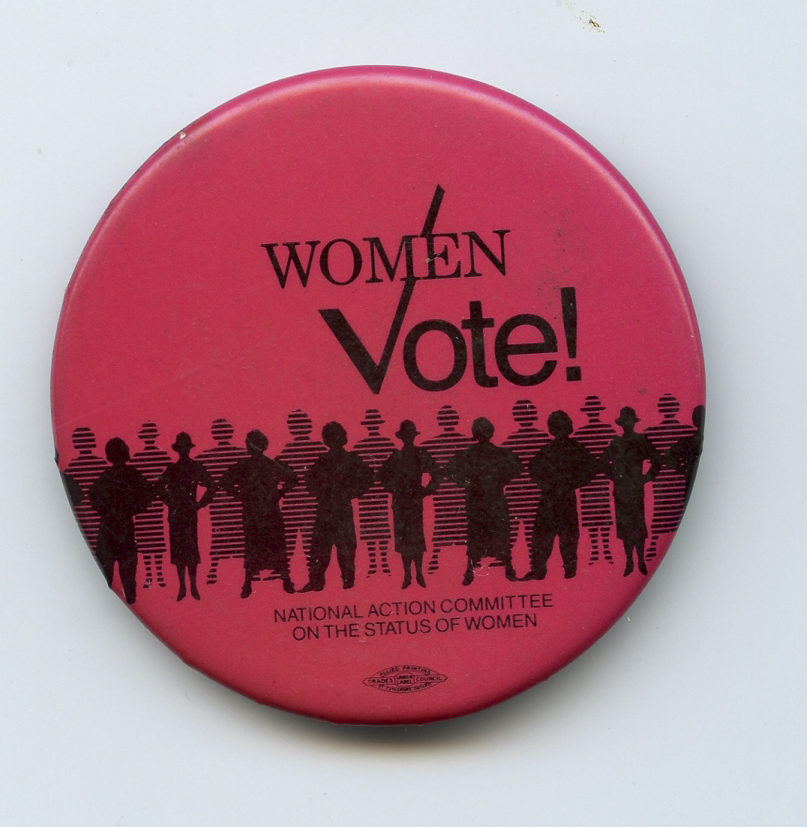
-
Article
Statute of Westminster, 1931
The Statute of Westminster is a British law that was passed on 11 December 1931. It was Canada’s all-but-final achievement of independence from Britain. It enacted recommendations from the Balfour Report of 1926, which had declared that Britain and its Dominions were constitutionally “equal in status.” The Statute of Westminster gave Canada and the other Commonwealth Dominions legislative equality with Britain. They now had full legal freedom except in areas of their choosing. The Statute also clarified the powers of Canada’s Parliament and those of the other Dominions. (See also Editorial: The Statute of Westminster, Canada’s Declaration of Independence.)
"https://d3d0lqu00lnqvz.cloudfront.net/media/media/fb8b6e92-b549-4842-8b58-76626f1e9087.jpg" // resources/views/front/categories/view.blade.php
https://d3d0lqu00lnqvz.cloudfront.net/media/media/fb8b6e92-b549-4842-8b58-76626f1e9087.jpg
-
Article
Statute of Westminster 1931 Document
Statute of Westminster, 1931: DocumentSelected text of the Statute of Westminster:An Act to give effect to certain resolutions passed by Imperial Conferences held in the years 1926 and 1930 Whereas the delegates to His Majesty's Governments in the United Kingdom, the Dominion of Canada, the Commonwealth of Australia, the Dominion of New Zealand, the Union of South Africa, the Irish Free State and Newfoundland, at Imperial Conferences holden at Westminster in the years of our...
"https://thecanadianencyclopedia.ca/images/tce_placeholder.jpg?v=e9dca980c9bdb3aa11e832e7ea94f5d9" // resources/views/front/categories/view.blade.php
https://thecanadianencyclopedia.ca/images/tce_placeholder.jpg?v=e9dca980c9bdb3aa11e832e7ea94f5d9
-
Editorial
Editorial: The Statute of Westminster, Canada's Declaration of Independence
The following article is an editorial written by The Canadian Encyclopedia staff. Editorials are not usually updated. In the fall of 1929, Canada’s Minister of Justice, Ernest Lapointe, travelled to England. He took with him Dr. Oscar Skelton — the “elder statesman” of the Canadian civil service, as William Lyon Mackenzie King once described him. When Lapointe and Skelton were done their negotiations, they had confirmed that Canada would have its independence from the British Empire.
"https://d3d0lqu00lnqvz.cloudfront.net/media/media/43cb3921-bb9b-4a07-818d-0f1dfeb80b26.jpg" // resources/views/front/categories/view.blade.php
https://d3d0lqu00lnqvz.cloudfront.net/media/media/43cb3921-bb9b-4a07-818d-0f1dfeb80b26.jpg
-
Article
Steven Truscott Case
At the age of 14, Steven Truscott was wrongly convicted of killing his 12-year-old schoolmate Lynne Harper. Five decades later he was exonerated.
"https://d3d0lqu00lnqvz.cloudfront.net/media/media/3623c200-158f-4385-9756-3c4900055fcf.jpg" // resources/views/front/categories/view.blade.php
https://d3d0lqu00lnqvz.cloudfront.net/media/media/3623c200-158f-4385-9756-3c4900055fcf.jpg
-
Article
Stillman Case
In the Stillman case (1997), a majority of the Supreme Court of Canada held that the common law power to carry out a search incidental to an arrest did not include the right to forcibly seize samples of body substances.
"https://thecanadianencyclopedia.ca/images/tce_placeholder.jpg?v=e9dca980c9bdb3aa11e832e7ea94f5d9" // resources/views/front/categories/view.blade.php
https://thecanadianencyclopedia.ca/images/tce_placeholder.jpg?v=e9dca980c9bdb3aa11e832e7ea94f5d9
-
Article
Stinchcombe Case
The Supreme Court delineated, in the Stinchcombe case (1991), the legal parameters of a full and complete defence, as guaranteed by section 7 of the Canadian Charter of Rights and Freedoms. This had the effect of eliminating the legal uncertainty surrounding the disclosure of evidence by the Crown.
"https://thecanadianencyclopedia.ca/images/tce_placeholder.jpg?v=e9dca980c9bdb3aa11e832e7ea94f5d9" // resources/views/front/categories/view.blade.php
https://thecanadianencyclopedia.ca/images/tce_placeholder.jpg?v=e9dca980c9bdb3aa11e832e7ea94f5d9
-
Article
Stornoway
Stornoway is the official residence of Canada’s federal leader of the Opposition. It is located at 541 Acacia Ave in the village of Rockcliffe Park in Ottawa. Purchased in 1950 by a private trust, Stornoway has been owned by the Government of Canada since 1970 and managed by the National Capital Commission since 1986. Leader of the Conservative Party and the Official Opposition Pierre Poilievre and his family reside in Stornoway since 2022.
"https://d3d0lqu00lnqvz.cloudfront.net/media/media/d2b6590d-341d-4404-9720-e10d3b91116b.jpg" // resources/views/front/categories/view.blade.php
https://d3d0lqu00lnqvz.cloudfront.net/media/media/d2b6590d-341d-4404-9720-e10d3b91116b.jpg
-
Article
Strikes and Lockouts
A strike is the withholding of labour by workers in order to obtain better wages or working conditions. A lockout is the opposite, being the temporary shutdown of a business by an employer to compel employees to accept certain conditions.
"https://d3d0lqu00lnqvz.cloudfront.net/media/media/c762eef7-88b7-40c9-afbe-91aa60ae56dd.jpg" // resources/views/front/categories/view.blade.php
https://d3d0lqu00lnqvz.cloudfront.net/media/media/c762eef7-88b7-40c9-afbe-91aa60ae56dd.jpg
-
Article
Student Rights
Basically 2 sorts of rights apply to students: substantive rights - the actual rights that students should enjoy - and procedural rights - methods by which students claim their rights.
"https://thecanadianencyclopedia.ca/images/tce_placeholder.jpg?v=e9dca980c9bdb3aa11e832e7ea94f5d9" // resources/views/front/categories/view.blade.php
https://thecanadianencyclopedia.ca/images/tce_placeholder.jpg?v=e9dca980c9bdb3aa11e832e7ea94f5d9
-
Article
Succession (Wills)
When a person dies, that person's property or its value is transferred to the persons entitled to it after payment of any outstanding debts and liabilities; this process is described as succession.
"https://thecanadianencyclopedia.ca/images/tce_placeholder.jpg?v=e9dca980c9bdb3aa11e832e7ea94f5d9" // resources/views/front/categories/view.blade.php
https://thecanadianencyclopedia.ca/images/tce_placeholder.jpg?v=e9dca980c9bdb3aa11e832e7ea94f5d9