
Browse "Politics & Law"
-
Macleans
Security Improved at 24 Sussex
Some things will have changed around the house by the time Prime Minister Jean Chrétien returns home to Ottawa on Nov. 19 from the Commonwealth heads of government meeting in New Zealand and his other travels in Asia.This article was originally published in Maclean's Magazine on November 20, 1995
"https://thecanadianencyclopedia.ca/images/tce_placeholder.jpg?v=e9dca980c9bdb3aa11e832e7ea94f5d9" // resources/views/front/categories/view.blade.php
https://thecanadianencyclopedia.ca/images/tce_placeholder.jpg?v=e9dca980c9bdb3aa11e832e7ea94f5d9
-
Macleans
Segal Enters Tory Leadership Race
The backroom boy is in. So is the dark horse. As expected, Hugh Segal, the consummate Tory fixer, announced his run for the federal party leadership last week, followed in short order by Brian Pallister, the former Manitoba cabinet minister.This article was originally published in Maclean's Magazine on June 22, 1998
"https://thecanadianencyclopedia.ca/images/tce_placeholder.jpg?v=e9dca980c9bdb3aa11e832e7ea94f5d9" // resources/views/front/categories/view.blade.php
https://thecanadianencyclopedia.ca/images/tce_placeholder.jpg?v=e9dca980c9bdb3aa11e832e7ea94f5d9
-
Editorial
Senate: Canada's Best Think Tank
The following article is an editorial written by The Canadian Encyclopedia staff. Editorials are not usually updated.
"https://d3d0lqu00lnqvz.cloudfront.net/media/media/c19d86a2-25d9-49fa-b11e-f7544e8c71f2.jpg" // resources/views/front/categories/view.blade.php
https://d3d0lqu00lnqvz.cloudfront.net/media/media/c19d86a2-25d9-49fa-b11e-f7544e8c71f2.jpg
-
Article
Sentencing Hate Crimes
For many offences, the Criminal Code prescribes only maximum sentences, giving judges wide latitude to determine fit penalties. Judges consider a broad array of aggravating and mitigating factors in sentencing. One aggravating factor is the motivation of racial or group hatred for an offence.
"https://thecanadianencyclopedia.ca/images/tce_placeholder.jpg?v=e9dca980c9bdb3aa11e832e7ea94f5d9" // resources/views/front/categories/view.blade.php
https://thecanadianencyclopedia.ca/images/tce_placeholder.jpg?v=e9dca980c9bdb3aa11e832e7ea94f5d9
-
Article
Sexual Abuse of Children
Sexual abuse of children has been defined in Ontario as abuse that includes "any sexual intercourse, sexual molestation, exhibitionism or sexual exploitation involving a child that could be a violation of the Criminal Code or render the child in need of protection under the Child Welfare Act.
"https://thecanadianencyclopedia.ca/images/tce_placeholder.jpg?v=e9dca980c9bdb3aa11e832e7ea94f5d9" // resources/views/front/categories/view.blade.php
https://thecanadianencyclopedia.ca/images/tce_placeholder.jpg?v=e9dca980c9bdb3aa11e832e7ea94f5d9
-
Article
Sexual Assault
Until it was amended in 1982 the Criminal Code contained the offence of rape. The offence required proof that a man had sexual intercourse with a woman other than his wife without the woman's consent. It was punishable by up to life imprisonment.
"https://thecanadianencyclopedia.ca/images/tce_placeholder.jpg?v=e9dca980c9bdb3aa11e832e7ea94f5d9" // resources/views/front/categories/view.blade.php
https://thecanadianencyclopedia.ca/images/tce_placeholder.jpg?v=e9dca980c9bdb3aa11e832e7ea94f5d9
-
Macleans
Sexual Harassment on Police Force
This article was originally published in Maclean’s magazine on April 10, 1995. Partner content is not updated. For Alice Clark, joining the RCMP in 1980 was the fulfilment of a teenage dream. Two years later, the Hamilton native was posted to the 60-member detachment at Red Deer, Alta., where, at first, the men she worked with were welcoming and helpful. Then, she was transferred to city traffic duty.
"https://thecanadianencyclopedia.ca/images/tce_placeholder.jpg?v=e9dca980c9bdb3aa11e832e7ea94f5d9" // resources/views/front/categories/view.blade.php
https://thecanadianencyclopedia.ca/images/tce_placeholder.jpg?v=e9dca980c9bdb3aa11e832e7ea94f5d9
-
Article
Sheriff
Sheriff Sheriff In each county and judicial district in Canada sheriffs, appointed by the lieutenant-governor-in-council, serve processes (eg, writs of summonses); attend upon supreme and county court judges and maintain order in the courts (performed by constables); execute judgements, eg, seizing the judgement debtor's goods (performed by BAILIFFS); summon and supervise JURIES, and take custody of noncriminal prisoners.
"https://thecanadianencyclopedia.ca/images/tce_placeholder.jpg?v=e9dca980c9bdb3aa11e832e7ea94f5d9" // resources/views/front/categories/view.blade.php
https://thecanadianencyclopedia.ca/images/tce_placeholder.jpg?v=e9dca980c9bdb3aa11e832e7ea94f5d9
-
Macleans
Sikh Editor Murdered
The sheer cowardice of the act was chilling. Someone, it appears, waited in the dusk that comes early this time of year for Tara Singh Hayer, the editor of North Americas largest Punjabi-language newspaper, to return to his home in Surrey, B.C., at the end of the workday on Nov. 18.This article was originally published in Maclean's Magazine on November 30, 1998
"https://thecanadianencyclopedia.ca/images/tce_placeholder.jpg?v=e9dca980c9bdb3aa11e832e7ea94f5d9" // resources/views/front/categories/view.blade.php
https://thecanadianencyclopedia.ca/images/tce_placeholder.jpg?v=e9dca980c9bdb3aa11e832e7ea94f5d9
-
Article
Singh Case
In the 1985 Singh case (Singh v. Minister of Employment and Immigration), the Supreme Court of Canada ruled that the legal guarantees of the Charter of Rights and Freedoms apply to “everyone” physically present in Canada, including foreign asylum seekers. The court also found that refugees have the right to a full oral hearing of their claims before being either admitted into the country or deported. The decision drastically changed the way refugees are dealt with in Canada. (See also Canadian Refugee Policy.)
"https://d3d0lqu00lnqvz.cloudfront.net/media/media/7ac02b0f-118b-4ccb-b6dc-81f218b68954.jpg" // resources/views/front/categories/view.blade.php
https://d3d0lqu00lnqvz.cloudfront.net/media/media/7ac02b0f-118b-4ccb-b6dc-81f218b68954.jpg
-
Article
Sinnisiak
Sinnisiak (d c 1930) and Uluksuk (d 1924), Inuit hunters from the Coppermine region of the NWT, were the first Inuit to be tried for murder under Canadian law.
"https://thecanadianencyclopedia.ca/images/tce_placeholder.jpg?v=e9dca980c9bdb3aa11e832e7ea94f5d9" // resources/views/front/categories/view.blade.php
https://thecanadianencyclopedia.ca/images/tce_placeholder.jpg?v=e9dca980c9bdb3aa11e832e7ea94f5d9
-
Article
Sioui Case
The Supreme Court of Canada ruling in the R. v. Sioui case on 24 May 1990 transformed understandings of treaty interpretations in Canada. Four Huron-Wendat brothers were charged and convicted of illegally camping, starting fires and cutting down trees in Jacques-Cartier Park in Québec. The Supreme Court found that the brothers were justified in arguing that a document signed by General James Murray and the Huron-Wendat chief in 1760 protected their right to use the land for ceremonial purposes and overturned the convictions.
"https://d3d0lqu00lnqvz.cloudfront.net/media/media/7fcab8e5-f524-4202-83cf-ebd903262d70.jpg" // resources/views/front/categories/view.blade.php
https://d3d0lqu00lnqvz.cloudfront.net/media/media/7fcab8e5-f524-4202-83cf-ebd903262d70.jpg
-
Article
Sixties Scoop (Plain-Language Summary)
The term “Sixties Scoop” refers to the large numbers of Indigenous children who were taken from their homes (scooped) throughout the 1960s. Most of these children were adopted by non-Indigenous families in Canada and the United States. The “Sixties Scoop” has left a lasting legacy on the children, families and communities involved. This article is a plain-language summary of the Sixties Scoop. If you are interested in reading about this topic more in depth, please see our full-length entry, Sixties Scoop.
"https://d3d0lqu00lnqvz.cloudfront.net/media/media/9fee628e-1ce5-4c82-9ebb-d5b2764b09c4.jpg" // resources/views/front/categories/view.blade.php
https://d3d0lqu00lnqvz.cloudfront.net/media/media/9fee628e-1ce5-4c82-9ebb-d5b2764b09c4.jpg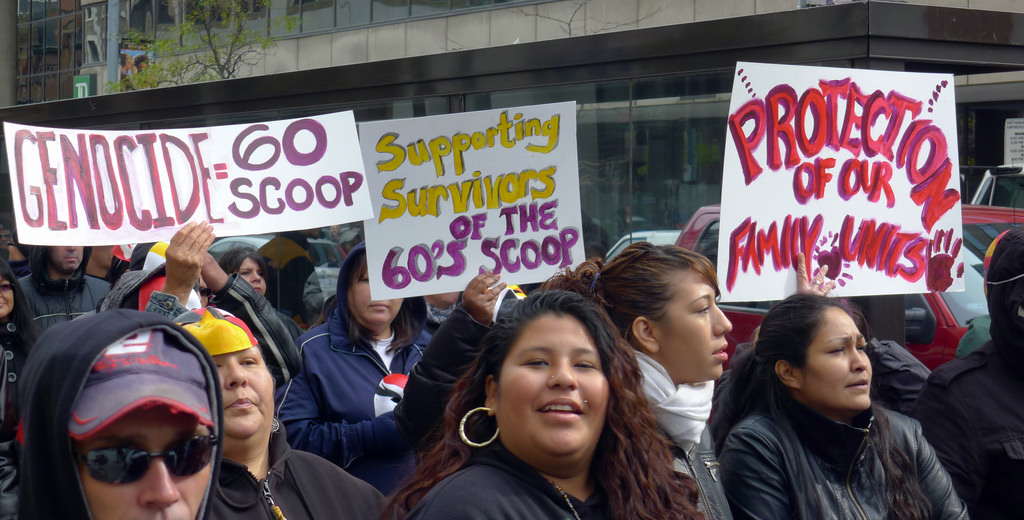
-
Editorial
Sixty Years On, Korean War Still Echoes
When is a war not a war? For the Korean War, the answer is not always clear. This year, 2013, marks the 60th anniversary of the ceasefire of a war that not everyone describes that way. It had ambiguous beginnings, more than 20 participating countries, and still no formal end. But some things are evident. This year, Historica Canada is commemorating this sometimes-forgotten but still-resonant period of our recent history, and Canada’s role therein. Our country sent more than 26,000 members of our military to the Korean “theatre.” More than 500 Canadians died, and another 1,000 were wounded; 32 became prisoners of war.
"https://thecanadianencyclopedia.ca/images/tce_placeholder.jpg?v=e9dca980c9bdb3aa11e832e7ea94f5d9" // resources/views/front/categories/view.blade.php
https://thecanadianencyclopedia.ca/images/tce_placeholder.jpg?v=e9dca980c9bdb3aa11e832e7ea94f5d9
-
Article
Slavery Abolition Act, 1833
An Act for the Abolition of Slavery throughout the British Colonies; for promoting the Industry of the manumitted slaves; and for compensating the Persons hitherto entitled to the Service of such Slaves (also known as the Slavery Abolition Act) received Royal Assent on 28 August 1833 and took effect 1 August 1834. The Act abolished enslavement in most British colonies, freeing over 800,000 enslaved Africans in the Caribbean and South Africa as well as a small number in Canada.
"https://d3d0lqu00lnqvz.cloudfront.net/media/media/9ea57f84-ae9c-45f6-97a9-ee077202abee.jpg" // resources/views/front/categories/view.blade.php
https://d3d0lqu00lnqvz.cloudfront.net/media/media/9ea57f84-ae9c-45f6-97a9-ee077202abee.jpg