
Browse "Politics & Law"
-
Article
Same-Sex Marriage in Canada
In 2003, Ontario and British Columbia became the first two provinces to legalize same-sex marriage. The federal Civil Marriage Act came into force on 20 July 2005, making same-sex marriage legal across Canada. Canada became the third country to permit same-sex marriages, after the Netherlands (2000) and Belgium (2003). Since then, all provinces in Canada have recognized same-sex marriages. Marriage itself falls under federal jurisdiction in Canada. But the provinces regulate the solemnization of marriage (the formal ceremony that is either civil or religious). They also grant marriage licenses. The Supreme Court has ruled that under the Charter of Rights and Freedoms, a religious official cannot be legally compelled to perform same-sex marriages if it is contrary to their religious beliefs.
"https://d3d0lqu00lnqvz.cloudfront.net/media/media/46a3c4ec-a503-4e72-bba8-c78f5fcd885a.jpg" // resources/views/front/categories/view.blade.php
https://d3d0lqu00lnqvz.cloudfront.net/media/media/46a3c4ec-a503-4e72-bba8-c78f5fcd885a.jpg
-
Article
Saskatchewan Bill of Rights
The Saskatchewan Bill of Rights came into force on 1 May 1947. Written primarily by lawyer and human rights advocate Morris Shumiatcher, it was enacted by the CCF government led by Premier Tommy Douglas. While critics have debated its efficacy, it remains important because it was Canada’s first bill of rights; it predated the Canadian Bill of Rights (1960), Quebec’s Charter of Human Rights and Freedoms (1975) and the Canadian Charter of Rights and Freedoms (1982).
"https://d3d0lqu00lnqvz.cloudfront.net/media/media/70c52f68-faf0-4d61-b849-c0bf34342d19.jpg" // resources/views/front/categories/view.blade.php
https://d3d0lqu00lnqvz.cloudfront.net/media/media/70c52f68-faf0-4d61-b849-c0bf34342d19.jpg
-
Article
Saskatchewan Doctors' Strike
The Saskatchewan Medical Care Insurance Bill was introduced in the Legislature 13 Oct 1961, and received royal assent 17 Nov 1961, after Woodrow S. LLOYD had replaced Douglas as premier. It was to come into force April 1, but this was amended, later, to 1 July 1962.
"https://d3d0lqu00lnqvz.cloudfront.net/media/media/88cc44c6-bfc5-41bd-894a-9734f479ff16.jpg" // resources/views/front/categories/view.blade.php
https://d3d0lqu00lnqvz.cloudfront.net/media/media/88cc44c6-bfc5-41bd-894a-9734f479ff16.jpg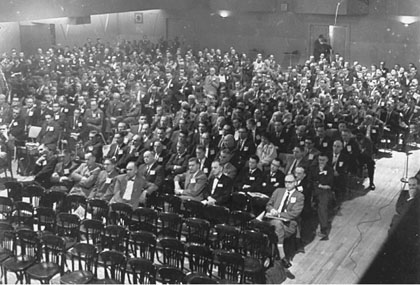
-
Article
Saskatchewan Electoral Boundaries (Reference)
The reference on Saskatchewan electoral boundaries (1991) comprised an important decision by the Supreme Court on the right to vote as set out in the Canadian Charter of Rights and Freedoms.
"https://thecanadianencyclopedia.ca/images/tce_placeholder.jpg?v=e9dca980c9bdb3aa11e832e7ea94f5d9" // resources/views/front/categories/view.blade.php
https://thecanadianencyclopedia.ca/images/tce_placeholder.jpg?v=e9dca980c9bdb3aa11e832e7ea94f5d9
-
Article
Saskatchewan Party
The Saskatchewan Party is a provincial political party formed in 1997 by a coalition of Liberals and Progressive Conservatives seeking to offer a viable governing alternative to the New Democratic Party (NDP). Since 2007, the Saskatchewan Party has won three straight elections, holding power in the province under leader and Premier Brad Wall. In 2018, Wall stepped down and was replaced as premier and party leader by Scott Moe, who served in Wall’s executive council from 2014 to 2017.
"https://d3d0lqu00lnqvz.cloudfront.net/media/media/edccdafa-2a7e-480a-b080-ae9129f54094.jpg" // resources/views/front/categories/view.blade.php
https://d3d0lqu00lnqvz.cloudfront.net/media/media/edccdafa-2a7e-480a-b080-ae9129f54094.jpg
-
Macleans
Saskatchewan Tories in Fraud Scandal
This article was originally published in Maclean’s magazine on November 18, 1996. Partner content is not updated. For many, those three words, uttered by the villainous financier Gordon Gekko in Oliver Stone's 1987 film Wall Street, sum up the Eighties - a decade of excess, self-aggrandizement and corruption.
"https://d3d0lqu00lnqvz.cloudfront.net/media/media/8bdca0df-28e7-4959-8f38-3ff61ff15381.jpg" // resources/views/front/categories/view.blade.php
https://d3d0lqu00lnqvz.cloudfront.net/media/media/8bdca0df-28e7-4959-8f38-3ff61ff15381.jpg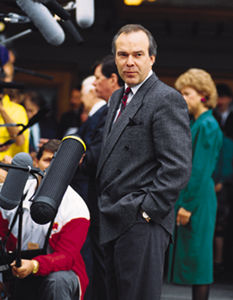
-
Article
Saumur v City of Québec
The Supreme Court, by a 5-4 majority, upheld (1953) the province of Québec's power, challenged by JEHOVAH'S WITNESS Laurier Saumur, to authorize municipalities to prohibit distribution, without police permission, of all publications in the streets.
"https://thecanadianencyclopedia.ca/images/tce_placeholder.jpg?v=e9dca980c9bdb3aa11e832e7ea94f5d9" // resources/views/front/categories/view.blade.php
https://thecanadianencyclopedia.ca/images/tce_placeholder.jpg?v=e9dca980c9bdb3aa11e832e7ea94f5d9
-
Article
Sayer Trial
Pierre-Guillaume Sayer and three other Métis in the Red River Colony were brought to trial on 17 May 1849 in the General Quarterly Court of Assiniboia on charges of violating the Hudson's Bay Company's charter by illegally trafficking in furs.
"https://thecanadianencyclopedia.ca/images/tce_placeholder.jpg?v=e9dca980c9bdb3aa11e832e7ea94f5d9" // resources/views/front/categories/view.blade.php
https://thecanadianencyclopedia.ca/images/tce_placeholder.jpg?v=e9dca980c9bdb3aa11e832e7ea94f5d9
-
Article
Schreiber Case
In the Schreiber case (1998), the majority of the Supreme Court of Canada held that an order requiring the seizure of bank documents, made by the Canadian minister of justice and despatched to the Swiss authorities, did not involve the application of the Canadian Charter of Rights and Freedoms and did not derogate from Article 8 of the Charter. The majority was of the opinion that the Charter did not apply to a foreign government....
"https://thecanadianencyclopedia.ca/images/tce_placeholder.jpg?v=e9dca980c9bdb3aa11e832e7ea94f5d9" // resources/views/front/categories/view.blade.php
https://thecanadianencyclopedia.ca/images/tce_placeholder.jpg?v=e9dca980c9bdb3aa11e832e7ea94f5d9
-
Article
Science Policy
Science PolicyScience policy is a term which came into use in the 1960s to denote the co-ordinated measures that should be taken by governments to promote the development of scientific and technological research and, especially, to guide the exploitation of research results to further national economic growth and welfare. State patronage of SCIENCE and TECHNOLOGY was not new; indeed it has a long history. What was new was the growing sense, among the public and...
"https://thecanadianencyclopedia.ca/images/tce_placeholder.jpg?v=e9dca980c9bdb3aa11e832e7ea94f5d9" // resources/views/front/categories/view.blade.php
https://thecanadianencyclopedia.ca/images/tce_placeholder.jpg?v=e9dca980c9bdb3aa11e832e7ea94f5d9
-
Macleans
Scott Talks His Way into Trouble
There is plenty to gossip about at the Lord Beaverbrook Hotel in Fredericton these days. For years, a collection of local lawyers, businessmen, politicians and backroom party types - most of them Liberals - have gathered Saturday mornings in the hotels restaurant to sip coffee and discuss politics.This article was originally published in Maclean's Magazine on October 19, 1998
"https://thecanadianencyclopedia.ca/images/tce_placeholder.jpg?v=e9dca980c9bdb3aa11e832e7ea94f5d9" // resources/views/front/categories/view.blade.php
https://thecanadianencyclopedia.ca/images/tce_placeholder.jpg?v=e9dca980c9bdb3aa11e832e7ea94f5d9
-
Article
Seafarers' International Union
Seafarers' International Union In 1949, supported by the federal government and some union leaders and shipping executives, an unsavoury ex-convict was allowed into Canada to destroy the powerful, communist-dominated Canadian Seamen's Union.
"https://thecanadianencyclopedia.ca/images/tce_placeholder.jpg?v=e9dca980c9bdb3aa11e832e7ea94f5d9" // resources/views/front/categories/view.blade.php
https://thecanadianencyclopedia.ca/images/tce_placeholder.jpg?v=e9dca980c9bdb3aa11e832e7ea94f5d9
-
Article
Section 94 BC Vehicle Act Reference
By virtue of par 94(2) of the Motor Vehicle Act of British Columbia, anyone who drives his vehicle without a valid permit or while his permit is suspended commits an infraction for which the minimum penalty is a prison sentence.
"https://thecanadianencyclopedia.ca/images/tce_placeholder.jpg?v=e9dca980c9bdb3aa11e832e7ea94f5d9" // resources/views/front/categories/view.blade.php
https://thecanadianencyclopedia.ca/images/tce_placeholder.jpg?v=e9dca980c9bdb3aa11e832e7ea94f5d9
-
Article
Section 98 Criminal Code
Section 98 was an offence in the CRIMINAL CODE of Canada from 1919 to 1936. The section was drafted in 1919 in response to the general labour unrest in the country, which culminated in the WINNIPEG GENERAL STRIKE.
"https://thecanadianencyclopedia.ca/images/tce_placeholder.jpg?v=e9dca980c9bdb3aa11e832e7ea94f5d9" // resources/views/front/categories/view.blade.php
https://thecanadianencyclopedia.ca/images/tce_placeholder.jpg?v=e9dca980c9bdb3aa11e832e7ea94f5d9
-
Macleans
Security High for G8 Summit
"A revolution is not a dinner party, or writing an essay, or painting a picture, or doing embroidery; it cannot be so refined, so leisurely and gentle.This article was originally published in Maclean's Magazine on June 17, 2002
"https://thecanadianencyclopedia.ca/images/tce_placeholder.jpg?v=e9dca980c9bdb3aa11e832e7ea94f5d9" // resources/views/front/categories/view.blade.php
https://thecanadianencyclopedia.ca/images/tce_placeholder.jpg?v=e9dca980c9bdb3aa11e832e7ea94f5d9