
Browse "Politics & Law"
-
Article
Political Protest
Political protest is the kind of political activity, eg, demonstrations, strikes and even VIOLENCE, usually but not always undertaken by those who lack access to the resources of organized PRESSURE GROUPS, or by those whose values conflict sharply with those of the dominant ELITE.
"https://d3d0lqu00lnqvz.cloudfront.net/media/media/1a569bb1-9267-494b-9b5f-614e5ded3171.jpg" // resources/views/front/categories/view.blade.php
https://d3d0lqu00lnqvz.cloudfront.net/media/media/1a569bb1-9267-494b-9b5f-614e5ded3171.jpg
-
Article
Political Science
Political SciencePolitical science has been defined as the systematic study of government processes by the application of scientific methods to political events, but this rather narrow definition has been questioned by those who believe that power and its organization in human relations is the subject matter of political science, and that power is a phenomenon that may be studied in forms of human association other than the state. Toward the middle of the 20th century,...
"https://thecanadianencyclopedia.ca/images/tce_placeholder.jpg?v=e9dca980c9bdb3aa11e832e7ea94f5d9" // resources/views/front/categories/view.blade.php
https://thecanadianencyclopedia.ca/images/tce_placeholder.jpg?v=e9dca980c9bdb3aa11e832e7ea94f5d9
-
Article
Political Songs
In contrast to patriotic songs, which are broad in appeal and generally avoid controversy, political songs usually display intense partisanship and relate to specific events or situations, such as elections, strikes, unemployment, racism or discrimination. They vent grievances and scorn, often through satire, and are meant to boost morale and rouse support.
"https://thecanadianencyclopedia.ca/images/tce_placeholder.jpg?v=e9dca980c9bdb3aa11e832e7ea94f5d9" // resources/views/front/categories/view.blade.php
https://thecanadianencyclopedia.ca/images/tce_placeholder.jpg?v=e9dca980c9bdb3aa11e832e7ea94f5d9
-
Article
Political Violence
Political violence refers to the use of physical force to achieve or prevent political or economic change. In this specific sense, Canada (as compared to the US) has been a "peaceable kingdom." There has been no bloody revolution or massive civil war and very little of the "lawless West.
"https://thecanadianencyclopedia.ca/images/tce_placeholder.jpg?v=e9dca980c9bdb3aa11e832e7ea94f5d9" // resources/views/front/categories/view.blade.php
https://thecanadianencyclopedia.ca/images/tce_placeholder.jpg?v=e9dca980c9bdb3aa11e832e7ea94f5d9
-
Article
Politics
Politics broadly refers to any or all conflicts among human beings over the allocation of power, wealth or prestige, when interests are pursued by means other than the use of physical violence.
"https://thecanadianencyclopedia.ca/images/tce_placeholder.jpg?v=e9dca980c9bdb3aa11e832e7ea94f5d9" // resources/views/front/categories/view.blade.php
https://thecanadianencyclopedia.ca/images/tce_placeholder.jpg?v=e9dca980c9bdb3aa11e832e7ea94f5d9
-
Article
Politics in Manitoba
In the Manitoba provincial election on 3 October 2023, Wab Kinew and the New Democratic Party (NDP) won a majority government with 34 seats. Kinew, a 41-year-old Anishinaabe man, became the first First Nations person to be elected premier of a Canadian province. The Progressive Conservative Party was reduced from 35 seats to 22, while the Liberal Party won one seat. Manitoba’s lieutenant-governor is Anita R. Neville.
"https://d3d0lqu00lnqvz.cloudfront.net/PoliticsInManitoba/JohnNorquay.jpg" // resources/views/front/categories/view.blade.php
https://d3d0lqu00lnqvz.cloudfront.net/PoliticsInManitoba/JohnNorquay.jpg
-
Article
Politics in Nova Scotia
The province of Nova Scotia has a majority Progressive Conservative government, formed on 17 August 2021. The premier of the province is Tim Houston and the lieutenant-governor is Arthur J. LeBlanc. Among Nova Scotia’s contributions to Canadian politics was the movement for responsible government, initiated by Joseph Howe, a political reformer, in 1836. In 1848, politicians in Nova Scotia formed the first responsible government in British North America.
"https://d3d0lqu00lnqvz.cloudfront.net/media/media/PoliticsInNovaScotia/NovaScotiaLegislature.jpg" // resources/views/front/categories/view.blade.php
https://d3d0lqu00lnqvz.cloudfront.net/media/media/PoliticsInNovaScotia/NovaScotiaLegislature.jpg
-
Article
Politics in Ontario
The province of Ontario has a majority Progressive Conservative government, formed on 2 June 2022. The premier of the province is Doug Ford and the lieutenant-governor is Edith Dumont. Its first premier, John Sandfield Macdonald, began his term in 1867, after the province joined Confederation. Between the start of European colonization and Confederation, the southern portion of what is now Ontario was controlled first by the French and then by the British, while much of the northern part was controlled by the Hudson’s Bay Company. Ontario (Upper Canada) received representative government in 1791, from which time the colony was governed by a House of Assembly, a lieutenant-governor, and executive and legislative councils. In 1848, Ontario (Canada West) received responsible government. From this point the colony was governed by a House of Assembly, premier, and executive and legislative councils.
"https://d3d0lqu00lnqvz.cloudfront.net/media/new_article_images/PoliticsInOntario/4020282813_0d55174918_c.jpg" // resources/views/front/categories/view.blade.php
https://d3d0lqu00lnqvz.cloudfront.net/media/new_article_images/PoliticsInOntario/4020282813_0d55174918_c.jpg
-
Article
Quebec Immigration Policy
The distinction is often made between the immigration policy of Quebec, that of Canada (see Immigration Policy in Canada) and that of other provinces. The particularities of the Québécois policy are essentially rooted in history, language, and culture. Despite these differences, immigration plays just as important a role in the Québécois society as it does elsewhere in the country. From 2015 to 2019, Quebec welcomed almost 250,000 permanent immigrants. Every year, the province also hosts thousands of temporary foreign workers, three quarters of whom find employment in the greater metropolitan area of Montreal. (See Canada’s Temporary Foreign Worker Programs.)
"https://d3d0lqu00lnqvz.cloudfront.net/media/media/e010974968-v8.jpg" // resources/views/front/categories/view.blade.php
https://d3d0lqu00lnqvz.cloudfront.net/media/media/e010974968-v8.jpg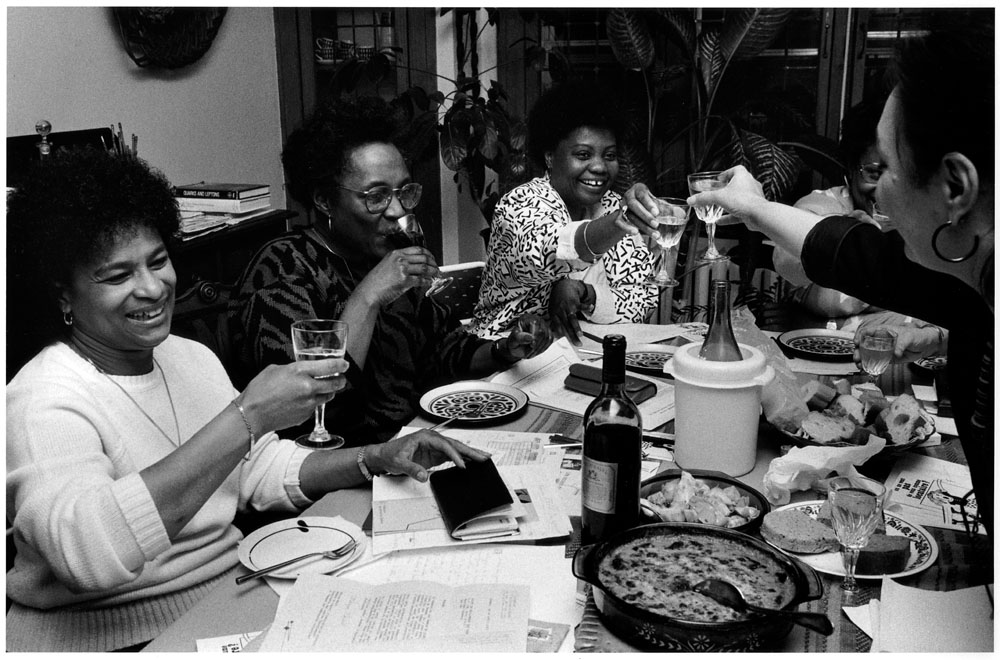
-
Article
École Polytechnique Tragedy (Montreal Massacre)
On 6 December 1989, a man entered a mechanical engineering classroom at Montreal’s École Polytechnique armed with a semi-automatic weapon. After separating the women from the men, he opened fire on the women while screaming, “You are all feminists.” Fourteen young women were murdered, and 13 other people were wounded. The shooter then turned the gun on himself. In his suicide note, he blamed feminists for ruining his life. The note contained a list of 19 “radical feminists” who he said would have been killed had he not run out of time. It included the names of well-known women in Quebec, including journalists, television personalities and union leaders.
"https://d3d0lqu00lnqvz.cloudfront.net/media/media/e46a9a44-231e-4000-8a86-dae26e0d9a25.jpg" // resources/views/front/categories/view.blade.php
https://d3d0lqu00lnqvz.cloudfront.net/media/media/e46a9a44-231e-4000-8a86-dae26e0d9a25.jpg
-
Article
Populism in Canada
Populism is a political ideology or movement that champions the idea of “the people,” usually in opposition to an established elite. It is often considered a right-wing ideology, but there are left-wing populists as well. Populism has a long history in Canada and continues to be an important factor in Canadian political culture and public life. In Canada, there have been right-wing populist parties (e.g., Social Credit Party, Créditistes, Reform) and left-wing populist parties (e.g., United Farmers of Alberta, Co-operative Commonwealth Federation). Although populism can be difficult to define, all populists claim to speak on behalf of ordinary people who have been let down in some way by an elite establishment.
"https://d3d0lqu00lnqvz.cloudfront.net/media/media/54ccbe27-ab03-4b87-9aad-53191602fb20.jpg" // resources/views/front/categories/view.blade.php
https://d3d0lqu00lnqvz.cloudfront.net/media/media/54ccbe27-ab03-4b87-9aad-53191602fb20.jpg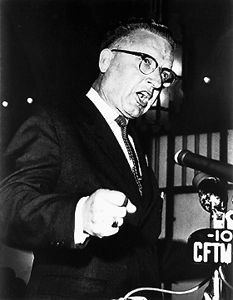
-
Macleans
Postal Strike Ends
At Golfinn Internationals offices in Brampton, Ont., Dave Finn is busily scratching numbers on a notepad, trying to arrive at some reasonably accurate estimate of the damage.This article was originally published in Maclean's Magazine on December 15, 1997
"https://thecanadianencyclopedia.ca/images/tce_placeholder.jpg?v=e9dca980c9bdb3aa11e832e7ea94f5d9" // resources/views/front/categories/view.blade.php
https://thecanadianencyclopedia.ca/images/tce_placeholder.jpg?v=e9dca980c9bdb3aa11e832e7ea94f5d9
-
Article
Potlatch Ban
From 1885 to 1951, the Indigenous ceremony known as the Potlatch was banned by the federal government of Canada. The government justified their decision to ban the Potlatch because they believed it was preventing the assimilation of Indigenous Peoples. Today, this ban is recognized as an aspect of cultural genocide (see Genocide and Indigenous Peoples in Canada). Though the Potlatch was illegal during this period of time, the ban was only ever sporadically enforced. This was in part a result of the vagueness of the wording of the law. The law was rewritten and prosecutions increased. In 1922, Indian agents, aided by police, arrested individuals who had participated in a Potlatch held in the community of ʼMimkwa̱mlis. They arrested 45 people. Ultimately, this resulted in imprisonment and the confiscation of hundreds of precious ceremonial objects.
"https://d3d0lqu00lnqvz.cloudfront.net/media/media/f2fed9a9-c6dc-429a-80cd-98e6c7825449.jpg" // resources/views/front/categories/view.blade.php
https://d3d0lqu00lnqvz.cloudfront.net/media/media/f2fed9a9-c6dc-429a-80cd-98e6c7825449.jpg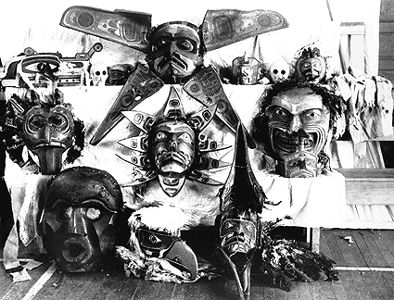
-
Macleans
Power Deal
Tobin's chipper words aside, there remain daunting hurdles to overcome if the premier's power play is to become a reality by 2007, the target completion date.This article was originally published in Maclean's Magazine on March 23, 1998
"https://d3d0lqu00lnqvz.cloudfront.net/media/media/697bba1d-7d03-4ef3-aa0b-5ac5d05a02bc.jpg" // resources/views/front/categories/view.blade.php
https://d3d0lqu00lnqvz.cloudfront.net/media/media/697bba1d-7d03-4ef3-aa0b-5ac5d05a02bc.jpg
-
Article
Powley Case
R. v. Powley was a legal case concerning Métis hunting rights in Canada. In 1993, the province of Ontario charged Steve and Roddy Powley with illegal hunting. The Powleys disputed their conviction, arguing that the Aboriginal rights enshrined in section 35 of the Constitution Act, 1982 protected their hunting rights as Métis people. The case concluded in 2003, when the Supreme Court of Canada ruled that the Powleys were, in fact, exercising lawful Métis hunting rights. The Powley case established criteria on who can legally qualify for Métis rights. It outlined 10 specific criteria, known as the Powley Test, which applies to Métis communities across Canada. The case also clarified that the Métis are a distinct people, separate from First Nations and Inuit peoples in Canada. Some legal experts believe the Powley case might lead to expanded Métis rights, including harvesting and fishing rights and possibly self-government.
"https://d3d0lqu00lnqvz.cloudfront.net/media/media/4de10db1-6b8b-45ef-a60a-55998c7afca0.jpg" // resources/views/front/categories/view.blade.php
https://d3d0lqu00lnqvz.cloudfront.net/media/media/4de10db1-6b8b-45ef-a60a-55998c7afca0.jpg