
Browse "Politics & Law"
-
Article
Opposition Party in Canada
An opposition party is a political party that does not win enough seats in a general election to form a government. The elected members of that party instead serve in the legislature as the opposition. An opposition party criticizes and challenges the governing party, with the goal of improving legislation and forming the government in the next election. The opposition party with the most seats is called the Official Opposition or His Majesty’s Loyal Opposition. This title emphasizes that the party remains loyal to the Crown even as they oppose the governing party. The leader of the opposition party with the most seats is called the leader of the Opposition.
"https://d3d0lqu00lnqvz.cloudfront.net/media/media/39b78f3a-b1bb-47ec-aa0b-d4f5de005157.jpg" // resources/views/front/categories/view.blade.php
https://d3d0lqu00lnqvz.cloudfront.net/media/media/39b78f3a-b1bb-47ec-aa0b-d4f5de005157.jpg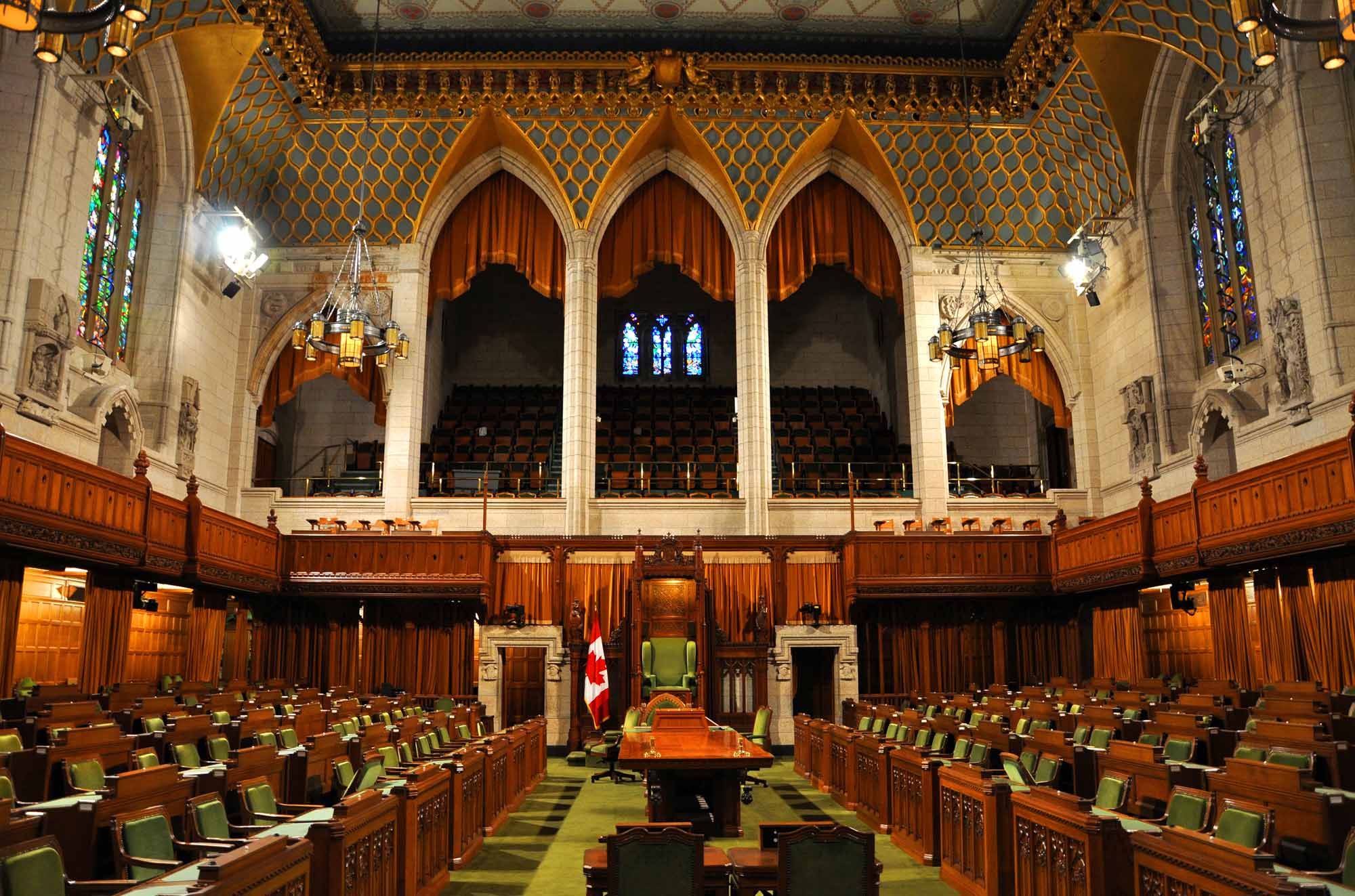
-
Article
Orange Order in Canada
The Orange Order was a political and religious fraternal society in Canada. From the early 19th century, members proudly defended Protestantism and the British connection while providing mutual aid. The Order had a strong influence in politics, particularly through patronage at the municipal level, and developed a reputation for sectarianism and rioting.
"https://d3d0lqu00lnqvz.cloudfront.net/media/media/d5c87930-81f5-4775-8e06-bdef546856e2.jpg" // resources/views/front/categories/view.blade.php
https://d3d0lqu00lnqvz.cloudfront.net/media/media/d5c87930-81f5-4775-8e06-bdef546856e2.jpg
-
Article
Order-in-Council
A federal order-in-council is a statutory instrument by which the governor general (the executive power of the governor-in-council), acting on the advice and consent of the King's Privy Council for Canada, expresses a decision. In practice, orders-in-council are drafted by Cabinet and formally approved by the governor general. Orders-in-council are not discussed by Parliament, and do not require legislation by Parliament, before being implemented.
"https://d3d0lqu00lnqvz.cloudfront.net/media/media/11551bec-a5f6-4e78-b101-265ddf7610cb.jpg" // resources/views/front/categories/view.blade.php
https://d3d0lqu00lnqvz.cloudfront.net/media/media/11551bec-a5f6-4e78-b101-265ddf7610cb.jpg
-
Article
Order-in-Council P.C. 1911-1324 — the Proposed Ban on Black Immigration to Canada
Order-in-Council P.C. 1324 was approved on 12 August 1911 by the Cabinet of Prime Minister Sir Wilfrid Laurier. The purpose of the order was to ban Black persons from entering Canada for a period of one year because, it read, “the Negro race…is deemed unsuitable to the climate and requirements of Canada.” The order-in-council was the culmination of what researcher R. Bruce Shepard has called Canada’s “campaign of diplomatic racism.” Though the order never became law, the actions of government officials made it clear that Black immigrants were not wanted in Canada (see Immigration).
"https://d3d0lqu00lnqvz.cloudfront.net/media/media/9d43e9db-d903-4447-a4a6-ad497d99685f.jpg" // resources/views/front/categories/view.blade.php
https://d3d0lqu00lnqvz.cloudfront.net/media/media/9d43e9db-d903-4447-a4a6-ad497d99685f.jpg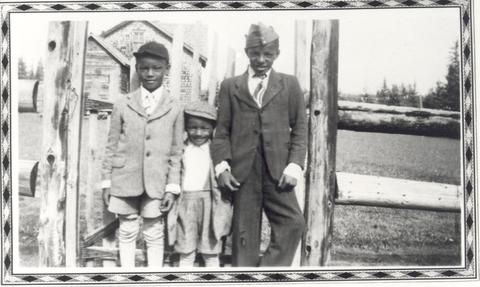
-
Article
Order of Canada
The Order of Canada, the highest level of distinction in the Canadian Honours System, was established on 1 July 1967, the 100th anniversary of Confederation. Any Canadian may be appointed a Member (CM), Officer (OC) or Companion (CC) of the Order in recognition of outstanding achievements or exemplary contributions in any sector of Canadian society. Appointments to the Order of Canada are made by the Governor General on the recommendation of the Advisory Council for the Order. This body, chaired by the Chief Justice of Canada, meets twice per year to consider nominations made by members of the public. From 1967 to 2015, 6,530 people from all walks of life were appointed to the Order.
"https://d3d0lqu00lnqvz.cloudfront.net/media/media/0e8ba642-899b-4107-b3c7-5a059d4c22fb.jpg" // resources/views/front/categories/view.blade.php
https://d3d0lqu00lnqvz.cloudfront.net/media/media/0e8ba642-899b-4107-b3c7-5a059d4c22fb.jpg
-
Article
Ordre de Jacques-Cartier
The Ordre de Jacques-Cartier (OJC), commonly known as “La Patente,” was a secret society founded in 1926 in Vanier (now Ottawa), Ontario, to further the religious, social and economic interests of French Canadians. At the forefront of the conflicts over language and nationalism until the 1960s, it discreetly wielded its influence by infiltrating various associations, and it mobilized its members within a strict authoritarian structure. The rise of Québécois nationalism and internal tensions led to its dissolution in 1965.
"https://d3d0lqu00lnqvz.cloudfront.net/media/media/4b2db646-824c-461d-acf7-30a5d5095b35.jpg" // resources/views/front/categories/view.blade.php
https://d3d0lqu00lnqvz.cloudfront.net/media/media/4b2db646-824c-461d-acf7-30a5d5095b35.jpg
-
Article
Oregon Treaty
The Oregon Treaty was an agreement between Britain and the United States. It came into force on 15 June 1846. It formalized the border between the United States and British North America west of the Rocky Mountains. It extended the border along the 49th parallel to the Pacific Ocean and down “the middle” of the channel that separates Vancouver Island from the mainland. The treaty resolved an important dispute between the two nations. But the lack of precision regarding the waterways between the mainland and Vancouver Island led to a dispute over the San Juan Islands, which resulted in an 1859 diplomatic conflict known as the Pig War.
"https://d3d0lqu00lnqvz.cloudfront.net/media/new_article_images/OregonTreaty/Vancouver_Island-relief.png" // resources/views/front/categories/view.blade.php
https://d3d0lqu00lnqvz.cloudfront.net/media/new_article_images/OregonTreaty/Vancouver_Island-relief.png
-
Article
Organized Crime in Canada
Organized crime is defined in the Criminal Code as a group of three or more people whose purpose is the commission of one or more serious offences that would “likely result in the direct or indirect receipt of a material benefit, including a financial benefit, by the group.” Organized crime centres on illegal means of making money, such as gambling; prostitution; pornography; drug trafficking; insurance and construction fraud; illegal bankruptcy; motor vehicle theft; computer crime; and counterfeiting, among many others. The structure, sophistication and widespread nature of organized crime first became evident in the 1960s and 1970s. Some criminal organizations are based on ethnicity, such as the Italian Mafia and Chinese triads. Others are founded within certain industries (e.g., construction) or activities (e.g., biker gangs).
"https://d3d0lqu00lnqvz.cloudfront.net/media/new_article_images/OrganizedCrime/Bonannos_and_Rizzuto.jpg" // resources/views/front/categories/view.blade.php
https://d3d0lqu00lnqvz.cloudfront.net/media/new_article_images/OrganizedCrime/Bonannos_and_Rizzuto.jpg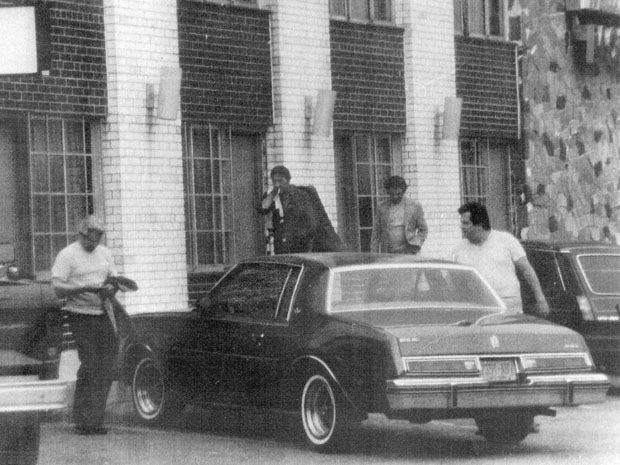
-
Article
Organized Crime in Canada (Plain-Language Summary)
Organized crime is when a group of three or more people commit crimes to make money. Such crimes include gambling; prostitution; pornography; drug trafficking; insurance and construction fraud; illegal bankruptcy; motor vehicle theft; computer crime; and counterfeiting. The widespread nature of organized crime first came to light in the 1960s. Some criminal groups are based on ethnicity. Others are formed within certain industries. New laws were made in the early 2000s to address organized crime in Canada. This article is a plain-language summary of organized crime in Canada. If you are interested in reading about this topic in more depth, please see our full-length entry: Organized Crime in Canada.
"https://d3d0lqu00lnqvz.cloudfront.net/media/new_article_images/OrganizedCrime/Bonannos_and_Rizzuto.jpg" // resources/views/front/categories/view.blade.php
https://d3d0lqu00lnqvz.cloudfront.net/media/new_article_images/OrganizedCrime/Bonannos_and_Rizzuto.jpg
-
Article
Oshawa Strike
Two of Hepburn's Cabinet colleagues who opposed his actions, Minister of Labour David Croll and Attorney General Arthur Roebuck, were persuaded to resign.
"https://d3d0lqu00lnqvz.cloudfront.net/media/media/13cef129-bb89-4686-97b1-a512f5d675f1.jpg" // resources/views/front/categories/view.blade.php
https://d3d0lqu00lnqvz.cloudfront.net/media/media/13cef129-bb89-4686-97b1-a512f5d675f1.jpg
-
Article
Ottawa Agreements
The Ottawa Agreements were 12 bilateral trade agreements providing for mutual tariff concessions and certain other commitments, negotiated 20 July-20 August 1932 at Ottawa by Britain, Canada and other COMMONWEALTH Dominions and territories.
"https://thecanadianencyclopedia.ca/images/tce_placeholder.jpg?v=e9dca980c9bdb3aa11e832e7ea94f5d9" // resources/views/front/categories/view.blade.php
https://thecanadianencyclopedia.ca/images/tce_placeholder.jpg?v=e9dca980c9bdb3aa11e832e7ea94f5d9
-
Macleans
Ottawa Appeals Pay Equity Ruling
Carol-Anne Grenier reckons the government owes her $20,000, and she is seething with anger at Prime Minister Jean Chrétiens refusal to pay up.This article was originally published in Maclean's Magazine on September 7, 1998
"https://thecanadianencyclopedia.ca/images/tce_placeholder.jpg?v=e9dca980c9bdb3aa11e832e7ea94f5d9" // resources/views/front/categories/view.blade.php
https://thecanadianencyclopedia.ca/images/tce_placeholder.jpg?v=e9dca980c9bdb3aa11e832e7ea94f5d9
-
Macleans
Ottawa Endorses Québec Partition
Gary Shapiro describes the idea as a "poison pill," a kind of desperate last resort to avert a looming national tragedy. Anthony Housefather considers it a "safety blanket to guarantee that we are all going to remain Canadian.This article was originally published in Maclean's Magazine on February 12, 1996
"https://thecanadianencyclopedia.ca/images/tce_placeholder.jpg?v=e9dca980c9bdb3aa11e832e7ea94f5d9" // resources/views/front/categories/view.blade.php
https://thecanadianencyclopedia.ca/images/tce_placeholder.jpg?v=e9dca980c9bdb3aa11e832e7ea94f5d9
-
Macleans
Ottawa Rethinking Foreign Aid
By her own admission, Susan Whelan was not the logical choice to be Canada's top social worker to the world. A small-business lawyer and daughter of former agriculture minister Eugene Whelan, the MP for Essex, near Windsor, Ont.This article was originally published in Maclean's Magazine on October 28, 2002
"https://thecanadianencyclopedia.ca/images/tce_placeholder.jpg?v=e9dca980c9bdb3aa11e832e7ea94f5d9" // resources/views/front/categories/view.blade.php
https://thecanadianencyclopedia.ca/images/tce_placeholder.jpg?v=e9dca980c9bdb3aa11e832e7ea94f5d9
-
Macleans
Ottawa Slow to Take Steps to Control BSE
RECENT DISCLOSURES OF MORE mad cows in our midst raise the nagging question of why Canada is not doing far more to screen the nation's cattle herds for the dreaded bovine spongiform encephalopathy, better known as mad cow disease.This article was originally published in Maclean's Magazine on February 14, 2005
"https://thecanadianencyclopedia.ca/images/tce_placeholder.jpg?v=e9dca980c9bdb3aa11e832e7ea94f5d9" // resources/views/front/categories/view.blade.php
https://thecanadianencyclopedia.ca/images/tce_placeholder.jpg?v=e9dca980c9bdb3aa11e832e7ea94f5d9