
Browse "Politics & Law"
-
Article
NORAD
The North American Aerospace Defense Command (NORAD) was a pact made in 1957, at the height of the Cold War. It placed under joint command the air forces of Canada and the United States. Its name was changed in 1981 to the North American Aerospace Defense Command, but it kept the NORAD acronym. Canada and the US renewed NORAD in 2006, making the arrangement permanent. It is subject to review every four years, or at the request of either country. NORAD’s mission was also expanded into maritime warnings. The naval forces of the two countries remain under separate commands.
"https://d3d0lqu00lnqvz.cloudfront.net/media/media/efca000f-abb8-4a6f-881e-e39e4ee2882f.jpg" // resources/views/front/categories/view.blade.php
https://d3d0lqu00lnqvz.cloudfront.net/media/media/efca000f-abb8-4a6f-881e-e39e4ee2882f.jpg
-
Article
North-South Institute
The North-South Institute (NSI) was an independent, nonprofit corporation established in 1976 to conduct professional and policy-relevant research on Canada's relations with developing countries. Lack of federal funding led to the closure of the NSI in September 2014.
"https://thecanadianencyclopedia.ca/images/tce_placeholder.jpg?v=e9dca980c9bdb3aa11e832e7ea94f5d9" // resources/views/front/categories/view.blade.php
https://thecanadianencyclopedia.ca/images/tce_placeholder.jpg?v=e9dca980c9bdb3aa11e832e7ea94f5d9
-
Article
North-West Resistance
The North-West Resistance (or North-West Rebellion) was a violent, five-month insurgency against the Canadian government, fought mainly by Métis and their First Nations allies in what is now Saskatchewan and Alberta. It was caused by rising fear and insecurity among the Métis and First Nations peoples as well as the white settlers of the rapidly changing West. A series of battles and other outbreaks of violence in 1885 left hundreds of people dead, but the resisters were eventually defeated by federal troops. The result was the permanent enforcement of Canadian law in the West, the subjugation of Plains Indigenous Peoples in Canada, and the conviction and hanging of Louis Riel.
"https://d3d0lqu00lnqvz.cloudfront.net/media/media/44b2bd9e-c62a-4a72-b6a8-029e1173ce70.jpg" // resources/views/front/categories/view.blade.php
https://d3d0lqu00lnqvz.cloudfront.net/media/media/44b2bd9e-c62a-4a72-b6a8-029e1173ce70.jpg
-
Article
North-West Territories (1870–1905)
The North-West Territories was the first Canadian territory. It was Established on 15 July 1870. As a territory, the region became part of Canada. But it lacked the population, economic and infrastructure resources to attain provincial status. It thus fell under the jurisdiction of the federal government. It covered a vast area, stretching west from a disputed boundary with Labrador, across the northern portions of present-day Quebec and Ontario, through the Prairies to British Columbia, and north from the 49th parallel to the Arctic Ocean. The territory was subject to numerous boundary changes before 1905. At that time, the provinces of Saskatchewan and Alberta were carved out of the southwest portion of the region. In 1906, the remaining territory was renamed the Northwest Territories.
"https://d3d0lqu00lnqvz.cloudfront.net/media/media/1ca2e02a-e2e8-4709-acee-5581d6051d5c.jpg" // resources/views/front/categories/view.blade.php
https://d3d0lqu00lnqvz.cloudfront.net/media/media/1ca2e02a-e2e8-4709-acee-5581d6051d5c.jpg
-
Article
North-West Territories Act
The North-West Territories Act, passed by the Liberal government of Alexander Mackenzie in April 1875, was an attempt to improve government administration and direct the development of the North-West Territories. Established in 1870, the North-West Territories was the first Canadian territory. It covered a vast area, stretching from Labrador to the Rocky Mountains and from the forty-ninth parallel to the Arctic Ocean.
"https://d3d0lqu00lnqvz.cloudfront.net/media/media/7f8e8aa1-65a4-4e8b-8c6b-8b660a36a8c7.jpg" // resources/views/front/categories/view.blade.php
https://d3d0lqu00lnqvz.cloudfront.net/media/media/7f8e8aa1-65a4-4e8b-8c6b-8b660a36a8c7.jpg
-
Macleans
Northern Ireland Riots
Richard Sterritt sounds sleepy after a night spent manning a Loyalist barricade in the Northern Irish border county of Armagh. But his voice swells when he's asked to describe the sound of a Lambeg drum. "It sounds like a church bell," he says of the ringing beat from the 45-lb.This article was originally published in Maclean's Magazine on July 22, 1996
"https://thecanadianencyclopedia.ca/images/tce_placeholder.jpg?v=e9dca980c9bdb3aa11e832e7ea94f5d9" // resources/views/front/categories/view.blade.php
https://thecanadianencyclopedia.ca/images/tce_placeholder.jpg?v=e9dca980c9bdb3aa11e832e7ea94f5d9
-
Article
Northwest Territories and Confederation
The Northwest Territories (NWT) entered Confederation in 1870 after Canada acquired Rupert’s Land and the North-Western Territory from the Hudson’s Bay Company. The smaller territory now known as the NWT is what remains after the creation of several other provinces and territories out of the original 1870 lands.
"https://d3d0lqu00lnqvz.cloudfront.net/media/media/a08da9c3-b38b-4f80-a425-a29b706528af.jpg" // resources/views/front/categories/view.blade.php
https://d3d0lqu00lnqvz.cloudfront.net/media/media/a08da9c3-b38b-4f80-a425-a29b706528af.jpg
-
Article
Notwithstanding Clause
Section 33 of the Canadian Charter of Rights and Freedoms is known as the notwithstanding clause. Also known as the override clause, it is part of the Constitution of Canada. The clause allows federal, provincial or territorial governments to temporarily override, or bypass, certain Charter rights. These overrides are subject to renewal after five years. Although the clause is available to governments, its use is politically difficult and therefore rare. It is known colloquially as the “nuclear option,” because its use is considered extremely severe. Since the Constitution was patriated in 1982, the clause has been used only a handful of times by various provinces. The federal government has never invoked the clause.
"https://d3d0lqu00lnqvz.cloudfront.net/media/media/eb6ec132-1f25-4df9-b54d-d101ef2e4e7e.jpg" // resources/views/front/categories/view.blade.php
https://d3d0lqu00lnqvz.cloudfront.net/media/media/eb6ec132-1f25-4df9-b54d-d101ef2e4e7e.jpg
-
Article
Notwithstanding Clause (Plain-Language Summary)
Section 33 of the Charter of Rights and Freedoms is called the notwithstanding clause. It is also called the override clause. It is part of the Constitution of Canada. The clause was crucial in winning provincial support for the Charter. The clause allows governments to bypass some rights. Such an override must be renewed after five years. Use of the clause is politically hard and therefore rare. It has been used by provinces only a handful of times. It has never been used by the federal government. This article is a plain-language summary of the Notwithstanding Clause. If you are interested in reading about this topic more in depth, please see our full-length entry, Notwithstanding Clause.
"https://d3d0lqu00lnqvz.cloudfront.net/media/media/31f862c0-7a65-41c2-a522-44c57858f583.jpg" // resources/views/front/categories/view.blade.php
https://d3d0lqu00lnqvz.cloudfront.net/media/media/31f862c0-7a65-41c2-a522-44c57858f583.jpg
-
Article
Nova Scotia 1714-84
Confirmed as British by the Treaty of Utrecht in 1713, the peninsula of Nova Scotia was neglected until 1749 - a period of "phantom rule" and "counterfeit suzerainty.
"https://d3d0lqu00lnqvz.cloudfront.net/media/media/12f25a44-2508-4e64-9dd1-8eb4b212345d.jpg" // resources/views/front/categories/view.blade.php
https://d3d0lqu00lnqvz.cloudfront.net/media/media/12f25a44-2508-4e64-9dd1-8eb4b212345d.jpg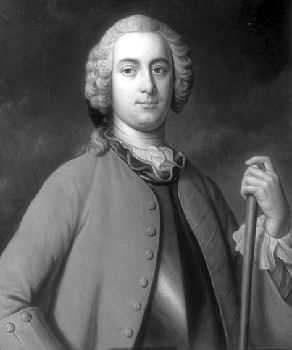
-
Article
Nova Scotia and Confederation
Nova Scotia was one of the four founding provinces of Canada. It joined New Brunswick, Ontario and Quebec in Confederation on 1 July 1867. However, this was mainly because Confederation delivered the Intercolonial Railway to the Maritimes, and because of the efforts of Sir Charles Tupper. His government passed approval for Confederation in the colonial legislature despite popular opposition. (See Confederation’s Opponents.) Confederation was met with mass protests in the colony. Joseph Howe led a two-year effort to repeal the union. (See Repeal Movement.) But Howe finally decided he could do more to help his province by working inside the federal government. He joined the federal Cabinet in 1869.
"https://d3d0lqu00lnqvz.cloudfront.net/media/media/7b457631-bb6e-40ee-bf61-fab12a06fb6d.jpg" // resources/views/front/categories/view.blade.php
https://d3d0lqu00lnqvz.cloudfront.net/media/media/7b457631-bb6e-40ee-bf61-fab12a06fb6d.jpg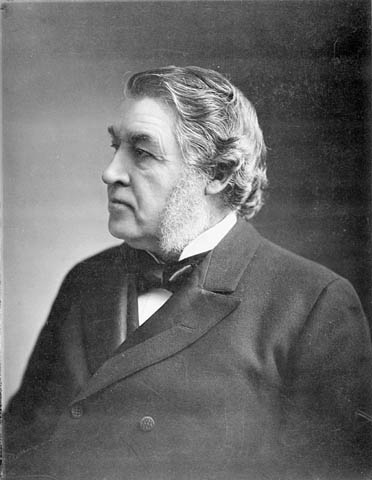
-
Macleans
Nova Scotia Government Falls
For days, Nova Scotia Tory Leader John Hamm withstood the pressure.This article was originally published in Maclean's Magazine on July 1, 1999
"https://thecanadianencyclopedia.ca/images/tce_placeholder.jpg?v=e9dca980c9bdb3aa11e832e7ea94f5d9" // resources/views/front/categories/view.blade.php
https://thecanadianencyclopedia.ca/images/tce_placeholder.jpg?v=e9dca980c9bdb3aa11e832e7ea94f5d9
-
Article
Nova Scotia Pharmaceutical Society Case
In the Nova Scotia Pharmaceutical Society case (1992), the Supreme Court took into account the doctrine of vagueness.
"https://thecanadianencyclopedia.ca/images/tce_placeholder.jpg?v=e9dca980c9bdb3aa11e832e7ea94f5d9" // resources/views/front/categories/view.blade.php
https://thecanadianencyclopedia.ca/images/tce_placeholder.jpg?v=e9dca980c9bdb3aa11e832e7ea94f5d9
-
Editorial
Nova Scotia: The Cradle of Canadian Parliamentary Democracy
The following article is an editorial written by The Canadian Encyclopedia staff. Editorials are not usually updated.
"https://d3d0lqu00lnqvz.cloudfront.net/media/media/2756e679-0a69-460f-a9df-a12d63bd1a22.png" // resources/views/front/categories/view.blade.php
https://d3d0lqu00lnqvz.cloudfront.net/media/media/2756e679-0a69-460f-a9df-a12d63bd1a22.png
-
Macleans
NS Premier John Savage Resigns
According to his friends and longtime political associates, there are two John Savages. The first is the private man, whom they describe as warm and compassionate, a doting grandfather, an affable golf companion.This article was originally published in Maclean's Magazine on March 31, 1997
"https://thecanadianencyclopedia.ca/images/tce_placeholder.jpg?v=e9dca980c9bdb3aa11e832e7ea94f5d9" // resources/views/front/categories/view.blade.php
https://thecanadianencyclopedia.ca/images/tce_placeholder.jpg?v=e9dca980c9bdb3aa11e832e7ea94f5d9