
Browse "Politics & Law"
-
Article
Internment of Japanese Canadians
The forcible expulsion and confinement of Japanese Canadians during the Second World War is one of the most tragic sets of events in Canada’s history. Some 21,000–22,000 Japanese Canadians were taken from their homes on Canada’s West Coast, without any charge or due process. Beginning 24 February 1942, they were exiled to remote areas of British Columbia and elsewhere. The federal government stripped them of their property and pressured many of them to accept mass deportation after the war. Those who remained were not allowed to return to the West Coast until 1 April 1949. In 1988, the federal government officially apologized for its treatment of Japanese Canadians. A redress payment of $21,000 was made to each survivor, and more than $12 million was allocated to a community fund and human rights projects. This article is the full-length text on Japanese Internment in Canada. For a plain-language summary, see Internment of Japanese Canadians (Plain-Language Summary).
"https://d3d0lqu00lnqvz.cloudfront.net/media/media/0bec6156-0467-4a97-909f-da599383381d.jpg" // resources/views/front/categories/view.blade.php
https://d3d0lqu00lnqvz.cloudfront.net/media/media/0bec6156-0467-4a97-909f-da599383381d.jpg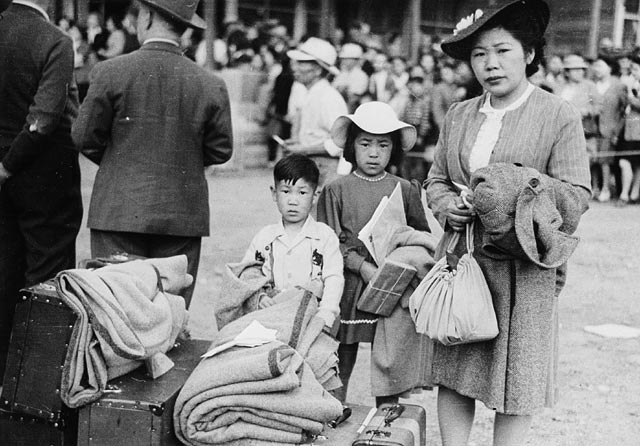
-
Article
Defence of Intoxication
Technically, there is no "intoxication" defence to criminal charges in Canadian law.
"https://thecanadianencyclopedia.ca/images/tce_placeholder.jpg?v=e9dca980c9bdb3aa11e832e7ea94f5d9" // resources/views/front/categories/view.blade.php
https://thecanadianencyclopedia.ca/images/tce_placeholder.jpg?v=e9dca980c9bdb3aa11e832e7ea94f5d9
-
Article
Inuit Circumpolar Council
The Inuit Circumpolar Council (ICC) is an international, non-profit, non-governmental organization. It represents the 180,000 Inuit living in the circumpolar regions of Alaska (United States), Inuit Nunangat (Canada), Kalaallit Nunaat (Greenland) and Chukotka (Russia). The ICC is committed to advancing and advocating for Inuit rights, language, education, culture, self-determination, land management, environmental stewardship and economic and social development (see also Rights of Indigenous Peoples in Canada; Inuktitut). There are nine executive members on the council. Each circumpolar region is represented by a vice-chair and an elected member. The executive also includes an international chair. Every four years, delegates convene at a general assembly. During this assembly, they discuss and find solutions to issues affecting Inuit and the Arctic.
"https://d3d0lqu00lnqvz.cloudfront.net/InuitCircumpolarCouncil/international-maritime-organization-icc_resized.jpg" // resources/views/front/categories/view.blade.php
https://d3d0lqu00lnqvz.cloudfront.net/InuitCircumpolarCouncil/international-maritime-organization-icc_resized.jpg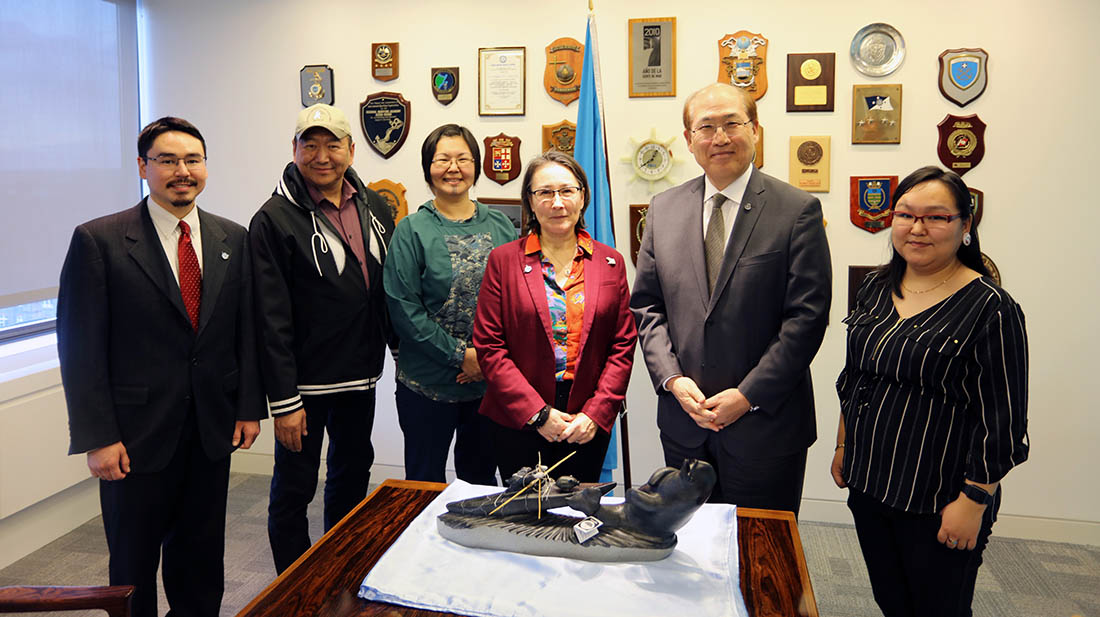
-
Article
Inuit High Arctic Relocations in Canada
In 1953 and 1955, the Royal Canadian Mounted Police, acting as representatives of the Department of Resources and Development, moved approximately 92 Inuit from Inukjuak, formerly called Port Harrison, in Northern Quebec, and Mittimatalik (Pond Inlet), in what is now Nunavut, to settle two locations on the High Arctic islands. It has been argued that the Government of Canada ordered the relocations to establish Canadian sovereignty in the Arctic, and proposed to Inuit the move, promising improved living conditions. The Inuit were assured plentiful wildlife, but soon discovered that they had been misled, and endured hardships. The effects have lingered for generations. The Inuit High Arctic relocations are often referred to as a “dark chapter” in Canadian history, and an example of how the federal government forced changes that fundamentally affected (and continue to affect) Inuit lives.
"https://d3d0lqu00lnqvz.cloudfront.net/media/media/72b158ab-21db-4572-9fec-db8a9548c9cf.jpg" // resources/views/front/categories/view.blade.php
https://d3d0lqu00lnqvz.cloudfront.net/media/media/72b158ab-21db-4572-9fec-db8a9548c9cf.jpg
-
Article
Ipperwash Crisis
The Ipperwash Crisis took place in 1995 on land in and around Ontario’s Ipperwash Provincial Park, which was claimed by the Kettle and Stony Point First Nation. The underlying cause of the crisis was the appropriation of the Stoney Point Reserve in 1942 by the federal government for use as a military camp. After repeated requests for the land to be returned, members of the Stony Point First Nation occupied the camp in 1993 and in 1995. On 4 September 1995 protesters also occupied Ipperwash Provincial Park nearby. Tension between the protesters and the OPP increased, resulting in a confrontation on 6 September 1995 during which Dudley George, an Ojibwa protestor, was killed.
"https://d3d0lqu00lnqvz.cloudfront.net/media/media/bcf04d96-a331-4532-bed5-98ee62f4034e.jpg" // resources/views/front/categories/view.blade.php
https://d3d0lqu00lnqvz.cloudfront.net/media/media/bcf04d96-a331-4532-bed5-98ee62f4034e.jpg
-
Macleans
IRA Bomb Shatters the Peace
The modernistic landscape that has sprouted over London's once-derelict Docklands since the 1980s is the kind of target the Irish Republican Army loved to hit. Its centrepiece is Canary Wharf, the sometimes-maligned 52-storey office tower that is the tallest building in Britain.This article was originally published in Maclean's Magazine on February 19, 1996
"https://thecanadianencyclopedia.ca/images/tce_placeholder.jpg?v=e9dca980c9bdb3aa11e832e7ea94f5d9" // resources/views/front/categories/view.blade.php
https://thecanadianencyclopedia.ca/images/tce_placeholder.jpg?v=e9dca980c9bdb3aa11e832e7ea94f5d9
-
Macleans
Ireland Votes for Peace
Even before the polls opened, the telltale signs of seismic change began to drift across Northern Ireland's rolling green hills.This article was originally published in Maclean's Magazine on June 1, 1998
"https://thecanadianencyclopedia.ca/images/tce_placeholder.jpg?v=e9dca980c9bdb3aa11e832e7ea94f5d9" // resources/views/front/categories/view.blade.php
https://thecanadianencyclopedia.ca/images/tce_placeholder.jpg?v=e9dca980c9bdb3aa11e832e7ea94f5d9
-
Macleans
Irish Peace Accord
For 30 years, it had been an unwinnable religious war of endless reprisals, fuelled by hate and hopelessness.This article was originally published in Maclean's Magazine on April 20, 1998
"https://thecanadianencyclopedia.ca/images/tce_placeholder.jpg?v=e9dca980c9bdb3aa11e832e7ea94f5d9" // resources/views/front/categories/view.blade.php
https://thecanadianencyclopedia.ca/images/tce_placeholder.jpg?v=e9dca980c9bdb3aa11e832e7ea94f5d9
-
Macleans
Irish Referendum Campaign
On the Falls Road in the western precincts of Belfast, right in the heart of the city's Roman Catholic strongholds, there is an exclusive watering hole with a singularly appropriate name. They call the place the Felons' Club.This article was originally published in Maclean's Magazine on May 25, 1998
"https://thecanadianencyclopedia.ca/images/tce_placeholder.jpg?v=e9dca980c9bdb3aa11e832e7ea94f5d9" // resources/views/front/categories/view.blade.php
https://thecanadianencyclopedia.ca/images/tce_placeholder.jpg?v=e9dca980c9bdb3aa11e832e7ea94f5d9
-
Macleans
Israel at 50
Gabriel Ben Yitzhak and Jamil Abu Heykal share an uneasy existence on a hilltop overlooking ancient Hebron, a town that was already old when Abraham arrived more than 35 centuries ago. The Jewish patriarch is, in religious tradition if not irrefutable fact, buried near the foot of the hill.This article was originally published in Maclean's Magazine on April 27, 1998
"https://thecanadianencyclopedia.ca/images/tce_placeholder.jpg?v=e9dca980c9bdb3aa11e832e7ea94f5d9" // resources/views/front/categories/view.blade.php
https://thecanadianencyclopedia.ca/images/tce_placeholder.jpg?v=e9dca980c9bdb3aa11e832e7ea94f5d9
-
Article
James Bay and Northern Quebec Agreement
The James Bay and Northern Quebec Agreement (JBNQA) is a legal agreement signed on 11 November 1975 by the government of Quebec, the government of Canada, Hydro-Québec and two of its subsidiaries, the Grand Council of the Crees of Quebec and the Northern Quebec Inuit Association. Described by many as the “first modern treaty,” the JBNQA redefined and framed land management as well as the relationship between the Quebecois state and the Indigenous peoples of the James Bay and Northern Quebec region (see James Bay Project, Treaties with Indigenous Peoples in Canada).
"https://thecanadianencyclopedia.ca/images/tce_placeholder.jpg?v=e9dca980c9bdb3aa11e832e7ea94f5d9" // resources/views/front/categories/view.blade.php
https://thecanadianencyclopedia.ca/images/tce_placeholder.jpg?v=e9dca980c9bdb3aa11e832e7ea94f5d9
-
Macleans
James Ossuary Declared a Fake
This article was originally published in Maclean’s magazine on March 28, 2005. Partner content is not updated. THE MAN ACCUSED of standing at the centre of the greatest forgery ring of our time, perhaps all time, doesn't appear to be holding up so well.
"https://thecanadianencyclopedia.ca/images/tce_placeholder.jpg?v=e9dca980c9bdb3aa11e832e7ea94f5d9" // resources/views/front/categories/view.blade.php
https://thecanadianencyclopedia.ca/images/tce_placeholder.jpg?v=e9dca980c9bdb3aa11e832e7ea94f5d9
-
Macleans
Jane Stewart Scandal
No one ever suggested Mel Cappe was much of a micromanager. Cappe's reputation in Ottawa's public service is as a big-picture guy, a bureaucrat more interested in the sweep of policy-making than the dotted i's of program management.This article was originally published in Maclean's Magazine on February 7, 2000
"https://thecanadianencyclopedia.ca/images/tce_placeholder.jpg?v=e9dca980c9bdb3aa11e832e7ea94f5d9" // resources/views/front/categories/view.blade.php
https://thecanadianencyclopedia.ca/images/tce_placeholder.jpg?v=e9dca980c9bdb3aa11e832e7ea94f5d9
-
Editorial
Japanese Canadian Internment: Prisoners in their own Country
Beginning in early 1942, the Canadian government detained and dispossessed more than 90 per cent of Japanese Canadians, some 21,000 people, living in British Columbia. They were detained under the War Measures Act and were interned for the rest of the Second World War. Their homes and businesses were sold by the government to pay for their detention. In 1988, Prime Minister Brian Mulroney apologized on behalf of the Canadian government for the wrongs it committed against Japanese Canadians. The government also made symbolic redress payments and repealed the War Measures Act.
"https://d3d0lqu00lnqvz.cloudfront.net/media/media/c61c85b5-d92f-44a0-8602-7e2c38458873.jpg" // resources/views/front/categories/view.blade.php
https://d3d0lqu00lnqvz.cloudfront.net/media/media/c61c85b5-d92f-44a0-8602-7e2c38458873.jpg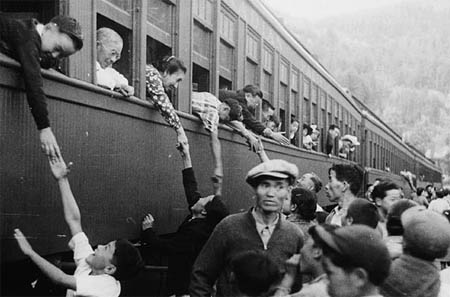
-
Article
Jay's Treaty
Jay’s Treaty was signed on 19 November 1794 by representatives of United States and Britain. The treaty is the product of trade and border negotiations. It is known for the provision that allows Indigenous people from Canada to live and work freely in the United States. The Canadian federal government does not recognize the reciprocal provision as binding. (See also Treaties with Indigenous Peoples in Canada.)
"https://d3d0lqu00lnqvz.cloudfront.net/media/media/e2ed8154-40d4-4e3e-b31e-c5e732db0af5.jpg" // resources/views/front/categories/view.blade.php
https://d3d0lqu00lnqvz.cloudfront.net/media/media/e2ed8154-40d4-4e3e-b31e-c5e732db0af5.jpg