
Browse "Nature & Geography"
-
Article
Touch-me-not
Touch-me-not, or Jewelweed, are common names for family of herbaceous plants (Balsaminaceae) of which Impatiens is the principal genus. The genus name derives from the fact that a ripe seed capsule, when touched, explodes violently, projecting seed some distance.
"https://thecanadianencyclopedia.ca/images/tce_placeholder.jpg?v=e9dca980c9bdb3aa11e832e7ea94f5d9" // resources/views/front/categories/view.blade.php
https://thecanadianencyclopedia.ca/images/tce_placeholder.jpg?v=e9dca980c9bdb3aa11e832e7ea94f5d9
-
Article
Trans Mountain Pipeline Expansion Project
The Trans Mountain Expansion is a project to build about 980 km of new pipe, most of which will run parallel to the existing Trans Mountain oil pipeline. The new line will carry diluted bitumen, or “dilbit,” from Edmonton, Alberta to Burnaby, British Columbia. The expansion will increase the pipeline route’s overall capacity from 300,000 barrels per day to 890,000 barrels per day. The project’s first owner, Kinder Morgan Canada, sold it to the Government of Canada in 2018. The Trans Mountain Expansion has been a focus of environmental and economic debates, as well as political conflicts. The $12.6 billion project is now under construction.
"https://d3d0lqu00lnqvz.cloudfront.net/media/new_article_images/TransMountainPipelineExpansionProject/Trans_Mountain_Spread_1_Dec2019.jpg" // resources/views/front/categories/view.blade.php
https://d3d0lqu00lnqvz.cloudfront.net/media/new_article_images/TransMountainPipelineExpansionProject/Trans_Mountain_Spread_1_Dec2019.jpg
-
Article
Treeline
The treeline is controlled by CLIMATE in interaction with SOIL. In the North, it is correlated generally with the modal (most common) position of the southern edge of the arctic front in summer, and with such temperature indices as the July 10°C isotherm.
"https://thecanadianencyclopedia.ca/images/tce_placeholder.jpg?v=e9dca980c9bdb3aa11e832e7ea94f5d9" // resources/views/front/categories/view.blade.php
https://thecanadianencyclopedia.ca/images/tce_placeholder.jpg?v=e9dca980c9bdb3aa11e832e7ea94f5d9
-
Article
Trees in Canada
Trees are single-stemmed, perennial, woody plants taller than 3 m and exceeding 8 cm in diameter at breast height; shrubs are multistemmed and smaller. These definitions are somewhat arbitrary, since many species (e.g., willow, alder, cherry, maple) can grow as trees or shrubs, depending on the environment. Counting the 30-odd shrubs that assume tree form under favourable conditions, there are about 140 native Canadian trees. The largest and oldest grow in the Pacific temperate rain forest. Douglas fir is an imposing example and, although it does not reach the size of redwoods or the age of bristlecone pines, specimens 90 m tall, 5 m in basal diameter, and older than 1,000 years have been reported. Canada's tallest reported tree (95 m) is a Sitka spruce, the "Carmanah Giant" in the Carmanah Valley on the west coast of Vancouver Island. Canada's tallest Douglas fir, 94.3 m in height and 8.07 m in circumference, stands near Coquitlam, BC.
"https://d3d0lqu00lnqvz.cloudfront.net/sprucetrees/The_San_Juan_Spruce.jpg" // resources/views/front/categories/view.blade.php
https://d3d0lqu00lnqvz.cloudfront.net/sprucetrees/The_San_Juan_Spruce.jpg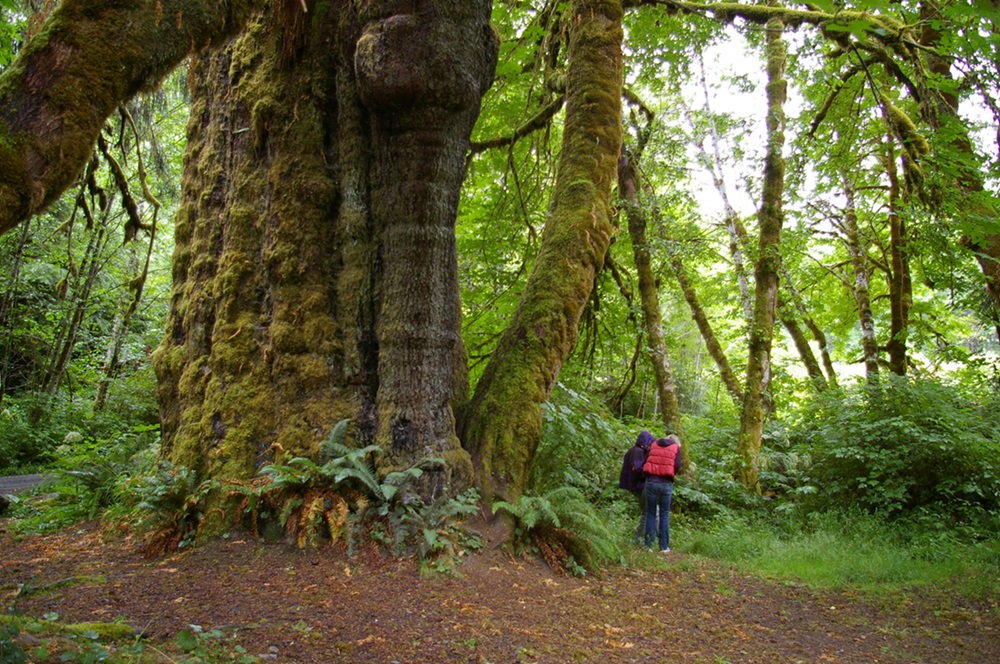
-
Article
Triceratops
Triceratops is a genus of plant-eating, horned dinosaur. There are two species of Triceratops: T. Horridus and T. Prorsus. Triceratops lived between 68 million and 66 million years ago during the Late Cretaceous period. The name Triceratops is of Greek origin and means “three-horned face.” Triceratops remains are among the most abundant dinosaur fossils found, though this is more true in the United States than in Canada. In 1921, paleontologist Charles M. Sternberg found the first Triceratops fossil from Canada, discovered in southern Saskatchewan. Paleontologists have also discovered Triceratops fossils in Alberta. (See also Dinosaurs Found in Canada.)
"https://d3d0lqu00lnqvz.cloudfront.net/triceratops/triceratopsspecimen.jpg" // resources/views/front/categories/view.blade.php
https://d3d0lqu00lnqvz.cloudfront.net/triceratops/triceratopsspecimen.jpg
-
Article
Trillium
Trillium, common and generic name of a perennial plant of the Trilliaceae family (sometimes classified as a subfamily of the LILY family). The name derives from the arrangement of leaves, petals and sepals in groups of 3. The
"https://d3d0lqu00lnqvz.cloudfront.net/media/media/aa1088a8-87d6-4b84-8811-f34fbfa0b9a7.jpg" // resources/views/front/categories/view.blade.php
https://d3d0lqu00lnqvz.cloudfront.net/media/media/aa1088a8-87d6-4b84-8811-f34fbfa0b9a7.jpg
-
Article
Trilobite
Trilobites are extinct marine arthropods of the Palaeozoic era (544–300 million years ago). Their closest modern relative is the horseshoe crab. Trilobite fossils are relatively abundant throughout Canada.
"https://d3d0lqu00lnqvz.cloudfront.net/trilobite/Trilobite-Fossil.jpg" // resources/views/front/categories/view.blade.php
https://d3d0lqu00lnqvz.cloudfront.net/trilobite/Trilobite-Fossil.jpg
-
Article
Triticale
Triticale (Triticosecale Wittmack), the first man-made crop species, is initially produced by crossing wheat (genus Triticum) with rye (Secale), and resembles wheat.
"https://d3d0lqu00lnqvz.cloudfront.net/media/media/968ada8b-613f-4a8f-9cfe-228d13b3a75d.jpg" // resources/views/front/categories/view.blade.php
https://d3d0lqu00lnqvz.cloudfront.net/media/media/968ada8b-613f-4a8f-9cfe-228d13b3a75d.jpg
-
Article
Tuna
The tuna is a swift, elegant marine fish of class Actinopterygii, order Perciformes, family Scombridae (mackerels).
"https://d3d0lqu00lnqvz.cloudfront.net/media/media/6954bf65-e5dd-4309-b2be-fe3047da446d.jpg" // resources/views/front/categories/view.blade.php
https://d3d0lqu00lnqvz.cloudfront.net/media/media/6954bf65-e5dd-4309-b2be-fe3047da446d.jpg
-
Article
Tungsten
Tungsten (W), also called Wolfram, lapis ponderosus or Heavy Stone, is a silver-grey metallic element with the highest melting point of any metal (3410° C). Tungsten has a high density, high strength at elevated temperatures and extreme hardness.
"https://thecanadianencyclopedia.ca/images/tce_placeholder.jpg?v=e9dca980c9bdb3aa11e832e7ea94f5d9" // resources/views/front/categories/view.blade.php
https://thecanadianencyclopedia.ca/images/tce_placeholder.jpg?v=e9dca980c9bdb3aa11e832e7ea94f5d9
-
Article
Tunnels
Unlike other mountainous countries such as Switzerland, and despite its size, Canada is not distinguished by well-known tunnels.
"https://thecanadianencyclopedia.ca/images/tce_placeholder.jpg?v=e9dca980c9bdb3aa11e832e7ea94f5d9" // resources/views/front/categories/view.blade.php
https://thecanadianencyclopedia.ca/images/tce_placeholder.jpg?v=e9dca980c9bdb3aa11e832e7ea94f5d9
-
Article
Turnip
Turnip (Brassica rapa, Rapifera Group), biennial vegetable belonging to the Cruciferae family and grown in all provinces as a root crop.
"https://d3d0lqu00lnqvz.cloudfront.net/media/media/8d38c5d8-4a56-4711-92af-1ef404715c83.jpg" // resources/views/front/categories/view.blade.php
https://d3d0lqu00lnqvz.cloudfront.net/media/media/8d38c5d8-4a56-4711-92af-1ef404715c83.jpg
-
Article
Tyrant Flycatchers in Canada
Tyrant flycatchers (family Tyrannidae) are a large, diverse bird family present in the Americas. The name flycatcher also refers to some members of the family Muscicapidae and a few other birds.
"https://d3d0lqu00lnqvz.cloudfront.net/tyrantflycatcher/eastern-phoebe.jpg" // resources/views/front/categories/view.blade.php
https://d3d0lqu00lnqvz.cloudfront.net/tyrantflycatcher/eastern-phoebe.jpg
-
Macleans
Unfamiliar territory
Author J.B. MacKinnon’s latest explores our ever-shrinking, increasingly unnatural worldThis article was originally published in Maclean's Magazine on March 3, 2014
"https://thecanadianencyclopedia.ca/images/tce_placeholder.jpg?v=e9dca980c9bdb3aa11e832e7ea94f5d9" // resources/views/front/categories/view.blade.php
https://thecanadianencyclopedia.ca/images/tce_placeholder.jpg?v=e9dca980c9bdb3aa11e832e7ea94f5d9
-
Article
Uranium
Uranium oxide was first identified in 1789 by M.H. Klaproth in the MINERAL pitchblende, but its distinctive property of radioactivity was discovered much later (1896) by Henri Becquerel.
"https://d3d0lqu00lnqvz.cloudfront.net/media/media/0eaeb68e-4b98-42e2-8107-45e9edf9b736.jpg" // resources/views/front/categories/view.blade.php
https://d3d0lqu00lnqvz.cloudfront.net/media/media/0eaeb68e-4b98-42e2-8107-45e9edf9b736.jpg