
Browse "Nature & Geography"
-
Article
Shrew
Shrew (Soricidae), family of small insectivores represented today by approximately 250 species worldwide, 16 in Canada.
"https://thecanadianencyclopedia.ca/images/tce_placeholder.jpg?v=e9dca980c9bdb3aa11e832e7ea94f5d9" // resources/views/front/categories/view.blade.php
https://thecanadianencyclopedia.ca/images/tce_placeholder.jpg?v=e9dca980c9bdb3aa11e832e7ea94f5d9
-
"https://d3d0lqu00lnqvz.cloudfront.net/media/media/e34d15e4-77b7-4dd7-8f0f-2174ffa8e9e2.jpg" // resources/views/front/categories/view.blade.php
https://d3d0lqu00lnqvz.cloudfront.net/media/media/e34d15e4-77b7-4dd7-8f0f-2174ffa8e9e2.jpg
-
Article
Shrimp
Shrimp are decapods ("10-footed") crustacean, differing from other decapods in being adapted for swimming, a fact reflected in the large, laterally compressed abdomen and well-developed pairs of swimming legs.
"https://d3d0lqu00lnqvz.cloudfront.net/media/media/dfdc0d43-b713-4658-b7a0-23305d11e86b.jpg" // resources/views/front/categories/view.blade.php
https://d3d0lqu00lnqvz.cloudfront.net/media/media/dfdc0d43-b713-4658-b7a0-23305d11e86b.jpg
-
Article
Silica
Silica, or silicon dioxide (SiO2), occurs as the MINERAL quartz and is the most abundant mineral of the Earth's crust. It also occurs in the skeletal parts of some animals (eg, certain protozoa) and various plants.
"https://thecanadianencyclopedia.ca/images/tce_placeholder.jpg?v=e9dca980c9bdb3aa11e832e7ea94f5d9" // resources/views/front/categories/view.blade.php
https://thecanadianencyclopedia.ca/images/tce_placeholder.jpg?v=e9dca980c9bdb3aa11e832e7ea94f5d9
-
Article
Silver
Important producing countries now are Mexico, Peru, the Commonwealth of Independent States, the US, Canada, Australia, Chile, Poland and China. Photographic films and papers account for about 25% of the demand for silver.
"https://d3d0lqu00lnqvz.cloudfront.net/media/media/e53f0267-a935-463b-b0cf-e1995d2548ca.jpg" // resources/views/front/categories/view.blade.php
https://d3d0lqu00lnqvz.cloudfront.net/media/media/e53f0267-a935-463b-b0cf-e1995d2548ca.jpg
-
Article
Silviculture
Silviculture is the branch of FORESTRY that deals with establishing, caring for and reproducing stands of trees for a variety of forest uses including wildlife habitat, timber production and outdoor recreation.
"https://thecanadianencyclopedia.ca/images/tce_placeholder.jpg?v=e9dca980c9bdb3aa11e832e7ea94f5d9" // resources/views/front/categories/view.blade.php
https://thecanadianencyclopedia.ca/images/tce_placeholder.jpg?v=e9dca980c9bdb3aa11e832e7ea94f5d9
-
Article
Skunk
The skunk is a carnivorous, cat-sized mammal. Skunks were previously considered as part of the weasel family (Mustelidae) but DNA research has placed them in their own family, Mephitidae. This animal is black in colour with conspicuous white stripes or spots. Adults average 54 centimetres long and weigh 1.6 kilograms. Two genera occur in Canada.
"https://d3d0lqu00lnqvz.cloudfront.net/media/media/034d1f13-755b-489b-ae6b-2f6912611488.jpg" // resources/views/front/categories/view.blade.php
https://d3d0lqu00lnqvz.cloudfront.net/media/media/034d1f13-755b-489b-ae6b-2f6912611488.jpg
-
Article
Sky
The sky appears its deepest blue when the air is dry and clean. Water vapour and dust scatter all colours of light, causing the blue to appear washed-out and pale.
"https://thecanadianencyclopedia.ca/images/tce_placeholder.jpg?v=e9dca980c9bdb3aa11e832e7ea94f5d9" // resources/views/front/categories/view.blade.php
https://thecanadianencyclopedia.ca/images/tce_placeholder.jpg?v=e9dca980c9bdb3aa11e832e7ea94f5d9
-
Article
Slug
Slug is a common name for several terrestrial pulmonate and numerous marine gilled species of gastropod molluscs conspicuous by the lack of an exposed shell.
"https://d3d0lqu00lnqvz.cloudfront.net/media/media/51c710f6-6973-4da3-8a4a-d48caed18d86.jpg" // resources/views/front/categories/view.blade.php
https://d3d0lqu00lnqvz.cloudfront.net/media/media/51c710f6-6973-4da3-8a4a-d48caed18d86.jpg
-
Article
Snipe
Snipe is the name given to 19 species of small to medium-sized shorebirds (254–406 mm) of the sandpiper family. Like woodcocks, snipes have long bills with flexible tips and eyes set well back on the skull, allowing almost all-round vision.
"https://d3d0lqu00lnqvz.cloudfront.net/media/media/58b1f67e-84e1-4107-8882-d2fe8a0d4c9a.jpg" // resources/views/front/categories/view.blade.php
https://d3d0lqu00lnqvz.cloudfront.net/media/media/58b1f67e-84e1-4107-8882-d2fe8a0d4c9a.jpg
-
Article
Soapstone
Soapstone's use dates back to antiquity: early Egyptians carved it into scarabs and seals; in China and India it was used for ornaments, implements and domestic utensils. It was similarly used at various times over the past 7,500 years by First Nations, Inuit and Norse in Canada (see Inuit Art).
"https://d3d0lqu00lnqvz.cloudfront.net/media/media/a7e8e79a-3e33-47b9-bf7f-900de027e572.jpg" // resources/views/front/categories/view.blade.php
https://d3d0lqu00lnqvz.cloudfront.net/media/media/a7e8e79a-3e33-47b9-bf7f-900de027e572.jpg
-
Article
Soil
Soil is the thin, fragile surface layer of Earth. It is a dynamic, loose and porous body of variable thickness (between a few centimetres and a few metres). Soil is formed by continuous transformations of rock or deposit through physical, chemical and biological processes. It is one of the two main components of Earth — the other being oceans — in which life is particularly active. Soil is the source and site of many human activities, and human life greatly depends on it. In Canada, agricultural, environmental and natural-resource scientists are at the forefront of research on soil.
"https://d3d0lqu00lnqvz.cloudfront.net/media/media/01f0989f-5102-44b1-82b6-1b7a44b8ff1d.jpg" // resources/views/front/categories/view.blade.php
https://d3d0lqu00lnqvz.cloudfront.net/media/media/01f0989f-5102-44b1-82b6-1b7a44b8ff1d.jpg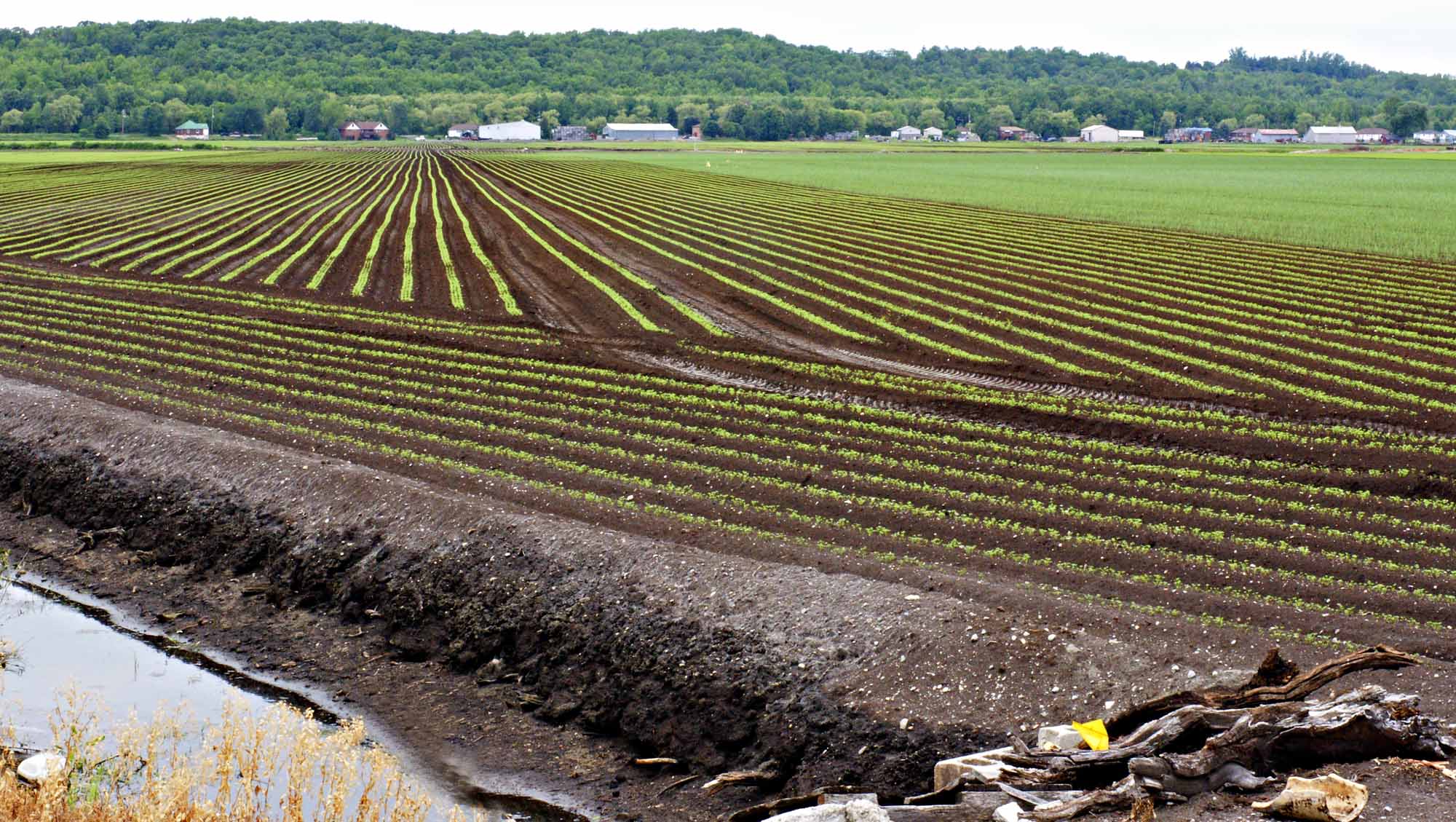
-
Article
Soil Classification
Classification involves arranging individual units with similar characteristics into groups. Soils do not occur as discrete entities; thus the unit of measurement for soil is not obvious.
"https://d3d0lqu00lnqvz.cloudfront.net/media/media/5ab8defa-319b-47f7-a725-b100a41ab8e1.jpg" // resources/views/front/categories/view.blade.php
https://d3d0lqu00lnqvz.cloudfront.net/media/media/5ab8defa-319b-47f7-a725-b100a41ab8e1.jpg
-
Article
Soil Conservation
Soil conservation is a combination of all methods of management and land use that safeguard the soil against depletion or deterioration by natural or human-induced factors.
"https://d3d0lqu00lnqvz.cloudfront.net/media/media/1feca1f5-6d62-4849-ada5-e7b61d404647.jpg" // resources/views/front/categories/view.blade.php
https://d3d0lqu00lnqvz.cloudfront.net/media/media/1feca1f5-6d62-4849-ada5-e7b61d404647.jpg
-
Article
Soil Science
Soil science is the science that deals with soils as a natural resource. Studies focus on soil formation, classification and mapping, and the physical, chemical and biological properties and fertility of soils as such and in relation to their management for crop production.
"https://thecanadianencyclopedia.ca/images/tce_placeholder.jpg?v=e9dca980c9bdb3aa11e832e7ea94f5d9" // resources/views/front/categories/view.blade.php
https://thecanadianencyclopedia.ca/images/tce_placeholder.jpg?v=e9dca980c9bdb3aa11e832e7ea94f5d9