Browse "Nature & Geography"
-
Article
Rye
Rye is the common name for members of the genus Secale of the grass family (Poaceae, formerly Gramineae) and for the cereal grains produced by those grasses.
"https://d3d0lqu00lnqvz.cloudfront.net/media/media/83b4aacd-d567-425d-9f9d-419c6a8b8ce8.jpg" // resources/views/front/categories/view.blade.php
https://d3d0lqu00lnqvz.cloudfront.net/media/media/83b4aacd-d567-425d-9f9d-419c6a8b8ce8.jpg
-
Article
Sable Island Horses
The wild horses, named for the island they inhabit, are now the only terrestrial mammals on Sable Island aside from the few inhabitants. They exhibit great variability in size, conformation and colour and most closely resemble the Spanish barb, a small, tough horse that originated in North Africa, and the Acadian horse, the common working horse of the Atlantic provinces from the 17th to the 19th centuries. The stallions weigh 270–360 kg and stand about 14 hands (140 cm) at the withers (shoulders). Mares are a little smaller, averaging about 40 kg less. The Sable Island horse is the provincial horse of Nova Scotia.
"https://d3d0lqu00lnqvz.cloudfront.net/media/media/bb59d32a-9657-4d60-acab-db0e4608fe4f.jpg" // resources/views/front/categories/view.blade.php
https://d3d0lqu00lnqvz.cloudfront.net/media/media/bb59d32a-9657-4d60-acab-db0e4608fe4f.jpg
-
Article
Sagebrush
Sagebrush (genus Artemisia), bitter, aromatic plant or shrub of the family Compositae or Asteraceae. They include annual, biennial and perennial plants. More than 100 species are known, chiefly from arid regions of the Northern Hemisphere. Fifteen species are native to Canada; seven others are introduced (two European, four Eurasian and one from Aleutian Islands).
"https://thecanadianencyclopedia.ca/images/tce_placeholder.jpg?v=e9dca980c9bdb3aa11e832e7ea94f5d9" // resources/views/front/categories/view.blade.php
https://thecanadianencyclopedia.ca/images/tce_placeholder.jpg?v=e9dca980c9bdb3aa11e832e7ea94f5d9
-
Macleans
Saguenay Floods Kill 10
This article was originally published in Maclean’s magazine on August 5, 1996. Partner content is not updated. One soggy day late last April, Art Poirier found himself among thousands of people stacking sandbags against rising floodwaters from southern Manitoba's ancient and implacable nemesis, the Red River. Poirier flicked a cigarette butt into the brand new lake around his home.
"https://thecanadianencyclopedia.ca/images/tce_placeholder.jpg?v=e9dca980c9bdb3aa11e832e7ea94f5d9" // resources/views/front/categories/view.blade.php
https://thecanadianencyclopedia.ca/images/tce_placeholder.jpg?v=e9dca980c9bdb3aa11e832e7ea94f5d9
-
Article
Salamander Species in Canada
Salamanders are tailed amphibians belonging to the order Caudata. There are around 800 known species worldwide; 22 are found in Canada. In addition to these species, the unisexual Ambystoma, a unique lineage of salamanders that does not conform to the typical definition of a species, are also found in Canada. Salamanders mainly live in the temperate regions of the Northern Hemisphere and tropical South and Central America. North America is home to more species of salamanders than anywhere else in the world. In Canada, salamanders are found from the Maritimes to British Columbia, and as far north as central Labrador and northern British Columbia; none have been recorded on the island of Newfoundland.
"https://d3d0lqu00lnqvz.cloudfront.net/SalamanderSpecies/SpottedSalamander.jpg" // resources/views/front/categories/view.blade.php
https://d3d0lqu00lnqvz.cloudfront.net/SalamanderSpecies/SpottedSalamander.jpg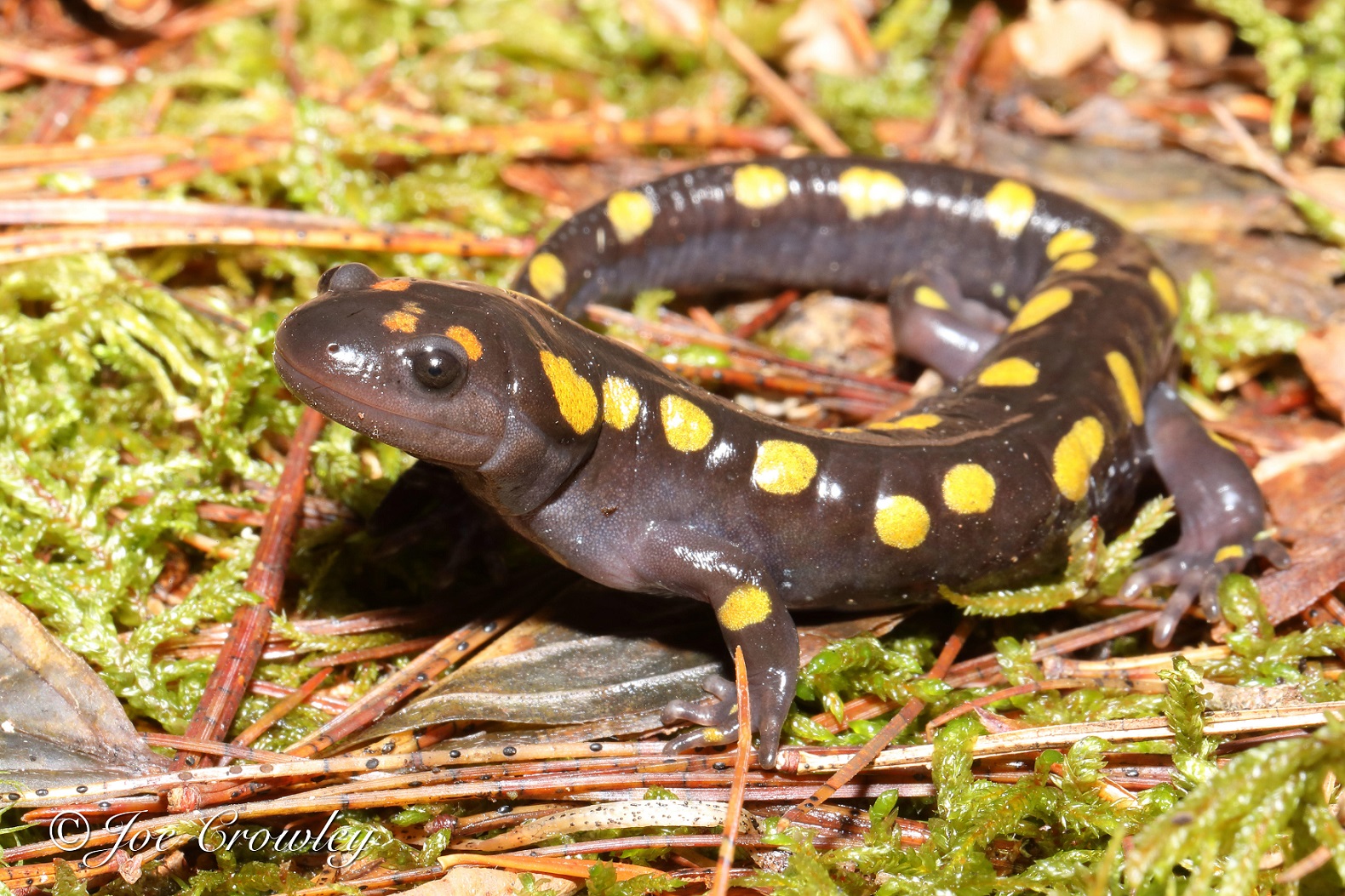
-
Article
Salish Woolly Dog
The Salish Woolly dog was an important part of Coast Salish life throughout southern Vancouver Island, the Strait of Georgia, and Washington State, as the dogs’ hair was used to weave clothing and blankets. Due to the increased presence of European settlers and their machine-spun sheep wool, the Salish Woolly dog population declined in the 1800s until its extinction around 1900.
"https://d3d0lqu00lnqvz.cloudfront.net/media/new_article_images/Salish-wooly-dog.jpg" // resources/views/front/categories/view.blade.php
https://d3d0lqu00lnqvz.cloudfront.net/media/new_article_images/Salish-wooly-dog.jpg
-
Article
Salmon
The salmon is a family of fish, Salmonidae [Lat salire, "to leap"], with soft fin rays, a short dorsal fin, an adipose (fatty) fin, and teeth in the jaws. The family includes salmon, trout and char of the subfamily Salmoninae, the graylings of the subfamily Thymallinae and the whitefishes of the subfamily Coregoninae. Salmonids are native to north temperate and subarctic waters. However, because of their tremendous sportfishing appeal, they have been introduced to all continents except Antarctica. Five genera of Salmoninae are recognized. Two are Eurasian, Brachymystax and Hucho. Three are found in both hemispheres, including Canada: Salmo, the trouts and the Atlantic salmon; Oncorhynchus, the Pacific salmon; and Salvelinus, the chars.
"https://d3d0lqu00lnqvz.cloudfront.net/media/media/e9b9b391-1dc4-48d3-bdb1-36e27a35cf6d.jpg" // resources/views/front/categories/view.blade.php
https://d3d0lqu00lnqvz.cloudfront.net/media/media/e9b9b391-1dc4-48d3-bdb1-36e27a35cf6d.jpg
-
Article
Salt
Sodium chloride (NaCl), or common salt, is ubiquitous in the environment. In its solid form, salt crystallizes as colourless cubes and is called rock salt. Salt is also known to geologists as halite. Its crystal structure was the first to be determined by X-rays.
"https://thecanadianencyclopedia.ca/images/tce_placeholder.jpg?v=e9dca980c9bdb3aa11e832e7ea94f5d9" // resources/views/front/categories/view.blade.php
https://thecanadianencyclopedia.ca/images/tce_placeholder.jpg?v=e9dca980c9bdb3aa11e832e7ea94f5d9
-
Article
Sand and Gravel
Sand and gravel are unconsolidated, granular mineral materials produced by the natural disintegration of rock caused by weathering. The terms sand, gravel, clay and silt relate to grain size rather than composition. Sand is material passing through a number 4 (4.
"https://thecanadianencyclopedia.ca/images/tce_placeholder.jpg?v=e9dca980c9bdb3aa11e832e7ea94f5d9" // resources/views/front/categories/view.blade.php
https://thecanadianencyclopedia.ca/images/tce_placeholder.jpg?v=e9dca980c9bdb3aa11e832e7ea94f5d9
-
"https://d3d0lqu00lnqvz.cloudfront.net/media/media/db84b082-87bb-42fd-9a57-f102344d71fe.jpg" // resources/views/front/categories/view.blade.php
https://d3d0lqu00lnqvz.cloudfront.net/media/media/db84b082-87bb-42fd-9a57-f102344d71fe.jpg
-
"https://d3d0lqu00lnqvz.cloudfront.net/media/media/8a982aaa-04b3-4292-a95d-8eb1cfc8f79c.jpg" // resources/views/front/categories/view.blade.php
https://d3d0lqu00lnqvz.cloudfront.net/media/media/8a982aaa-04b3-4292-a95d-8eb1cfc8f79c.jpg
-
Article
Saskatoon Berry
Saskatoon berry (Amelanchier alnifolia) is a deciduous native shrub that grows from western Ontario to British Columbia and the Yukon. The city of Saskatoon takes its name from a Cree word for the sweet, fleshy fruits, which were of prime importance to Indigenous peoples and early settlers. On the prairies, saskatoons were a major ingredient in pemmican. Saskatoons are very hardy plants that can survive winter temperatures of -50 to -60º Celsius with a lifespan of 30 to 50 years. Plant size ranges from a small to large shrub or tree 4 to 6 m high. The Saskatoon berry is the provincial fruit of Saskatchewan. (See also Provincial and Territorial Emblems; Provincial Floral Emblems.)
"https://d3d0lqu00lnqvz.cloudfront.net/media/media/6daeece7-6958-48e5-a9d8-409ea86607f0.jpg" // resources/views/front/categories/view.blade.php
https://d3d0lqu00lnqvz.cloudfront.net/media/media/6daeece7-6958-48e5-a9d8-409ea86607f0.jpg
-
Article
Sawfly
Sawfly, common name for members of insect order Hymenoptera, which resemble wasps and are characterized by the lack of a marked constriction between the first and second abdominal segments.
"https://thecanadianencyclopedia.ca/images/tce_placeholder.jpg?v=e9dca980c9bdb3aa11e832e7ea94f5d9" // resources/views/front/categories/view.blade.php
https://thecanadianencyclopedia.ca/images/tce_placeholder.jpg?v=e9dca980c9bdb3aa11e832e7ea94f5d9
-
Article
Saxifrage
Flowers, mostly small, commonly white or yellow, are borne as terminal clusters on hairy stalks. Plants form tufted, spreading cushions, frequently giving striking patches of colour. S.
"https://thecanadianencyclopedia.ca/images/tce_placeholder.jpg?v=e9dca980c9bdb3aa11e832e7ea94f5d9" // resources/views/front/categories/view.blade.php
https://thecanadianencyclopedia.ca/images/tce_placeholder.jpg?v=e9dca980c9bdb3aa11e832e7ea94f5d9
-
Article
Scallop
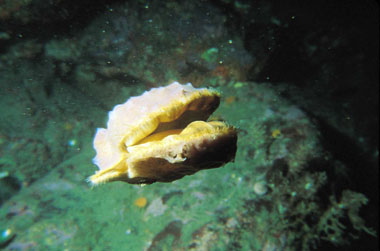
Scallop is a bivalve (hinged shell) mollusc of suborder Pectinina. Scallops are found in all seas.
"https://d3d0lqu00lnqvz.cloudfront.net/media/media/cd549afe-419a-4907-88e2-c009fcbc4fa7.jpg" // resources/views/front/categories/view.blade.php
https://d3d0lqu00lnqvz.cloudfront.net/media/media/cd549afe-419a-4907-88e2-c009fcbc4fa7.jpg