
Browse "Nature & Geography"
-
Article
Quill Lakes
The Quill Lakes are three connected saline lakes in southeastern Saskatchewan. They are located 150 km north of Regina and 152 km east of Saskatoon. From west to east the lakes are named Big Quill, Middle Quill (also known as Mud Lake) and Little Quill. Despite its name, at 181 km2 Little Quill is the second largest of the three lakes. Big Quill is the largest at 307 km2. The Quill Lakes’ elevation is 516 m.
"https://thecanadianencyclopedia.ca/images/tce_placeholder.jpg?v=e9dca980c9bdb3aa11e832e7ea94f5d9" // resources/views/front/categories/view.blade.php
https://thecanadianencyclopedia.ca/images/tce_placeholder.jpg?v=e9dca980c9bdb3aa11e832e7ea94f5d9
-
Article
Rabbit Farming
Rabbit farming, officially called cuniculture (from the species name for wild rabbits, Oryctolagus cuniculus), is a small part of Canadian agriculture, with most production in Ontario and Québec.
"https://d3d0lqu00lnqvz.cloudfront.net/media/media/cb6c0bcf-d5f4-46aa-be4f-5de63ae493dd.jpg" // resources/views/front/categories/view.blade.php
https://d3d0lqu00lnqvz.cloudfront.net/media/media/cb6c0bcf-d5f4-46aa-be4f-5de63ae493dd.jpg
-
Article
Racoon
Racoon was a 26-gun British sloop of war sent to seize Astoria, the American Pacific Fur Company post at the Columbia River mouth, and to establish an outpost there during the War of 1812.
"https://thecanadianencyclopedia.ca/images/tce_placeholder.jpg?v=e9dca980c9bdb3aa11e832e7ea94f5d9" // resources/views/front/categories/view.blade.php
https://thecanadianencyclopedia.ca/images/tce_placeholder.jpg?v=e9dca980c9bdb3aa11e832e7ea94f5d9
-
Article
Radish
Radish (Raphanus sativus) is a hardy annual or biennial vegetable belonging to the Cruciferae family. Roots are mostly rounded with a red exterior and white, acrid flesh.
"https://d3d0lqu00lnqvz.cloudfront.net/media/media/876c15d2-b9d3-4c88-9be3-a60d0814c851.jpg" // resources/views/front/categories/view.blade.php
https://d3d0lqu00lnqvz.cloudfront.net/media/media/876c15d2-b9d3-4c88-9be3-a60d0814c851.jpg
-
Article
Ragweed
Ragweed is an annual or perennial plant of the genus Ambrosia, family Compositae or Asteraceae. Fifteen species are native to North America; 3 occur across Canada: common ragweed (A. artemisiifolia), perennial ragweed (A. coronopifolia) and giant ragweed (A. trifida).
"https://thecanadianencyclopedia.ca/images/tce_placeholder.jpg?v=e9dca980c9bdb3aa11e832e7ea94f5d9" // resources/views/front/categories/view.blade.php
https://thecanadianencyclopedia.ca/images/tce_placeholder.jpg?v=e9dca980c9bdb3aa11e832e7ea94f5d9
-
"https://thecanadianencyclopedia.ca/images/tce_placeholder.jpg?v=e9dca980c9bdb3aa11e832e7ea94f5d9" // resources/views/front/categories/view.blade.php
https://thecanadianencyclopedia.ca/images/tce_placeholder.jpg?v=e9dca980c9bdb3aa11e832e7ea94f5d9
-
Article
Rain
Central US lows, entering Canada somewhere between Manitoba and Québec, are of major environmental significance because they pass through the industrial heartland of the US and frequently bring ACID RAIN.
"https://d3d0lqu00lnqvz.cloudfront.net/media/media/d32eb943-b421-42f4-bb17-0d8dbdeb99d9.jpg" // resources/views/front/categories/view.blade.php
https://d3d0lqu00lnqvz.cloudfront.net/media/media/d32eb943-b421-42f4-bb17-0d8dbdeb99d9.jpg
-
Article
Rainbow
A rainbow is a coloured arc that forms when sunlight shines onto falling raindrops, is refracted, and then reflected back towards the observer. In this process, each drop acts as a tiny prism, splitting the sun's rays (according to wavelength) into their component colours.
"https://d3d0lqu00lnqvz.cloudfront.net/media/media/de807858-670f-48f2-986d-ea5cea2fc44e.jpg" // resources/views/front/categories/view.blade.php
https://d3d0lqu00lnqvz.cloudfront.net/media/media/de807858-670f-48f2-986d-ea5cea2fc44e.jpg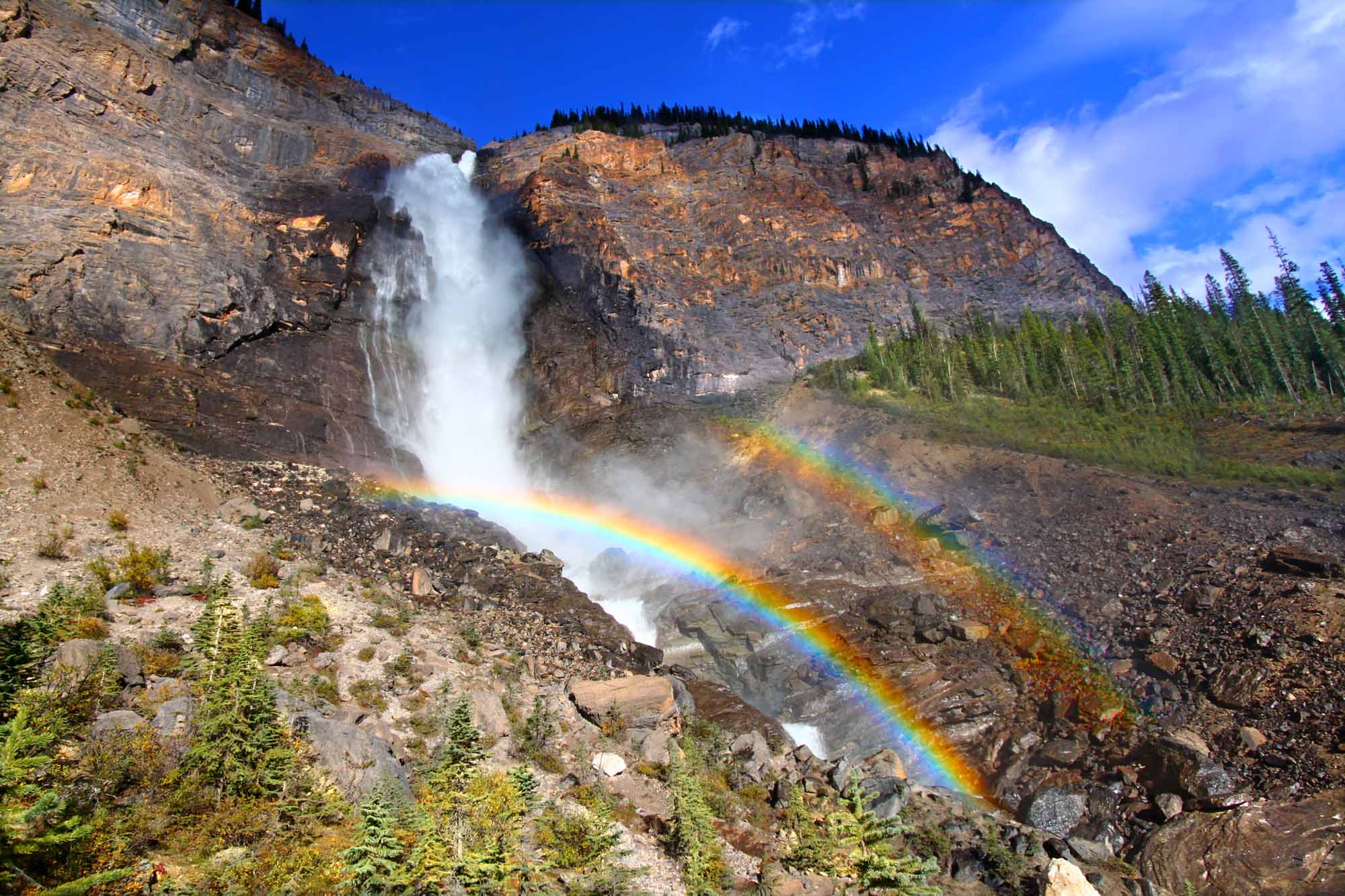
-
Article
Rainfall Extremes
The amount of rain or snow that reaches the ground can vary dramatically on any particular given day, even over short distances. Many people have experienced a near-deluge of rain in their backyard, while at the same time their front yard or their neighbour's home remains quite dry.
"https://d3d0lqu00lnqvz.cloudfront.net/media/media/619882aa-a3f1-43cc-8453-b40c8eb53187.jpg" // resources/views/front/categories/view.blade.php
https://d3d0lqu00lnqvz.cloudfront.net/media/media/619882aa-a3f1-43cc-8453-b40c8eb53187.jpg
-
Article
Rat Control in Alberta
Rat control in Alberta is administered and co-ordinated by Alberta Agriculture and Food. It was established in 1950 to keep Alberta free of Norway rats (seeRAT), which were introduced to the east coast of North America in 1775
"https://thecanadianencyclopedia.ca/images/tce_placeholder.jpg?v=e9dca980c9bdb3aa11e832e7ea94f5d9" // resources/views/front/categories/view.blade.php
https://thecanadianencyclopedia.ca/images/tce_placeholder.jpg?v=e9dca980c9bdb3aa11e832e7ea94f5d9
-
Article
Rattlesnakes in Canada
Rattlesnake is the common name for about 30 species of venomous, viperid snakes in the genera Crotalus and Sistrurus, found from southern Canada to South America. Three species of rattlesnake are found in Canada: the Western rattlesnake (Crotalus oreganous), the prairie rattlesnake (Crotalus viridus) and the Eastern massasauga rattlesnake (Sistrurus catenatus). Another species, the timber rattlesnake (Crotalus horridus), is extirpated, meaning the species no longer exists in the wild in Canada but continues to live in the eastern United States.
"https://d3d0lqu00lnqvz.cloudfront.net/rattlesnake/eastern-massasauga-rattlesnake.jpg" // resources/views/front/categories/view.blade.php
https://d3d0lqu00lnqvz.cloudfront.net/rattlesnake/eastern-massasauga-rattlesnake.jpg
-
Article
Raven
The raven is a large, black bird with a purplish lustre, belonging, like the crow, to the genus Corvus. The common raven is the territorial bird of the Yukon.
"https://d3d0lqu00lnqvz.cloudfront.net/crowsincanada/common-raven.jpg" // resources/views/front/categories/view.blade.php
https://d3d0lqu00lnqvz.cloudfront.net/crowsincanada/common-raven.jpg
-
Article
Ray
Description Rays are flattened dorsoventrally, the body appearing disclike. The pectoral fins are attached to the side of the head. The mouth, nostrils and 5 pairs of gill slits are located on the white lower surface. A pair of spiracles occurs on the upper surface behind the eyes.
"https://d3d0lqu00lnqvz.cloudfront.net/media/media/aaf4d826-92aa-43ed-9759-91127c90e8b8.jpg" // resources/views/front/categories/view.blade.php
https://d3d0lqu00lnqvz.cloudfront.net/media/media/aaf4d826-92aa-43ed-9759-91127c90e8b8.jpg
-
Article
Red Fife Wheat
Red Fife is a bread wheat (Triticum aestivum) variety that David Fife and family began to grow in 1842 at their farm in Peterborough, Ontario. Its name is derived from the original red colour of the wheat kernel and the name of the farmer; this was a typical procedure for naming wheat in the mid-1800s.
"https://d3d0lqu00lnqvz.cloudfront.net/redfifewheat/redfifewheat.jpg" // resources/views/front/categories/view.blade.php
https://d3d0lqu00lnqvz.cloudfront.net/redfifewheat/redfifewheat.jpg
-
Macleans
Red River Flood
This article was originally published in Maclean’s magazine on May 12, 1997. Partner content is not updated. The flood of the century, they have been calling it in Manitoba, an awesome demonstration of natures raw might.
"https://d3d0lqu00lnqvz.cloudfront.net/media/media/c61bdc21-634f-4316-9ab1-acb89adc0cdf.jpg" // resources/views/front/categories/view.blade.php
https://d3d0lqu00lnqvz.cloudfront.net/media/media/c61bdc21-634f-4316-9ab1-acb89adc0cdf.jpg