
Browse "Nature & Geography"
-
Article
Pika
Pika is a common name for the smallest members of the order Lagomorpha, which also includes rabbits and hares. Pikas are like guinea pigs in size and shape, have relatively short legs, no external tail and almost circular, prominent external ears.
"https://d3d0lqu00lnqvz.cloudfront.net/media/media/af98ba70-1113-45b4-b37d-a949a1275270.jpg" // resources/views/front/categories/view.blade.php
https://d3d0lqu00lnqvz.cloudfront.net/media/media/af98ba70-1113-45b4-b37d-a949a1275270.jpg
-
Article
Pike
Pike is the common name for the group of 5 species of predaceous freshwater fish with elongated snouts, sharp teeth, cylindrical bodies and forked tails, belonging to family Esocidae, order Esociformes, class Actinopterygii.
"https://d3d0lqu00lnqvz.cloudfront.net/media/media/b3274c7c-a583-453e-9df1-19e86cd30f1d.jpg" // resources/views/front/categories/view.blade.php
https://d3d0lqu00lnqvz.cloudfront.net/media/media/b3274c7c-a583-453e-9df1-19e86cd30f1d.jpg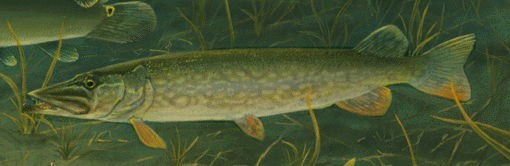
-
Article
Pingo
A pingo is an ice-cored hill typically conical in shape, growing and persisting only in PERMAFROST. The word "pingo" is of Inuit origin and was first used in the English-language literature by the botanist Alf E.
"https://d3d0lqu00lnqvz.cloudfront.net/media/media/5e658751-a56e-4535-9950-f641ec565a97.jpg" // resources/views/front/categories/view.blade.php
https://d3d0lqu00lnqvz.cloudfront.net/media/media/5e658751-a56e-4535-9950-f641ec565a97.jpg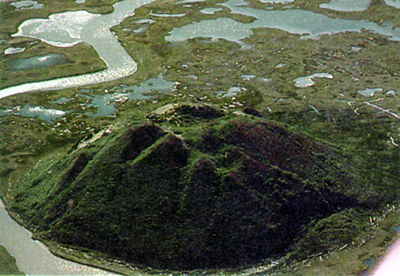
-
Article
Pipelines in Canada
Pipelines are systems of connected pipes used to transport liquids and gases — namely oil and natural gas — across long distances from source to market. More than 840,000 km of pipelines criss-cross the country. They represent part of the oil and gas sector which directly and indirectly employs approximately 740,000 people. According to Natural Resources Canada, the sector earns the government an average of $20 billion in royalties, fees and taxes each year (see Natural Resources in Canada). It also contributes nearly 11 per cent of Canada’s gross domestic product. Pipelines, however, have been controversial in Canada. Pipelines help transport fossil fuels and research indicates that fossil fuel use, is significantly contributing to climate change. In recent years, Indigenous groups, environmentalists, municipalities and labour unions have opposed numerous pipeline projects due to the risk of contaminated local waterways from spills and leaks. (See also Environmental Movement in Canada).
"https://d3d0lqu00lnqvz.cloudfront.net/media/media/d582fdd1-da33-4f4e-bb6a-d3573745bd88.jpg" // resources/views/front/categories/view.blade.php
https://d3d0lqu00lnqvz.cloudfront.net/media/media/d582fdd1-da33-4f4e-bb6a-d3573745bd88.jpg
-
Article
Pipit
Pipit is the common name for some birds of the family Motacillidae, which also includes wagtails.
"https://thecanadianencyclopedia.ca/images/tce_placeholder.jpg?v=e9dca980c9bdb3aa11e832e7ea94f5d9" // resources/views/front/categories/view.blade.php
https://thecanadianencyclopedia.ca/images/tce_placeholder.jpg?v=e9dca980c9bdb3aa11e832e7ea94f5d9
-
Article
Pitcher Plant
Pitcher plant is the common name for certain perennial herbs adapted to wet, marshy and boggy habitats low in nutrients. They have rosettes of leaves that are modified into tubular, trumpet-like structures filled with liquid that function as insect traps. The plants generally bear a single, large nodding flower. Canada is home to only one species, the purple pitcher plant (Sarracenia purpurea).
"https://d3d0lqu00lnqvz.cloudfront.net/media/widgets_images/pitcherplant/Ptcher-Plant.jpg" // resources/views/front/categories/view.blade.php
https://d3d0lqu00lnqvz.cloudfront.net/media/widgets_images/pitcherplant/Ptcher-Plant.jpg
-
Article
Planet and Satellite
The diameter of a world is a significant value because, given the same densities, the surface gravity will vary roughly with the diameter. A diameter of 350 km is the approximate dividing line between the larger, near-spherical bodies and the smaller objects of irregular shape.
"https://d3d0lqu00lnqvz.cloudfront.net/media/media/4c1c6f4c-e6fb-43ec-a6ab-1611826eba6d.jpg" // resources/views/front/categories/view.blade.php
https://d3d0lqu00lnqvz.cloudfront.net/media/media/4c1c6f4c-e6fb-43ec-a6ab-1611826eba6d.jpg
-
Article
Plankton
Plankton [Gk planktos, "drifting"], plants and animals , phytoplankton and zooplankton, respectively, that float freely or drift with currents in oceans , freshwater ponds and lakes.
"https://thecanadianencyclopedia.ca/images/tce_placeholder.jpg?v=e9dca980c9bdb3aa11e832e7ea94f5d9" // resources/views/front/categories/view.blade.php
https://thecanadianencyclopedia.ca/images/tce_placeholder.jpg?v=e9dca980c9bdb3aa11e832e7ea94f5d9
-
Article
Plant Breeding
Plant breeding is an applied science, in which knowledge of genetics, pathology, plant physiology, statistics, and molecular biology are used to modify plant species for human needs or preferences.
"https://thecanadianencyclopedia.ca/images/tce_placeholder.jpg?v=e9dca980c9bdb3aa11e832e7ea94f5d9" // resources/views/front/categories/view.blade.php
https://thecanadianencyclopedia.ca/images/tce_placeholder.jpg?v=e9dca980c9bdb3aa11e832e7ea94f5d9
-
Article
Plant Classification
Popular classification usually divides living beings into plants and animals and, sometimes, microbes. Scientific classification long followed a similar system, with 2 principal kingdoms: the animal order and the vegetable order.
"https://d3d0lqu00lnqvz.cloudfront.net/media/media/edce9657-3d08-4b7c-b369-aa52cc7f8d79.jpg" // resources/views/front/categories/view.blade.php
https://d3d0lqu00lnqvz.cloudfront.net/media/media/edce9657-3d08-4b7c-b369-aa52cc7f8d79.jpg
-
Article
Plant Disease
Plant disease can decrease the economic, aesthetic and biological value of all kinds of plants. Plant pathology (phytopathology) is the study of the nature, causes, prevention and socioeconomic aspects of plant diseases. Plant diseases are recognized by symptoms such as necrosis (death of cells or tissues), chlorosis (yellowing), wilting (shoot and leaf drooping), rot, dwarfing, tumefaction (formation of gall or localized swelling), bronzing or damping-off (plant toppling), etc.
"https://d3d0lqu00lnqvz.cloudfront.net/insectpestsofforests/beech-bark-disease.jpg" // resources/views/front/categories/view.blade.php
https://d3d0lqu00lnqvz.cloudfront.net/insectpestsofforests/beech-bark-disease.jpg
-
Article
Platinum
Platinum (Pt) is the best known of the 6 greyish-white, metallic, platinum group elements, which also include palladium (Pd), iridium (Ir), rhodium (Rh), osmium (Os) and ruthenium (Ru). Platinum and palladium are more commonly used than the other elements in the group.
"https://thecanadianencyclopedia.ca/images/tce_placeholder.jpg?v=e9dca980c9bdb3aa11e832e7ea94f5d9" // resources/views/front/categories/view.blade.php
https://thecanadianencyclopedia.ca/images/tce_placeholder.jpg?v=e9dca980c9bdb3aa11e832e7ea94f5d9
-
Article
Plover
Plover is the common name for a family (Charadriidae) of shorebirds with 2 subfamilies: Charadriinae, including true plovers; and Vanellinae, including lapwings.
"https://d3d0lqu00lnqvz.cloudfront.net/media/media/54ed14de-ebc8-46ba-80f7-c4f5bbef4130.jpg" // resources/views/front/categories/view.blade.php
https://d3d0lqu00lnqvz.cloudfront.net/media/media/54ed14de-ebc8-46ba-80f7-c4f5bbef4130.jpg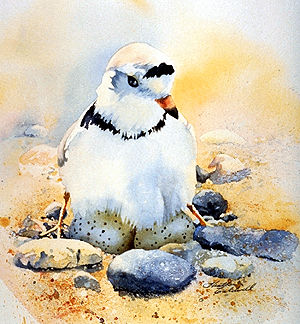
-
Article
Plum
Plum is a common name for certain members of genus Prunus of the rose family, which produce a smooth-skinned, elliptical, heart-shaped, oblong, ovate or round fruit with a flat seed. About 18 plum species are horticulturally important, including the European plum (P. domestica), which probably originated in the Caspian Sea area; Japanese plum (P. salicina), of Chinese origin; cherry plum (P. ceracifera), native to southeast Europe or southwest Asia; and P. nigra and P. americana, of Canadian and American origin respectively.
"https://d3d0lqu00lnqvz.cloudfront.net/media/media/a7b2bcfe-316e-4c50-b69e-69d4fc395472.jpg" // resources/views/front/categories/view.blade.php
https://d3d0lqu00lnqvz.cloudfront.net/media/media/a7b2bcfe-316e-4c50-b69e-69d4fc395472.jpg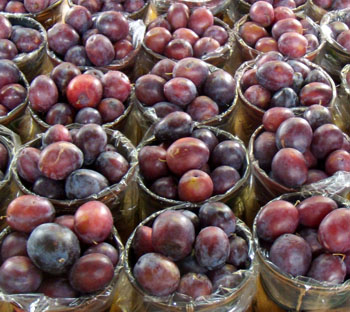
-
Article
Poison Ivy
Poison ivy is the common name collectively referring to a small genus (Toxicodendron) of woody perennial plants of the cashew family (Anacardiaceae). Poison ivy is closely related to and sometimes classified with the Sumacs in the genus Rhus.
"https://thecanadianencyclopedia.ca/images/tce_placeholder.jpg?v=e9dca980c9bdb3aa11e832e7ea94f5d9" // resources/views/front/categories/view.blade.php
https://thecanadianencyclopedia.ca/images/tce_placeholder.jpg?v=e9dca980c9bdb3aa11e832e7ea94f5d9