
Browse "Nature & Geography"
-
Article
Eggplant
Eggplant (Solanum melongena var. esculentum), or aubergine, perennial herbaceous plant of the nightshade family.
"https://d3d0lqu00lnqvz.cloudfront.net/media/media/006404cb-0860-4d6d-ab1f-efcb18067a02.jpg" // resources/views/front/categories/view.blade.php
https://d3d0lqu00lnqvz.cloudfront.net/media/media/006404cb-0860-4d6d-ab1f-efcb18067a02.jpg
-
Article
Elder
Elder, shrub of genus Sambucus, family Caprifoliaceae (honeysuckle). Elders grow up to 3 m high and spread to form thickets. About 20 species are known worldwide; 3 are native to Canada.
"https://d3d0lqu00lnqvz.cloudfront.net/media/media/0e03f876-f076-4da1-b276-9c2788b05c56.jpg" // resources/views/front/categories/view.blade.php
https://d3d0lqu00lnqvz.cloudfront.net/media/media/0e03f876-f076-4da1-b276-9c2788b05c56.jpg
-
Article
Ellesmere Island Eocene Fossils
Some 55 million years ago, during the early Eocene Epoch, Ellesmere Island in Canada's eastern High Arctic was warm and ice-free. It was also home to lush lowland forests and swamps inhabited by alligators, giant tortoises, snakes, lizards, and a host of mammals that included primates, tapirs, hippo-like Coryphodon, and large, rhino-like brontotheres. In the nearby ocean, clams and snails thrived. This extinct environment, well above the Arctic Circle, combined a warm temperate climate with a typical Arctic light regime of bright summers and dark winters.
"https://d3d0lqu00lnqvz.cloudfront.net/media/media/aad2c212-c087-43c4-8332-2d38b2f04f6d.jpg" // resources/views/front/categories/view.blade.php
https://d3d0lqu00lnqvz.cloudfront.net/media/media/aad2c212-c087-43c4-8332-2d38b2f04f6d.jpg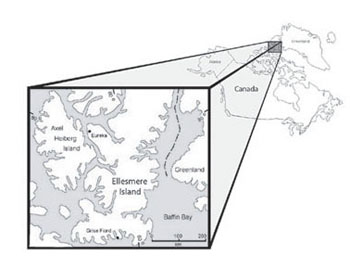
-
Article
Ellesmere Island Pliocene Fossils
Toward the close of the Tertiary (5 to 2 million years ago) and the beginning of the ice age (Quaternary — about 2 million years ago), a beaver pond existed on what is now Canada's Ellesmere Island, Nunavut. The site, which is located near the head of Strathcona Fiord (78°33'N), was discovered by Geological Survey of Canada geologist John Fyles in 1961. It is the world's most northerly Early Pliocene vertebrate locality. The small exposure of peaty, fossil-bearing beds have produced tree trunks up to 3 m long, many beaver-cut sticks (some burned by forest fires), remains of freshwater mollusks, insects, pollen, plant macrofossils (such as twigs, cones and leaves) and vertebrates.
"https://d3d0lqu00lnqvz.cloudfront.net/media/media/4bdc5be8-286b-4108-81c1-9602995884ad.jpg" // resources/views/front/categories/view.blade.php
https://d3d0lqu00lnqvz.cloudfront.net/media/media/4bdc5be8-286b-4108-81c1-9602995884ad.jpg
-
Article
Elm
Elm (Ulmus), genus of trees of elm family (Ulmaceae), found only in temperate regions of the Northern Hemisphere.
"https://thecanadianencyclopedia.ca/images/tce_placeholder.jpg?v=e9dca980c9bdb3aa11e832e7ea94f5d9" // resources/views/front/categories/view.blade.php
https://thecanadianencyclopedia.ca/images/tce_placeholder.jpg?v=e9dca980c9bdb3aa11e832e7ea94f5d9
-
Article
Endangered Animals in Canada
Many animals in Canada face the risk of extinction. Animals are put at risk for several reasons, including: climate change, the loss of forest and grassland to cities and agriculture, hunting, fishing, and the pollution of lakes and rivers. As of 2026, 587 animal species are at risk in Canada, according to the Committee on the Status of Endangered Wildlife in Canada. In addition, 21 are extirpated and 25 extinct. The committee’s definition of a wildlife species includes taxonomic categories as well as geographically distinct populations. For example, the beluga whale (Delphinapterus leucas) is included in the list of at risk animal species six times, as there are six different populations facing different threats to their survival.
"https://d3d0lqu00lnqvz.cloudfront.net/media/media/d94ee6d6-cf87-4001-9183-a07490901889.jpg" // resources/views/front/categories/view.blade.php
https://d3d0lqu00lnqvz.cloudfront.net/media/media/d94ee6d6-cf87-4001-9183-a07490901889.jpg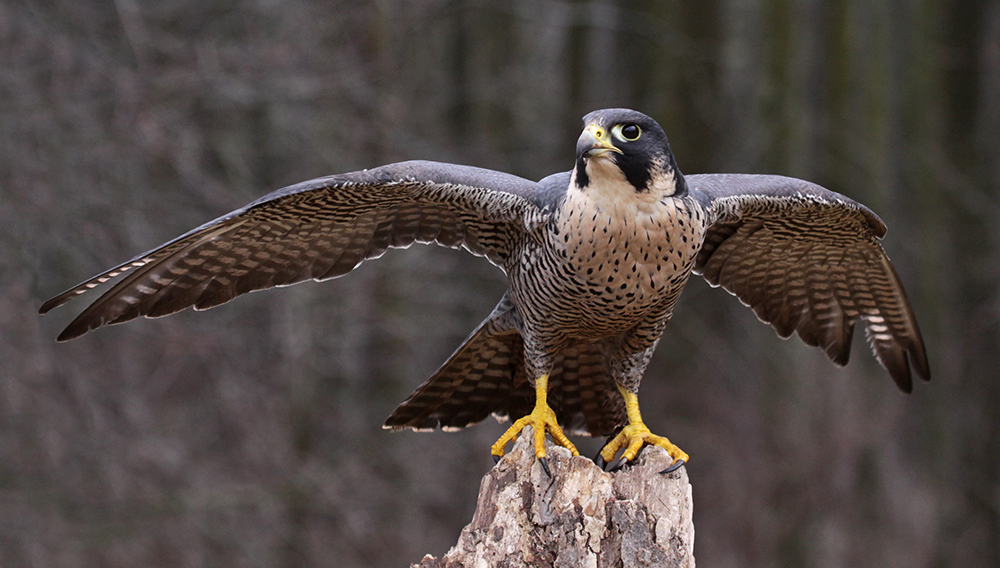
-
Article
Endangered Plants in Canada
A species is endangered if there are threats to its survival. Plants are put at risk for several reasons, including: climate change and the loss of natural habitat to cities, agriculture and industry. In Canada, these activities threaten entire natural ecosystems, such as older forests and Prairie grasslands. As of 2026, 240 plant species (including mosses) are at risk in Canada, according to the Committee on the Status of Endangered Wildlife in Canada. In addition, four are extirpated and one is extinct. The committee’s definition of a wildlife species includes taxonomic categories as well as geographically distinct populations. For example, the bent spike-rush (Eleocharis geniculate) is included on the list of at risk plant species twice, as there are two different populations, one in British Columbia and one in Ontario, facing different threats to their survival. (See also Endangered Animals in Canada.)
"https://d3d0lqu00lnqvz.cloudfront.net/media/media/387f5c8e-f2b5-4742-b30d-2a9832555b49.jpg" // resources/views/front/categories/view.blade.php
https://d3d0lqu00lnqvz.cloudfront.net/media/media/387f5c8e-f2b5-4742-b30d-2a9832555b49.jpg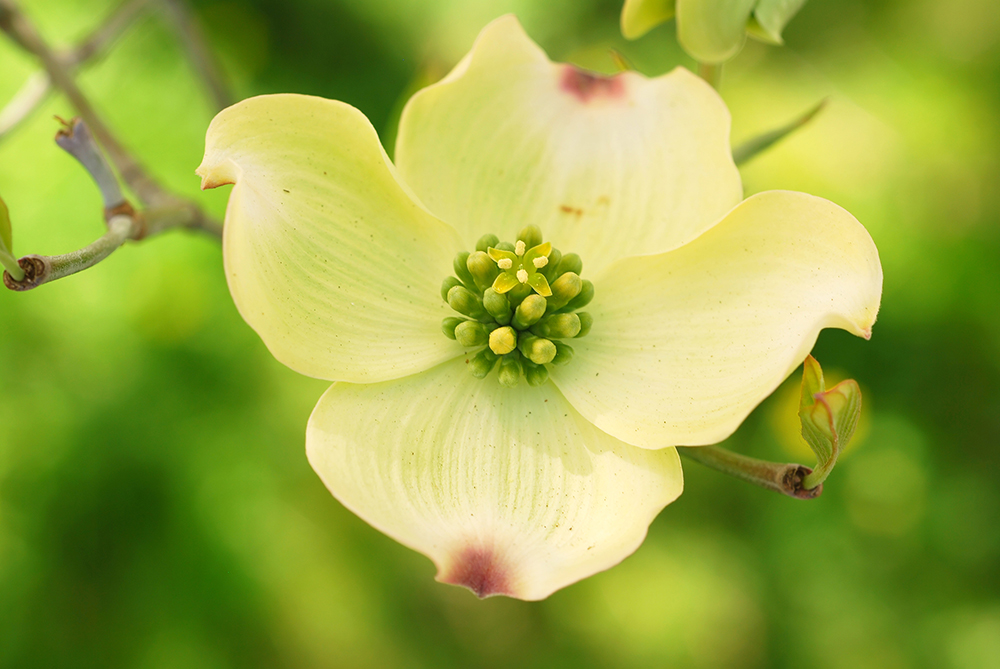
-
Macleans
Endangered Species Protection
Grant Fahlman, 51, has lived his whole life on the farm 25 km southeast of Regina where his family settled when they came from Russia in 1889, and this year was the first in his memory that no burrowing owls raised their broods in his pasture.This article was originally published in Maclean's Magazine on December 20, 1999
"https://thecanadianencyclopedia.ca/images/tce_placeholder.jpg?v=e9dca980c9bdb3aa11e832e7ea94f5d9" // resources/views/front/categories/view.blade.php
https://thecanadianencyclopedia.ca/images/tce_placeholder.jpg?v=e9dca980c9bdb3aa11e832e7ea94f5d9
-
Article
Endive
Endive, or escarole (Cichorium endivia), herbaceous biennial vegetable belonging to the Compositae family.
"https://d3d0lqu00lnqvz.cloudfront.net/media/media/b76a7ecf-15b6-4b61-8247-8839122572cf.jpg" // resources/views/front/categories/view.blade.php
https://d3d0lqu00lnqvz.cloudfront.net/media/media/b76a7ecf-15b6-4b61-8247-8839122572cf.jpg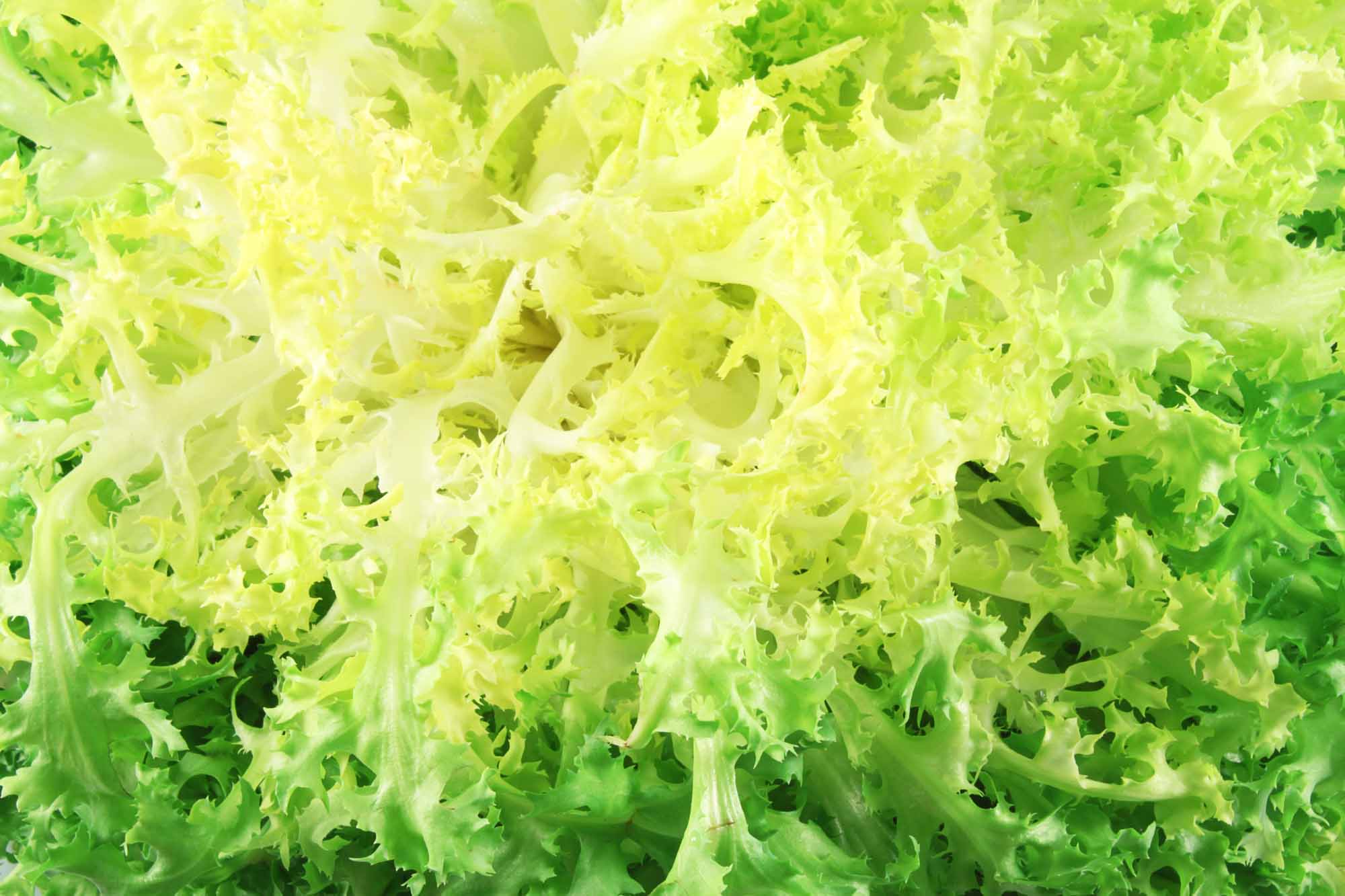
-
Article
Energy
The term "energy" is often used interchangeably with the term "power," but incorrectly so. Energy is defined as the capacity to do work and is measured in joules (J) or watt hours (1 Wh = 3600 J).
"https://thecanadianencyclopedia.ca/images/tce_placeholder.jpg?v=e9dca980c9bdb3aa11e832e7ea94f5d9" // resources/views/front/categories/view.blade.php
https://thecanadianencyclopedia.ca/images/tce_placeholder.jpg?v=e9dca980c9bdb3aa11e832e7ea94f5d9
-
Macleans
Energy Alternatives Getting Insufficient Government Support
CANADIANS ARE now committed to the reduction of greenhouse gas emissions under the Kyoto Protocol, even though Ottawa may not have a well-developed plan. But Dean Scammell does, and he's a good six years ahead of the government. In 1999, Scammell started building his 2,400-sq.This article was originally published in Maclean's Magazine on February 28, 2005
"https://thecanadianencyclopedia.ca/images/tce_placeholder.jpg?v=e9dca980c9bdb3aa11e832e7ea94f5d9" // resources/views/front/categories/view.blade.php
https://thecanadianencyclopedia.ca/images/tce_placeholder.jpg?v=e9dca980c9bdb3aa11e832e7ea94f5d9
-
Article
Energy in Society
Energy plays a unique and critical role in the world; no activity of any kind (no "work") can take place without the movement or conversion of energy.
"https://thecanadianencyclopedia.ca/images/tce_placeholder.jpg?v=e9dca980c9bdb3aa11e832e7ea94f5d9" // resources/views/front/categories/view.blade.php
https://thecanadianencyclopedia.ca/images/tce_placeholder.jpg?v=e9dca980c9bdb3aa11e832e7ea94f5d9
-
Article
Entomology
Entomology is the branch of zoology dealing with the study of insects, although which organisms are included is open to interpretation. Probably, those animals covered by the Gk word entomon ("cut up, segmented") are appropriately considered insects, e.g., the arthropods, but crustaceans (except for a few terrestrial species) and a few small, marine arthropod groups, such as sea spiders and horseshoe crabs, are generally excluded. Entomologists study the following groups: Insecta; Myriapoda (e.g., millipedes, centipedes); and Arachnida (e.g., scorpions, spiders, mites, ticks). Hence, entomology embraces the study of the majority of known species of organisms.
"https://d3d0lqu00lnqvz.cloudfront.net/media/media/c70607bd-f0f1-4ad2-9273-d49c9e46c013.jpg" // resources/views/front/categories/view.blade.php
https://d3d0lqu00lnqvz.cloudfront.net/media/media/c70607bd-f0f1-4ad2-9273-d49c9e46c013.jpg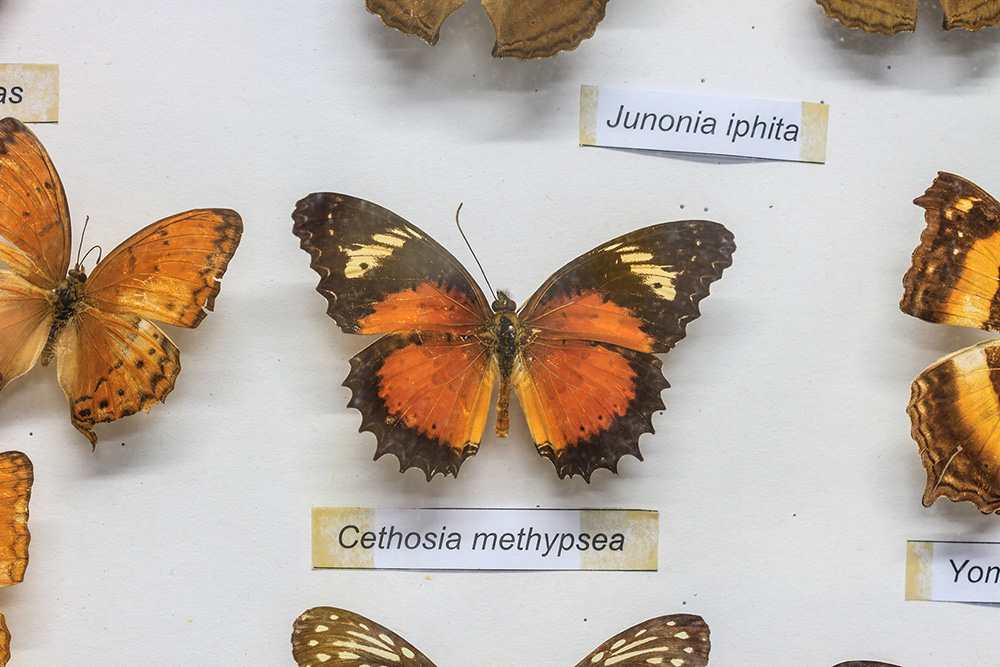
-
Article
Environment
The environment is the physical, social and psychological milieu in which humans exist. Throughout Earth’s four-billion-year history, profound changes have occurred in its geological and ecological systems. As long as human populations remained small and communities were part of local ecosystems, most changes occurred slowly and seemingly without major disturbances to the global system.
"https://d3d0lqu00lnqvz.cloudfront.net/media/media/a900e05f-6cab-483c-98fb-d602ef1a44bd.jpg" // resources/views/front/categories/view.blade.php
https://d3d0lqu00lnqvz.cloudfront.net/media/media/a900e05f-6cab-483c-98fb-d602ef1a44bd.jpg
-
Article
Environmental Movement in Canada
The environmental movement seeks to protect the natural world and promote sustainable living. It had its beginnings in the conservation efforts of the early 1900s. During this time, conservationists aimed to slow the rapid depletion of Canadian resources in favour of more regulated management. Many scholars divide the evolution of the environmental movement into “waves.” These waves are periods in time easily characterized by certain themes. While the number of waves and their characterization may differ from scholar to scholar, they’re often defined as follows: The first wave focused on conservation; the second, pollution; the third, the professionalization of environmental groups; and the fourth, climate change.
"https://d3d0lqu00lnqvz.cloudfront.net/media/media/1b9f48c9-96c8-4d74-a770-1a8819acf2ed.jpg" // resources/views/front/categories/view.blade.php
https://d3d0lqu00lnqvz.cloudfront.net/media/media/1b9f48c9-96c8-4d74-a770-1a8819acf2ed.jpg