
Browse "Nature & Geography"
-
Article
Climate Severity
Environment Canada devised the climate severity index to rate a locality's climate according to human comfort and well being. The index has a range from 1 to 100, with a score of 1 representing the least severe climate and 100 the most.
"https://d3d0lqu00lnqvz.cloudfront.net/media/media/ccf0af1a-002e-4354-a12c-75c5dd40fc2e.jpg" // resources/views/front/categories/view.blade.php
https://d3d0lqu00lnqvz.cloudfront.net/media/media/ccf0af1a-002e-4354-a12c-75c5dd40fc2e.jpg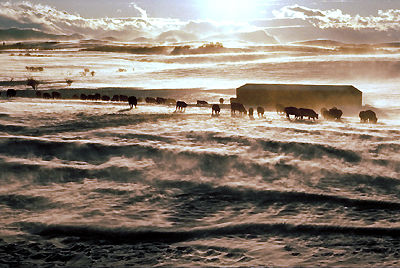
-
Article
Cloud
Cloud, visible suspension in the atmosphere composed of tiny water droplets or ICE crystals from about one to a few hundred micrometres in diameter.
"https://d3d0lqu00lnqvz.cloudfront.net/media/Twitter_Cards/cloud.jpg" // resources/views/front/categories/view.blade.php
https://d3d0lqu00lnqvz.cloudfront.net/media/Twitter_Cards/cloud.jpg
-
Article
Clover
The "true" clovers (genus Trifolium) are herbaceous plants of the pea family Leguminosae or Fabaceae (see legume) and must be distinguished from bur clovers (Medicago) and sweet clovers (Melilotus) of the same family.
"https://d3d0lqu00lnqvz.cloudfront.net/media/media/17ee5c4b-53cb-4a9d-8404-21c23f0d528a.jpg" // resources/views/front/categories/view.blade.php
https://d3d0lqu00lnqvz.cloudfront.net/media/media/17ee5c4b-53cb-4a9d-8404-21c23f0d528a.jpg
-
Article
Club-moss
Club-moss, perennial, evergreen, coarsely mosslike plants belonging to the genera Diphasiastrum, Huperzia, Lycopodiella and Lycopodium of the club-moss family (Lycopodiaceae).
"https://d3d0lqu00lnqvz.cloudfront.net/media/media/a46115b2-9cad-45a1-b41a-cdd3daecdb7b.jpg" // resources/views/front/categories/view.blade.php
https://d3d0lqu00lnqvz.cloudfront.net/media/media/a46115b2-9cad-45a1-b41a-cdd3daecdb7b.jpg
-
Article
Cnidaria
Cnidaria, phylum of multicellular, radially symmetrical invertebrates (eg, hydroids, jellyfish, sea anemones, corals) dating to late Precambrian era (630-570 million years ago).
"https://d3d0lqu00lnqvz.cloudfront.net/media/media/d0d93bdb-a7a6-4b76-a22b-57d9f2138218.jpg" // resources/views/front/categories/view.blade.php
https://d3d0lqu00lnqvz.cloudfront.net/media/media/d0d93bdb-a7a6-4b76-a22b-57d9f2138218.jpg
-
Article
Cockroach
Cockroach, swift-running, flattened, oval-shaped insect belonging to order Dictyoptera.
"https://thecanadianencyclopedia.ca/images/tce_placeholder.jpg?v=e9dca980c9bdb3aa11e832e7ea94f5d9" // resources/views/front/categories/view.blade.php
https://thecanadianencyclopedia.ca/images/tce_placeholder.jpg?v=e9dca980c9bdb3aa11e832e7ea94f5d9
-
Article
Cod in Canada
Cod is the common name for fishes of the class Actinopterygii, order Gadiformes, family Gadidae. This family contains about 30 species of mostly bottom-living fishes found in cool seas. In Canada, about nine species occur in Atlantic waters, three in the Pacific and five in the Arctic. The family includes many important food fishes, e.g., Atlantic cod (Gadus morhua), haddock (genus Melanogrammus), pollock (Pollachius virens), Pacific cod (Gadus macrocephalus) and tomcods (genus Microgadus). Fishes recently removed from the family Gadidae include cusk, burbot, rocklings and lings (now family Lotidae) and hakes (now family Phycidae).
"https://d3d0lqu00lnqvz.cloudfront.net/cod/Gadus_morhua_-head.jpg" // resources/views/front/categories/view.blade.php
https://d3d0lqu00lnqvz.cloudfront.net/cod/Gadus_morhua_-head.jpg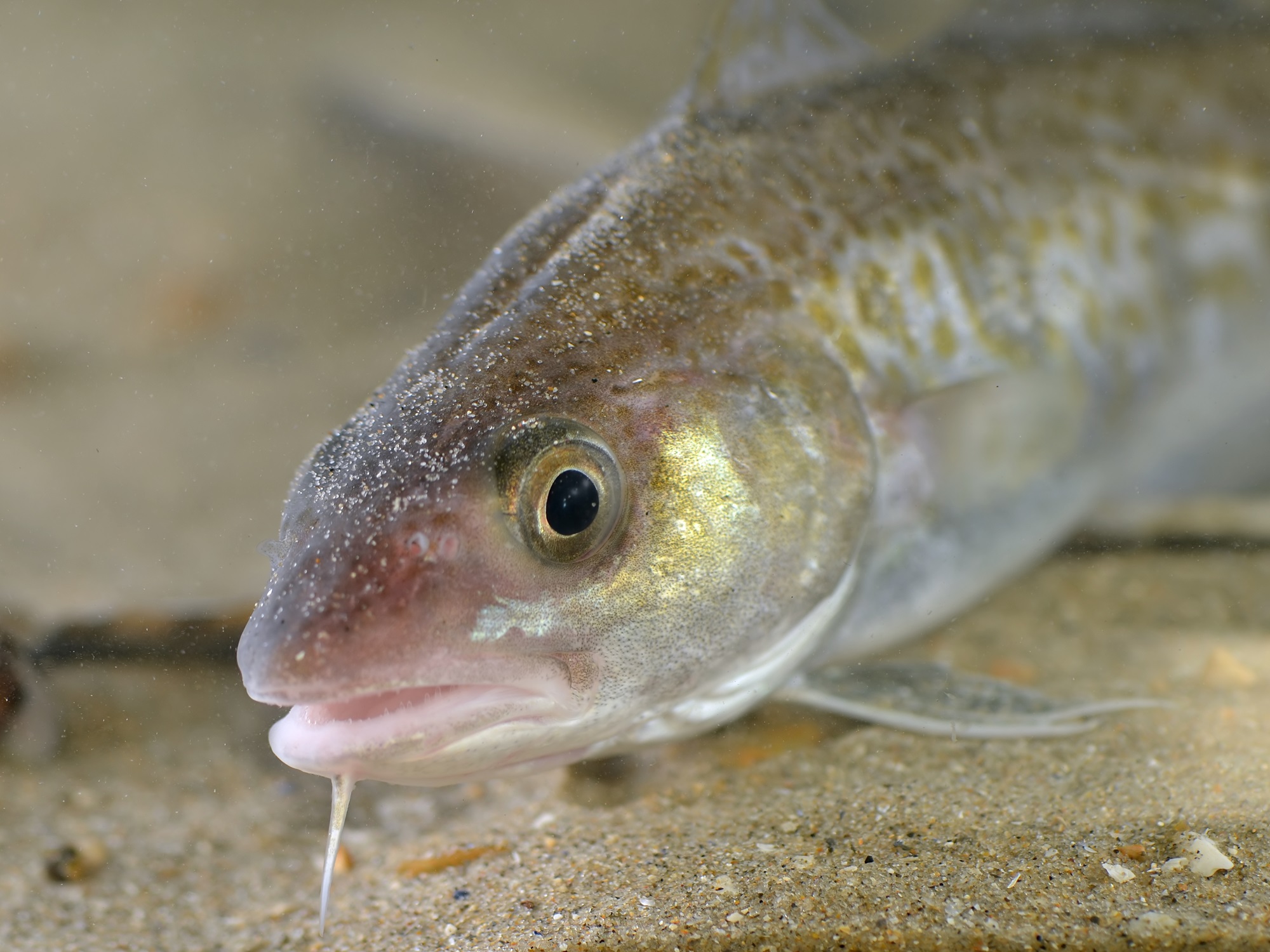
-
Article
Cod Moratorium of 1992
On 2 July 1992, the federal government banned cod fishing along Canada’s east coast. This moratorium ended nearly five centuries of cod fishing in Newfoundland and Labrador. Cod had played a central role in the province’s economy and culture. The aim of the policy was to help restore cod stocks that had been depleted due to overfishing. (See also Fisheries.) Click here for definitions of key terms used in this article.
"https://d3d0lqu00lnqvz.cloudfront.net/media/new_article_images/CodMoratoriumof1992/Harbour_Grace_Douglas_Sprott_flickr.jpg" // resources/views/front/categories/view.blade.php
https://d3d0lqu00lnqvz.cloudfront.net/media/new_article_images/CodMoratoriumof1992/Harbour_Grace_Douglas_Sprott_flickr.jpg
-
Article
Cold Places in Canada
During the prolonged darkness of winter, the air over the huge snow- and ice-covered surfaces of Canada may stagnate for weeks, radiating heat to outer space.
"https://d3d0lqu00lnqvz.cloudfront.net/media/media/4746fd27-236c-4c5b-a1e2-a5d87eba78b2.jpg" // resources/views/front/categories/view.blade.php
https://d3d0lqu00lnqvz.cloudfront.net/media/media/4746fd27-236c-4c5b-a1e2-a5d87eba78b2.jpg
-
Article
Columbia Icefield
The Columbia Icefield is a mass of ice covering a high plateau between Mount Columbia (3747 m), the highest point in Alberta, and Mount Athabasca (3491 m), located between Banff and Jasper national parks, along the BC-Alberta border.
"https://d3d0lqu00lnqvz.cloudfront.net/media/media/4f68d2f4-7717-496d-a427-bbafb71196fd.jpg" // resources/views/front/categories/view.blade.php
https://d3d0lqu00lnqvz.cloudfront.net/media/media/4f68d2f4-7717-496d-a427-bbafb71196fd.jpg
-
Article
Columbine
Columbine, herbaceous plant (genus Aquilegia) of buttercup family (Ranunculaceae). The generic name derives from Latin aquila, "eagle," common name from Latin columba, "dove."
"https://d3d0lqu00lnqvz.cloudfront.net/media/media/d4ad8955-6625-442a-8665-4fa9e5d4905c.jpg" // resources/views/front/categories/view.blade.php
https://d3d0lqu00lnqvz.cloudfront.net/media/media/d4ad8955-6625-442a-8665-4fa9e5d4905c.jpg
-
Article
Columbium
Columbium (Cb), or niobium, is a grey, ductile, tarnish-resistant and superconductive metal with a melting point of 2468°C. The name niobium (Nb) was officially adopted in 1951 by the International Union of Pure and Applied Chemistry, after 100 years of controversy.
"https://thecanadianencyclopedia.ca/images/tce_placeholder.jpg?v=e9dca980c9bdb3aa11e832e7ea94f5d9" // resources/views/front/categories/view.blade.php
https://thecanadianencyclopedia.ca/images/tce_placeholder.jpg?v=e9dca980c9bdb3aa11e832e7ea94f5d9
-
Article
Comet
Comet, astronomical body orbiting the SUN, which appears for a few weeks as a faint, luminous patch moving slowly, from night to night, relative to the background of stars. The comet may also have a luminous tail pointing away from the sun.
"https://thecanadianencyclopedia.ca/images/tce_placeholder.jpg?v=e9dca980c9bdb3aa11e832e7ea94f5d9" // resources/views/front/categories/view.blade.php
https://thecanadianencyclopedia.ca/images/tce_placeholder.jpg?v=e9dca980c9bdb3aa11e832e7ea94f5d9
-
Article
Commodities in Canada
In commerce, commodities are interchangeable goods or services. Many natural resources in Canada are viewed as commodities. They are a major source of the country’s wealth. Examples of commodities include a barrel of crude oil, an ounce of gold, or a contract to clear snow during the winter. Commodity products often supply the production of other goods or services. Many are widely traded in futures exchanges (see Commodity Trading).
"https://d3d0lqu00lnqvz.cloudfront.net/media/new_article_images/EconomicsSummaries/dreamstimeextralarge_35143531.jpg" // resources/views/front/categories/view.blade.php
https://d3d0lqu00lnqvz.cloudfront.net/media/new_article_images/EconomicsSummaries/dreamstimeextralarge_35143531.jpg
-
Article
Common Five-Lined Skink
The common five-lined skink (Plestiodon fasciatus) is a relatively small lizard native to Eastern North America. With a distribution spanning more than 2.5 million square kilometres, it is the most widely distributed lizard species in Eastern North America. Due to a combination of threats and historical declines, it is listed as a species at risk under the Canadian Species at Risk Act.
"https://d3d0lqu00lnqvz.cloudfront.net/commonfive-linedskink/Crowley-Five-lined-Skink-Plestiodon-fasciatus-juvenile.jpg" // resources/views/front/categories/view.blade.php
https://d3d0lqu00lnqvz.cloudfront.net/commonfive-linedskink/Crowley-Five-lined-Skink-Plestiodon-fasciatus-juvenile.jpg