
Browse "Military"
-
Article
Billy Bishop Goes to War
Billy Bishop Goes to War is a musical written by John MacLachlan Gray with Eric Peterson about the exploits of First World War flying ace William Avery "Billy" Bishop. Since its premiere in 1978, the musical has been staged across Canada and in the United States and Europe. It remains one of the most popular Canadian musicals.
"https://d3d0lqu00lnqvz.cloudfront.net/BillyBishop/BIshop-in-plane.jpg" // resources/views/front/categories/view.blade.php
https://d3d0lqu00lnqvz.cloudfront.net/BillyBishop/BIshop-in-plane.jpg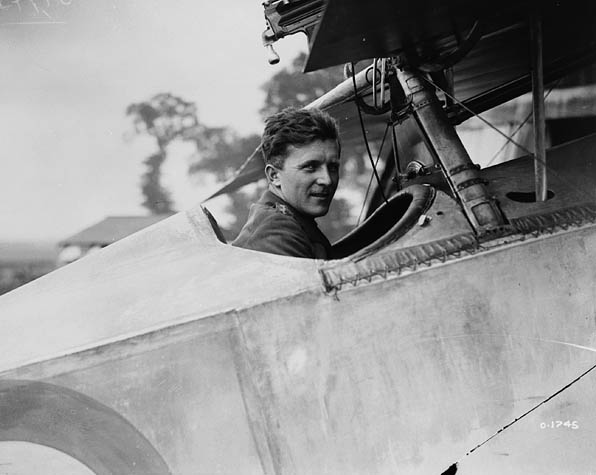
-
Macleans
Boer War Remembered
This article was originally published in Maclean’s magazine on November 15, 1999. Partner content is not updated. The first contingent of 1,000 troops sailed from Quebec City 100 years ago, on Oct. 30, 1899. Another 7,638 young soldiers and 12 nurses followed over the next 2½ years. Their destination: South Africa, to join British troops battling the Afrikaner republics of Transvaal and Orange Free State.
"https://thecanadianencyclopedia.ca/images/tce_placeholder.jpg?v=e9dca980c9bdb3aa11e832e7ea94f5d9" // resources/views/front/categories/view.blade.php
https://thecanadianencyclopedia.ca/images/tce_placeholder.jpg?v=e9dca980c9bdb3aa11e832e7ea94f5d9
-
Article
Bomarc Missile Crisis
The CIM-10B Bomarc was the world’s first long-range, nuclear capable, ground-to-air anti-aircraft missile. Two squadrons of the missile were purchased and deployed by the Canadian government in 1958. This was part of Canada’s role during the Cold War to defend North America against an attack from the Soviet Union. Prime Minister John Diefenbaker’s refusal to equip the missiles with nuclear warheads led to a souring of Canada’s relationship with the United States, especially once the Cuban Missile Crisis brought the issue to the fore. The issue split Diefenbaker’s Cabinet and contributed to his party losing the 1963 election.
"https://d3d0lqu00lnqvz.cloudfront.net/media/media/fe8757c3-dd58-4969-92f1-316d16aa4e6c.jpg" // resources/views/front/categories/view.blade.php
https://d3d0lqu00lnqvz.cloudfront.net/media/media/fe8757c3-dd58-4969-92f1-316d16aa4e6c.jpg
-
Article
Bren Gun Scandal
When Canada prepared to produce Bren guns in the lead up to the Second World War, corruption allegations against the process were published. A royal commission was set up by the government but found no evidence of corruption.
"https://d3d0lqu00lnqvz.cloudfront.net/bren_gun_girl.jpg" // resources/views/front/categories/view.blade.php
https://d3d0lqu00lnqvz.cloudfront.net/bren_gun_girl.jpg
-
Article
British Commonwealth Air Training Plan
In 1939, Canada, Great Britain, New Zealand and Australia signed an agreement creating the British Commonwealth Air Training Plan (BCATP). Located in Canada, the plan's mandate was to train Allied aircrews for the Second World War, including pilots, navigators, bomb aimers, wireless operators, air gunners, and flight engineers. More than 130,000 crewmen and women were trained between 1939 and 1945, making this one of Canada's great contributions to Allied victory in the war. It led United States President Franklin Roosevelt to call Canada the "aerodrome of democracy."
"https://d3d0lqu00lnqvz.cloudfront.net/media/media/6a823326-afa8-474e-a4e7-8b72b9a5dd53.jpg" // resources/views/front/categories/view.blade.php
https://d3d0lqu00lnqvz.cloudfront.net/media/media/6a823326-afa8-474e-a4e7-8b72b9a5dd53.jpg
-
Article
Brock's Monument, Queenston Heights
The monument to Sir Isaac Brock stands atop Ontario’s Niagara Escarpment at Queenston Heights, overlooking the lower Niagara River. The current monument is the second erected in Canada to honour Brock, a military commander who died during the Battle of Queenston Heights in the War of 1812.
"https://d3d0lqu00lnqvz.cloudfront.net/media/media/da5bc151-a17e-4794-9d5d-fd6eb47e06f9.jpg" // resources/views/front/categories/view.blade.php
https://d3d0lqu00lnqvz.cloudfront.net/media/media/da5bc151-a17e-4794-9d5d-fd6eb47e06f9.jpg
-
Article
C19 Rifle
The C19 rifle is the service rifle of the Canadian Rangers, replacing the Lee-Enfield No.4 rifle. As a bolt-action rifle chambered for .308 Winchester and 7.62x51mm, it is designed to be used in remote areas, particularly against animal predators and for survival hunting.
"https://d3d0lqu00lnqvz.cloudfront.net/C19_Rifle/C19_Lee-Enfield.jpg" // resources/views/front/categories/view.blade.php
https://d3d0lqu00lnqvz.cloudfront.net/C19_Rifle/C19_Lee-Enfield.jpg
-
Article
C7 Rifle and C8 Carbine
The C7 automatic rifle and C8 carbine automatic rifle are 5.56 mm-calibre assault rifles. In 1982, the Department of National Defence contracted Diemaco (later, Colt Canada) to produce the C7 and C8. Canada adopted these two rifles to replace the FN C1 rifle and C1 submachine gun. Canadian forces used the C7 and C8 for over 35 years. Many other countries have adopted the C7 or C8, including NATO allies such as the Netherlands, the United Kingdom, Denmark and Norway. Some Canadian police services have also adopted semi-automatic C8 carbines. In March 2026, Canada announced it would adopt the Canadian Modular Assault Rifle to replace older C7 and C8 rifles.
"https://d3d0lqu00lnqvz.cloudfront.net/C7RifleC8Carbine/C7A2.jpg" // resources/views/front/categories/view.blade.php
https://d3d0lqu00lnqvz.cloudfront.net/C7RifleC8Carbine/C7A2.jpg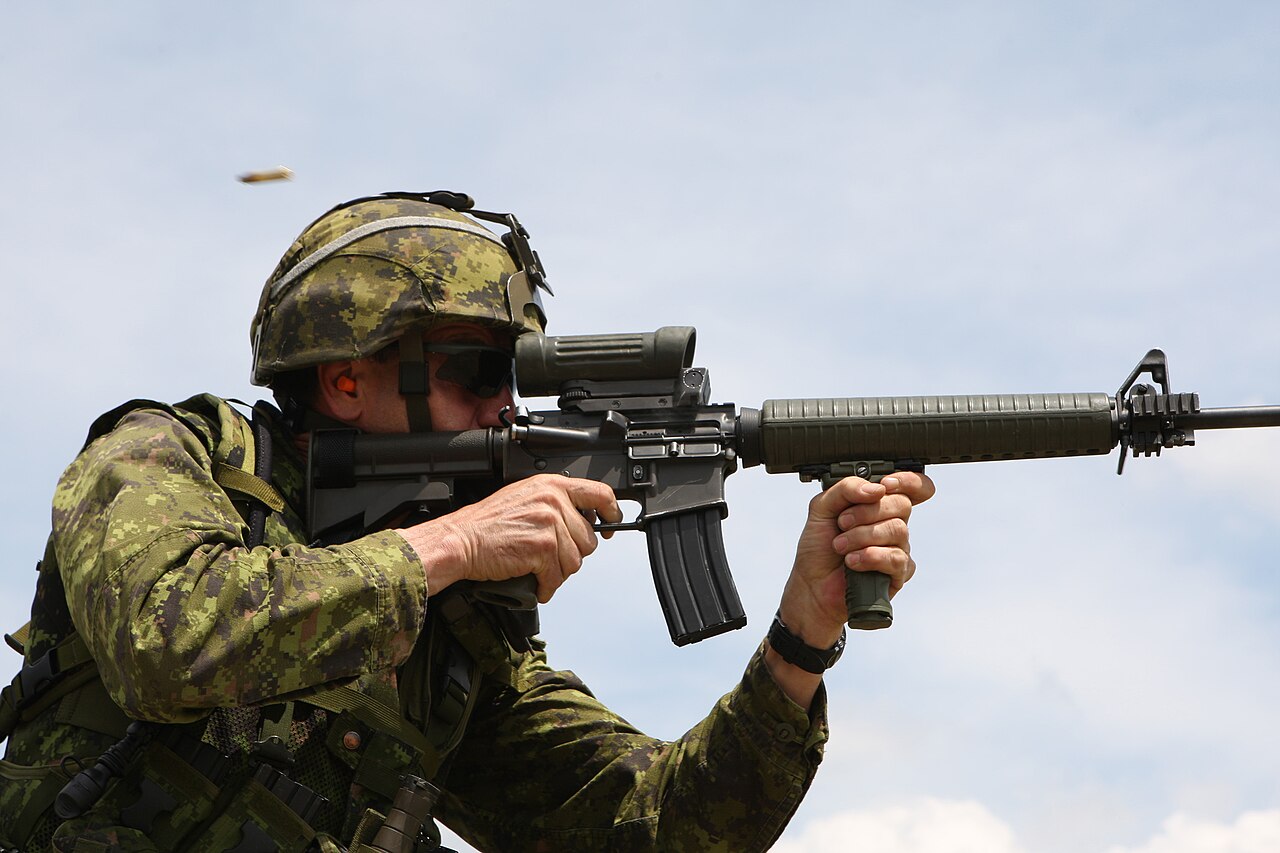
-
Article
Camp X
Camp X — a popular name that reflects the secrecy surrounding its activities — was a training school for covert agents and a radio communications centre that operated close to Whitby, Ontario, during the Second World War. It was the first such purpose-built facility constructed in North America. Known officially as STS (Special Training School) 103, Camp X was one of several dozen around the world that served the needs of the Special Operations Executive (SOE), the British agency created in 1940 to “set Europe ablaze” by promoting sabotage and subversion behind enemy lines. The radio communications centre, with its high-speed transmitter known as Hydra, was closely linked with British Security Co-Ordination (BSC), the New York-based agency directed by the Winnipeg-born businessman William Stephenson. Soviet defector Igor Gouzenko was hidden there after his defection in September 1945.
"https://d3d0lqu00lnqvz.cloudfront.net/media/media/29e7f4d4-b408-4532-8c5f-c3aa1874cc0c.jpg" // resources/views/front/categories/view.blade.php
https://d3d0lqu00lnqvz.cloudfront.net/media/media/29e7f4d4-b408-4532-8c5f-c3aa1874cc0c.jpg
-
Article
Canada and Antisubmarine Warfare during the Cold War
During the Cold War, the Canadian Navy played a crucial role in antisubmarine warfare (ASW), working closely with its allies to patrol and monitor the North Atlantic and Pacific Oceans for Soviet submarine activity. Canada invested in new technology and continually modernized its fleet of ships and aircraft to better detect and counter Soviet submarines. It also operated strategic warning systems with its allies, particularly the United States. By the end of the Cold War, Canada had developed a very high reputation in the field.
"https://d3d0lqu00lnqvz.cloudfront.net/media/media/9f869e07-d522-4293-927d-787f3be65104.jpg" // resources/views/front/categories/view.blade.php
https://d3d0lqu00lnqvz.cloudfront.net/media/media/9f869e07-d522-4293-927d-787f3be65104.jpg
-
Article
Canada and Antisubmarine Warfare in the First World War
When the First World War began in August 1914, the Royal Canadian Navy (RCN) was unprepared to fight a war at sea. Founded only in 1910, it consisted of two obsolete cruisers, HMCS Niobe and HMCS Rainbow, and about 350 regular sailors, augmented by 250 reservists. During the war, it was assigned a growing number of tasks, which it was ill-equipped to perform. This included protecting Canadian coastal waters against German U-boats. The RCN scrambled to find ships and sailors but was ill-equipped to fight enemy submarines, which sank several vessels in Canadian waters in 1918.
"https://d3d0lqu00lnqvz.cloudfront.net/ASW/VictoryBondsPosterLlandoveryCastle1918.jpg" // resources/views/front/categories/view.blade.php
https://d3d0lqu00lnqvz.cloudfront.net/ASW/VictoryBondsPosterLlandoveryCastle1918.jpg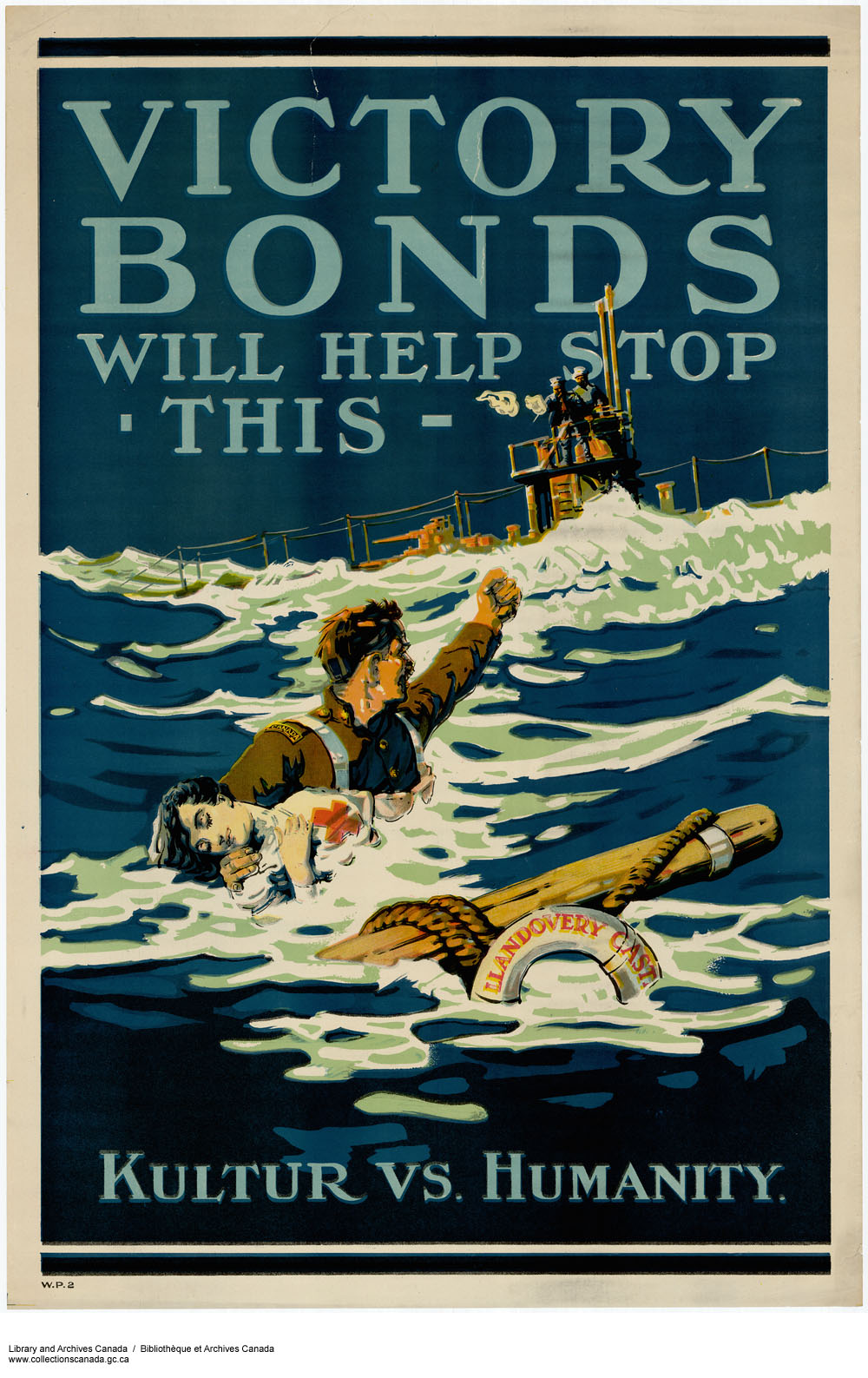
-
Article
Canada and Gas Warfare
Poison gas was used throughout the First World War by almost all armies. Its widespread use was unique in the history of warfare. The various types of gas, delivered by canisters, projectors, or shell, killed, maimed, and wore down morale. By 1918, soldiers of all armies encountered gas frequently while serving at the Western Front. Canadian soldiers were among the first to face the death clouds, at the Second Battle of Ypres in April 1915. At least 11,572 Canadian soldiers were casualties of poison gas, yet many were denied pensions after the war. During the Second World War, chemical weapons were not used on the battlefield; however, the Suffield Experimental Station in Alberta developed and tested chemical and biological weapons beginning in 1941. From about the middle of the 20th century, Canadian officials worked on the global stage to ban chemical weapons, and in the 1990s, Canada signed the Chemical Weapons Convention (see Arms Control and Disarmament.)
"https://d3d0lqu00lnqvz.cloudfront.net/media/new_article_images/GasWarfare/a002897-v8.jpg" // resources/views/front/categories/view.blade.php
https://d3d0lqu00lnqvz.cloudfront.net/media/new_article_images/GasWarfare/a002897-v8.jpg
-
Article
Canada and SOSUS
The Sound Surveillance System (SOSUS) was a network of passive sonar stations established by the United States Navy (USN) in the early 1950s to “listen” for Soviet submarines. SOSUS was a core element of antisubmarine warfare (ASW) during the Cold War. It developed out of intense postwar oceanographic research into how sound is propagated under water. Given Canada’s shared responsibility for the defence of North America, the Royal Canadian Navy (RCN) was actively engaged in this research and mission and helped operate SOSUS. The mission was highly classified throughout the Cold War and only declassified in 1991. SOSUS became part of the Integrated Undersea Surveillance System (IUSS), a broader network of fixed and towed sensors that remains operational.
"https://d3d0lqu00lnqvz.cloudfront.net/ASW/Atlantic Canada w-markers_EN Final.jpg" // resources/views/front/categories/view.blade.php
https://d3d0lqu00lnqvz.cloudfront.net/ASW/Atlantic Canada w-markers_EN Final.jpg
-
Article
Canada and the American Revolution (Plain-Language Summary)
The American Revolution (1775–83) was a rebellion of 13 British colonies on the Atlantic coast of North America. Early in the war, rebel forces invaded Canada. However, they were forced to retreat. American rebels tried to gain support from people in Quebec and Nova Scotia. However, most people in these colonies remained neutral or supported the British government. The American Revolution created the United States and shaped the future of Canada. Thousands of Loyalists migrated to Quebec and Nova Scotia. Their arrival led to cultural and political changes. This included the creation of Upper Canada and New Brunswick. Britain’s Indigenous allies also lost territory. Many Haudenosaunee settled along the Grand River and the Bay of Quinte after the war. This article is a plain-language summary of the American Revolution. If you are interested in reading about this topic in more depth, please see our full-length entry, Canada and the American Revolution.
"https://d3d0lqu00lnqvz.cloudfront.net/American-Revolution/1783-Map.jpg" // resources/views/front/categories/view.blade.php
https://d3d0lqu00lnqvz.cloudfront.net/American-Revolution/1783-Map.jpg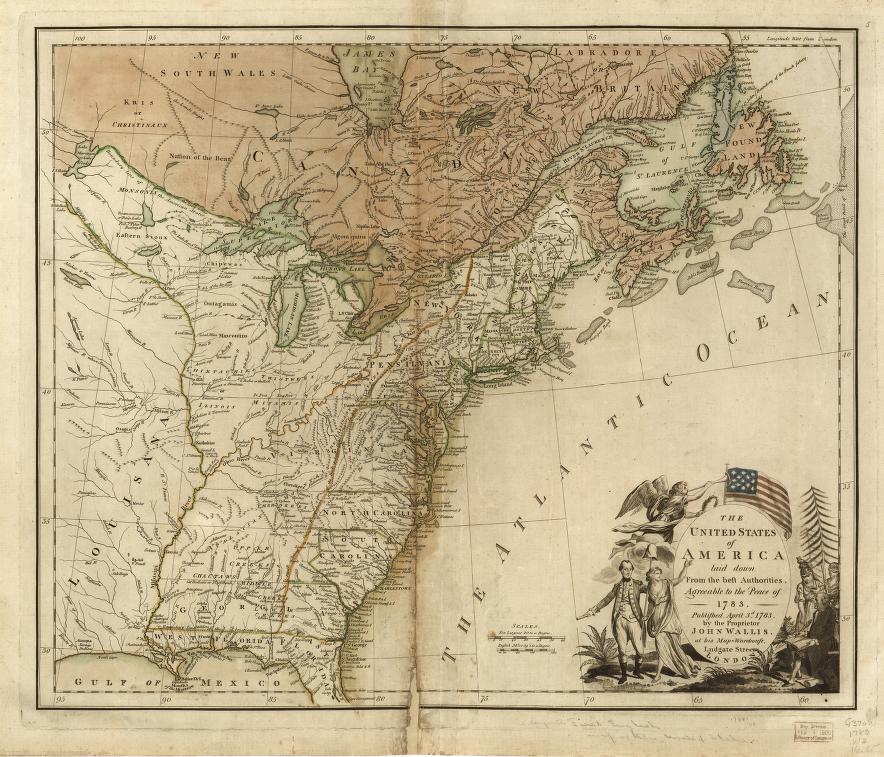
-
Article
Canada and the Battle of the Atlantic (Plain-Language Summary)
The Battle of the Atlantic was the longest battle of the Second World War. It lasted between 3 September 1939 and 8 May 1945. The Atlantic Ocean was important for the Allies because they needed to send supplies and people by ship from North America to Europe. German U-boats (submarines) attacked and sank many of these ships. Canada played an important role in the Battle of the Atlantic. The Canadian navy and air force protected convoys of supply ships and hunted U-boats. The Canadian merchant navy transported troops, food and other supplies. (This is a plain-language summary of the Battle of the Atlantic. If you are interested in reading about this topic in more depth, please see our full-length entry, Canada and the Battle of the Atlantic.)
"https://d3d0lqu00lnqvz.cloudfront.net/media/media/8cb80cb6-7ee5-4b1d-b742-922466dbc5f3.jpg" // resources/views/front/categories/view.blade.php
https://d3d0lqu00lnqvz.cloudfront.net/media/media/8cb80cb6-7ee5-4b1d-b742-922466dbc5f3.jpg