
Browse "Military"
-
Article
Spanish-American War
Spanish-American War, the 1898 conflict between the US and Spain, during which the US removed Cuba, Puerto Rico, Guam and the Philippines from Spain, annexing the last 3.
"https://thecanadianencyclopedia.ca/images/tce_placeholder.jpg?v=e9dca980c9bdb3aa11e832e7ea94f5d9" // resources/views/front/categories/view.blade.php
https://thecanadianencyclopedia.ca/images/tce_placeholder.jpg?v=e9dca980c9bdb3aa11e832e7ea94f5d9
-
Article
St Albans Raid
In the third year of the American Civil War, around 20 Confederate agents raided the town of St. Albans, Vermont. The raid was planned by Confederate spymasters based in St. Catharines and Montreal. On 19 October 1864, the men robbed the town’s three banks and killed a man, before crossing the border into Canada. Fourteen of the raiders were soon arrested. They were brought to trial three times and released each time by Canadian judges. The raid and court decisions worsened relations between Canada and the US, which were already strained.
"https://d3d0lqu00lnqvz.cloudfront.net/Capt-Young.jpg" // resources/views/front/categories/view.blade.php
https://d3d0lqu00lnqvz.cloudfront.net/Capt-Young.jpg
-
Article
Steele Narrows Battle
Steele Narrows Battle, at Loon Lake, 95 km north-east of Lloydminster, scene of the last shots fired in the North-West Resistance on 3 June 1885.
"https://d3d0lqu00lnqvz.cloudfront.net/media/media/a64c2753-6c2c-4abe-a75b-d9e9202495e4.jpg" // resources/views/front/categories/view.blade.php
https://d3d0lqu00lnqvz.cloudfront.net/media/media/a64c2753-6c2c-4abe-a75b-d9e9202495e4.jpg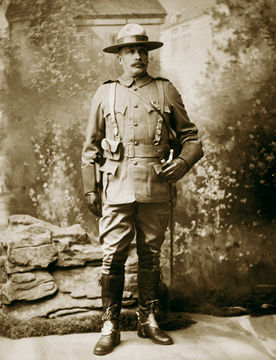
-
Article
The Great War in the Air
Airplanes became an important part of modern warfare during the First World War (1914–18). Aircraft technology developed rapidly and by war’s end, airplanes were involved in reconnaissance, artillery spotting, air-to-air combat, strafing ground targets, anti-submarine warfare, tactical and strategic bombing and home defence. More than 20,000 Canadians served in British flying services (Royal Flying Corps, Royal Naval Air Service and Royal Air Force) during the war. Approximately 1,400 were killed or died from wounds or accidents. Canada did not have an air force during the First World War; a single-plane Canadian Aviation Corps was established in 1914, but never saw service and soon disbanded. Later, on 5 August 1918, two Canadian Air Force squadrons were formed in Britain, but were disbanded the next year when the British cut off funding. The Royal Canadian Naval Air Service was formed in September 1918 but lasted only three months before the war ended. Canada would not have a permanent air force until 1924 (see Royal Canadian Air Force).
"https://d3d0lqu00lnqvz.cloudfront.net/media/media/f864cf51-65b5-4803-85a1-a7908ffdc0aa.jpg" // resources/views/front/categories/view.blade.php
https://d3d0lqu00lnqvz.cloudfront.net/media/media/f864cf51-65b5-4803-85a1-a7908ffdc0aa.jpg
-
Article
The Army Show
The Army Show. At first a musical revue produced during World War II for the Canadian army, and later the operational name for entertainment units serving with the army.
"https://thecanadianencyclopedia.ca/images/tce_placeholder.jpg?v=e9dca980c9bdb3aa11e832e7ea94f5d9" // resources/views/front/categories/view.blade.php
https://thecanadianencyclopedia.ca/images/tce_placeholder.jpg?v=e9dca980c9bdb3aa11e832e7ea94f5d9
-
Article
The Battle of Ogdensburg
Prescott, located 112 kilometres downriver from Kingston, was an important transhipment point where merchantmen exchanged cargo with the bateaux from Montréal. Ogdensburg, New York, lay on the opposite shore.
"https://d3d0lqu00lnqvz.cloudfront.net/media/media/2cc6eb04-9958-4ee8-bd53-5e250021704c.jpg" // resources/views/front/categories/view.blade.php
https://d3d0lqu00lnqvz.cloudfront.net/media/media/2cc6eb04-9958-4ee8-bd53-5e250021704c.jpg
-
Article
The Bully Boys
Eric Walters’s The Bully Boys (2000) is a work of historical fiction for young adults. It follows Tom Roberts, a young farm boy who aids and observes Lieutenant James FitzGibbon and his mercenary soldiers during the War of 1812.
"https://d3d0lqu00lnqvz.cloudfront.net/media/new_article_images/EricWalters/528px-Eric_Walters_-_Eden_Mills_Writers_Festival_-_2016_(DanH-0627)_(cropped).jpg" // resources/views/front/categories/view.blade.php
https://d3d0lqu00lnqvz.cloudfront.net/media/new_article_images/EricWalters/528px-Eric_Walters_-_Eden_Mills_Writers_Festival_-_2016_(DanH-0627)_(cropped).jpg_(cropped).jpg)
-
Article
The Burning of Washington
In the final summer of the War of 1812, British presence in the Chesapeake region was strengthened in an effort to divert the American forces from the frontiers of Upper and Lower Canada.
"https://d3d0lqu00lnqvz.cloudfront.net/media/media/07db67ae-df36-4c64-b774-750df91b2db9.jpg" // resources/views/front/categories/view.blade.php
https://d3d0lqu00lnqvz.cloudfront.net/media/media/07db67ae-df36-4c64-b774-750df91b2db9.jpg
-
Article
The Canadian Great War Soldier
Canada, as part of the British Empire, found itself at war on 4 August 1914. Yet Canadians would decide the extent of their commitment to the war. With no air force, a puny navy, and a professional army of a mere 3,100 men, the soon-to-be Canadian Expeditionary Force (CEF) would consist of citizen soldiers from across the Dominion.
"https://d3d0lqu00lnqvz.cloudfront.net/media/media/b00ddf7f-b199-4bd3-95d9-41f5430c22bf.jpg" // resources/views/front/categories/view.blade.php
https://d3d0lqu00lnqvz.cloudfront.net/media/media/b00ddf7f-b199-4bd3-95d9-41f5430c22bf.jpg
-
Editorial
The Canadian Peacekeeping Tradition
The following article is an editorial written by The Canadian Encyclopedia staff. Editorials are not usually updated.
"https://d3d0lqu00lnqvz.cloudfront.net/media/media/60ad4bbe-5c2b-4bbb-bd25-be7af3c895d3.jpg" // resources/views/front/categories/view.blade.php
https://d3d0lqu00lnqvz.cloudfront.net/media/media/60ad4bbe-5c2b-4bbb-bd25-be7af3c895d3.jpg
-
Article
The Canadian War Museum: Exploring Canada's Military History
The Canadian War Museum, whose roots travel back to 1880, was the first national history museum, but it was also one of the most neglected of federal institutions. Its usual fate was pedestrian quarters, meagre financial resources, and a miniscule staff.
"https://d3d0lqu00lnqvz.cloudfront.net/media/media/964b41f7-a913-4186-8d4f-5950cf48ea1b.jpg" // resources/views/front/categories/view.blade.php
https://d3d0lqu00lnqvz.cloudfront.net/media/media/964b41f7-a913-4186-8d4f-5950cf48ea1b.jpg
-
Article
The American Response to the Canadian Rebellions of 1837–38
By December 1837 and January 1838, rebels from Upper and Lower Canada had suffered heavy defeats at the hands of British and Loyalist forces. (See: Rebellion in Lower Canada; Rebellion in Upper Canada.) They fled to the United States to seek financial and military assistance. The American public was aware that there had been armed conflicts in the Canadas. Many were even initially supportive. However, the presence of Canadian rebels on American soil forced many to question American involvement. The growing tensions with Great Britain over the Caroline Affair complicated matters. The creation of the Republic of Texas and the fight over the abolition of slavery were also factors. In January 1838, US President Martin Van Buren took steps to ensure America’s neutrality in the Canadian rebellions.
"https://d3d0lqu00lnqvz.cloudfront.net/media/media/a4abe204-c34a-4e1d-95d4-4b754e7b9598.jpg" // resources/views/front/categories/view.blade.php
https://d3d0lqu00lnqvz.cloudfront.net/media/media/a4abe204-c34a-4e1d-95d4-4b754e7b9598.jpg
-
Article
The Elsie Initiative for Women in Peace Operations
The Elsie Initiative for Women in Peace Operations is a Canadian-led multilateral project aimed at increasing women’s meaningful participation in peace operations. Named after aeronautical engineer and women’s rights pioneer Elsie MacGill, the initiative figures into Canada’s feminist foreign policy and Global Affairs Canada’s commitment to the United Nations’ Women, Peace and Security agenda (see Canada and Peacekeeping).
"https://d3d0lqu00lnqvz.cloudfront.net/media/media/008643e1-8d7f-4f2b-85d8-7c3f94caecd6.png" // resources/views/front/categories/view.blade.php
https://d3d0lqu00lnqvz.cloudfront.net/media/media/008643e1-8d7f-4f2b-85d8-7c3f94caecd6.png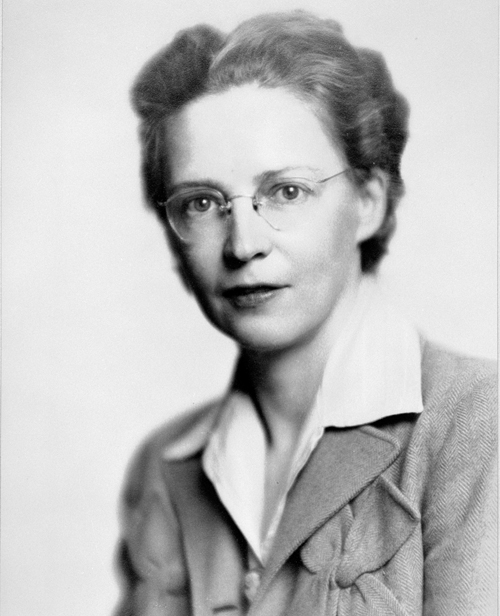
-
Article
The Governor General's Foot Guards Band
The Governor General's Foot Guards Band, Ottawa. Volunteer militia band formed soon after the establishment of the regiment in 1872. Based on the personnel of the Ottawa Brigade Artillery Band, the ensemble made its debut 15 Jun 1872 under its first director, John C. Bonner.
"https://thecanadianencyclopedia.ca/images/tce_placeholder.jpg?v=e9dca980c9bdb3aa11e832e7ea94f5d9" // resources/views/front/categories/view.blade.php
https://thecanadianencyclopedia.ca/images/tce_placeholder.jpg?v=e9dca980c9bdb3aa11e832e7ea94f5d9
-
Macleans
The Great War Haunts Us Still
IT'S BEEN 90 YEARS now since the Guns of August began to fire, and the smoke has yet to clear from the world they made. The fault lines of modern history - from the quagmire in Iraq through Yugoslavia's implosion to the Cold War and beyond - all branch back to the cataclysm of 1914-1918.This article was originally published in Maclean's Magazine on November 8, 2004
"https://thecanadianencyclopedia.ca/images/tce_placeholder.jpg?v=e9dca980c9bdb3aa11e832e7ea94f5d9" // resources/views/front/categories/view.blade.php
https://thecanadianencyclopedia.ca/images/tce_placeholder.jpg?v=e9dca980c9bdb3aa11e832e7ea94f5d9