
Browse "Military"
-
Article
Canadians in the Royal Naval Air Service
During the First World War, more than 900 Canadians served in Britain’s Royal Naval Air Service (RNAS). Members of the RNAS were involved in the defence of Britain, support of land operations, and anti-submarine warfare.
"https://d3d0lqu00lnqvz.cloudfront.net/RNAS/assembling-seaplane-RNAS.jpg" // resources/views/front/categories/view.blade.php
https://d3d0lqu00lnqvz.cloudfront.net/RNAS/assembling-seaplane-RNAS.jpg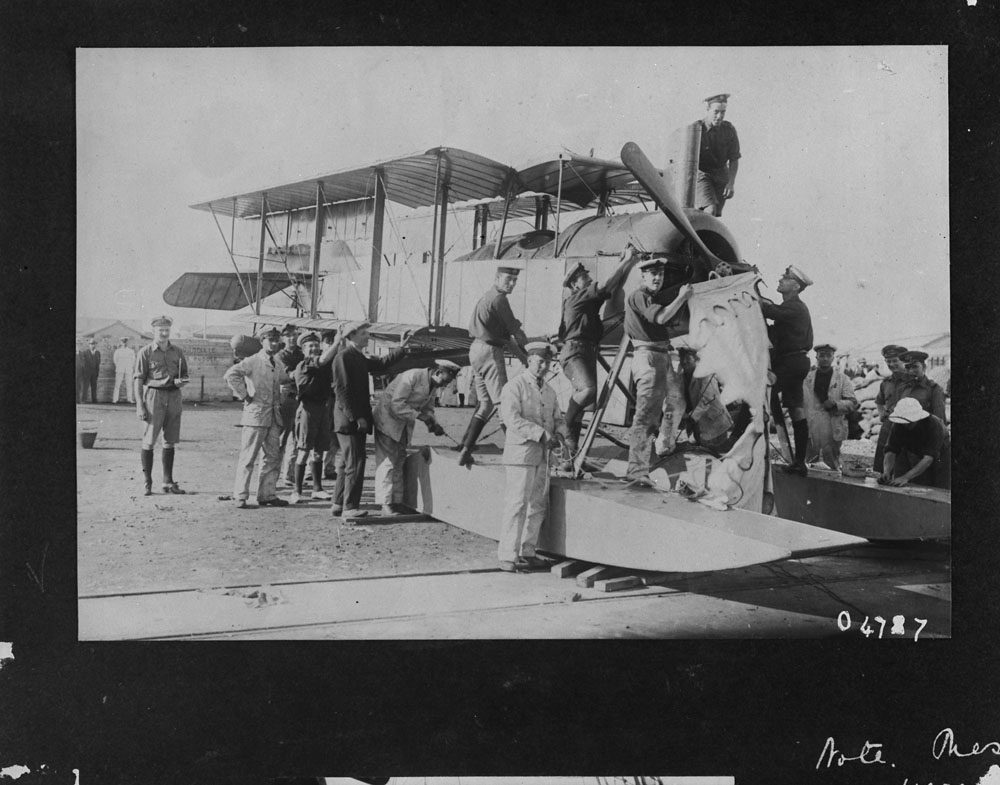
-
Article
Royal Proclamation of 1763
The Royal Proclamation of 1763 was issued by King George III on 7 October 1763. It established the basis for governing the North American territories surrendered by France to Britain in the Treaty of Paris, 1763, following the Seven Years’ War. It introduced policies meant to assimilate the French population to British rule. These policies ultimately failed and were replaced by the Quebec Act of 1774 (see also The Conquest of New France). The Royal Proclamation also set the constitutional structure for the negotiation of treaties with the Indigenous inhabitants of large sections of Canada. It is referenced in section 25 of the Constitution Act, 1982. As such, it has been labelled an “Indian Magna Carta” or an “Indian Bill of Rights.” The Proclamation also contributed to the outbreak of the American Revolutionary War in 1775. The Proclamation legally defined the North American interior west of the Appalachian Mountains as a vast Indigenous reserve. This angered people in the Thirteen Colonies who desired western expansion.This is the full-length entry about the Royal Proclamation of 1763. For a plain language summary, please see Royal Proclamation of 1763 (Plain Language Summary).
"https://thecanadianencyclopedia.ca/images/tce_placeholder.jpg?v=e9dca980c9bdb3aa11e832e7ea94f5d9" // resources/views/front/categories/view.blade.php
https://thecanadianencyclopedia.ca/images/tce_placeholder.jpg?v=e9dca980c9bdb3aa11e832e7ea94f5d9
-
Article
Royal Regiment of Canada Band
Royal Regiment of Canada Band. Toronto-based volunteer militia band attached to the Royal Regiment of Canada (founded in 1862 as the 10th Battalion Volunteer Militia). The band received its first set of drums and instruments in 1863.
"https://thecanadianencyclopedia.ca/images/tce_placeholder.jpg?v=e9dca980c9bdb3aa11e832e7ea94f5d9" // resources/views/front/categories/view.blade.php
https://thecanadianencyclopedia.ca/images/tce_placeholder.jpg?v=e9dca980c9bdb3aa11e832e7ea94f5d9
-
Article
Second Battle of Hill 355
Hill 355 (Kowang San) was a strategically important site during the Korean War. Canadian troops were involved in two battles for control of the mountain. The 1st Battalion The Royal Canadian Regiment (RCR) fought in the second battle (22–24 October 1952), during which they defended the hill against Chinese attacks. See also First Battle of Hill 355.
"https://d3d0lqu00lnqvz.cloudfront.net/The-Memory-Project/image/9998_original.jpg" // resources/views/front/categories/view.blade.php
https://d3d0lqu00lnqvz.cloudfront.net/The-Memory-Project/image/9998_original.jpg
-
Article
Battle of Seven Oaks
The Battle of Seven Oaks, or the Victory of the Frog Plain (la Victoire de la Grenouillère), took place 19 June 1816. The battle was a culmination of the Pemmican Wars and the escalating fur trade disputes between the Hudson’s Bay Company (HBC) and the North West Company (NWC). Pemmican was the food supply that the fur traders depended on to carry out operations. On the day of the battle, a party of about 60 Métis and First Nations men, led by Cuthbert Grant, was heading west of the Forks to deliver pemmican to the NWC canoe brigades on Lake Winnipeg. They were confronted at Seven Oaks by HBC Governor Robert Semple and 28 men (mostly HBC officers and employees). The gunfire and hand-to-hand combat that resulted left Semple and 20 of the HBC party dead. On the Métis side, 16-year-old Joseph Letendre died, and Joseph Trottier was wounded.
"https://d3d0lqu00lnqvz.cloudfront.net/media/media/50a4274a-0c2a-44b4-8d4c-f2246db64e4a.jpg" // resources/views/front/categories/view.blade.php
https://d3d0lqu00lnqvz.cloudfront.net/media/media/50a4274a-0c2a-44b4-8d4c-f2246db64e4a.jpg
-
Article
Shattered
Eric Walters’s young adult novel Shattered (2006) tells the story of Ian Blackburn. He is shaken out of his privileged life when he meets Jack, a homeless veteran of the Canadian Armed Forces. A member of the failed United Nations peacekeeping mission to Rwanda, Jack introduces Ian to some of humanity’s darkest moments. Shattered received the 2007 Ontario Library Association’s White Pine Award for best Canadian children’s book and the 2007 National Chapter of Canada International Order of the Daughters of Empire Violet Downey Book Award.
"https://d3d0lqu00lnqvz.cloudfront.net/media/home-page-images/Peacekeepers-in-Rwanda.jpg" // resources/views/front/categories/view.blade.php
https://d3d0lqu00lnqvz.cloudfront.net/media/home-page-images/Peacekeepers-in-Rwanda.jpg
-
Article
Ships of the War of 1812
The war on the water was an essential, if not the most important, aspect of the WAR OF 1812. Great Britain was obviously at a disadvantage geographically when trying to defend its colony Canada in a conflict with the United States.
"https://thecanadianencyclopedia.ca/images/tce_placeholder.jpg?v=e9dca980c9bdb3aa11e832e7ea94f5d9" // resources/views/front/categories/view.blade.php
https://thecanadianencyclopedia.ca/images/tce_placeholder.jpg?v=e9dca980c9bdb3aa11e832e7ea94f5d9
-
Article
Siege of Fort Erie, War of 1812
The siege of Fort Erie was a British blockade of their own fort located at the entrance to the Niagara River opposite Buffalo, New York, which the Americans had captured on 3 July 1814.
"https://thecanadianencyclopedia.ca/images/tce_placeholder.jpg?v=e9dca980c9bdb3aa11e832e7ea94f5d9" // resources/views/front/categories/view.blade.php
https://thecanadianencyclopedia.ca/images/tce_placeholder.jpg?v=e9dca980c9bdb3aa11e832e7ea94f5d9
-
Article
Sinking of HMHS Llandovery Castle
On the evening of 27 June 1918, while sailing from Halifax, Nova Scotia, to Liverpool, England, the Canadian hospital ship Llandovery Castle was torpedoed and sunk by a German U-boat (U-86). Of the 258 crew and passengers, only 24 survived. Almost all the Canadian Army Medical Corps personnel were killed: six male officers, 64 enlisted men and 14 nursing sisters. Only one lifeboat escaped; the rest were either sucked under as the ship sank or attacked by the U-boat. The submarine’s officers were later charged with committing a war crime.
"https://d3d0lqu00lnqvz.cloudfront.net/ASW/VictoryBondsPosterLlandoveryCastle1918.jpg" // resources/views/front/categories/view.blade.php
https://d3d0lqu00lnqvz.cloudfront.net/ASW/VictoryBondsPosterLlandoveryCastle1918.jpg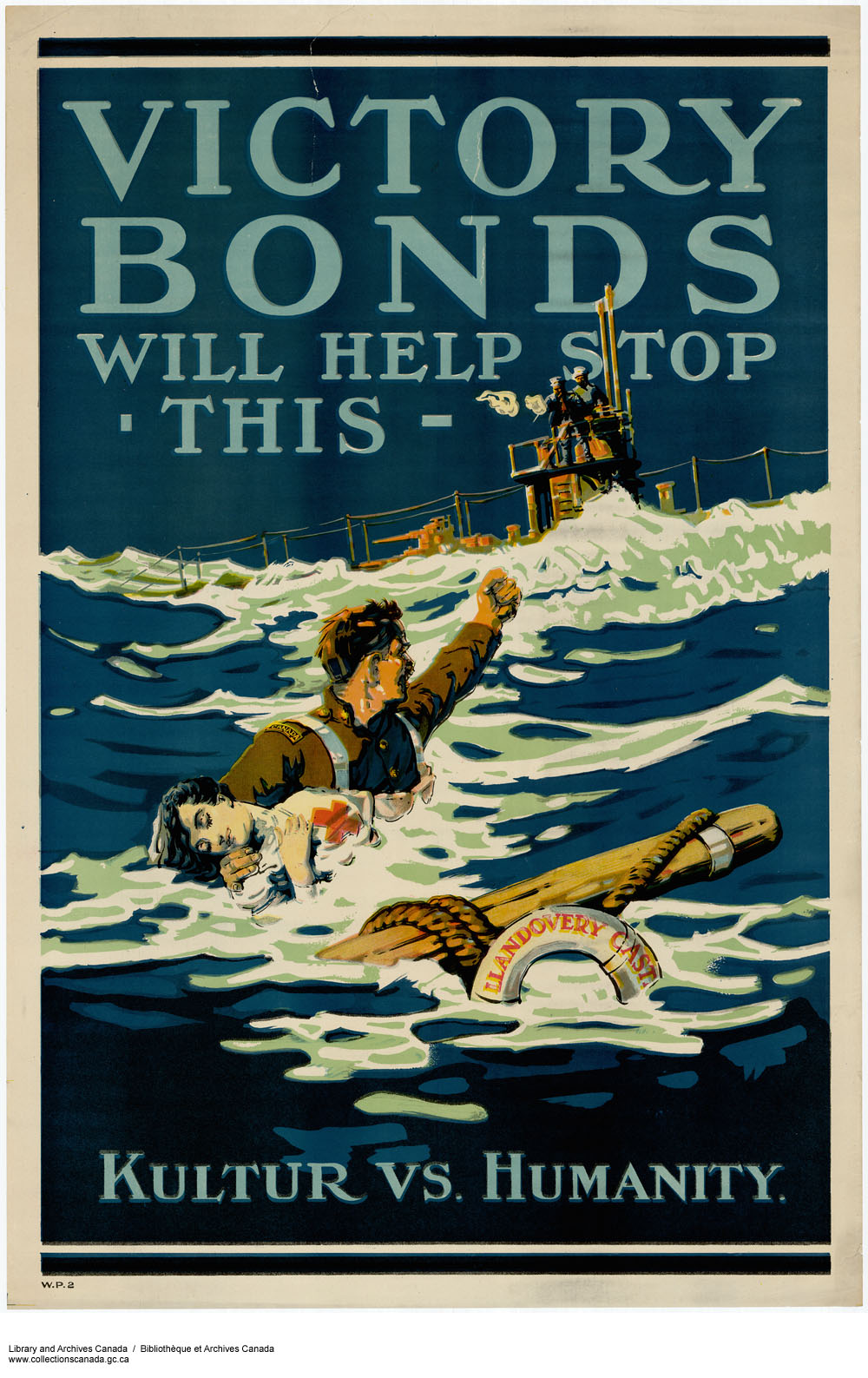
-
Article
Sinking of the SS Caribou
The SS Caribou was a passenger and train ferry that operated in the Cabot Strait between Port aux Basques, Newfoundland and North Sydney, Nova Scotia. On 14 October 1942, the German submarine U-69 sank the vessel, causing the worst loss of life in Canadian waters during the Second World War.
"https://d3d0lqu00lnqvz.cloudfront.net/media/new_article_images/Caribou/ss-caribou-1920-1940.jpg" // resources/views/front/categories/view.blade.php
https://d3d0lqu00lnqvz.cloudfront.net/media/new_article_images/Caribou/ss-caribou-1920-1940.jpg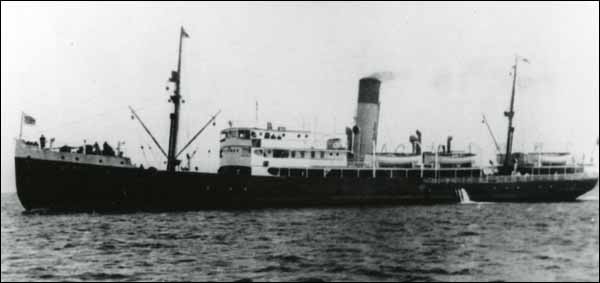
-
Editorial
Sixty Years On, Korean War Still Echoes
When is a war not a war? For the Korean War, the answer is not always clear. This year, 2013, marks the 60th anniversary of the ceasefire of a war that not everyone describes that way. It had ambiguous beginnings, more than 20 participating countries, and still no formal end. But some things are evident. This year, Historica Canada is commemorating this sometimes-forgotten but still-resonant period of our recent history, and Canada’s role therein. Our country sent more than 26,000 members of our military to the Korean “theatre.” More than 500 Canadians died, and another 1,000 were wounded; 32 became prisoners of war.
"https://thecanadianencyclopedia.ca/images/tce_placeholder.jpg?v=e9dca980c9bdb3aa11e832e7ea94f5d9" // resources/views/front/categories/view.blade.php
https://thecanadianencyclopedia.ca/images/tce_placeholder.jpg?v=e9dca980c9bdb3aa11e832e7ea94f5d9
-
Article
Snowbirds
The Canadian Forces Snowbirds are a military aerobatics team. They are officially known as "431 Air Demonstration Squadron." Since 1971, the team has performed across North America before millions of people. The Snowbirds have been recognized as among the best in the world at precision formation aerobatics and stunning solo crosses with minimum separation between the aircraft.
"https://d3d0lqu00lnqvz.cloudfront.net/media/media/3d26459f-4f24-4f5c-a33b-b6d9ac0f4515.jpg" // resources/views/front/categories/view.blade.php
https://d3d0lqu00lnqvz.cloudfront.net/media/media/3d26459f-4f24-4f5c-a33b-b6d9ac0f4515.jpg
-
Article
Somalia Affair
In 1992–93, Canada contributed military forces to UNITAF, a United Nations–backed humanitarian mission in the African nation of Somalia. In 1993, Canadian soldiers from the now-defunct Airborne Regiment tortured and killed a Somali teenager named Shidane Arone. These and other violent abuses during the mission shocked Canadians and damaged the country’s international reputation. They also led to a public inquiry that revealed serious failures of leadership at the highest levels of the Canadian Armed Forces, kick-starting reforms aimed a professionalizing the officer corps. This article contains sensitive material that may not be suitable for all audiences.
"https://d3d0lqu00lnqvz.cloudfront.net/media/new_article_images/e002280232.jpg" // resources/views/front/categories/view.blade.php
https://d3d0lqu00lnqvz.cloudfront.net/media/new_article_images/e002280232.jpg
-
Macleans
Somalia Affair: Chronology
This article was originally published in Maclean’s magazine on April 15, 1996. Partner content is not updated. What began as a humanitarian mission quickly unravelled into one of the darkest chapters in Canadian military history (see Somalia Affair).
"https://thecanadianencyclopedia.ca/images/tce_placeholder.jpg?v=e9dca980c9bdb3aa11e832e7ea94f5d9" // resources/views/front/categories/view.blade.php
https://thecanadianencyclopedia.ca/images/tce_placeholder.jpg?v=e9dca980c9bdb3aa11e832e7ea94f5d9
-
Macleans
Somalia Inquiry's Damning Report
This article was originally published in Maclean’s magazine on July 14, 1997. Partner content is not updated. Hindsight is a wonderful thing. If only Prime Minister Brian Mulroney had not jumped at U.S. President George Bushs request to send Canadian troops to Somalia in 1992.
"https://thecanadianencyclopedia.ca/images/tce_placeholder.jpg?v=e9dca980c9bdb3aa11e832e7ea94f5d9" // resources/views/front/categories/view.blade.php
https://thecanadianencyclopedia.ca/images/tce_placeholder.jpg?v=e9dca980c9bdb3aa11e832e7ea94f5d9