
Browse "Military"
-
Article
National War Labour Board
The National War Labour Board was established in 1941 with 5 regional boards to enforce the Canadian government's program of wage stabilization in the volatile wartime economy. The first chairman was Humphrey MITCHELL, later minister of labour.
"https://thecanadianencyclopedia.ca/images/tce_placeholder.jpg?v=e9dca980c9bdb3aa11e832e7ea94f5d9" // resources/views/front/categories/view.blade.php
https://thecanadianencyclopedia.ca/images/tce_placeholder.jpg?v=e9dca980c9bdb3aa11e832e7ea94f5d9
-
Article
Naval Aid Bill
As early as 1909 the Conservative Party believed that Canada should contribute "emergency" funds to help the Royal Navy maintain its superiority over the German navy. In March 1912 the RN required more "dreadnought" battleships.
"https://thecanadianencyclopedia.ca/images/tce_placeholder.jpg?v=e9dca980c9bdb3aa11e832e7ea94f5d9" // resources/views/front/categories/view.blade.php
https://thecanadianencyclopedia.ca/images/tce_placeholder.jpg?v=e9dca980c9bdb3aa11e832e7ea94f5d9
-
Article
Naval Service Act
The Naval Service Act, passed by the Liberal government of Sir Wilfrid Laurier, established the Royal Canadian Navy on 4 May 1910. Before the Act passed, Canada did not have a navy of its own and relied on the British Royal Navy. This new defence initiative was a direct response to the naval arms race between Britain and Germany in the years before the First World War and the 1909 panic in Britain over expansion of the German navy. The Act was built on earlier, distinctively Canadian approaches to defence and its key provisions remained in force until 1950. The Naval Service Act was bitterly opposed by French Canadian nationalists, led by Henri Bourassa, who feared deeper involvement in imperial affairs.
"https://d3d0lqu00lnqvz.cloudfront.net/media/media/04c5cf2b-940f-4410-b1a6-fa7105c8b99e.jpg" // resources/views/front/categories/view.blade.php
https://d3d0lqu00lnqvz.cloudfront.net/media/media/04c5cf2b-940f-4410-b1a6-fa7105c8b99e.jpg
-
Macleans
Navy blues
Even before it was hit by a series of setbacks, Canada’s Pacific fleet faced questions about its readinessThis article was originally published in Maclean's Magazine on October 7, 2013
"https://thecanadianencyclopedia.ca/images/tce_placeholder.jpg?v=e9dca980c9bdb3aa11e832e7ea94f5d9" // resources/views/front/categories/view.blade.php
https://thecanadianencyclopedia.ca/images/tce_placeholder.jpg?v=e9dca980c9bdb3aa11e832e7ea94f5d9
-
Article
Navy League of Canada
The Navy League of Canada is a volunteer organization founded in 1918 under federal charter, but tracing its origins to branches of the British Empire Navy League established in Canada from 1895.
"https://thecanadianencyclopedia.ca/images/tce_placeholder.jpg?v=e9dca980c9bdb3aa11e832e7ea94f5d9" // resources/views/front/categories/view.blade.php
https://thecanadianencyclopedia.ca/images/tce_placeholder.jpg?v=e9dca980c9bdb3aa11e832e7ea94f5d9
-
Article
Niobe Day
Since 2014, Niobe Day has been celebrated every year on 21 October by the Royal Canadian Navy. It commemorates the entrance of HMCS Niobe, one of Canada’s first two warships, into Halifax Harbour on 21 October 1910. Niobe, which had been purchased from Britain, was the first Canadian warship to enter Canadian territorial waters. Before 2014, the Canadian navy marked Trafalgar Day every 21 October in commemoration of the British victory at the Battle of Trafalgar (1805).
"https://d3d0lqu00lnqvz.cloudfront.net/HMCSNiobe/HMCS Niobe entering Halifax on Trafalgar Day 1910.jpg" // resources/views/front/categories/view.blade.php
https://d3d0lqu00lnqvz.cloudfront.net/HMCSNiobe/HMCS Niobe entering Halifax on Trafalgar Day 1910.jpg
-
Article
No. 8 Company – Canadian Forestry Corps
No. 8 Company, Canadian Forestry Corps (CFC) was the second Black unit formed in the First World War, after No. 2 Construction Battalion. From November 1918 to March 1919, No. 8 Company improved and repaired airfields and roads in northern Belgium and Germany, providing valuable support to the Royal Air Force (RAF).
"https://d3d0lqu00lnqvz.cloudfront.net/No8CompanyCFC/No8-Co-CFC_WarDiary_Dec1918.jpg" // resources/views/front/categories/view.blade.php
https://d3d0lqu00lnqvz.cloudfront.net/No8CompanyCFC/No8-Co-CFC_WarDiary_Dec1918.jpg
-
Article
NORAD
The North American Aerospace Defense Command (NORAD) was a pact made in 1957, at the height of the Cold War. It placed under joint command the air forces of Canada and the United States. Its name was changed in 1981 to the North American Aerospace Defense Command, but it kept the NORAD acronym. Canada and the US renewed NORAD in 2006, making the arrangement permanent. It is subject to review every four years, or at the request of either country. NORAD’s mission was also expanded into maritime warnings. The naval forces of the two countries remain under separate commands.
"https://d3d0lqu00lnqvz.cloudfront.net/media/media/efca000f-abb8-4a6f-881e-e39e4ee2882f.jpg" // resources/views/front/categories/view.blade.php
https://d3d0lqu00lnqvz.cloudfront.net/media/media/efca000f-abb8-4a6f-881e-e39e4ee2882f.jpg
-
Article
Normandy Massacres
One of the worst war crimes in Canadian history occurred in June, 1944, during the Battle of Normandy, following the D-Day landings of the Second World War. As many as 156 Canadian soldiers, taken prisoner by German forces, were executed by their captors during various incidents in the Normandy countryside.
"https://d3d0lqu00lnqvz.cloudfront.net/media/media/f6f8902f-029b-4666-8ab3-5ccd0711dda3.jpg" // resources/views/front/categories/view.blade.php
https://d3d0lqu00lnqvz.cloudfront.net/media/media/f6f8902f-029b-4666-8ab3-5ccd0711dda3.jpg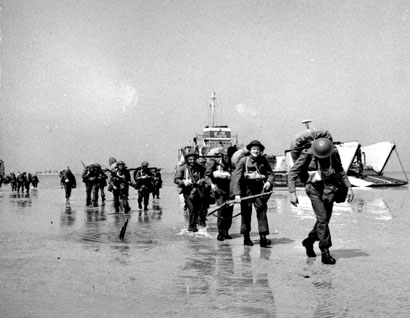
-
Article
Kanesatake Resistance (Oka Crisis)
The Kanesatake Resistance, also known as the Oka Crisis or the Mohawk Resistance at Kanesatake, was a 78-day standoff (11 July–26 September 1990) between Kanyen'kehà:ka (Mohawk) protesters, Quebec police, the RCMP and the Canadian Army. It took place in the community of Kanesatake, near the Town of Oka, on the north shore of Montreal. Related protests and violence occurred in the Kahnawá:ke reserve, to the south of Montreal. The crisis was sparked by the proposed expansion of a golf course and the development of townhouses on disputed land in Kanesatake that included a Kanyen'kehà:ka burial ground. Tensions were high, particularly after the death of Corporal Marcel Lemay, a Sûreté du Québec police officer. Eventually, the army was called in and the protest ended. The golf course expansion was cancelled, and the land was purchased by the federal government. However, it did not establish the land as a reserve, and there has since been no organized transfer of the land to the Mohawks of Kanesatake. This article is a full-length entry about the Kanesatake Resistance (Oka Crisis). For a plain-language summary, please see Kanesatake Resistance (Oka Crisis) (Plain-Language Summary).
"https://d3d0lqu00lnqvz.cloudfront.net/media/new_article_images/OkaCrisis/1990_C_35_7 (003).jpg" // resources/views/front/categories/view.blade.php
https://d3d0lqu00lnqvz.cloudfront.net/media/new_article_images/OkaCrisis/1990_C_35_7 (003).jpg.jpg)
-
Article
Operation Nanook
Operation Nanook is the Canadian Armed Forces’ major annual northern operation. It consists of a series of wide-ranging events intended to practice the defence of Canada and secure the country’s northern areas. Operation Nanook occurs across the North in Yukon, the Northwest Territories, Nunavut and Labrador and includes as many as six deployments during the year.
"https://d3d0lqu00lnqvz.cloudfront.net/OperationNanook/20210821NKAG0006D208_resized.jpg" // resources/views/front/categories/view.blade.php
https://d3d0lqu00lnqvz.cloudfront.net/OperationNanook/20210821NKAG0006D208_resized.jpg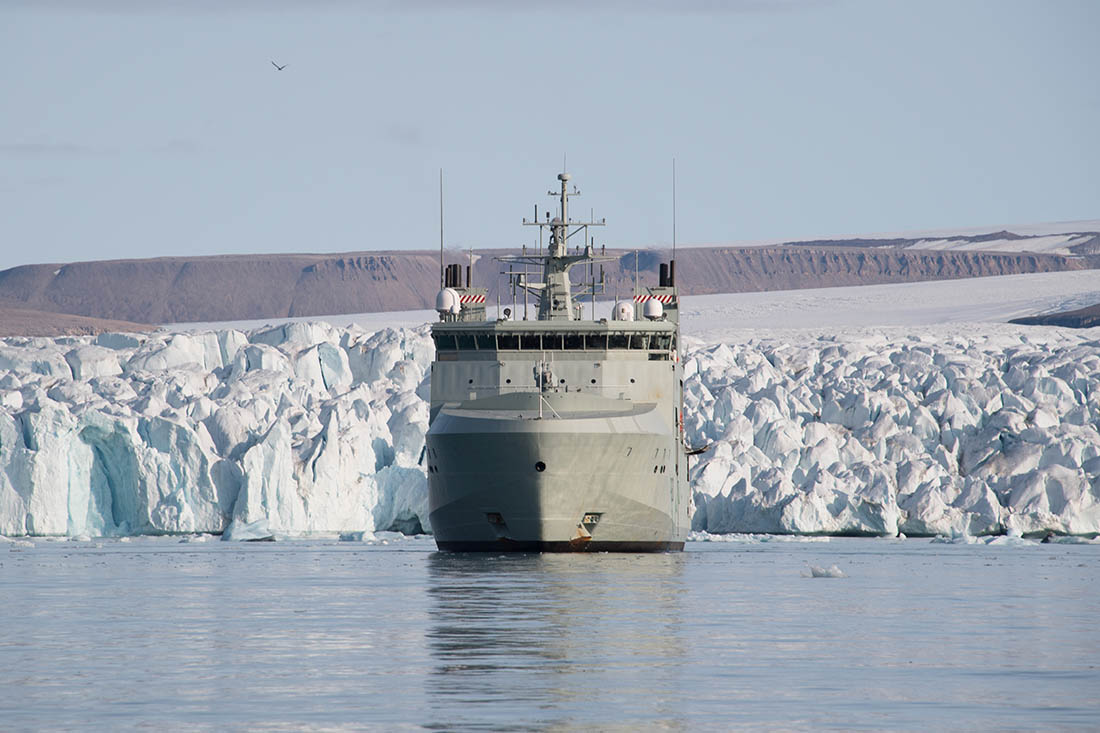
-
Editorial
Canadian Soldiers and the Battle of Ortona
The following article is an editorial written by The Canadian Encyclopedia staff. Editorials are not usually updated.
"https://d3d0lqu00lnqvz.cloudfront.net/media/media/599599a1-a339-4bd7-84d5-6bf2c1238122.jpg" // resources/views/front/categories/view.blade.php
https://d3d0lqu00lnqvz.cloudfront.net/media/media/599599a1-a339-4bd7-84d5-6bf2c1238122.jpg
-
Macleans
Ottawa Purchases New Helicopters
Cpl. Mark Gibeault missed the big news conference. Many of his colleagues gathered around TVs last week at the Comox, B.C., armed forces base to applaud Defence Minister Arthur Eggleton's long-awaited announcement that Canada would buy 15 new search-and-rescue helicopters.This article was originally published in Maclean's Magazine on January 19, 1998
"https://thecanadianencyclopedia.ca/images/tce_placeholder.jpg?v=e9dca980c9bdb3aa11e832e7ea94f5d9" // resources/views/front/categories/view.blade.php
https://thecanadianencyclopedia.ca/images/tce_placeholder.jpg?v=e9dca980c9bdb3aa11e832e7ea94f5d9
-
Editorial
Passchendaele: Remembrance of Things Past
The following article is an editorial written by The Canadian Encyclopedia staff. Editorials are not usually updated. How does memory speak to us? Each November, over 13 million poppies blossom on the jackets, dresses and hats of Canadians.
"https://d3d0lqu00lnqvz.cloudfront.net/media/media/e180a291-7739-4324-9d95-27e1fe6439b0.jpg" // resources/views/front/categories/view.blade.php
https://d3d0lqu00lnqvz.cloudfront.net/media/media/e180a291-7739-4324-9d95-27e1fe6439b0.jpg
-
Macleans
Patrol with Canadian Troops Outside Kabul
FROM HIS hilltop perch overlooking the fertile Lalandar Valley, Shaheen is prepared for war. Or perhaps, in his mind, the conflicts that have swept through the mountains around Kabul have not ended.This article was originally published in Maclean's Magazine on October 20, 2003
"https://thecanadianencyclopedia.ca/images/tce_placeholder.jpg?v=e9dca980c9bdb3aa11e832e7ea94f5d9" // resources/views/front/categories/view.blade.php
https://thecanadianencyclopedia.ca/images/tce_placeholder.jpg?v=e9dca980c9bdb3aa11e832e7ea94f5d9