
Browse "Military"
-
Article
Army Benevolent Fund Board
The Army Benevolent Fund Board was established under the Army Benevolent Fund Act (1947) to administer funds in special accounts existing in the Consolidated Revenue Fund.
"https://thecanadianencyclopedia.ca/images/tce_placeholder.jpg?v=e9dca980c9bdb3aa11e832e7ea94f5d9" // resources/views/front/categories/view.blade.php
https://thecanadianencyclopedia.ca/images/tce_placeholder.jpg?v=e9dca980c9bdb3aa11e832e7ea94f5d9
-
Article
Aroostook War
The Aroostook War was a confrontation between British and Maine authorities in disputed territory known as Madawaska. During the Napoleonic Wars, Britain was in dire need of wood and the region’s pine forests became an important commodity. Claimed by both Maine and New Brunswick, Madawaska became fertile ground for confrontations between the two. The war peaked in 1838‒39 when the governor of Maine, John Fairfield, sent a group, led by Rufus McIntyre, to stop “provincials” from entering territory that Fairfield believed was Maine’s. McIntyre was captured and accused of invading the colony. The conflict ended in 1842 with the Webster-Ashburton Treaty, which divided the territory along the Saint John River.
"https://d3d0lqu00lnqvz.cloudfront.net/media/media/0052e055-bf0b-4980-8f10-08f926f15b9b.jpg" // resources/views/front/categories/view.blade.php
https://d3d0lqu00lnqvz.cloudfront.net/media/media/0052e055-bf0b-4980-8f10-08f926f15b9b.jpg
-
Article
Editorial: Canadian Art and the Great War
The following article is an editorial written by The Canadian Encyclopedia staff. Editorials are not usually updated. Canadian painting in the 19th century tended towards the pastoral. It depicted idyllic scenes of rural life and represented the country as a wondrous Eden. Canadian painter Homer Watson, under the influence of such American masters as Frederic Edwin Church and Albert Bierstadt, created images that are serene and suffused with golden light. In On the Mohawk River (1878), for instance, a lazy river ambles between tall, overhanging trees; in the background is a light-struck mountain. In Watson’s world, nature is peaceful, unthreatening and perhaps even sacred.
"https://d3d0lqu00lnqvz.cloudfront.net/media/media/62472ac0-198a-4d62-b24b-61a481415215.jpg" // resources/views/front/categories/view.blade.php
https://d3d0lqu00lnqvz.cloudfront.net/media/media/62472ac0-198a-4d62-b24b-61a481415215.jpg
-
Article
Atlantic Campaign of the War of 1812
The War of 1812 as it was fought on the high seas included a variety of activities related to sea power, including clashes between ships, naval blockades, coastal raids, joint operations with the army and a commerce war involving privateers and letters of marque.
"https://thecanadianencyclopedia.ca/images/tce_placeholder.jpg?v=e9dca980c9bdb3aa11e832e7ea94f5d9" // resources/views/front/categories/view.blade.php
https://thecanadianencyclopedia.ca/images/tce_placeholder.jpg?v=e9dca980c9bdb3aa11e832e7ea94f5d9
-
Article
Avro CF-100 Canuck
The CF-100 Canuck, manufactured by A.V. Roe Canada (Avro), was the first jet fighter designed and built entirely in Canada. It flew in front-line air defence from 1953 until the early 1960s.
"https://d3d0lqu00lnqvz.cloudfront.net/media/media/3a0a9f3f-2007-4508-9859-461204bba5f2.jpg" // resources/views/front/categories/view.blade.php
https://d3d0lqu00lnqvz.cloudfront.net/media/media/3a0a9f3f-2007-4508-9859-461204bba5f2.jpg
-
Article
Balado États de service : Le décryptage
Record of Service, a podcast presented by The Memory Project, a program of Historica Canada. In this series, we bring you interviews with Canada’s veterans—their stories of life, loss and service. (Click here to view the entire series.)
"https://d3d0lqu00lnqvz.cloudfront.net/tats de service 800 x 800.jpg" // resources/views/front/categories/view.blade.php
https://d3d0lqu00lnqvz.cloudfront.net/tats de service 800 x 800.jpg
-
Article
Battle Hill National Historic Site of Canada
By November 1813, the Americans were in control of the Detroit River frontier while the British had established small outposts at Port Talbot and the village of Delaware.
"https://d3d0lqu00lnqvz.cloudfront.net/media/media/eb215d4d-3eb9-46ac-aa02-a021a8b1d9d8.jpg" // resources/views/front/categories/view.blade.php
https://d3d0lqu00lnqvz.cloudfront.net/media/media/eb215d4d-3eb9-46ac-aa02-a021a8b1d9d8.jpg
-
Article
Battle of Baltimore
The Battle of Baltimore, from 12 to 15 September 1814, was a British defeat against American forces in the War of 1812.
"https://d3d0lqu00lnqvz.cloudfront.net/media/media/9930fd50-9090-40ee-9db8-b2b0e227370c.jpg" // resources/views/front/categories/view.blade.php
https://d3d0lqu00lnqvz.cloudfront.net/media/media/9930fd50-9090-40ee-9db8-b2b0e227370c.jpg
-
Article
Battle of Batoche
The Battle of Batoche, 9–12 May 1885, was the last major action of the North-West Resistance. Under the leadership of Louis Riel, Métis and their First Nations allies were defeated by government troops.
"https://d3d0lqu00lnqvz.cloudfront.net/media/media/c685f017-4089-45e3-8f17-7e68149e2550.jpg" // resources/views/front/categories/view.blade.php
https://d3d0lqu00lnqvz.cloudfront.net/media/media/c685f017-4089-45e3-8f17-7e68149e2550.jpg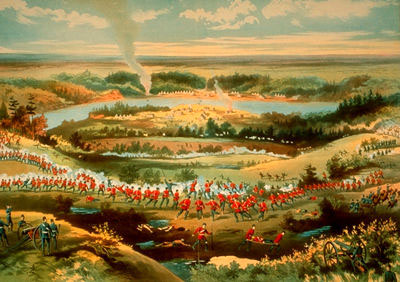
-
Article
The Newfoundland Regiment at Beaumont-Hamel
On 1 July 1916, Allied forces launched a major offensive in France during the First World War. The opening of the Somme offensive turned into one of the deadliest days in the history of modern warfare. At the village of Beaumont-Hamel, the Newfoundland Regiment suffered catastrophic losses. More than 80 percent of the soldiers who advanced that day were either killed or wounded. In one morning, the regiment suffered approximately 700 casualties, including more than 300 dead.
"https://d3d0lqu00lnqvz.cloudfront.net/media/media/893d1022-5a54-4070-89cd-4bce24aa2783.jpg" // resources/views/front/categories/view.blade.php
https://d3d0lqu00lnqvz.cloudfront.net/media/media/893d1022-5a54-4070-89cd-4bce24aa2783.jpg
-
Article
Battle of Beaver Dams
The Battle of Beaver Dams took place during the War of 1812. On 24 June 1813, American troops marched from Fort George and intended to surprise the British at Beaver Dams. Laura Secord, a woman living in Queenston where the Americans had temporarily lodged, learned about this plan, and set off on a journey to warn the British. When the Americans resumed their trek to Beaver Dams, they were ambushed by Kanyen'kehà:ka (Mohawk) and other Indigenous warriors. The Americans lost the battle, surrendering to British troops led by Lieutenant James FitzGibbon (also spelled Fitzgibbon). The Battle of Beaver Dams established the importance of professional soldiering, Indigenous warfare and luck involved in British victory.
"https://d3d0lqu00lnqvz.cloudfront.net/media/media/SecordWarnsFitzGibbon.jpg" // resources/views/front/categories/view.blade.php
https://d3d0lqu00lnqvz.cloudfront.net/media/media/SecordWarnsFitzGibbon.jpg
-
Article
Battle of Beaver Dams National Historic Site of Canada
In 1976, the cairn was moved to the newly created Battle of Beaverdams Park in Thorold. Also moved to the park was a stone monument, erected in 1874, marking the grave of 16 American soldiers found during the construction of the third Welland Canal.
"https://d3d0lqu00lnqvz.cloudfront.net/media/media/ed860320-50c1-449e-884d-bd4968480689.jpg" // resources/views/front/categories/view.blade.php
https://d3d0lqu00lnqvz.cloudfront.net/media/media/ed860320-50c1-449e-884d-bd4968480689.jpg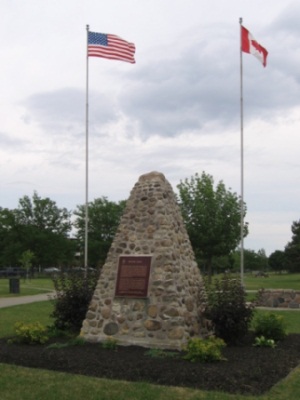
-
Article
Canada and the Second Battle of Cambrai
The Second Battle of Cambrai in northern France took place from 27 September to 11 October 1918, during the First World War. The battle was among the Canadian Corps' most impressive tactical victories of the war, particularly because of the Canadians' skillful use of military engineers. It was part of a series of connected battles at the start of the Hundred Days Campaign, which would lead to the defeat of Germany and the end the war. Victory came at a heavy cost, however: more than 30,000 Canadians were killed or wounded.
"https://d3d0lqu00lnqvz.cloudfront.net/media/media/a003268-v8.jpg" // resources/views/front/categories/view.blade.php
https://d3d0lqu00lnqvz.cloudfront.net/media/media/a003268-v8.jpg
-
Article
Battle of Châteauguay
From the outset, Hampton's cause was fraught with challenges. Approximately 1000 of the New York militia who were a part of his army refused to cross the border, and during the battle itself, several of his officers were seen abandoning their men and positions for safer ground.
"https://d3d0lqu00lnqvz.cloudfront.net/media/media/cda45a2f-f1cd-4579-9bf4-528f87a529dd.jpg" // resources/views/front/categories/view.blade.php
https://d3d0lqu00lnqvz.cloudfront.net/media/media/cda45a2f-f1cd-4579-9bf4-528f87a529dd.jpg
-
Article
Battle of Chippawa
Brown's division crossed the Niagara River into Upper Canada on 3 July 1814 and within hours took possession of Fort Erie.
"https://d3d0lqu00lnqvz.cloudfront.net/media/media/0a912643-d9dd-44f2-bc07-3664e3cee776.jpg" // resources/views/front/categories/view.blade.php
https://d3d0lqu00lnqvz.cloudfront.net/media/media/0a912643-d9dd-44f2-bc07-3664e3cee776.jpg