
Browse "History"
-
Article
Williams Treaties
The Williams Treaties were signed in October and November 1923 by the governments of Canada and Ontario and by seven First Nations of the Chippewa of Lake Simcoe (Beausoleil, Georgina Island and Rama) and the Mississauga of the north shore of Lake Ontario (Alderville, Curve Lake, Hiawatha and Scugog Island). As the last historic land cession treaties in Canada, these agreements transferred over 20,000 km2 of land in south central Ontario to the Crown; in exchange, Indigenous signatories received one-time cash payments. While Chippewa and Mississauga peoples argue that the Williams Treaties also guaranteed their right to hunt and fish on the territory, the federal and provincial governments have interpreted the treaty differently, resulting in legal disputes and negotiations between the three parties about land rights. In 2018, the Williams Treaties First Nations and the Governments of Ontario and Canada came to a final agreement, settling litigation about land surrenders and harvesting rights.
"https://d3d0lqu00lnqvz.cloudfront.net/media/media/345446e9-d0d1-4626-9702-e214ca87a8a7.jpg" // resources/views/front/categories/view.blade.php
https://d3d0lqu00lnqvz.cloudfront.net/media/media/345446e9-d0d1-4626-9702-e214ca87a8a7.jpg
-
Macleans
Windows 95 Introduced
The world tour has been drawing huge crowds, there are souvenir T-shirts and a seemingly endless stream of articles in magazines and newspapers around the world. Everywhere there is an air of feverish anticipation.This article was originally published in Maclean's Magazine on August 21, 1995
"https://thecanadianencyclopedia.ca/images/tce_placeholder.jpg?v=e9dca980c9bdb3aa11e832e7ea94f5d9" // resources/views/front/categories/view.blade.php
https://thecanadianencyclopedia.ca/images/tce_placeholder.jpg?v=e9dca980c9bdb3aa11e832e7ea94f5d9
-
Article
Winnipeg Falcons
The Winnipeg Falcons was a hockey team of the early 20th century that was made up almost solely of players of Icelandic heritage. In 1920, they won Olympic gold in Antwerp, Belgium, in the first Olympic hockey tournament. Although some sources have identified the Toronto Granites as the first Canadian Olympic hockey team to win gold (at the 1924 Olympic Winter Games), Hockey Canada and the Canadian Olympic Hall of Fame now recognize the Falcons as the first Canadians (and the first team ever) to win Olympic gold in the sport. In addition to the commendations that went with the first-ever Olympic gold medal in hockey, the triumph of the 1920 Winnipeg Falcons is a story of perseverance over adversity and underdogs beating long odds.
"https://d3d0lqu00lnqvz.cloudfront.net/media/media/cf449e10-408d-4793-8620-fa5889355750.jpg" // resources/views/front/categories/view.blade.php
https://d3d0lqu00lnqvz.cloudfront.net/media/media/cf449e10-408d-4793-8620-fa5889355750.jpg
-
Article
Women in the Labour Force
Women are considered labour force participants only if they work outside the home. In the past women have been expected to be in the labour force only until they marry; this reflects the historical, idealized notion of a society in which the man is the breadwinner and the woman the homemaker.
"https://d3d0lqu00lnqvz.cloudfront.net/media/media/57bf0875-fdbe-4d5c-8309-1ab4037ceaeb.jpg" // resources/views/front/categories/view.blade.php
https://d3d0lqu00lnqvz.cloudfront.net/media/media/57bf0875-fdbe-4d5c-8309-1ab4037ceaeb.jpg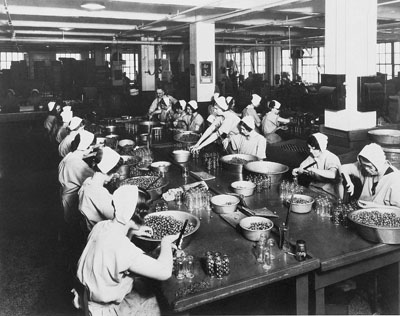
-
Article
Women's Labour Leagues
Women's Labour Leagues emerged in Canada prior to WWI. Modelled on the British Labour Leagues, auxiliaries to the Independent Labour Party, their purpose was to defend the struggles of women workers and support the labour movement.
"https://thecanadianencyclopedia.ca/images/tce_placeholder.jpg?v=e9dca980c9bdb3aa11e832e7ea94f5d9" // resources/views/front/categories/view.blade.php
https://thecanadianencyclopedia.ca/images/tce_placeholder.jpg?v=e9dca980c9bdb3aa11e832e7ea94f5d9
-
Article
Women's Movements in Canada
Canadian women have participated in many social movements, both on their own, and allied with men.
"https://d3d0lqu00lnqvz.cloudfront.net/media/Twitter_Cards/International Women's Day 5 (1).jpg" // resources/views/front/categories/view.blade.php
https://d3d0lqu00lnqvz.cloudfront.net/media/Twitter_Cards/International Women's Day 5 (1).jpg.jpg)
-
Article
Women's Movements in Canada: 1985–present
Women’s movements (or, feminist movements) during the period 1985–present — sometimes referred to as third- or fourth-wave feminism — engaged in multiple campaigns, from employment equity and daycare, to anti-racism and ending poverty and violence against women.
"https://d3d0lqu00lnqvz.cloudfront.net/media/media/aa47a6fa-67f1-434d-af96-389b6e1ac4d4.jpg" // resources/views/front/categories/view.blade.php
https://d3d0lqu00lnqvz.cloudfront.net/media/media/aa47a6fa-67f1-434d-af96-389b6e1ac4d4.jpg
-
Article
Workers Unity League
Workers Unity League the Workers Unity League (WUL) is a national trade union federation that was formed in 1929 on the initiative of the Communist Party Of Canada in line with the decision of the Communist International (Comintern) in 1928 that communists break with their previous policy of working inside existing labour parties and labour unions to push for more militant stances. The new policy stressed the need for revolutionary organizations independent of the existing...
"https://thecanadianencyclopedia.ca/images/tce_placeholder.jpg?v=e9dca980c9bdb3aa11e832e7ea94f5d9" // resources/views/front/categories/view.blade.php
https://thecanadianencyclopedia.ca/images/tce_placeholder.jpg?v=e9dca980c9bdb3aa11e832e7ea94f5d9
-
Article
Working-Class History
Working-class history is the story of the changing conditions and actions of all working people. Most adult Canadians today earn their living in the form of wages and salaries and thus share the conditions of dependent employment associated with the definition of "working class."
"https://d3d0lqu00lnqvz.cloudfront.net/media/media/74917b1f-8a36-49c3-99fd-4cf328a0bfa3.jpg" // resources/views/front/categories/view.blade.php
https://d3d0lqu00lnqvz.cloudfront.net/media/media/74917b1f-8a36-49c3-99fd-4cf328a0bfa3.jpg
-
Article
Working Class History: Québec
Most adult Canadians earn their living in the form of wages and salaries and are therefore associated with the definition of "working class." In Québec, working people and unions have played an essential role in the province's development.
"https://d3d0lqu00lnqvz.cloudfront.net/media/media/222d14f9-a2d1-4eec-b95b-7c351a0c229b.jpg" // resources/views/front/categories/view.blade.php
https://d3d0lqu00lnqvz.cloudfront.net/media/media/222d14f9-a2d1-4eec-b95b-7c351a0c229b.jpg
-
Article
Working Class History: English Canada
Most adult Canadians earn their living in the form of wages and salaries and are therefore associated with the definition of "working class." Less than a third of employed Canadians typically belong to unions. Unionized or not, the struggles and triumphs of Canadian workers are an essential part of the country's development.
"https://d3d0lqu00lnqvz.cloudfront.net/media/media/554f9da9-f4b3-4173-91d6-cfe9ae8b67a9.jpg" // resources/views/front/categories/view.blade.php
https://d3d0lqu00lnqvz.cloudfront.net/media/media/554f9da9-f4b3-4173-91d6-cfe9ae8b67a9.jpg
-
Article
XY Company
XY Company (New North West Co), named after the marks used to distinguish its bales of goods from those of the NORTH WEST COMPANY, was a product of conflicts between NWC agents (led by Simon MCTAVISH) and NWC winterers, following the company's reorganization in 1795.
"https://d3d0lqu00lnqvz.cloudfront.net/media/media/40bc582e-1852-43d6-bc74-d3a308f5d41b.jpg" // resources/views/front/categories/view.blade.php
https://d3d0lqu00lnqvz.cloudfront.net/media/media/40bc582e-1852-43d6-bc74-d3a308f5d41b.jpg
-
Article
York Boat
The York boat, named for the Hudson’s Bay Company’s York Factory, was one of three types of inland boats (the others being scows and sturgeon-heads) used by the HBC in the fur trade. It was the company’s most suitable boat for lake travel, although it also plied rivers. For about a century beginning the 1820s, this freight-carrying boat was the main mode of transportation between York Factory on Hudson Bay and inland trading posts.
"https://d3d0lqu00lnqvz.cloudfront.net/media/media/2d475434-ebfb-4096-bb34-c21b0169fca7.jpg" // resources/views/front/categories/view.blade.php
https://d3d0lqu00lnqvz.cloudfront.net/media/media/2d475434-ebfb-4096-bb34-c21b0169fca7.jpg
-
Article
York Factory
York Factory, also known as York Fort, Fort Bourbon by the French, and Kischewaskaheegan by some Indigenous people, was a trading post on the Hayes River near its outlet to Hudson Bay, in what is now Manitoba. During its life, it served as a post and later as a major administrative centre in the Hudson’s Bay Company’s fur trade network. It also bore witness to the largest naval battle to take place in Arctic Canada, the Battle of Hudson Bay in 1697.
"https://d3d0lqu00lnqvz.cloudfront.net/YorkFactory1853.jpg" // resources/views/front/categories/view.blade.php
https://d3d0lqu00lnqvz.cloudfront.net/YorkFactory1853.jpg
-
Article
You'll Get Used to It
'You'll Get Used to It'. World War II song in quick-march tempo, written in 1940 by Freddie Grant about life in a camp for German and Austrian nationals (many of whom were refugees) in England during the hostilities.
"https://thecanadianencyclopedia.ca/images/tce_placeholder.jpg?v=e9dca980c9bdb3aa11e832e7ea94f5d9" // resources/views/front/categories/view.blade.php
https://thecanadianencyclopedia.ca/images/tce_placeholder.jpg?v=e9dca980c9bdb3aa11e832e7ea94f5d9