
Browse "History"
-
Article
Trading Post
The trading post can be viewed as a large household whose size and social organization reflected the cultural heritage of its members and the post's role in the fur trade.
"https://d3d0lqu00lnqvz.cloudfront.net/media/media/a4d6e476-5e53-4126-9ee6-313b64235660.jpg" // resources/views/front/categories/view.blade.php
https://d3d0lqu00lnqvz.cloudfront.net/media/media/a4d6e476-5e53-4126-9ee6-313b64235660.jpg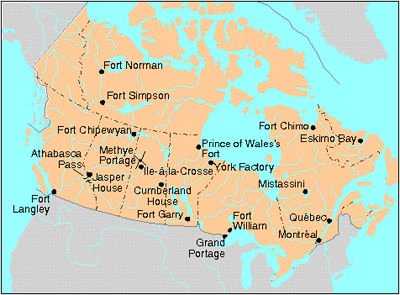
-
Article
Trail of '98
Trail of '98, a reference to the Chilkoot Trail and other northern trails scaled by prospectors during the Klondike Gold Rush, which was at its height in 1898. Robert W. Service tells the story of these prospectors in his first novel, The Trail of '98 (1910).
"https://d3d0lqu00lnqvz.cloudfront.net/media/media/f8badbbb-95b8-44cf-a053-5589845ee1ef.jpg" // resources/views/front/categories/view.blade.php
https://d3d0lqu00lnqvz.cloudfront.net/media/media/f8badbbb-95b8-44cf-a053-5589845ee1ef.jpg
-
Article
Transgender Archives at the University of Victoria
The Transgender Archives at the University of Victoria is believed to be the largest collection of historical documents and materials related to transgender research and activism in the world (see Historical Sources). Aaron Devor, chair of Transgender Studies at the University of Victoria, is the founder and subject matter expert of the archives, which officially opened in 2011. The archives aim to preserve the history and research of transgender people and other gender-diverse peoples. (See also 2SLGBTQ+ Rights in Canada; Two-Spirit; Queer Culture.)
"https://d3d0lqu00lnqvz.cloudfront.net/media/media/6483ddf2-6bee-4d0b-a2b1-142ae795176c.jpg" // resources/views/front/categories/view.blade.php
https://d3d0lqu00lnqvz.cloudfront.net/media/media/6483ddf2-6bee-4d0b-a2b1-142ae795176c.jpg
-
Article
Travels and Adventures in Canada and the Indian Territories between the Years 1760 and 1776
Travels and Adventures in Canada and the Indian Territories between the Years 1760 and 1776 (New York, 1809; Toronto, 1901) was written by Alexander Henry (the elder), one of the first Britons to venture into western Indigenous territory after the defeat of the French at Québec.
"https://thecanadianencyclopedia.ca/images/tce_placeholder.jpg?v=e9dca980c9bdb3aa11e832e7ea94f5d9" // resources/views/front/categories/view.blade.php
https://thecanadianencyclopedia.ca/images/tce_placeholder.jpg?v=e9dca980c9bdb3aa11e832e7ea94f5d9
-
Article
Treaty 10
Treaty 10 is the 10th of the 11 Numbered Treaties. It was signed in 1906–07 by the Canadian government and Indigenous peoples in northern Saskatchewan and Alberta. Treaty 10 covers nearly 220,000 km2 of Saskatchewan and Alberta. The terms of Treaty 10 have had ongoing legal and socioeconomic impacts on Indigenous communities.
"https://d3d0lqu00lnqvz.cloudfront.net/media/media/22da8ac5-1905-4c28-ad2e-c9f55c67c7aa.jpg" // resources/views/front/categories/view.blade.php
https://d3d0lqu00lnqvz.cloudfront.net/media/media/22da8ac5-1905-4c28-ad2e-c9f55c67c7aa.jpg
-
Article
Treaty 11
Treaty 11 is the last of the Numbered Treaties signed on 22 August 1921 between First Nations and the Canadian government following Confederation, as Canada expanded its borders north and west. It covers more than 950,000 km2 of present-day Yukon, Northwest Territories and Nunavut. The First Nations involved were predominately Dene, and include the Gwich’in, Tlicho (Dogrib) and Sahtu. As with other Numbered Treaties, the government did not want to enter into treaty until its interests would be served by doing so; accordingly, Treaty 11 was only created in 1921, after oil and gas prospects in the Mackenzie region sparked its interests. However, hasty negotiations combined with weak implementation of the terms — particularly with regard to reserves and land claims — have led to considerable disagreement between the parties on what was meant by the treaty and which promises have not been fulfilled. As a result, many of the signatories to Treaty 11 have also been involved in the modern treaties process ( see Indigenous Peoples: Treaties).
"https://d3d0lqu00lnqvz.cloudfront.net/media/media/ec35153e-3722-48ad-b760-64812a063ffe.jpg" // resources/views/front/categories/view.blade.php
https://d3d0lqu00lnqvz.cloudfront.net/media/media/ec35153e-3722-48ad-b760-64812a063ffe.jpg
-
Article
Treaty 6
Treaty 6 was signed by Crown representatives and Cree, Assiniboine and Ojibwe leaders on 23 August 1876 at Fort Carlton , Saskatchewan, and on 9 September 1876 at Fort Pitt, Saskatchewan. The treaty boundaries extend across central portions of present-day Alberta and Saskatchewan. This is the full-length entry about Treaty 6. For a plain-language summary, please see Treaty 6 (Plain-Language Summary).
"https://d3d0lqu00lnqvz.cloudfront.net/media/media/2a58e580-6da4-4fd4-b1fe-dc1357c14c36.jpg" // resources/views/front/categories/view.blade.php
https://d3d0lqu00lnqvz.cloudfront.net/media/media/2a58e580-6da4-4fd4-b1fe-dc1357c14c36.jpg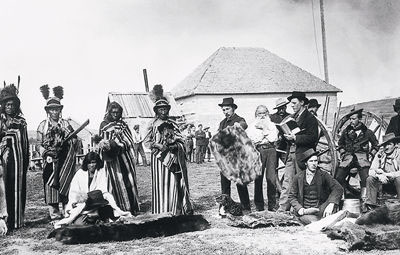
-
Article
Treaty 7
Treaty 7 is the last of the Numbered Treaties made between the Government of Canada and the Plains First Nations (see Indigenous Peoples: Plains). It was signed on 22 September 1877 by five First Nations: the Siksika (Blackfoot), Kainai (Blood), Piikani (Peigan), Stoney-Nakoda, and Tsuut’ina (Sarcee). Different understandings of the treaty’s purpose, combined with significant culture and language barriers and what some have argued were deliberate attempts to mislead the First Nations on the part of the government negotiators, have led to ongoing conflicts and claims. This article is a full-length entry about Treaty 7. For a plain-language summary, please see Treaty 7 (Plain-Language Summary).
"https://d3d0lqu00lnqvz.cloudfront.net/media/media/0729607a-735a-424b-a138-3e76e6053763.jpg" // resources/views/front/categories/view.blade.php
https://d3d0lqu00lnqvz.cloudfront.net/media/media/0729607a-735a-424b-a138-3e76e6053763.jpg
-
Article
Treaty 9
Treaty 9 (also known as the James Bay Treaty) is one of the 11 post-Confederation Numbered Treaties negotiated with Indigenous peoples in Canada between 1871 and 1921. (See also Treaties with Indigenous Peoples in Canada.) Signed in 1905-6, Treaty 9 covers most of present-day Ontario north of the height of land dividing the Great Lakes watershed from the Hudson and James Bay drainage basins. The purpose of Treaty 9 was to purchase the interests of the resident Cree and Ojibwe peoples to lands and resources to make way for white settlement and resource development. Treaty 9, like other Numbered Treaties, contained provisions for cash treaty payments, the creation of reserves, education and hunting, fishing and trapping rights.
"https://d3d0lqu00lnqvz.cloudfront.net/media/media/ab3026d0-af94-42ad-bfc4-5a7775f728cc.jpg" // resources/views/front/categories/view.blade.php
https://d3d0lqu00lnqvz.cloudfront.net/media/media/ab3026d0-af94-42ad-bfc4-5a7775f728cc.jpg
-
Article
Treaty-Making Power
Treaty-Making Power describes any and all types of international agreements governed by international law which are concluded between and among states and international organizations. Terms such as "convention," "protocol" and "declaration" are sometimes used to describe such agreements.
"https://thecanadianencyclopedia.ca/images/tce_placeholder.jpg?v=e9dca980c9bdb3aa11e832e7ea94f5d9" // resources/views/front/categories/view.blade.php
https://thecanadianencyclopedia.ca/images/tce_placeholder.jpg?v=e9dca980c9bdb3aa11e832e7ea94f5d9
-
Article
Treaty of Breda
Breda, Treaty of, agreements signed 21 July 1667 at Breda, the Netherlands, between England and the Netherlands and between England and France, ending the second Anglo-Dutch War. The former treaty recognized the English conquest of Amsterdam (New York) in 1664.
"https://thecanadianencyclopedia.ca/images/tce_placeholder.jpg?v=e9dca980c9bdb3aa11e832e7ea94f5d9" // resources/views/front/categories/view.blade.php
https://thecanadianencyclopedia.ca/images/tce_placeholder.jpg?v=e9dca980c9bdb3aa11e832e7ea94f5d9
-
Article
Treaties of Fort Stanwix (1768 and 1784)
The first Treaty of Fort Stanwix was signed in 1768 between the Haudenosaunee (also known as the Six Nations or Iroquois Confederacy) and British Superintendent of Indian Affairs in the Northern District, Sir William Johnson. It was the first major treaty to be negotiated according to the Royal Proclamation of 1763. Five years after the proclamation had set the western boundary of colonial settlement at the Appalachian Mountains — reserving the vast North American interior as Indigenous territory — the Treaty of Fort Stanwix pushed the border west to the Ohio River, opening up lands to white settlers. The second Treaty of Fort Stanwix, signed in 1784, was an agreement between the Haudenosaunee and the newly independent United States. This treaty redrew the eastern boundaries of the first Treaty of Fort Stanwix, surrendering more Indigenous territory.
"https://thecanadianencyclopedia.ca/images/tce_placeholder.jpg?v=e9dca980c9bdb3aa11e832e7ea94f5d9" // resources/views/front/categories/view.blade.php
https://thecanadianencyclopedia.ca/images/tce_placeholder.jpg?v=e9dca980c9bdb3aa11e832e7ea94f5d9
-
Article
Treaty of Ghent
Treaty of Ghent, signed in Ghent, Belgium, on Christmas Eve 1814 by Great Britain and the US to end the War of 1812. Negotiations for peace had begun the previous year, with both parties agreeing to meet in Europe to work out the details.
"https://d3d0lqu00lnqvz.cloudfront.net/media/media/69a62e0d-3a5c-45fe-9b42-ec67fb4f5d02.jpg" // resources/views/front/categories/view.blade.php
https://d3d0lqu00lnqvz.cloudfront.net/media/media/69a62e0d-3a5c-45fe-9b42-ec67fb4f5d02.jpg
-
Article
Treaty of Oswegatchie (1760)
The 1760 Treaty of Oswegatchie was signed during the Seven Years’ War and assured neutrality between the Seven Nations (former Indigenous allies of the French) and the British. (See also Treaties with Indigenous Peoples in Canada.)
"https://d3d0lqu00lnqvz.cloudfront.net/media/media/813dff7d-8227-4201-9405-43db3b3e98c0.jpg" // resources/views/front/categories/view.blade.php
https://d3d0lqu00lnqvz.cloudfront.net/media/media/813dff7d-8227-4201-9405-43db3b3e98c0.jpg
-
Article
Treaty of Paris 1763
The Treaty of Paris was signed on 10 February 1763 and ended the Seven Years’ War between France, Britain and Spain. It marked the end of the war in North America and created the basis for the modern country of Canada. France formally ceded New France to the British, and largely withdrew from the continent.
"https://thecanadianencyclopedia.ca/images/tce_placeholder.jpg?v=e9dca980c9bdb3aa11e832e7ea94f5d9" // resources/views/front/categories/view.blade.php
https://thecanadianencyclopedia.ca/images/tce_placeholder.jpg?v=e9dca980c9bdb3aa11e832e7ea94f5d9