
Browse "History"
-
Editorial
Editorial: The Death of the Meech Lake Accord
The following article is an editorial written by The Canadian Encyclopedia staff. Editorials are not usually updated. On a Sunday evening, 3 June 1990, Prime Minister Brian Mulroney and the ten provincial premiers marked the third anniversary of the Meech Lake Accord at a dinner in the architectural splendour of the Canadian Museum of Civilization (now the Canadian Museum of History) in Hull, Quebec.
"https://d3d0lqu00lnqvz.cloudfront.net/media/media/73c1f655-bfcc-4aa6-9251-c0d5c550fde4.jpg" // resources/views/front/categories/view.blade.php
https://d3d0lqu00lnqvz.cloudfront.net/media/media/73c1f655-bfcc-4aa6-9251-c0d5c550fde4.jpg
-
Editorial
The 1704 Raid on Deerfield
The following article is an editorial written by The Canadian Encyclopedia staff. Editorials are not usually updated.
"https://d3d0lqu00lnqvz.cloudfront.net/media/media/d349c3ec-f959-45b6-a8e5-9f3c67a1e498.jpg" // resources/views/front/categories/view.blade.php
https://d3d0lqu00lnqvz.cloudfront.net/media/media/d349c3ec-f959-45b6-a8e5-9f3c67a1e498.jpg
-
Editorial
Acadian Expulsion (the Great Upheaval)
Soldiers rounding up terrified civilians, expelling them from their land, burning their homes and crops ‒ it sounds like a 20th century nightmare in one of the world's trouble spots, but it describes a scene from Canada's early history, the Deportation of the Acadians.
"https://d3d0lqu00lnqvz.cloudfront.net/Acadian still.png" // resources/views/front/categories/view.blade.php
https://d3d0lqu00lnqvz.cloudfront.net/Acadian still.png
-
Editorial
The arrival of Doukhobors in Canada (1899)
The following article is an editorial written by The Canadian Encyclopedia staff. Editorials are not usually updated.
"https://thecanadianencyclopedia.ca/images/tce_placeholder.jpg?v=e9dca980c9bdb3aa11e832e7ea94f5d9" // resources/views/front/categories/view.blade.php
https://thecanadianencyclopedia.ca/images/tce_placeholder.jpg?v=e9dca980c9bdb3aa11e832e7ea94f5d9
-
Article
The American Response to the Canadian Rebellions of 1837–38
By December 1837 and January 1838, rebels from Upper and Lower Canada had suffered heavy defeats at the hands of British and Loyalist forces. (See: Rebellion in Lower Canada; Rebellion in Upper Canada.) They fled to the United States to seek financial and military assistance. The American public was aware that there had been armed conflicts in the Canadas. Many were even initially supportive. However, the presence of Canadian rebels on American soil forced many to question American involvement. The growing tensions with Great Britain over the Caroline Affair complicated matters. The creation of the Republic of Texas and the fight over the abolition of slavery were also factors. In January 1838, US President Martin Van Buren took steps to ensure America’s neutrality in the Canadian rebellions.
"https://d3d0lqu00lnqvz.cloudfront.net/media/media/a4abe204-c34a-4e1d-95d4-4b754e7b9598.jpg" // resources/views/front/categories/view.blade.php
https://d3d0lqu00lnqvz.cloudfront.net/media/media/a4abe204-c34a-4e1d-95d4-4b754e7b9598.jpg
-
Editorial
The First Telegraph in Canada
The following article is an editorial written by The Canadian Encyclopedia staff. Editorials are not usually updated.
"https://d3d0lqu00lnqvz.cloudfront.net/media/media/d728ded5-05be-48c5-8097-f08db72cac00.jpg" // resources/views/front/categories/view.blade.php
https://d3d0lqu00lnqvz.cloudfront.net/media/media/d728ded5-05be-48c5-8097-f08db72cac00.jpg
-
Editorial
The First Thanksgiving in North America
The following article is an editorial written by The Canadian Encyclopedia staff. Editorials are not usually updated. It has become common knowledge that the first Thanksgiving in North America was held by Sir Martin Frobisher and his crew in Nunavut in 1578. There are those — mainly Americans upset by the thought of having their holiday co-opted — who argue that it wasn't a “real” Thanksgiving. I would counter that Frobisher had reason to give thanks, and that giving thanks was an important aspect of Elizabethan society, so it would have been a natural thing for him and his men to do.
"https://d3d0lqu00lnqvz.cloudfront.net/media/media/c07fc308-7b63-421f-8b08-2c821321ba57.jpg" // resources/views/front/categories/view.blade.php
https://d3d0lqu00lnqvz.cloudfront.net/media/media/c07fc308-7b63-421f-8b08-2c821321ba57.jpg
-
Editorial
Editorial: Baldwin, LaFontaine and Responsible Government
The following article is an editorial written by The Canadian Encyclopedia staff. Editorials are not usually updated. The Baldwin–LaFontaine government of 1848 has been called the “great ministry.” In addition to establishing responsible government, it had an incomparable record of legislation. It established a public school system and finalized the founding of the University of Toronto. It set up municipal governments and pacified French-Canadian nationalism after a period of unrest. Responsible government did not transform Canada overnight into a fully developed democracy. But it was an important milestone along the road to political autonomy. Most importantly, it provided an opportunity for French Canadians to find a means for their survival through the British Constitution. The partnership and friendship between Baldwin and LaFontaine were brilliant examples of collaboration that have been all too rare in Canadian history.
"https://d3d0lqu00lnqvz.cloudfront.net/media/media/ba6bdff6-574a-4697-ac95-afdcc5ddfcc9.jpg" // resources/views/front/categories/view.blade.php
https://d3d0lqu00lnqvz.cloudfront.net/media/media/ba6bdff6-574a-4697-ac95-afdcc5ddfcc9.jpg
-
Editorial
The Great Crash of 1929 in Canada
The following article is an editorial written by The Canadian Encyclopedia staff. Editorials are not usually updated. In late October of 1929, terror seized the stock exchanges of North America. Capitalism’s speculative party, with its galloping share prices and its celebrity millionaires, came to an abrupt stop. The Great Crash, it was called, and it was followed by the Great Depression.
"https://d3d0lqu00lnqvz.cloudfront.net/media/media/cc8df85f-c925-4f6f-91e1-7403bcb85345.jpg" // resources/views/front/categories/view.blade.php
https://d3d0lqu00lnqvz.cloudfront.net/media/media/cc8df85f-c925-4f6f-91e1-7403bcb85345.jpg
-
Macleans
The Great War Haunts Us Still
IT'S BEEN 90 YEARS now since the Guns of August began to fire, and the smoke has yet to clear from the world they made. The fault lines of modern history - from the quagmire in Iraq through Yugoslavia's implosion to the Cold War and beyond - all branch back to the cataclysm of 1914-1918.This article was originally published in Maclean's Magazine on November 8, 2004
"https://thecanadianencyclopedia.ca/images/tce_placeholder.jpg?v=e9dca980c9bdb3aa11e832e7ea94f5d9" // resources/views/front/categories/view.blade.php
https://thecanadianencyclopedia.ca/images/tce_placeholder.jpg?v=e9dca980c9bdb3aa11e832e7ea94f5d9
-
Editorial
The Halifax Explosion of 1917
The following article is an editorial written by The Canadian Encyclopedia staff. Editorials are not usually updated.
"https://thecanadianencyclopedia.ca/images/tce_placeholder.jpg?v=e9dca980c9bdb3aa11e832e7ea94f5d9" // resources/views/front/categories/view.blade.php
https://thecanadianencyclopedia.ca/images/tce_placeholder.jpg?v=e9dca980c9bdb3aa11e832e7ea94f5d9
-
Editorial
The Heroism of William Jackman
The following article is an editorial written by The Canadian Encyclopedia staff. Editorials are not updated.On 9 October 1867, in Spotted Island Harbour, Labrador, Captain William Jackman secured his vessel ahead of a vicious storm and went ashore to visit his old friend, John Holwell. Before the day ended, events transpired that earned Jackman a place in Newfoundland history — and legend.
"https://d3d0lqu00lnqvz.cloudfront.net/media/media/ab2a7cfb-9c8d-4afb-81e1-d63780c50952.jpg" // resources/views/front/categories/view.blade.php
https://d3d0lqu00lnqvz.cloudfront.net/media/media/ab2a7cfb-9c8d-4afb-81e1-d63780c50952.jpg
-
Article
The History of Canadian Women in Sport
For hundreds of years, very few sports were considered appropriate for women, whether for reasons of supposed physical frailty, or the alleged moral dangers of vigorous exercise. Since the late 19th century, however, women in Canada have participated in a growing list of sports — not only those deemed graceful and feminine, but also the sweaty, rough-and-tumble games traditionally played only by men (e.g., hockey, boxing, soccer, rugby)
"https://d3d0lqu00lnqvz.cloudfront.net/media/media/9c27e9a9-7620-4f38-b10f-d79a6c7956ce.jpg" // resources/views/front/categories/view.blade.php
https://d3d0lqu00lnqvz.cloudfront.net/media/media/9c27e9a9-7620-4f38-b10f-d79a6c7956ce.jpg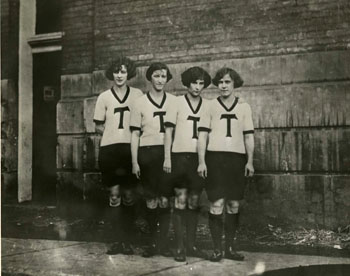
-
Article
Canadian Film History: 1896 to 1938
Filmmaking is a powerful form of cultural and artistic expression, as well as a highly profitable commercial enterprise. From a practical standpoint, filmmaking is a business involving large sums of money and a complex division of labour. This labour is involved, roughly speaking, in three sectors: production, distribution and exhibition. The history of the Canadian film industry has been one of sporadic achievement accomplished in isolation against great odds. Canadian cinema has existed within an environment where access to capital for production, to the marketplace for distribution and to theatres for exhibition has been extremely difficult. The Canadian film industry, particularly in English Canada, has struggled against the Hollywood entertainment monopoly for the attention of an audience that remains largely indifferent toward the domestic industry. The major distribution and exhibition outlets in Canada have been owned and controlled by foreign interests. The lack of domestic production throughout much of the industry’s history can only be understood against this economic backdrop. This article is one of four that surveys the history of the film industry in Canada. The entire series includes: Canadian Film History: 1896 to 1938; Canadian Film History: 1939 to 1973; Canadian Film History: 1974 to Present; Canadian Film History: Notable Films and Filmmakers 1980 to Present.
"https://d3d0lqu00lnqvz.cloudfront.net/media/media/1f440346-22dd-48de-951f-264baf7a7fc4.jpg" // resources/views/front/categories/view.blade.php
https://d3d0lqu00lnqvz.cloudfront.net/media/media/1f440346-22dd-48de-951f-264baf7a7fc4.jpg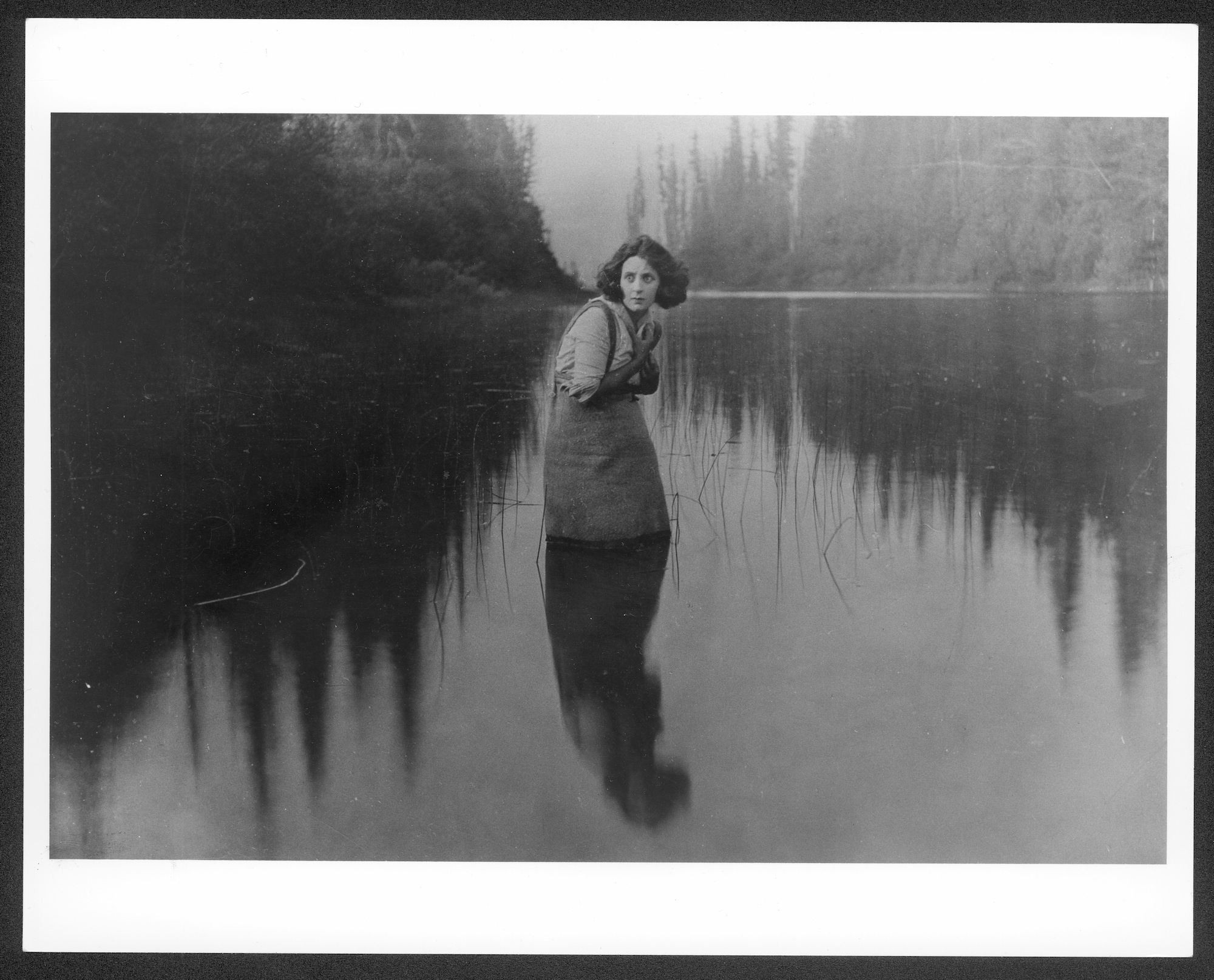
-
Article
The Last Spike
The Last Spike was the final and ceremonial railway spike driven into the Canadian Pacific Railway (CPR) track by company director Donald Smith on the morning of 7 November 1885. The ceremony marked the completion of the transcontinental CPR and was a muted affair at which a group of company officials and labourers gathered at Craigellachie near Eagle Pass in the interior of British Columbia. One of about 30 million iron spikes used in the construction of the line, the Last Spike came to symbolize more than the completion of a railway. Contemporaries and historians have viewed the Last Spike — as well as the iconic photographs of the event — as a moment when national unity was realized.
"https://d3d0lqu00lnqvz.cloudfront.net/media/media/1f3712f0-f1ac-4fba-a093-ff4c7cfec856.jpg" // resources/views/front/categories/view.blade.php
https://d3d0lqu00lnqvz.cloudfront.net/media/media/1f3712f0-f1ac-4fba-a093-ff4c7cfec856.jpg