
Browse "History"
-
Macleans
Romanow Re-elected With Minority Government
In one stump speech after another during the 28-day Saskatchewan election campaign, Premier Roy Romanow returned to the same refrain. "Don't judge me against perfection," he urged voters. "Judge me against the alternatives.This article was originally published in Maclean's Magazine on September 27, 1999
"https://thecanadianencyclopedia.ca/images/tce_placeholder.jpg?v=e9dca980c9bdb3aa11e832e7ea94f5d9" // resources/views/front/categories/view.blade.php
https://thecanadianencyclopedia.ca/images/tce_placeholder.jpg?v=e9dca980c9bdb3aa11e832e7ea94f5d9
-
Article
Rooster Town
Rooster Town was a largely Métis community that existed on the southwest fringes of suburban Winnipeg from 1901 until the late 1950s. While there were numerous urban Métis fringe communities on the Prairies and in British Columbia, their history has been relatively forgotten. (See also Métis Road Allowance Communities.)
"https://d3d0lqu00lnqvz.cloudfront.net/media/media/093c5c4d-cdd7-4fe5-b8d1-753c6c5a7dd9.jpg" // resources/views/front/categories/view.blade.php
https://d3d0lqu00lnqvz.cloudfront.net/media/media/093c5c4d-cdd7-4fe5-b8d1-753c6c5a7dd9.jpg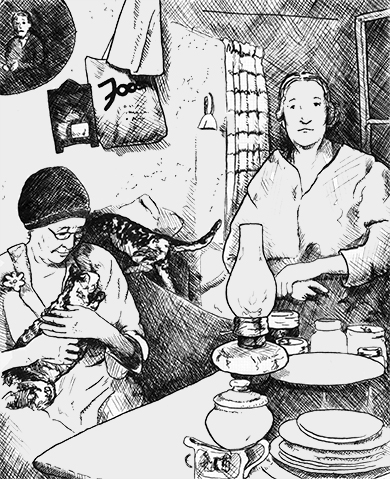
-
Article
Round Table Movement
Round Table Movement, an organization devoted to the study of British Empire problems and the promotion of imperial unity, fd 1909 in London, Eng.
"https://thecanadianencyclopedia.ca/images/tce_placeholder.jpg?v=e9dca980c9bdb3aa11e832e7ea94f5d9" // resources/views/front/categories/view.blade.php
https://thecanadianencyclopedia.ca/images/tce_placeholder.jpg?v=e9dca980c9bdb3aa11e832e7ea94f5d9
-
Article
Royal Proclamation of 1763 Document
Royal Proclamation of 1763: DocumentSelected text of the Royal Proclamation:Whereas we have taken into Our Royal Consideration the extensive and valuable acquisitions in America, secured to our Crown by the late Definitive Treaty of Peace concluded at Paris, the 10th day of February last; and being desirous that all Our loving Subjects, as well of our Kingdom as of our Colonies in America, may avail themselves with all convenient Speed, of the great Benefits and...
"https://thecanadianencyclopedia.ca/images/tce_placeholder.jpg?v=e9dca980c9bdb3aa11e832e7ea94f5d9" // resources/views/front/categories/view.blade.php
https://thecanadianencyclopedia.ca/images/tce_placeholder.jpg?v=e9dca980c9bdb3aa11e832e7ea94f5d9
-
Article
Royal Proclamation of 1763
The Royal Proclamation of 1763 was issued by King George III on 7 October 1763. It established the basis for governing the North American territories surrendered by France to Britain in the Treaty of Paris, 1763, following the Seven Years’ War. It introduced policies meant to assimilate the French population to British rule. These policies ultimately failed and were replaced by the Quebec Act of 1774 (see also The Conquest of New France). The Royal Proclamation also set the constitutional structure for the negotiation of treaties with the Indigenous inhabitants of large sections of Canada. It is referenced in section 25 of the Constitution Act, 1982. As such, it has been labelled an “Indian Magna Carta” or an “Indian Bill of Rights.” The Proclamation also contributed to the outbreak of the American Revolutionary War in 1775. The Proclamation legally defined the North American interior west of the Appalachian Mountains as a vast Indigenous reserve. This angered people in the Thirteen Colonies who desired western expansion.This is the full-length entry about the Royal Proclamation of 1763. For a plain language summary, please see Royal Proclamation of 1763 (Plain Language Summary).
"https://thecanadianencyclopedia.ca/images/tce_placeholder.jpg?v=e9dca980c9bdb3aa11e832e7ea94f5d9" // resources/views/front/categories/view.blade.php
https://thecanadianencyclopedia.ca/images/tce_placeholder.jpg?v=e9dca980c9bdb3aa11e832e7ea94f5d9
-
Article
Royal Proclamation of 1763 (Plain-Language Summary)
The Royal Proclamation of 1763 was issued after the British defeated the French at Québec City in 1759 and Montreal in 1760 (see Battle of the Plains of Abraham and Seven Years’ War). After those defeats, New France (1608-1763) was taken over by the British. The Proclamation brought the new Province of Quebec under British control.
"https://thecanadianencyclopedia.ca/images/tce_placeholder.jpg?v=e9dca980c9bdb3aa11e832e7ea94f5d9" // resources/views/front/categories/view.blade.php
https://thecanadianencyclopedia.ca/images/tce_placeholder.jpg?v=e9dca980c9bdb3aa11e832e7ea94f5d9
-
Article
Royal Union Flag (Union Jack)
Before the adoption of the maple leaf–designed National Flag of Canada in 1965, Canada, first as a colony and later as a dominion, was represented by a succession of royal flags — the flag of France, the Cross of St. George, the first version of the Royal Union Flag (combining the English and Scottish flags), and, finally, the current Royal Union Flag (combining the British and Irish flags, and also known as the Union Jack).
"https://d3d0lqu00lnqvz.cloudfront.net/media/media/dfb0588f-9e6d-41df-aba0-bc28e28a97c6.png" // resources/views/front/categories/view.blade.php
https://d3d0lqu00lnqvz.cloudfront.net/media/media/dfb0588f-9e6d-41df-aba0-bc28e28a97c6.png
-
Macleans
Royal Wedding of Edward and Sophie
If the tabloids had their way, this royal wedding would be remembered as the saga of Sophie's bared breast. It is a poignant story, even a little tawdry, about a bashful prince and a canny career girl.This article was originally published in Maclean's Magazine on June 21, 1999
"https://thecanadianencyclopedia.ca/images/tce_placeholder.jpg?v=e9dca980c9bdb3aa11e832e7ea94f5d9" // resources/views/front/categories/view.blade.php
https://thecanadianencyclopedia.ca/images/tce_placeholder.jpg?v=e9dca980c9bdb3aa11e832e7ea94f5d9
-
Article
Royal William
The Royal William was the first Canadian ship to cross the Atlantic entirely under steam power. It was built by Messrs Black and Campbell and launched on 27 April 1831 by Lord and Lady Aylmer at Québec. The steam
"https://d3d0lqu00lnqvz.cloudfront.net/media/media/880cecc5-9899-4e5e-aa1c-1d846d970530.jpg" // resources/views/front/categories/view.blade.php
https://d3d0lqu00lnqvz.cloudfront.net/media/media/880cecc5-9899-4e5e-aa1c-1d846d970530.jpg
-
Article
Run
Eric Walters’s novel Run (2003) is a fictionalized account of Terry Fox’s Marathon of Hope. The book follows troubled youth Winston Macdonald, who is inspired to stop running away from his problems after he befriends Fox in 1980. Run is both the first book for young adults and the first fictionalized book about Terry Fox endorsed by the Fox family. Author royalties from the sales of Run are donated to the Terry Fox Foundation. The novel’s audio version received the 2004 Torgi Award for Books in Alternative Formats.
"https://thecanadianencyclopedia.ca/images/tce_placeholder.jpg?v=e9dca980c9bdb3aa11e832e7ea94f5d9" // resources/views/front/categories/view.blade.php
https://thecanadianencyclopedia.ca/images/tce_placeholder.jpg?v=e9dca980c9bdb3aa11e832e7ea94f5d9
-
Article
Rush-Bagot Agreement
The Rush-Bagot Agreement (or Rush-Bagot Treaty) was signed in 1817 by Acting Secretary of State Richard Rush and Sir Charles Bagot, British minister in Washington. The treaty reduced the number of military ships on the Great Lakes and Lake Champlain and helped secure the Canadian-American border.
"https://d3d0lqu00lnqvz.cloudfront.net/Royal_Military_College_of_Canada_Rush_Bagot_Agreement.jpg" // resources/views/front/categories/view.blade.php
https://d3d0lqu00lnqvz.cloudfront.net/Royal_Military_College_of_Canada_Rush_Bagot_Agreement.jpg
-
Macleans
Rwandan Genocide Aftermath
This article was originally published in Maclean’s magazine on March 6, 1995. Partner content is not updated. Through the window of a Huey helicopter whisking above the countryside at 700 feet, the southern Rwandan countryside does not look like a hellish killing ground. The camel-hump hills are variations on green, groomed for the planting season that is just beginning.
"https://thecanadianencyclopedia.ca/images/tce_placeholder.jpg?v=e9dca980c9bdb3aa11e832e7ea94f5d9" // resources/views/front/categories/view.blade.php
https://thecanadianencyclopedia.ca/images/tce_placeholder.jpg?v=e9dca980c9bdb3aa11e832e7ea94f5d9
-
Macleans
Rwandan Refugees Trek Home
The quickest and the fittest among them led the exodus. The first sign of Rwanda's long march of refugees was a single file of ragged but relatively healthy families, who stuck cautiously to the side of the road like people emerging into the light after a long night.This article was originally published in Maclean's Magazine on November 25, 1996
"https://thecanadianencyclopedia.ca/images/tce_placeholder.jpg?v=e9dca980c9bdb3aa11e832e7ea94f5d9" // resources/views/front/categories/view.blade.php
https://thecanadianencyclopedia.ca/images/tce_placeholder.jpg?v=e9dca980c9bdb3aa11e832e7ea94f5d9
-
Macleans
Saguenay Floods Kill 10
This article was originally published in Maclean’s magazine on August 5, 1996. Partner content is not updated. One soggy day late last April, Art Poirier found himself among thousands of people stacking sandbags against rising floodwaters from southern Manitoba's ancient and implacable nemesis, the Red River. Poirier flicked a cigarette butt into the brand new lake around his home.
"https://thecanadianencyclopedia.ca/images/tce_placeholder.jpg?v=e9dca980c9bdb3aa11e832e7ea94f5d9" // resources/views/front/categories/view.blade.php
https://thecanadianencyclopedia.ca/images/tce_placeholder.jpg?v=e9dca980c9bdb3aa11e832e7ea94f5d9
-
Article
Sailing Ships
In Canada's age of sail (1800-75) over 4000 ships, each exceeding 500 tons burthen, were built in Canada. In 1878 Canadian-registered ships numbered 7196 and totalled 1 333 015 tons. Among the nations, Canada stood fourth in seagoing tonnage.
"https://d3d0lqu00lnqvz.cloudfront.net/media/media/51e2696b-a413-49ec-95f7-5c8ae1e99b18.jpg" // resources/views/front/categories/view.blade.php
https://d3d0lqu00lnqvz.cloudfront.net/media/media/51e2696b-a413-49ec-95f7-5c8ae1e99b18.jpg