
Browse "History"
-
Article
Hill 70 and Canadian Independence
Canada’s war of independence was the First World War. Unlike the Americans, our war of independence was not fought against the country from which we became independent, but alongside it. We started the war as a colony of Britain and ended it as an ally. The remarkable performance of the Canadian Corps and its first Canadian commander made these gains in autonomy possible.
"https://d3d0lqu00lnqvz.cloudfront.net/media/media/9dd8ed5e-dc70-4b32-a4d8-bbe7a5207248.jpg" // resources/views/front/categories/view.blade.php
https://d3d0lqu00lnqvz.cloudfront.net/media/media/9dd8ed5e-dc70-4b32-a4d8-bbe7a5207248.jpg
-
Article
Hindenburg Line
Hindenburg Line (Siegfried-Stellung), a system of fortified and entrenched reserve positions stretching 80 km southeast from Arras to Soissons, France, built by the Germans in the winter of 1916-17.
"https://thecanadianencyclopedia.ca/images/tce_placeholder.jpg?v=e9dca980c9bdb3aa11e832e7ea94f5d9" // resources/views/front/categories/view.blade.php
https://thecanadianencyclopedia.ca/images/tce_placeholder.jpg?v=e9dca980c9bdb3aa11e832e7ea94f5d9
-
Article
Histoire des Canadiens-français 1608-1880
Histoire des Canadiens-français 1608-1880Histoire des Canadiens-français 1608-1880 by Benjamin Sulte (8 volumes, 1882-84), proclaims in its own subtitle its significance as a comprehensive study of the French Canadian people (complete with statistics): it examines their "origins; history; religion; wars; discoveries; colonization; customs; domestic, social and political life; development and future." An eccentric "liberal" history, it met with the church's approval - despite its denunciation of the JESUIT RELATIONS - because of its outspoken critique of...
"https://d3d0lqu00lnqvz.cloudfront.net/media/media/a75df73a-e1e0-4b27-ba7a-76631cfc6a0e.jpg" // resources/views/front/categories/view.blade.php
https://d3d0lqu00lnqvz.cloudfront.net/media/media/a75df73a-e1e0-4b27-ba7a-76631cfc6a0e.jpg
-
Article
Histoire du Canada depuis sa découverte jusqu'à nos jours
Histoire du Canada depuis sa découverte jusqu'à nos jours, a Canadian classic by François-Xavier GARNEAU, appeared in 4 volumes from 1845-52, tracing French Canada's development from Champlain's voyages of discovery to 1840.
"https://thecanadianencyclopedia.ca/images/tce_placeholder.jpg?v=e9dca980c9bdb3aa11e832e7ea94f5d9" // resources/views/front/categories/view.blade.php
https://thecanadianencyclopedia.ca/images/tce_placeholder.jpg?v=e9dca980c9bdb3aa11e832e7ea94f5d9
-
Article
Historic Dunvegan
One of the most important fur trade sites on the PEACE RIVER, a post operated at Dunvegan from 1805 to 1918. The first post was built by Archibald Norman McLeod of the North West Company to trade with the BEAVER and other First Nations who lived in the middle and upper reaches of the Peace River.
"https://d3d0lqu00lnqvz.cloudfront.net/media/media/1b7019ae-3e5d-4d8a-9491-35e2fb72ca9a.jpg" // resources/views/front/categories/view.blade.php
https://d3d0lqu00lnqvz.cloudfront.net/media/media/1b7019ae-3e5d-4d8a-9491-35e2fb72ca9a.jpg
-
Article
Historic Rockslides in Canada
Historic Rockslides in Canada Site Date Volume m³ Damage Rubble Creek, BC 1855? 25 million unknown Frank, Alberta 29 April 1903 30 million 70 deaths, half a town destroyed Brazeau Lake, Alberta July 1933 5 million telephone lines Hope, BC 9 January 1965 47 million 4 deaths; road buried English Chief River, NWT 5 October 1985 7 million None
"https://thecanadianencyclopedia.ca/images/tce_placeholder.jpg?v=e9dca980c9bdb3aa11e832e7ea94f5d9" // resources/views/front/categories/view.blade.php
https://thecanadianencyclopedia.ca/images/tce_placeholder.jpg?v=e9dca980c9bdb3aa11e832e7ea94f5d9
-
Article
Historical Societies
The main purpose of historical societies in Canada is the study and promotion of Canadian history. There are hundreds of historical associations in Canada. Activities include publication of scholarly and amateur works, public education programs, and assistance to and co-operation with archives, museums, heritage groups and other similar organizations.
"https://d3d0lqu00lnqvz.cloudfront.net/YorkPioneers.jpg" // resources/views/front/categories/view.blade.php
https://d3d0lqu00lnqvz.cloudfront.net/YorkPioneers.jpg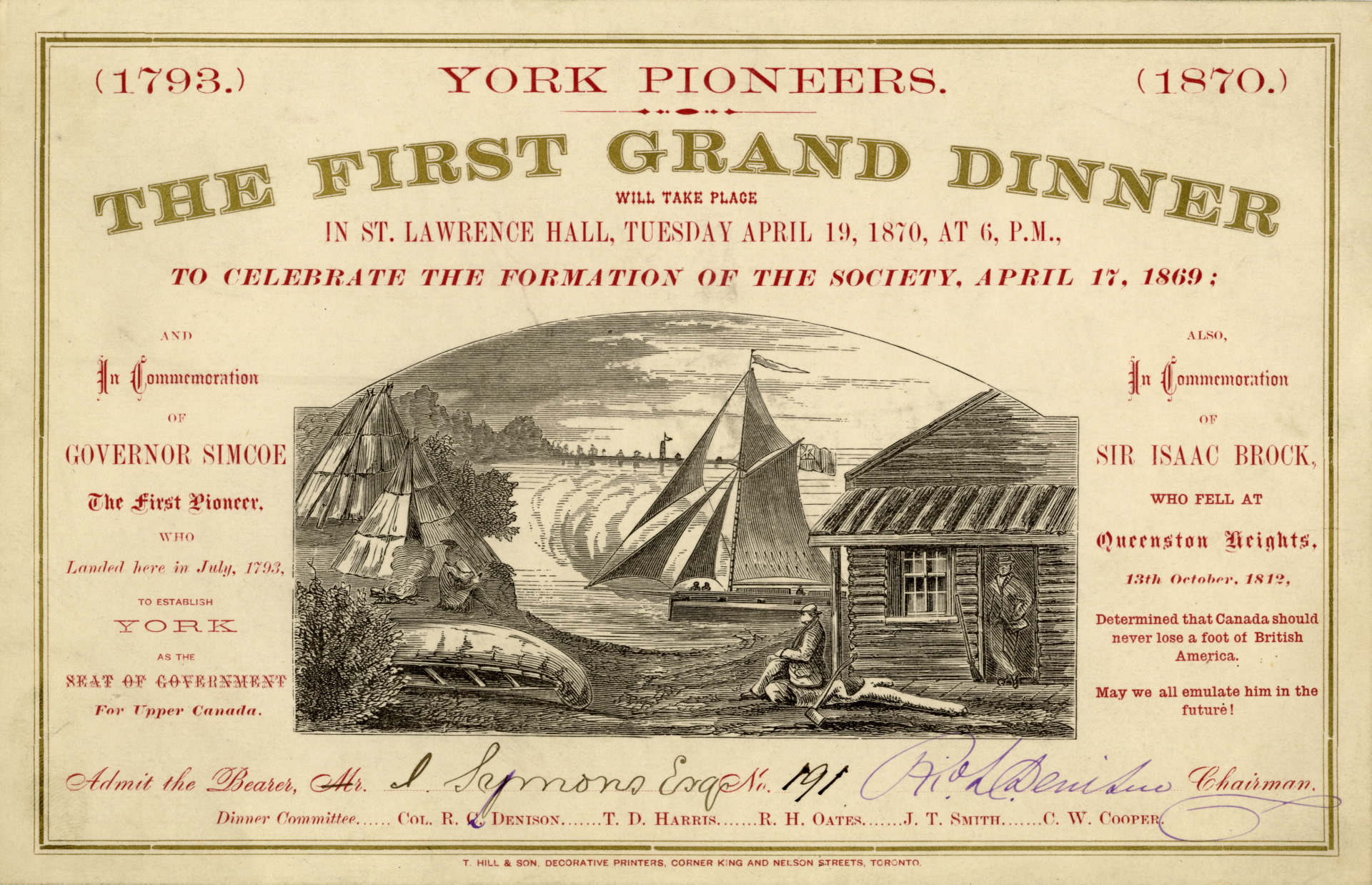
-
Article
Historical Sources
Historians use written, oral and visual sources to develop and support their interpretations of historical events. The historical discipline divides source materials into two categories: primary sources and secondary sources. Both categories are flexible and depend on the subject and era a historian is investigating.
"https://d3d0lqu00lnqvz.cloudfront.net/media/media/58da114a-b3c6-46ec-acb3-f525c1bcca6a.jpg" // resources/views/front/categories/view.blade.php
https://d3d0lqu00lnqvz.cloudfront.net/media/media/58da114a-b3c6-46ec-acb3-f525c1bcca6a.jpg
-
Article
Historical Thinking Concepts
The six “Historical Thinking Concepts” were developed by The Historical Thinking Project, which was led by Dr. Peter Seixas of the University of British Columbia and educational expert Jill Colyer. The project identified six key concepts: historical significance, primary source evidence, continuity and change, cause and consequence, historical perspectives and ethical dimensions. Together, these concepts form the basis of historical inquiry. The project was funded by the Department of Canadian Heritage and The History Education Network (THEN/HiER). Seixas and Tom Morton published a book, The Big Six: Historical Thinking Concepts, that expanded on these concepts.
"https://d3d0lqu00lnqvz.cloudfront.net/media/ht-concepts-en.jpg" // resources/views/front/categories/view.blade.php
https://d3d0lqu00lnqvz.cloudfront.net/media/ht-concepts-en.jpg
-
Article
Historiography
Historiography, the published product of the historian's declared interest in the past; the writing of history. It is not by itself "history," but is by necessity part of the historical record.
"https://d3d0lqu00lnqvz.cloudfront.net/media/media/a75df73a-e1e0-4b27-ba7a-76631cfc6a0e.jpg" // resources/views/front/categories/view.blade.php
https://d3d0lqu00lnqvz.cloudfront.net/media/media/a75df73a-e1e0-4b27-ba7a-76631cfc6a0e.jpg
-
Article
Historiography in English
Canadian historiography in the English language began virtually with British settlement in America. By necessity, it developed regionally, and it was practised by enthusiastic amateurs.
"https://d3d0lqu00lnqvz.cloudfront.net/media/media/c49e83e8-3877-4052-832c-ab1fdd5e4f2b.jpg" // resources/views/front/categories/view.blade.php
https://d3d0lqu00lnqvz.cloudfront.net/media/media/c49e83e8-3877-4052-832c-ab1fdd5e4f2b.jpg
-
Article
Historiography in French
Various descriptive works and narratives dealing with Canada and published in France during the 17th and 18th centuries were entitled "histoires." Although written by Frenchmen who in many cases had only visited New France, these publications profoundly influenced French Canadian historiography.
"https://d3d0lqu00lnqvz.cloudfront.net/media/media/a75df73a-e1e0-4b27-ba7a-76631cfc6a0e.jpg" // resources/views/front/categories/view.blade.php
https://d3d0lqu00lnqvz.cloudfront.net/media/media/a75df73a-e1e0-4b27-ba7a-76631cfc6a0e.jpg
-
Article
History of Acadia
Acadia’s history as a French-speaking colony stretches as far back as the early 17th century. The French settlers who colonized the land and coexisted alongside Indigenous peoples became called Acadians. Acadia was also the target of numerous wars between the French and the English. Ultimately, the colony fell under British rule. Many Acadians were subsequently deported away from Acadia. Over time, as a British colony and then as part of Canada, Acadians increasingly became a linguistic minority. Nonetheless, Acadians have strived to protect their language and identity throughout time.
"https://d3d0lqu00lnqvz.cloudfront.net/media/media/66c056b0-bee3-47a2-9680-5d5a50b5e7eb.jpg" // resources/views/front/categories/view.blade.php
https://d3d0lqu00lnqvz.cloudfront.net/media/media/66c056b0-bee3-47a2-9680-5d5a50b5e7eb.jpg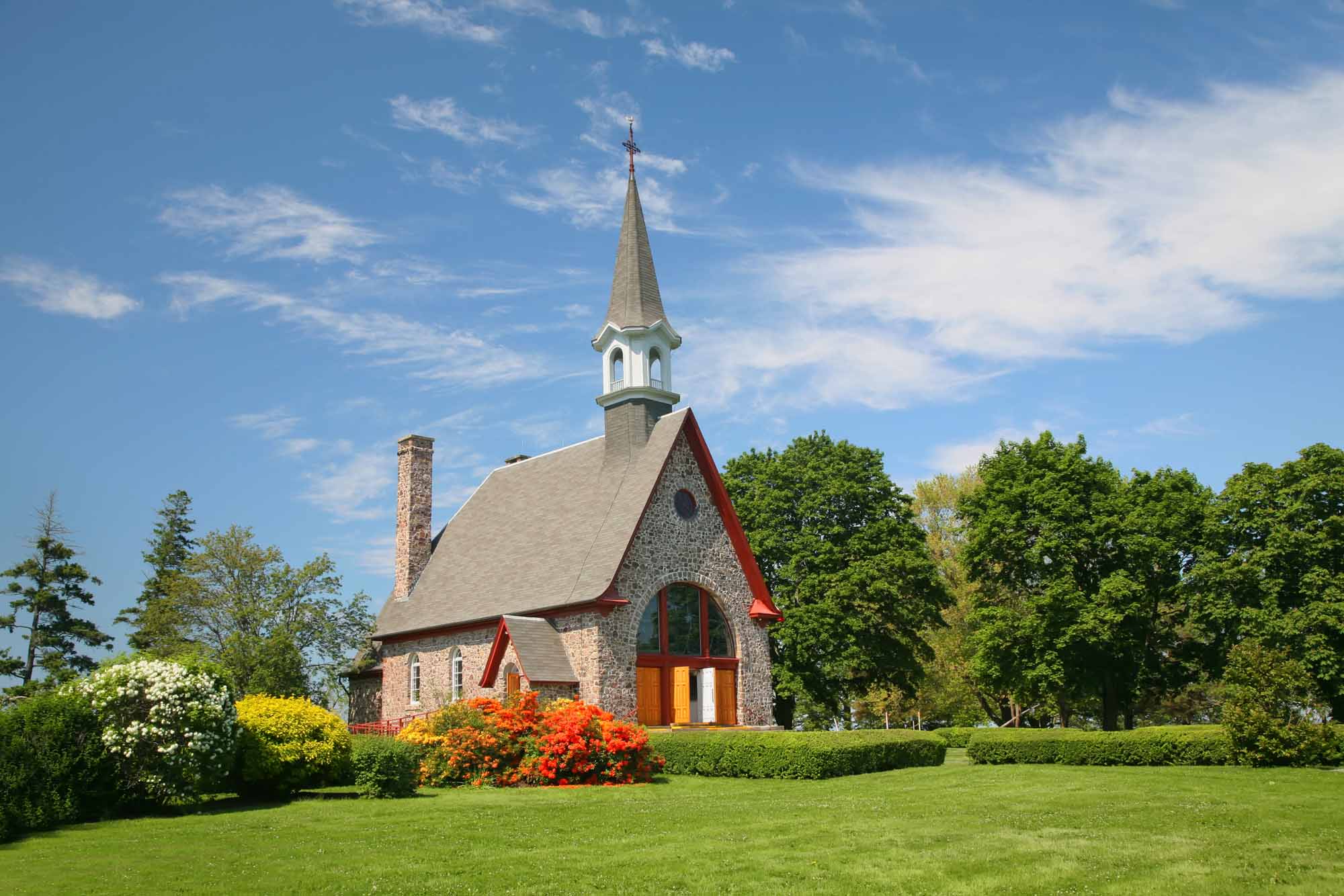
-
Article
History of Canada in music
A consideration of music which, in retrospect, deals with episodes and personages of Canadian history.
"https://thecanadianencyclopedia.ca/images/tce_placeholder.jpg?v=e9dca980c9bdb3aa11e832e7ea94f5d9" // resources/views/front/categories/view.blade.php
https://thecanadianencyclopedia.ca/images/tce_placeholder.jpg?v=e9dca980c9bdb3aa11e832e7ea94f5d9
-
Article
History of Cartography in Canada
Cartography is the art, science and technology of making maps, plans, charts and globes representing Earth or any celestial body at any scale. Cartographic documents have been used as vehicles of communication by different cultures for many millennia; the earliest map to survive, drawn about 2300 BCE on a clay tablet, was found in the Middle East. In Canada, Indigenous people drew maps on the ground and in the snow, and sometimes committed them to media such as animal skins or bark. The maps of the 16th century were rough and often conjectural; maps of the French period became more accurate in the better-known areas; and after 1800, with the widespread use of the sextant and advanced astronomical techniques for determining longitude (for example, using the marine chronometer), the major gaps in the map of Canada were filled. During the 20th century, mapping skills were greatly refined in Canada. This article provides background on the history of cartography in Canada. For more detailed information please see Cartography in Canada: Indigenous Mapmaking; Cartography in Canada: 1500s; Cartography in Canada: 1600–1763; Cartography in Canada: 1763–Second World War; Cartography in Canada: Mapping Since the Second World War; National Topographic System; Cadastral Surveying.
"https://d3d0lqu00lnqvz.cloudfront.net/HistoryofCartographyinCanada/JohannesRuyschMap.jpg" // resources/views/front/categories/view.blade.php
https://d3d0lqu00lnqvz.cloudfront.net/HistoryofCartographyinCanada/JohannesRuyschMap.jpg