
Browse "History"
-
Article
Elections of 1979 and 1980
The following article is an editorial written by The Canadian Encyclopedia staff. Editorials are not usually updated. Calling elections is like Goldilocks visiting the three bears — which political stew will turn out to be too soon, too late, or just right? The elections of 1979 and 1980 illustrate the perils of too late, followed by too soon.
"https://d3d0lqu00lnqvz.cloudfront.net/media/media/94d33b59-7a6c-4ea2-9fb1-b4b57e3be842.jpg" // resources/views/front/categories/view.blade.php
https://d3d0lqu00lnqvz.cloudfront.net/media/media/94d33b59-7a6c-4ea2-9fb1-b4b57e3be842.jpg
-
Article
Canadian Electoral System
Electoral systems are methods of choosing political representatives. (See also Political Campaigning in Canada.) Elections in Canada use a first-past-the-post system, whereby the candidate that wins the most votes in a constituency is selected to represent that riding. Elections are governed by an elaborate series of laws and a well-developed administrative apparatus. They occur at the federal, provincial, territorial and municipal levels. Canada’s federal election system is governed by the Canada Elections Act. It is administered by the Chief Electoral Officer. Provincial election systems, governed by provincial election acts, are similar to the federal system; they differ slightly from each other in important details. Federal and provincial campaigns — and that of Yukon — are party contests in which candidates represent political parties. Municipal campaigns — and those of Northwest Territories and Nunavut — are contested by individuals, not by parties.
"https://d3d0lqu00lnqvz.cloudfront.net/media/media/3fcad776-7e8d-47da-86aa-c77b5a9d2744.jpg" // resources/views/front/categories/view.blade.php
https://d3d0lqu00lnqvz.cloudfront.net/media/media/3fcad776-7e8d-47da-86aa-c77b5a9d2744.jpg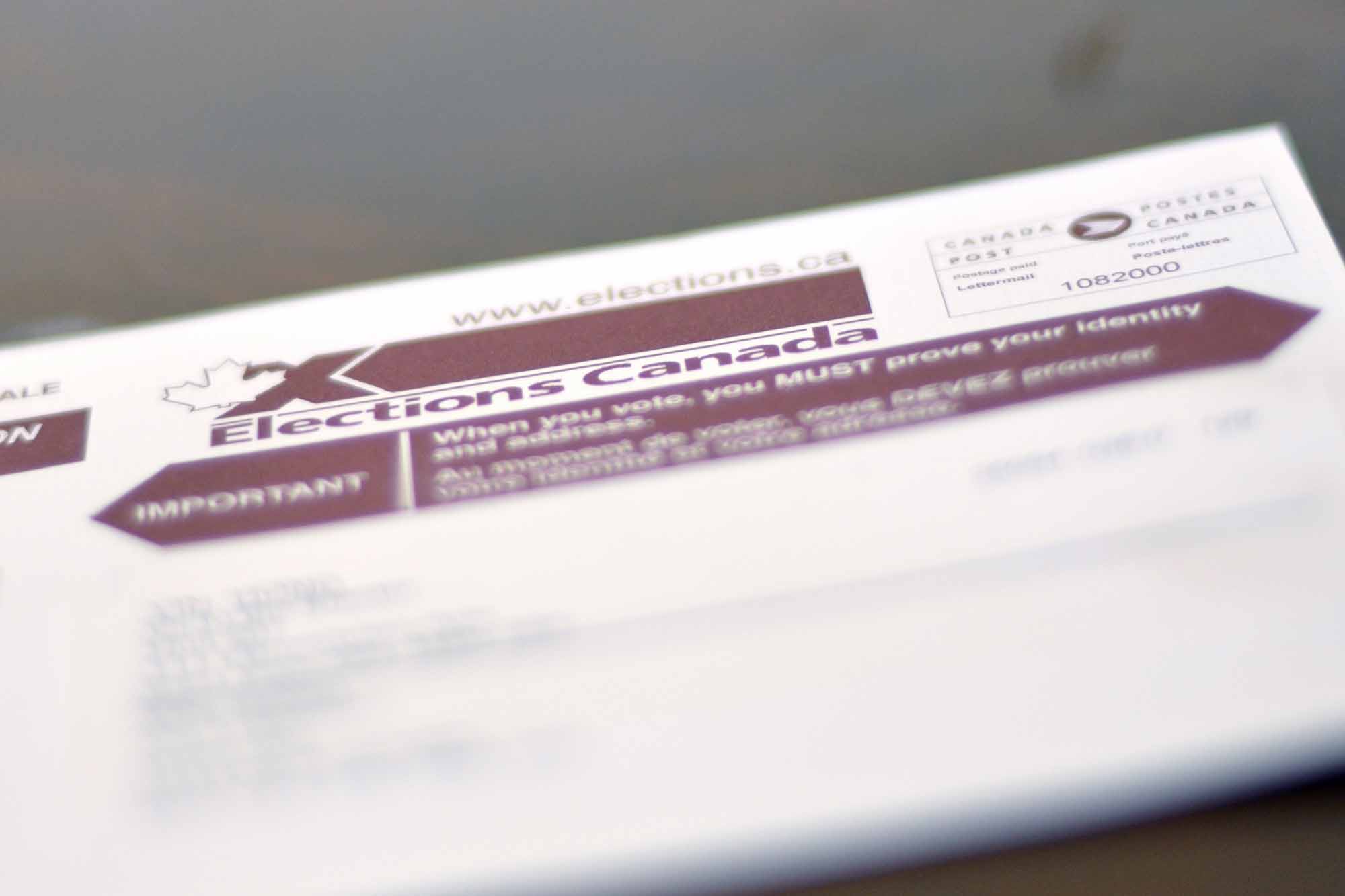
-
Article
Emergencies Act
In July 1988, the War Measures Act was repealed and replaced by the Emergencies Act. The Emergencies Act authorizes “the taking of special temporary measures to ensure safety and security during national emergencies and to amend other Acts in consequence thereof.” In contrast to the sweeping powers and violation of civil liberties authorized by the War Measures Act, the Emergencies Act created more limited and specific powers for the federal government to deal with security emergencies of five different types: national emergencies; public welfare emergencies; public order emergencies; international emergencies; and war emergencies. Under the Act, Cabinet orders and regulations must be reviewed by Parliament, meaning the Cabinet cannot act on its own, unlike under the War Measures Act. The Emergencies Act outlines how people affected by government actions during emergencies are to be compensated. It also notes that government actions are subject to the Canadian Charter of Rights and Freedoms and the Canadian Bill of Rights.
"https://d3d0lqu00lnqvz.cloudfront.net/media/media/c8a1d56b-60f5-40b0-86e2-3ce31bc3e7b0.jpg" // resources/views/front/categories/view.blade.php
https://d3d0lqu00lnqvz.cloudfront.net/media/media/c8a1d56b-60f5-40b0-86e2-3ce31bc3e7b0.jpg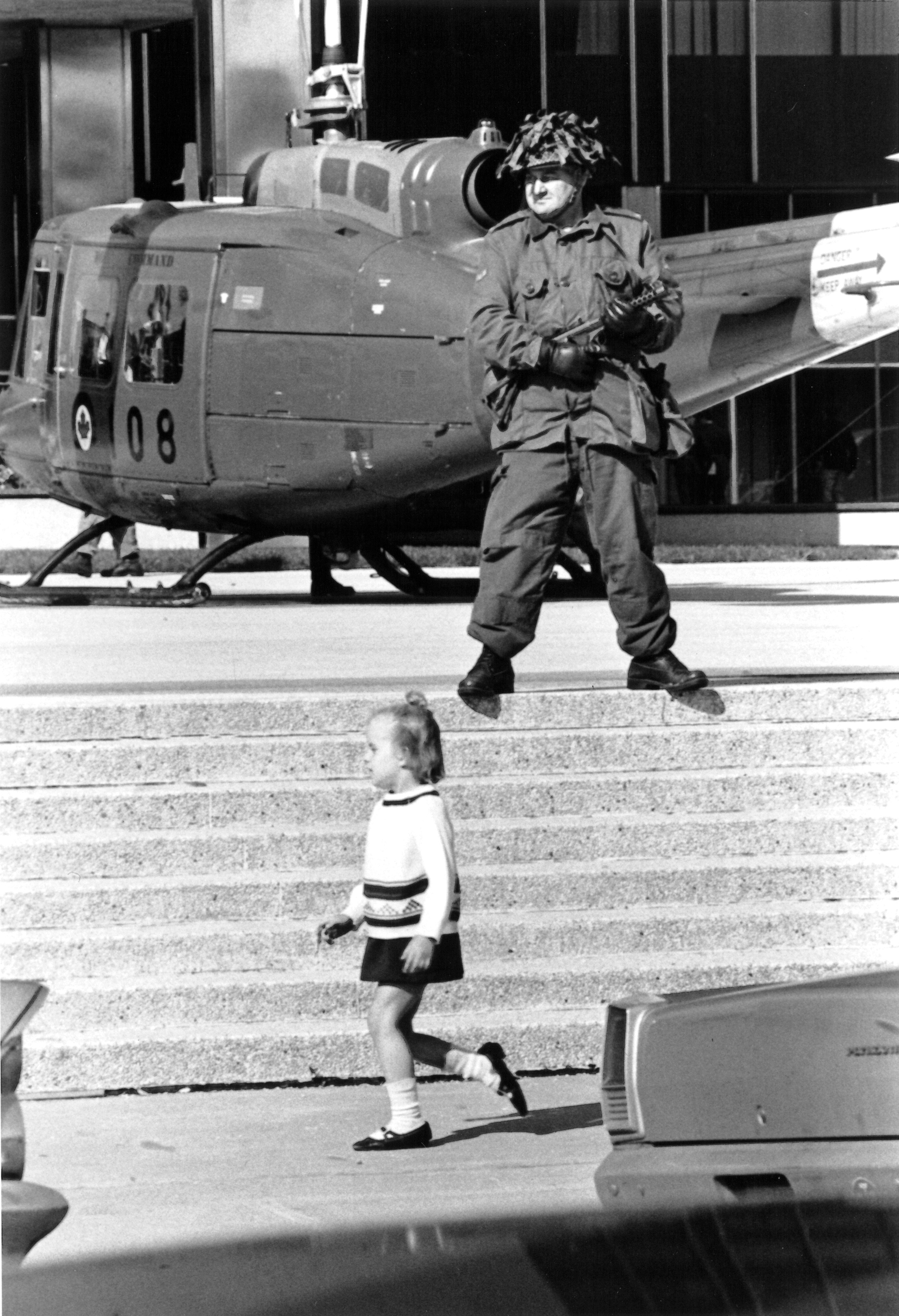
-
Article
Empress of Ireland
The RMS Empress of Ireland sank in 1914 in the St Lawrence River, with the loss of 1,012 lives. The wreck was designated a national historic site of Canada in 2009.
"https://d3d0lqu00lnqvz.cloudfront.net/media/media/6b656b4b-173d-416d-967d-03c44bca61ca.jpg" // resources/views/front/categories/view.blade.php
https://d3d0lqu00lnqvz.cloudfront.net/media/media/6b656b4b-173d-416d-967d-03c44bca61ca.jpg
-
Article
Enfranchisement (Plain-Language Summary)
Throughout much of Canadian history, a First Nations person would lose their Indian status if they were enfranchised. An enfranchised person is someone who has the right to vote in elections. A First Nations person who is deemed a Status Indian has certain rights and benefits granted to them through the Indian Act. (This article is a plain-language summary of Enfranchisement. If you are interested in reading about this topic in more depth, please see our full-length entry Enfranchisement).
"https://d3d0lqu00lnqvz.cloudfront.net/media/media/4d994481-dad0-4092-811e-1f0718cd1a1e.jpg" // resources/views/front/categories/view.blade.php
https://d3d0lqu00lnqvz.cloudfront.net/media/media/4d994481-dad0-4092-811e-1f0718cd1a1e.jpg
-
Article
Eugenics in Canada
Eugenics is a set of beliefs and practices aimed at improving the human population through controlled breeding. It includes “negative” eugenics (discouraging or limiting the procreation of people considered to have undesirable characteristics and genes) and “positive” eugenics (encouraging the procreation of people considered to have desirable characteristics and genes). Many Canadians supported eugenic policies in the early 20th century, including some medical professionals, politicians and feminists. Both Alberta (1928) and British Columbia (1933) passed Sexual Sterilization Acts, which were not repealed until the 1970s. Although often considered a pseudoscience and a thing of the past, eugenic methods have continued into the 21st century, including the coerced sterilization of Indigenous women and what some have termed the “new eugenics” — genetic editing and the screening of fetuses for disabilities.
"https://d3d0lqu00lnqvz.cloudfront.net/media/new_article_images/Eugenics/Eugenics_congress_logo.png" // resources/views/front/categories/view.blade.php
https://d3d0lqu00lnqvz.cloudfront.net/media/new_article_images/Eugenics/Eugenics_congress_logo.png
-
Editorial
Eugenics: Pseudo-Science Based on Crude Misconceptions of Heredity
The following article is an editorial written by The Canadian Encyclopedia staff. Editorials are not usually updated. "Great men are almost always bad men," Lord Acton famously said. If that is so, we are going to have to tolerate flaws if we want to celebrate "great" Canadians. The eugenics movement of the early 20th century particularly tries our tolerance of several of our textbook heroes.
"https://d3d0lqu00lnqvz.cloudfront.net/media/media/71b32f94-9a39-48f2-975b-9919068e36a2.jpg" // resources/views/front/categories/view.blade.php
https://d3d0lqu00lnqvz.cloudfront.net/media/media/71b32f94-9a39-48f2-975b-9919068e36a2.jpg
-
Article
Exercise Tocsin B
Exercise Tocsin B was a nationwide nuclear preparedness drill that lasted 24 hours between 13 and 14 November 1961. It was the last of three national survival exercises named Tocsin in 1960–61. It was also the largest and most widely publicized civil defence drill ever held in Canada. This Cold War exercise run by the Canadian Army simulated the impact of thermonuclear warfare in Canada. Its goals were to show how the state would warn Canadians of such an attack and how government would continue during the crisis. By raising popular awareness of the potential for a devastating nuclear attack, Tocsin B showed Canadians what was at stake in the Cold War.
"https://d3d0lqu00lnqvz.cloudfront.net/media/new_article_images/ExerciseTocsinB/EMO_excerpt.JPG" // resources/views/front/categories/view.blade.php
https://d3d0lqu00lnqvz.cloudfront.net/media/new_article_images/ExerciseTocsinB/EMO_excerpt.JPG
-
Article
Exploration
Exploration of Canada by Europeans began with the Norse in the late 10th century on the country’s East Coast. Following Jacques Cartier’s arrival in 1534, over the course of the next three centuries British and French explorers gradually moved further west. Commercial, resource-based interests often drove exploration; for example, a westward route to Asia and later, the fur trade. By the mid-19th century most of the main geographical features of Canada had been mapped by European colonists. (See also Arctic Exploration.)
"https://d3d0lqu00lnqvz.cloudfront.net/media/media/29aa6574-e729-424b-9d5a-34c9698c1ae0.jpg" // resources/views/front/categories/view.blade.php
https://d3d0lqu00lnqvz.cloudfront.net/media/media/29aa6574-e729-424b-9d5a-34c9698c1ae0.jpg
-
Article
Fake News (a.k.a. Disinformation) in Canada
Fake news is falsified information created with the intent of misleading people. It aims to shape public opinion by eliciting an emotional and biased response that is divorced from facts but in alignment with a particular ideology or perspective. Fake news can effectively weaponize information. It uses disinformation, misinformation or mal-information to demonize or damage a political foe, or to sow confusion and mistrust among the public. Fake news came to the fore of public consciousness during and immediately after the 2016 US presidential election, though its origins date back much further.
"https://d3d0lqu00lnqvz.cloudfront.net/media/new_article_images/FakeNews/640px-FAKE_NEWS.png" // resources/views/front/categories/view.blade.php
https://d3d0lqu00lnqvz.cloudfront.net/media/new_article_images/FakeNews/640px-FAKE_NEWS.png
-
Article
Family Compact
The term Family Compact is an epithet, or insulting nickname; it is used to describe the network of men who dominated the legislative, bureaucratic, business, religious and judicial centres of power in Upper Canada (present-day Ontario) from the early- to mid-1800s. Members of the Family Compact held largely conservative and loyalist views. They were against democratic reform and responsible government. By the mid-19th century, immigration, the union of Upper and Lower Canada, and the work of various democratic reformers had diminished the group’s power. The equivalent to the Family Compact in Lower Canada was the Château Clique.
"https://d3d0lqu00lnqvz.cloudfront.net/media/media/693e886b-aefa-4d54-b3e0-c1695d334bb0.jpg" // resources/views/front/categories/view.blade.php
https://d3d0lqu00lnqvz.cloudfront.net/media/media/693e886b-aefa-4d54-b3e0-c1695d334bb0.jpg
-
Article
Famous Five
Alberta’s “Famous Five” were petitioners in the groundbreaking Persons Case. The case was brought before the Supreme Court of Canada in 1927. It was decided in 1929 by the Judicial Committee of the Privy Council, Canada’s highest appeals court at the time. The group was led by judge Emily Murphy. It also included Henrietta Edwards, Nellie McClung, Louise McKinney and Irene Parlby. Together, the five women had many years of active work in various campaigns for women’s rights dating back to the 1880s and 1890s. They enjoyed a national — and in the case of McClung, an international — reputation among reformers.
"https://d3d0lqu00lnqvz.cloudfront.net/media/media/65699b89-06c0-4518-aa06-4eea43f2ec74.jpg" // resources/views/front/categories/view.blade.php
https://d3d0lqu00lnqvz.cloudfront.net/media/media/65699b89-06c0-4518-aa06-4eea43f2ec74.jpg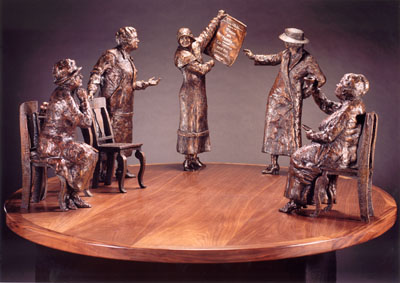
-
Article
Fenians
Fenians were members of a mid-19th century movement to secure Ireland’s independence from Britain. They were a secret, outlawed organization in the British Empire, where they were known as the Irish Republican Brotherhood. They operated freely and openly in the United States as the Fenian Brotherhood. Eventually, both wings became known as the Fenians. They launched a series of armed raids into Canadian territory between 1866 and 1871. The movement was primarily based in the United States, but it had a significant presence in Canada.
"https://d3d0lqu00lnqvz.cloudfront.net/media/media/a4c521f1-90fe-495e-9550-39952e8e3d07.jpg" // resources/views/front/categories/view.blade.php
https://d3d0lqu00lnqvz.cloudfront.net/media/media/a4c521f1-90fe-495e-9550-39952e8e3d07.jpg
-
Article
Filles du Roi
The Filles du Roi were a cohort of around 800 unmarried women sponsored by the King to immigrate to New France between 1663 and 1673. At the time, private interests instead gave priority to bringing over male workers. As a result, the French government and religious communities attempted to correct the gender imbalance in the colony. By facilitating the migration of the Filles du Roi, Minister Jean-Baptiste Colbert sought to incentivize male workers, who had finished their contract, and soldiers of the Carignan-Salières regiment (which had just been demobilized) to settle in the colony. Today, many people can trace their ancestry to the Filles du Roi.
"https://d3d0lqu00lnqvz.cloudfront.net/media/media/d698c031-e790-4c17-906a-5b880e71e24d.jpg" // resources/views/front/categories/view.blade.php
https://d3d0lqu00lnqvz.cloudfront.net/media/media/d698c031-e790-4c17-906a-5b880e71e24d.jpg
-
Article
Film Distribution in Canada
Film distribution is one of the three main branches of the film industry. It provides the link between film production and exhibition. It is also the most profitable of the three sectors and is dominated by large multinational conglomerates. Film distribution companies supply movies, television programs, videos and new media to outlets such as cinemas and broadcasters. They do so in territories where they have acquired rights from the producers. Traditionally, distribution companies are the prime source for financing new productions. The distribution sector has been called “the invisible art.” Its practices tend to only concern industry insiders and go unnoticed by audiences. American companies dominate film distribution in Canada. They have controlled access to Canadian screens since the 1920s. (See also: Canadian Film History: 1896 to 1938.)
"https://d3d0lqu00lnqvz.cloudfront.net/media/media/d10595af-11b7-4974-94a8-9187ef18aa77.jpg" // resources/views/front/categories/view.blade.php
https://d3d0lqu00lnqvz.cloudfront.net/media/media/d10595af-11b7-4974-94a8-9187ef18aa77.jpg