
Browse "Communities & Sociology"
-
Article
Child Abuse
Children have been maltreated and exploited throughout history. Evidence even exists that child abuse existed during the prehistoric period. Children have long been considered family property. Fathers in ancient times could sell, mutilate or kill their children.
"https://thecanadianencyclopedia.ca/images/tce_placeholder.jpg?v=e9dca980c9bdb3aa11e832e7ea94f5d9" // resources/views/front/categories/view.blade.php
https://thecanadianencyclopedia.ca/images/tce_placeholder.jpg?v=e9dca980c9bdb3aa11e832e7ea94f5d9
-
Article
Child Labour
Child labour is defined as the regular employment of boys and girls under the age of 15 or 16. Attitudes toward child labour have altered dramatically since the late 18th century, when it was generally assumed that children should contribute to the family economy from about age seven. By the beginning of the 20th century most Canadian provinces had enacted labour legislation to restrict the employment of children.
"https://d3d0lqu00lnqvz.cloudfront.net/media/media/35ffe4df-edd2-457d-85c5-aed95daeeb4e.jpg" // resources/views/front/categories/view.blade.php
https://d3d0lqu00lnqvz.cloudfront.net/media/media/35ffe4df-edd2-457d-85c5-aed95daeeb4e.jpg
-
Article
Child Migration to Canada
Migration is a unique experience for a child and Canada receives child migrants from all over the world. Some children come as unaccompanied minors and claim refugee status, some come alone and wait to be reunited with their families, while others are international adoptees by Canadian families.
"https://d3d0lqu00lnqvz.cloudfront.net/media/media/55e0c503-e9cf-4fb3-852d-7776eb9d9871.jpg" // resources/views/front/categories/view.blade.php
https://d3d0lqu00lnqvz.cloudfront.net/media/media/55e0c503-e9cf-4fb3-852d-7776eb9d9871.jpg
-
Macleans
Child Poverty in Canada
This article was originally published in Maclean’s magazine on February 24, 1997. Partner content is not updated. At times, the surroundings must seem grim. The white walls are devoid of decoration, except for a home-made Valentine addressed to "Maman" on the refrigerator, and twin beds are pushed together in the dining-room to create more space.
"https://thecanadianencyclopedia.ca/images/tce_placeholder.jpg?v=e9dca980c9bdb3aa11e832e7ea94f5d9" // resources/views/front/categories/view.blade.php
https://thecanadianencyclopedia.ca/images/tce_placeholder.jpg?v=e9dca980c9bdb3aa11e832e7ea94f5d9
-
Macleans
Child-Sex Trade Thriving in Cambodia
This article was originally published in Maclean’s magazine on November 24, 2003. Partner content is not updated.
"https://thecanadianencyclopedia.ca/images/tce_placeholder.jpg?v=e9dca980c9bdb3aa11e832e7ea94f5d9" // resources/views/front/categories/view.blade.php
https://thecanadianencyclopedia.ca/images/tce_placeholder.jpg?v=e9dca980c9bdb3aa11e832e7ea94f5d9
-
Article
Children of Peace
The Children of Peace. A religious sect active in the area of Sharon (known as Hope until the 1860s but from the 1840s mainly as Sharon), south of Lake Simcoe, Ont, from the second to the ninth decade of the 19th century.
"https://thecanadianencyclopedia.ca/images/tce_placeholder.jpg?v=e9dca980c9bdb3aa11e832e7ea94f5d9" // resources/views/front/categories/view.blade.php
https://thecanadianencyclopedia.ca/images/tce_placeholder.jpg?v=e9dca980c9bdb3aa11e832e7ea94f5d9
-
Article
Chinese Canadians
Chinese Canadians are one of the largest ethnic groups in the country. In the 2021 census, more than 1.7 million people reported being of Chinese origin. Despite their importance to the Canadian economy, including the construction of the Canadian Pacific Railway (CPR), many European Canadians were historically hostile to Chinese immigration. A prohibitive head tax restricted Chinese immigration to Canada from 1885 to 1923. From 1923 to 1947, the Chinese were excluded altogether from immigrating to Canada. (See Chinese Immigration Act.) Since 1900, Chinese Canadians have settled primarily in urban areas, particularly in Vancouver and Toronto. They have contributed to every aspect of Canadian society, from literature to sports, politics to civil rights, film to music, business to philanthropy, and education to religion. This is the full-length entry about Chinese Canadians. For a plain-language summary, please see Chinese Canadians (Plain-Language Summary).
"https://d3d0lqu00lnqvz.cloudfront.net/media/media/bff27f89-2e99-43af-a42e-36f38dbcdf8d.jpg" // resources/views/front/categories/view.blade.php
https://d3d0lqu00lnqvz.cloudfront.net/media/media/bff27f89-2e99-43af-a42e-36f38dbcdf8d.jpg
-
Article
Chinese Head Tax in Canada
The Chinese head tax was enacted to restrict immigration after Chinese labour was no longer needed to build the Canadian Pacific Railway. Between 1885 and 1923, Chinese immigrants had to pay a head tax to enter Canada. The tax was levied under the Chinese Immigration Act (1885). It was the first legislation in Canadian history to exclude immigration on the basis of ethnic background. With few exceptions, Chinese people had to pay at least $50 to come to Canada. The tax was later raised to $100, then to $500. During the 38 years the tax was in effect, around 82,000 Chinese immigrants paid nearly $23 million in tax. The head tax was removed with the passing of the Chinese Immigration Act in 1923. Also known as the Chinese Exclusion Act, it banned all Chinese immigrants until its repeal in 1947. In 2006, the federal government apologized for the head tax and its other racist immigration policies targeting Chinese people. This is the full-length entry about the Chinese Head Tax. For a plain-language summary, please see Chinese Head Tax in Canada (Plain-Language Summary).
"https://d3d0lqu00lnqvz.cloudfront.net/media/media/d0c5f1d6-6030-4a96-900c-3efed6463116.jpg" // resources/views/front/categories/view.blade.php
https://d3d0lqu00lnqvz.cloudfront.net/media/media/d0c5f1d6-6030-4a96-900c-3efed6463116.jpg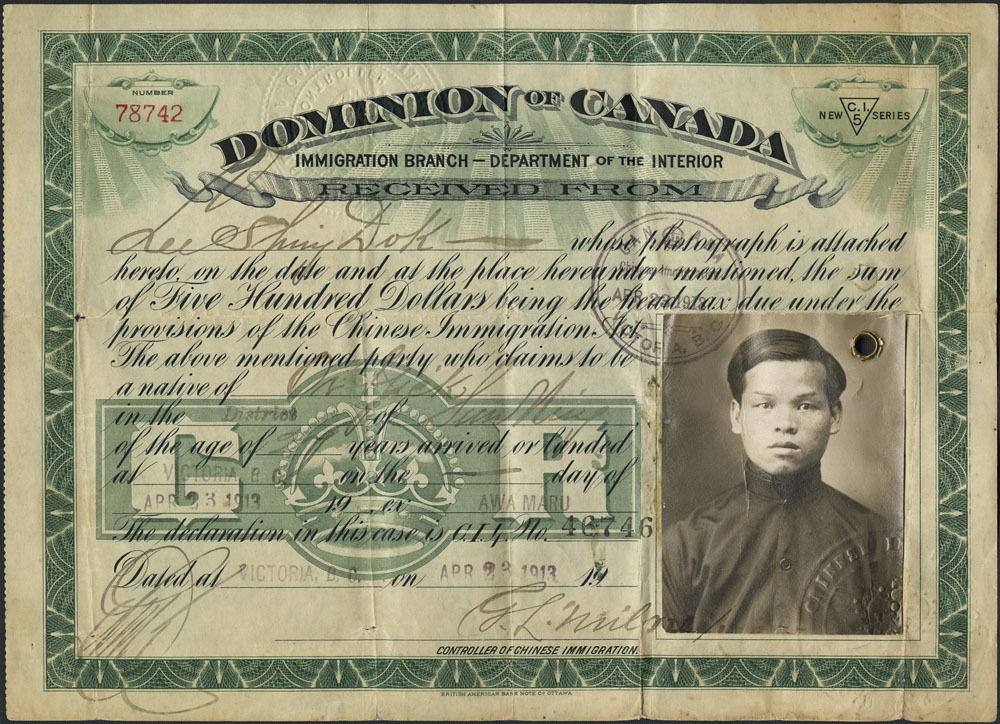
-
Article
Lunar New Year in Canada
The Lunar New Year — also known as the Spring Festival, Chinese New Year, Tet for Vietnamese Canadians, or Solnal for Korean Canadians — is celebrated in Canada and several other countries. It is one of the largest celebrations for Canada’s Chinese population, it is also celebrated by Canadians from Vietnam, Korea and Southeast Asia. Although it is not a statutory holiday in Canada, many Asian Canadian businesses are closed or have reduced hours for the occasion. Since 1 June 2016, this celebration has been recognized as an official holiday in Canada.
"https://d3d0lqu00lnqvz.cloudfront.net/media/media/e1474526-547c-47b7-90e4-afda069c28bf.jpg" // resources/views/front/categories/view.blade.php
https://d3d0lqu00lnqvz.cloudfront.net/media/media/e1474526-547c-47b7-90e4-afda069c28bf.jpg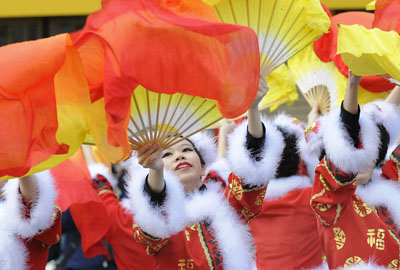
-
Article
Denesuline (Chipewyan)
The Denesuline (also known as Chipewyan) are Indigenous Peoples in the Subarctic region of Canada, with communities in Manitoba, Saskatchewan, Alberta and the Northwest Territories. The Denesuline are Dene, and share many cultural and linguistic similarities with neighbouring Dene communities. The 2021 census reported that 4,815 people claimed to be of Denesuline ancestry. However, the registered population of Denesuline First Nations may be higher. Denesuline are closely associated with other Dene groups as well as northern Cree and Métis, who may share their communities and also speak Denesuline. As such, population and language numbers are approximations.
"https://d3d0lqu00lnqvz.cloudfront.net/media/media/d042a7cd-8095-4a4a-b112-ef4791bf04c6.jpg" // resources/views/front/categories/view.blade.php
https://d3d0lqu00lnqvz.cloudfront.net/media/media/d042a7cd-8095-4a4a-b112-ef4791bf04c6.jpg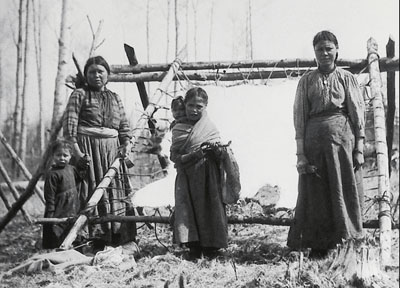
-
Article
Christian Science
Christian Science, a religion founded upon the applied principles of "primitive Christianity and its lost element of healing," and practised by members of The First Church of Christ, Scientist.
"https://thecanadianencyclopedia.ca/images/tce_placeholder.jpg?v=e9dca980c9bdb3aa11e832e7ea94f5d9" // resources/views/front/categories/view.blade.php
https://thecanadianencyclopedia.ca/images/tce_placeholder.jpg?v=e9dca980c9bdb3aa11e832e7ea94f5d9
-
Article
Christmas in Canada
Christmas is celebrated in various ways in contemporary Canada. In particular, it draws form the French, British and American traditions. Since the beginning of the 20th century, it had become the biggest annual celebration and had begun to take on the form that we recognize today.
"https://d3d0lqu00lnqvz.cloudfront.net/media/media/a8ac9316-d4be-451e-9801-1c4f6a329d71.jpg" // resources/views/front/categories/view.blade.php
https://d3d0lqu00lnqvz.cloudfront.net/media/media/a8ac9316-d4be-451e-9801-1c4f6a329d71.jpg
-
Article
Christmas Music
Of all Christmas music Handel's Messiah has been the major work most frequently performed during the Christmas season across Canada.
"https://d3d0lqu00lnqvz.cloudfront.net/media/media/002ca392-7456-4c42-b684-6cf77258f948.jpg" // resources/views/front/categories/view.blade.php
https://d3d0lqu00lnqvz.cloudfront.net/media/media/002ca392-7456-4c42-b684-6cf77258f948.jpg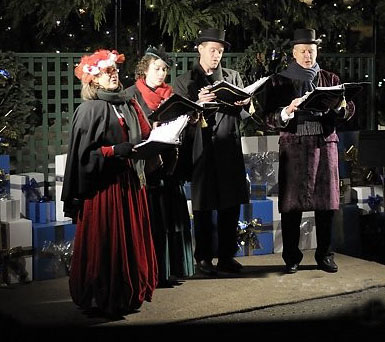
-
Editorial
The First Christmas Tree in North America
The following article is an editorial written by The Canadian Encyclopedia staff. Editorials are not usually updated.
"https://d3d0lqu00lnqvz.cloudfront.net/media/media/b7110cb5-bfa8-4f96-803e-418fb5b41091.jpg" // resources/views/front/categories/view.blade.php
https://d3d0lqu00lnqvz.cloudfront.net/media/media/b7110cb5-bfa8-4f96-803e-418fb5b41091.jpg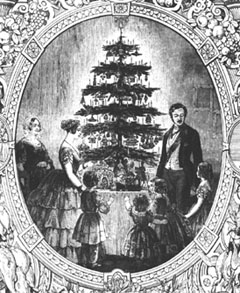
-
Article
Church Choir Schools
Church choir schools. Institutions set up to train young musicians in the literature and performance of church music and to enable them, through the presentation of such music, to worship in a manner at once spiritual and artistic.
"https://thecanadianencyclopedia.ca/images/tce_placeholder.jpg?v=e9dca980c9bdb3aa11e832e7ea94f5d9" // resources/views/front/categories/view.blade.php
https://thecanadianencyclopedia.ca/images/tce_placeholder.jpg?v=e9dca980c9bdb3aa11e832e7ea94f5d9