
Browse "Business & Economics"
-
Article
Ocean Mining
Several types of valuable mineral deposits exist under the oceans and other large bodies of water. Where water is shallow, placer deposits can be recovered by large dredges (eg, tin minerals off the coasts of Java and Borneo).
"https://thecanadianencyclopedia.ca/images/tce_placeholder.jpg?v=e9dca980c9bdb3aa11e832e7ea94f5d9" // resources/views/front/categories/view.blade.php
https://thecanadianencyclopedia.ca/images/tce_placeholder.jpg?v=e9dca980c9bdb3aa11e832e7ea94f5d9
-
Article
Oil, Chemical and Atomic Workers International Union v Imperial Oil Limited et al
In 1961 the BC Legislature prohibited trade unions from using membership fees paid under a collective agreement checkoff provision for political purposes.
"https://thecanadianencyclopedia.ca/images/tce_placeholder.jpg?v=e9dca980c9bdb3aa11e832e7ea94f5d9" // resources/views/front/categories/view.blade.php
https://thecanadianencyclopedia.ca/images/tce_placeholder.jpg?v=e9dca980c9bdb3aa11e832e7ea94f5d9
-
Article
Oil Sands
The Canadian oil sands (or tar sands) are a large area of petroleum extraction from bitumen, located primarily along the Athabasca River with its centre of activity close to Fort McMurray in Alberta, approximately 400 km northeast of the provincial capital, Edmonton. Increased global energy demand, high petroleum dependency and geopolitical conflict in key oil producing regions has driven the exploration of unconventional oil sources since the 1970s which, paired with advances in the field of petroleum engineering, has continued to make bitumen extraction economically profitable at a time of rising oil prices. Oil sands are called “unconventional” oil because the extraction process is more difficult than extracting from liquid (“conventional”) oil reserves, causing higher costs of production and increased environmental concerns.
"https://d3d0lqu00lnqvz.cloudfront.net/media/media/55ab3410-4b51-409d-bdb8-019dbd2c6d20.jpg" // resources/views/front/categories/view.blade.php
https://d3d0lqu00lnqvz.cloudfront.net/media/media/55ab3410-4b51-409d-bdb8-019dbd2c6d20.jpg
-
Article
One Big Union
The One Big Union (OBU) was a radical labour union formed in Western Canada in 1919. It aimed to empower workers through mass organization along industrial lines. The OBU met fierce opposition from other parts of the labour movement, the federal government, employers and the press. Nevertheless, it helped transform the role of unions in Canada. Click here for definitions of key terms used in this article.
"https://d3d0lqu00lnqvz.cloudfront.net/media/new_article_images/OneBigUnion/OBU_logo.JPG" // resources/views/front/categories/view.blade.php
https://d3d0lqu00lnqvz.cloudfront.net/media/new_article_images/OneBigUnion/OBU_logo.JPG
-
Macleans
Ontario Hydro to be Privatized
This article was originally published in Maclean’s magazine on February 12, 1996. Partner content is not updated.
"https://d3d0lqu00lnqvz.cloudfront.net/media/media/4c2c080b-2319-41db-bfdd-da332a9d805d.jpg" // resources/views/front/categories/view.blade.php
https://d3d0lqu00lnqvz.cloudfront.net/media/media/4c2c080b-2319-41db-bfdd-da332a9d805d.jpg
-
Macleans
Ontario Hydro's $6 Billion Loss
It was a sight to behold: men and women who have dumped all over the province's public electrical utility from the dawn of political time, running in rhetorical circles in an effort to persuade worried voters and nervous consumers that Ontario Hydro's decision to write $6.This article was originally published in Maclean's Magazine on March 2, 1998
"https://thecanadianencyclopedia.ca/images/tce_placeholder.jpg?v=e9dca980c9bdb3aa11e832e7ea94f5d9" // resources/views/front/categories/view.blade.php
https://thecanadianencyclopedia.ca/images/tce_placeholder.jpg?v=e9dca980c9bdb3aa11e832e7ea94f5d9
-
Article
Otto Higel Co. Ltd.
Otto Higel Co. Ltd. Toronto manufacturer of piano and organ supplies. The company was founded in 1896 by Otto Higel (b Silesia, Germany, 1869, d Toronto 2 Jul 1930), who had bought the Toronto piano action and key manufacturing business of F.
"https://thecanadianencyclopedia.ca/images/tce_placeholder.jpg?v=e9dca980c9bdb3aa11e832e7ea94f5d9" // resources/views/front/categories/view.blade.php
https://thecanadianencyclopedia.ca/images/tce_placeholder.jpg?v=e9dca980c9bdb3aa11e832e7ea94f5d9
-
Article
Pacific Fur Company
The Pacific Fur Company was established on 23 June 1810 and headed by New York fur dealer John Jacob Astor. Principal partners included ex-Nor'Westers Alexander McKay, Donald McKenzie and Duncan McDougall.
"https://thecanadianencyclopedia.ca/images/tce_placeholder.jpg?v=e9dca980c9bdb3aa11e832e7ea94f5d9" // resources/views/front/categories/view.blade.php
https://thecanadianencyclopedia.ca/images/tce_placeholder.jpg?v=e9dca980c9bdb3aa11e832e7ea94f5d9
-
Article
Pacific Western Airlines Ltd
In 1984, with the advent of the Economic Regulatory Reform (ERR), most of Canada experienced a deregulation program similar to that in the United States. The ERR had several significant effects. Two large trunk carriers, CAI and Air Canada, emerged, competing on major domestic routes.
"https://d3d0lqu00lnqvz.cloudfront.net/media/media/5c388c63-b1f0-49ff-a8bf-0f60b265c315.jpg" // resources/views/front/categories/view.blade.php
https://d3d0lqu00lnqvz.cloudfront.net/media/media/5c388c63-b1f0-49ff-a8bf-0f60b265c315.jpg
-
Article
Political Party Financing in Canada
The financial activities of political parties in Canada were largely unregulated until the Election Expenses Act was passed in 1974. Canada now has an extensive regime regulating federal political party financing, both during and outside of election periods. Such regulation encourages greater transparency of political party activities. It also ensures a fair electoral system that limits the advantages of those with more money. Political parties and candidates are funded both privately and publicly. Election finance laws govern how parties and candidates are funded, as well as the ways in which they can spend money.
"https://d3d0lqu00lnqvz.cloudfront.net/media/media/3217b36a-f0cf-4108-91d7-0d45276492fc.jpg" // resources/views/front/categories/view.blade.php
https://d3d0lqu00lnqvz.cloudfront.net/media/media/3217b36a-f0cf-4108-91d7-0d45276492fc.jpg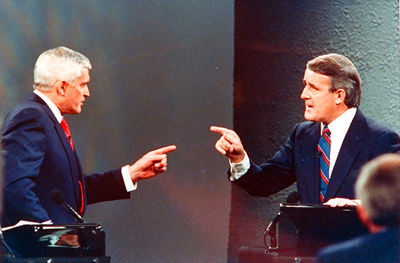
-
Article
Pay Television
Although undertaken experimentally in Etobicoke, Ontario, between 1960 and 1965, pay television as a major venture was licensed only in March 1982, after a decade of debate.
"https://thecanadianencyclopedia.ca/images/tce_placeholder.jpg?v=e9dca980c9bdb3aa11e832e7ea94f5d9" // resources/views/front/categories/view.blade.php
https://thecanadianencyclopedia.ca/images/tce_placeholder.jpg?v=e9dca980c9bdb3aa11e832e7ea94f5d9
-
Article
Petro-Canada
Petro-Canada, created by the federal government in the mid-1970s as Canada's national oil company, was the offspring of the world energy crisis, Canadian ECONOMIC NATIONALISM, and a tradition of state-supported development of the country's costly energy frontier.
"https://thecanadianencyclopedia.ca/images/tce_placeholder.jpg?v=e9dca980c9bdb3aa11e832e7ea94f5d9" // resources/views/front/categories/view.blade.php
https://thecanadianencyclopedia.ca/images/tce_placeholder.jpg?v=e9dca980c9bdb3aa11e832e7ea94f5d9
-
Article
Petrochemical Industry
The petrochemical industry, which produces chemicals using OIL AND NATURAL GAS as major raw materials, occupies an important position in Canada's MANUFACTURING and consuming sectors. Oil and natural gas are composed primarily of hydrocarbons. Most petrochemicals contain hydrogen or carbon or both.
"https://thecanadianencyclopedia.ca/images/tce_placeholder.jpg?v=e9dca980c9bdb3aa11e832e7ea94f5d9" // resources/views/front/categories/view.blade.php
https://thecanadianencyclopedia.ca/images/tce_placeholder.jpg?v=e9dca980c9bdb3aa11e832e7ea94f5d9
-
Article
Petroleum
Since its first commercial exploitation in the 1850s, petroleum has become the major energy source of Canada and the industrial world.
"https://d3d0lqu00lnqvz.cloudfront.net/media/media/b1bdae25-5b0f-46c9-b9d1-47b72ddc49ba.jpg" // resources/views/front/categories/view.blade.php
https://d3d0lqu00lnqvz.cloudfront.net/media/media/b1bdae25-5b0f-46c9-b9d1-47b72ddc49ba.jpg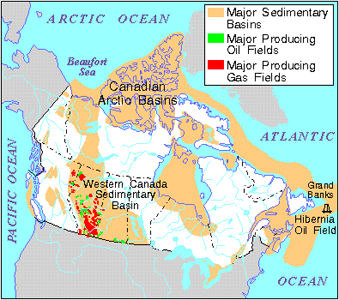
-
Article
Petroleum Industries
Petroleum industries find, produce, process, transport, refine and market petroleum commodities.
"https://d3d0lqu00lnqvz.cloudfront.net/media/media/5ceeeefa-12aa-419d-91aa-b6c959804761.jpg" // resources/views/front/categories/view.blade.php
https://d3d0lqu00lnqvz.cloudfront.net/media/media/5ceeeefa-12aa-419d-91aa-b6c959804761.jpg