
Browse "Business & Economics"
-
Article
Canadair CL-215
Canadair CL-215, unique amphibious aircraft designed to fight forest fires with water bombing and chemical fire retardants. It can scoop up a load of over 5000 litres of water in 10 seconds while skimming over a body of water, and jettison it over a fire in less than 1 second.
"https://thecanadianencyclopedia.ca/images/tce_placeholder.jpg?v=e9dca980c9bdb3aa11e832e7ea94f5d9" // resources/views/front/categories/view.blade.php
https://thecanadianencyclopedia.ca/images/tce_placeholder.jpg?v=e9dca980c9bdb3aa11e832e7ea94f5d9
-
Article
Canadair Ltd
Canadair Ltd, aerospace manufacturers. The company had its origins in the aircraft division of Canadian Vickers Ltd, formed in 1923. It was purchased by Canadians in 1927 and during WWII produced the Canso, a long-range flying boat used for maritime patrol.
"https://thecanadianencyclopedia.ca/images/tce_placeholder.jpg?v=e9dca980c9bdb3aa11e832e7ea94f5d9" // resources/views/front/categories/view.blade.php
https://thecanadianencyclopedia.ca/images/tce_placeholder.jpg?v=e9dca980c9bdb3aa11e832e7ea94f5d9
-
Macleans
Canada's Auto Industry Struggling
FOR THE FIRST TIME in his life, Buzz Hargrove didn't buy a new car last year after trading in his '99 Chrysler LHS. Instead, he got himself a Jeep, a luxurious 2002 Grand Cherokee. Now he admits he doesn't care much for it, that he's not one for an SUV.This article was originally published in Maclean's Magazine on September 23, 2002
"https://thecanadianencyclopedia.ca/images/tce_placeholder.jpg?v=e9dca980c9bdb3aa11e832e7ea94f5d9" // resources/views/front/categories/view.blade.php
https://thecanadianencyclopedia.ca/images/tce_placeholder.jpg?v=e9dca980c9bdb3aa11e832e7ea94f5d9
-
Article
Canada’s Temporary Foreign Worker Programs
Temporary foreign worker programs are regulated by the federal government and allow employers to hire foreign nationals on a temporary basis to fill gaps in their workforces. Each province and territory also has its own set of policies that affect the administration of the programs. Canada depends on thousands of migrant workers every year to bolster its economy and to support its agricultural, homecare, and other lower-wage sectors. In 2014, there were 567,077 migrant workers employed in Canada, with migrant farm workers making up 12 per cent of Canada’s agricultural workforce. A growing labour shortage is projected to increase, with a study by the Conference Board of Canada projecting 113,800 unfilled jobs by 2025.
"https://d3d0lqu00lnqvz.cloudfront.net/media/media/3bf77737-2df1-42f7-a8c8-6660b9529dcf.jpg" // resources/views/front/categories/view.blade.php
https://d3d0lqu00lnqvz.cloudfront.net/media/media/3bf77737-2df1-42f7-a8c8-6660b9529dcf.jpg
-
Macleans
Canadian Airlines Struggles
This article was originally published in Maclean’s magazine on February 12, 1996. Partner content is not updated. When he stepped into the job of president at Canadian Airlines International Ltd. four years ago, Kevin Jenkins decided to learn the ropes the hard way.
"https://thecanadianencyclopedia.ca/images/tce_placeholder.jpg?v=e9dca980c9bdb3aa11e832e7ea94f5d9" // resources/views/front/categories/view.blade.php
https://thecanadianencyclopedia.ca/images/tce_placeholder.jpg?v=e9dca980c9bdb3aa11e832e7ea94f5d9
-
Macleans
Canadian Airlines Struggles to Stay Aloft
This article was originally published in Maclean’s magazine on December 2, 1996. Partner content is not updated. Mike Lowther calls it "Black Friday" - the day CANADIAN AIRLINES INTERNATIONAL LTD. told its 16,400 employees that the company was on the brink of collapse.
"https://thecanadianencyclopedia.ca/images/tce_placeholder.jpg?v=e9dca980c9bdb3aa11e832e7ea94f5d9" // resources/views/front/categories/view.blade.php
https://thecanadianencyclopedia.ca/images/tce_placeholder.jpg?v=e9dca980c9bdb3aa11e832e7ea94f5d9
-
Macleans
Canadian Airlines' Survival Deal
For a Prime Minister who boasts that he has no trouble keeping his hands off issues best delegated to the cabinet, Jean CHRÉTIEN can sometimes be a decidedly hands-on leader.This article was originally published in Maclean's Magazine on December 16, 1996
"https://thecanadianencyclopedia.ca/images/tce_placeholder.jpg?v=e9dca980c9bdb3aa11e832e7ea94f5d9" // resources/views/front/categories/view.blade.php
https://thecanadianencyclopedia.ca/images/tce_placeholder.jpg?v=e9dca980c9bdb3aa11e832e7ea94f5d9
-
Article
Canadian Business
Canadian Business, a magazine established in 1927, is Canada's leading business monthly magazine. It was owned by the Montréal Chamber of Commerce and published in Montréal from its inception until 1978, when it was bought by Michael de Pencier, Alexander Ross and Roy MacLaren, and moved to Toronto.
"https://thecanadianencyclopedia.ca/images/tce_placeholder.jpg?v=e9dca980c9bdb3aa11e832e7ea94f5d9" // resources/views/front/categories/view.blade.php
https://thecanadianencyclopedia.ca/images/tce_placeholder.jpg?v=e9dca980c9bdb3aa11e832e7ea94f5d9
-
Article
Canadian Business Review
Canadian Business Review, The, established in 1974, was a quarterly published by the Conference Board of Canada from its headquarters in Ottawa. With a circulation of about 8000, it fulfilled the same role in Canada as the board's US magazine, Across the Board, did in that country.
"https://thecanadianencyclopedia.ca/images/tce_placeholder.jpg?v=e9dca980c9bdb3aa11e832e7ea94f5d9" // resources/views/front/categories/view.blade.php
https://thecanadianencyclopedia.ca/images/tce_placeholder.jpg?v=e9dca980c9bdb3aa11e832e7ea94f5d9
-
Article
Canadian Commercial Bank
Canadian Commercial Bank (CCB) became Canada's tenth Schedule A bank when chartered as Canadian Commercial and Industrial Bank on 30 July 1975.
"https://thecanadianencyclopedia.ca/images/tce_placeholder.jpg?v=e9dca980c9bdb3aa11e832e7ea94f5d9" // resources/views/front/categories/view.blade.php
https://thecanadianencyclopedia.ca/images/tce_placeholder.jpg?v=e9dca980c9bdb3aa11e832e7ea94f5d9
-
Article
Canadian Congress of Labour
Canadian Congress of Labour, founded fall 1940 as a merger of the All-Canadian Congress of Labour and the Canadian section of the Congress of Industrial Organizations. For 16 years the CCL was in the forefront of Canadian union activity and organization.
"https://d3d0lqu00lnqvz.cloudfront.net/media/media/6ff103be-feca-472e-8963-9d367e0fabff.jpg" // resources/views/front/categories/view.blade.php
https://d3d0lqu00lnqvz.cloudfront.net/media/media/6ff103be-feca-472e-8963-9d367e0fabff.jpg
-
Article
Canadian Democracy and Corporate Accountability Commission
Created in 2000, the privately funded Canadian Democracy and Corporate Accountability Commission (CDCAC) was co-chaired by Canadian publisher Avie Bennett and ex-NDP leader Ed Broadbent.
"https://thecanadianencyclopedia.ca/images/tce_placeholder.jpg?v=e9dca980c9bdb3aa11e832e7ea94f5d9" // resources/views/front/categories/view.blade.php
https://thecanadianencyclopedia.ca/images/tce_placeholder.jpg?v=e9dca980c9bdb3aa11e832e7ea94f5d9
-
Article
Canadian Federation of Labour
The Canadian Federation of Labour (National Trades and Labor Congress until 1908) was founded in 1902 as a solely Canadian body dedicated to national organization.
"https://d3d0lqu00lnqvz.cloudfront.net/media/media/deaaaf0f-2d04-4ae8-8391-d6255fe2a78a.jpg" // resources/views/front/categories/view.blade.php
https://d3d0lqu00lnqvz.cloudfront.net/media/media/deaaaf0f-2d04-4ae8-8391-d6255fe2a78a.jpg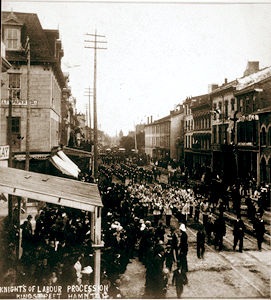
-
Article
Canadian Film History: 1939 to 1973
Filmmaking is a powerful form of cultural and artistic expression, as well as a highly profitable commercial enterprise. From a practical standpoint, filmmaking is a business involving large sums of money and a complex division of labour. This labour is involved, roughly speaking, in three sectors: production, distribution and exhibition. The history of the Canadian film industry has been one of sporadic achievement accomplished in isolation against great odds. Canadian cinema has existed within an environment where access to capital for production, to the marketplace for distribution and to theatres for exhibition has been extremely difficult. The Canadian film industry, particularly in English Canada, has struggled against the Hollywood entertainment monopoly for the attention of an audience that remains largely indifferent toward the domestic industry. The major distribution and exhibition outlets in Canada have been owned and controlled by foreign interests. The lack of domestic production throughout much of the industry’s history can only be understood against this economic backdrop. This article is one of four that surveys the history of the film industry in Canada. The entire series includes: Canadian Film History: 1896 to 1938; Canadian Film History: 1939 to 1973; Canadian Film History: 1974 to Present; Canadian Film History: Regional Cinema and Auteurs, 1980 to Present.
"https://d3d0lqu00lnqvz.cloudfront.net/media/media/365bfdc3-53d4-4033-b13f-5a89a83a85d5.jpg" // resources/views/front/categories/view.blade.php
https://d3d0lqu00lnqvz.cloudfront.net/media/media/365bfdc3-53d4-4033-b13f-5a89a83a85d5.jpg
-
Article
Canadian Film History: 1974 to Present
Filmmaking is a powerful form of cultural and artistic expression, as well as a highly profitable commercial enterprise. From a practical standpoint, filmmaking is a business involving large sums of money and a complex division of labour. This labour is involved, roughly speaking, in three sectors: production, distribution and exhibition. The history of the Canadian film industry has been one of sporadic achievement accomplished in isolation against great odds. Canadian cinema has existed within an environment where access to capital for production, to the marketplace for distribution and to theatres for exhibition has been extremely difficult. The Canadian film industry, particularly in English Canada, has struggled against the Hollywood entertainment monopoly for the attention of an audience that remains largely indifferent toward the domestic industry. The major distribution and exhibition outlets in Canada have been owned and controlled by foreign interests. The lack of domestic production throughout much of the industry’s history can only be understood against this economic backdrop. This article is one of four that surveys the history of the film industry in Canada. The entire series includes: Canadian Film History: 1896 to 1938; Canadian Film History: 1939 to 1973; Canadian Film History: 1974 to Present; Canadian Film History: Notable Films and Filmmakers 1980 to Present.
"https://d3d0lqu00lnqvz.cloudfront.net/media/media/4fd4ee50-6f27-491b-aeb7-2f5cd3c95f9e.jpg" // resources/views/front/categories/view.blade.php
https://d3d0lqu00lnqvz.cloudfront.net/media/media/4fd4ee50-6f27-491b-aeb7-2f5cd3c95f9e.jpg