
Browse "Places"
-
Article
Reform Movement in Upper Canada
After the War of 1812, Upper Canada began to develop rapidly. This resulted in social and economic tensions and political issues. These included the expulsion of Robert Gourlay, the Alien Question, the Anglican monopoly of the Clergy Reserves and education, and Tory control of patronage.
"https://d3d0lqu00lnqvz.cloudfront.net/media/media/9e9e3848-d959-4713-9a6f-8747181ebc24.jpg" // resources/views/front/categories/view.blade.php
https://d3d0lqu00lnqvz.cloudfront.net/media/media/9e9e3848-d959-4713-9a6f-8747181ebc24.jpg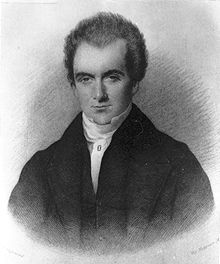
-
Article
Regina
Regina, Saskatchewan, founded in 1882, incorporated as a city in 1903, population 226,404 (2021 census), 215,106 (2016 census). The City of Regina is the capital, commercial and financial centre of Saskatchewan. Regina is situated 160 km north of the United States border. The city is set in a wide, level alluvial plain. It was named for Queen Victoria, mother-in-law of the Marquess of Lorne, governor general at the time of the city’s founding.
"https://d3d0lqu00lnqvz.cloudfront.net/media/media/28886a39-49ac-49a7-b464-aeefa4a2b4cc.jpg" // resources/views/front/categories/view.blade.php
https://d3d0lqu00lnqvz.cloudfront.net/media/media/28886a39-49ac-49a7-b464-aeefa4a2b4cc.jpg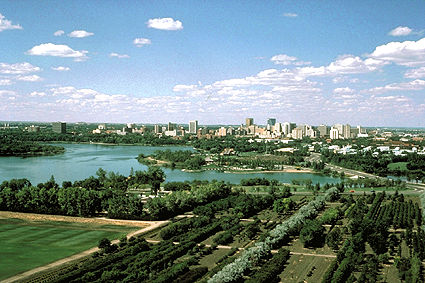
-
Article
Music in Regina
Capital city of Saskatchewan. Originally called 'Pile of Bones,' from the Cree word Wascana, it became the capital of the Northwest Territories in 1882 with the coming of the railway and was renamed Regina after Queen Victoria.
"https://thecanadianencyclopedia.ca/images/tce_placeholder.jpg?v=e9dca980c9bdb3aa11e832e7ea94f5d9" // resources/views/front/categories/view.blade.php
https://thecanadianencyclopedia.ca/images/tce_placeholder.jpg?v=e9dca980c9bdb3aa11e832e7ea94f5d9
-
Article
Reindeer Lake
Reindeer Lake, 6650 km2, elev 337 m, max length 233 km, located on the border between northeastern Saskatchewan and northwestern Manitoba, is the second-largest lake in Saskatchewan and ninth largest in Canada. It has a heavily indented shoreline and contains numerous small islands.
"https://thecanadianencyclopedia.ca/images/tce_placeholder.jpg?v=e9dca980c9bdb3aa11e832e7ea94f5d9" // resources/views/front/categories/view.blade.php
https://thecanadianencyclopedia.ca/images/tce_placeholder.jpg?v=e9dca980c9bdb3aa11e832e7ea94f5d9
-
Article
Church Architecture
Later in the 17th century, under Jesuit influence and with the arrival of more artisans and builders trained in France, certain traditional features of religious architecture were used to construct churches in Québec City and Montréal.
"https://d3d0lqu00lnqvz.cloudfront.net/media/media/dc54dcff-f3dd-4f2c-b5ec-0ad5078ee2b2.jpg" // resources/views/front/categories/view.blade.php
https://d3d0lqu00lnqvz.cloudfront.net/media/media/dc54dcff-f3dd-4f2c-b5ec-0ad5078ee2b2.jpg
-
Article
Renfrew
Renfrew, Ontario, incorporated as a town in 1895, population 8,190 (2021 census), 8,223 (2016 census). The town of Renfrew is located on the Bonnechere River, 100 km west of Ottawa.
"https://thecanadianencyclopedia.ca/images/tce_placeholder.jpg?v=e9dca980c9bdb3aa11e832e7ea94f5d9" // resources/views/front/categories/view.blade.php
https://thecanadianencyclopedia.ca/images/tce_placeholder.jpg?v=e9dca980c9bdb3aa11e832e7ea94f5d9
-
Article
Repentigny
Repentigny, Quebec, incorporated as a town in 1957, population 86,100 (2021 census), 53,824 (2016 census). Repentigny is located 24 km northeast of Montreal where the Rivière L'Assomption and Rivière des Prairies meet the St. Lawrence River. It is built on a quasi-peninsula formed by the Rivière L'Assomption and the St. Lawrence, fronted by a chain of islands along its shoreline. The town is connected to Île de Montréal by the Pierre-Le-Gardeur Bridge (1938–39; rebuilt in 1974). On 1 June 2002, Repentigny was amalgamated with the town of Le Gardeur.
"https://d3d0lqu00lnqvz.cloudfront.net/Rue_Notre-Dame_-_Repentigny_-vue_aerienne.jpg" // resources/views/front/categories/view.blade.php
https://d3d0lqu00lnqvz.cloudfront.net/Rue_Notre-Dame_-_Repentigny_-vue_aerienne.jpg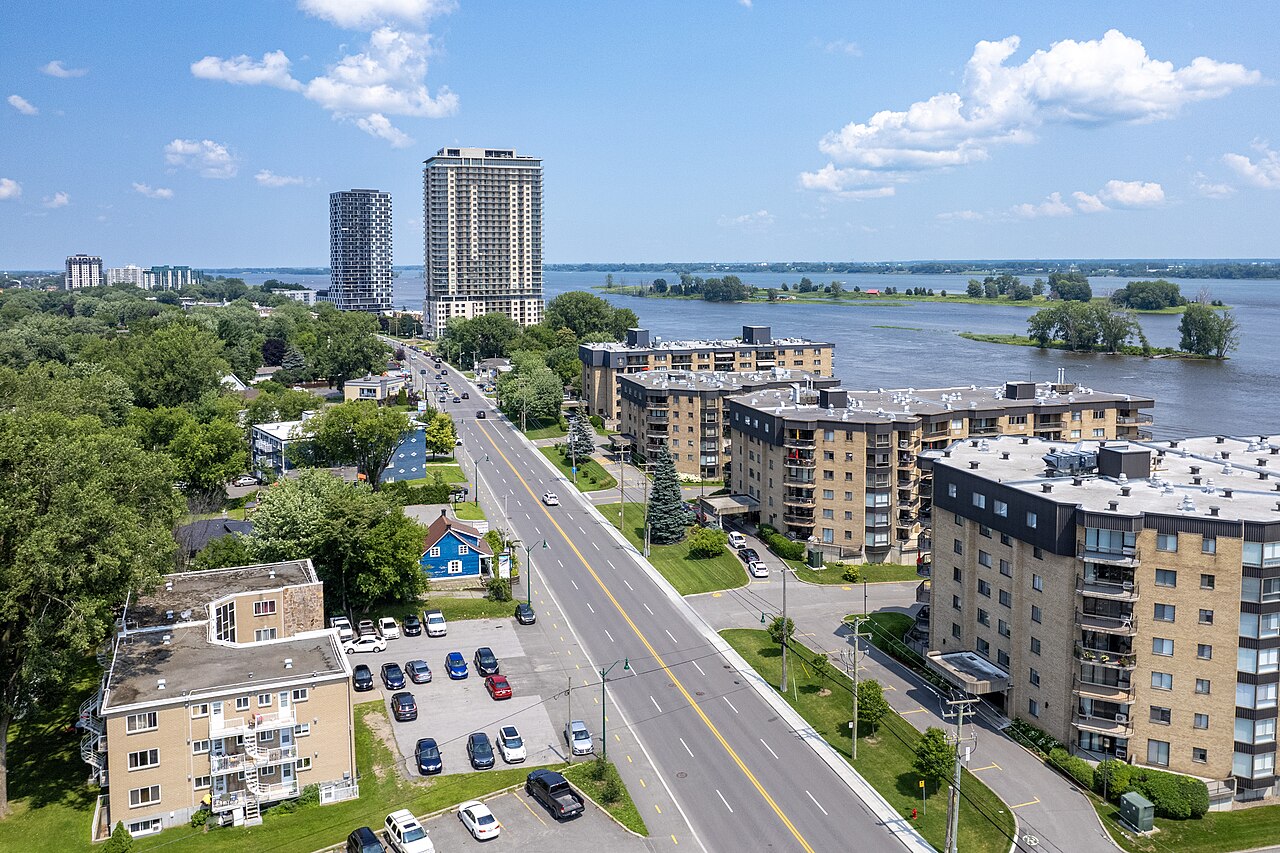
-
Article
Naujaat
Naujaat, Nunavut, incorporated as a hamlet in 1978, population 1,225 (2021 census), 1,082 (2016 census). The hamlet of Naujaat is located on the north shore of Repulse Bay, which is on the south shore of the Rae Isthmus. For a period of time, Naujaat was known as Repulse Bay.
"https://thecanadianencyclopedia.ca/images/tce_placeholder.jpg?v=e9dca980c9bdb3aa11e832e7ea94f5d9" // resources/views/front/categories/view.blade.php
https://thecanadianencyclopedia.ca/images/tce_placeholder.jpg?v=e9dca980c9bdb3aa11e832e7ea94f5d9
-
Article
Reserves in Alberta
There are 138 reserves in Alberta, held primarily by the province’s 46 First Nations ( see also First Nations in Alberta). A handful of these reserves are held by First Nations based outside the province, namely Salt River First Nation and Smith’s Landing First Nation, whose administrative headquarters are in the Northwest Territories. Onion Lake Cree Nation, based in Saskatchewan, holds a reserve that straddles the Alberta-Saskatchewan border. In 2020, there were 133,051 Registered Indians living in Alberta, 60 per cent of whom lived on reserves. First Nations in Alberta are typically grouped into three areas based on Treaties 6, 7 and 8 (see also Numbered Treaties). While historically the Canadian government assigned reserves to First Nations people and not Métis or Inuit, Alberta is the only province in which Métis people were given a collective land base (see Métis Settlements).
"https://d3d0lqu00lnqvz.cloudfront.net/media/new_article_images/ReservesInAlberta/DSC03560.jpg" // resources/views/front/categories/view.blade.php
https://d3d0lqu00lnqvz.cloudfront.net/media/new_article_images/ReservesInAlberta/DSC03560.jpg
-
Article
Reserves in British Columbia
As of 2019, there were 1,583 reserves in British Columbia associated with 203 Indigenous Nations (see also First Nations in British Columbia). Unlike many other parts the country, where reserves resulted from treaties made between the federal government and Indigenous Nations, most reserves in BC were created without such negotiations. Only two general locations in BC are covered by historic treaties: parts of Vancouver Island are covered by the Douglas Treaties, and the northeast corner of the province by Treaty 8. In BC as with other parts of the country, reserves are bound by the terms of the Indian Act. However, given the number of Indigenous Nations without a treaty in BC, the province has implemented a modern treaty negotiation process. Several BC Indigenous communities have used this process or other means to negotiate self-governing agreements. These agreements place decision-making authority over land management in the hands of Indigenous governments.
"https://d3d0lqu00lnqvz.cloudfront.net/ReservesInBC/TribalCanoeJourney.jpg" // resources/views/front/categories/view.blade.php
https://d3d0lqu00lnqvz.cloudfront.net/ReservesInBC/TribalCanoeJourney.jpg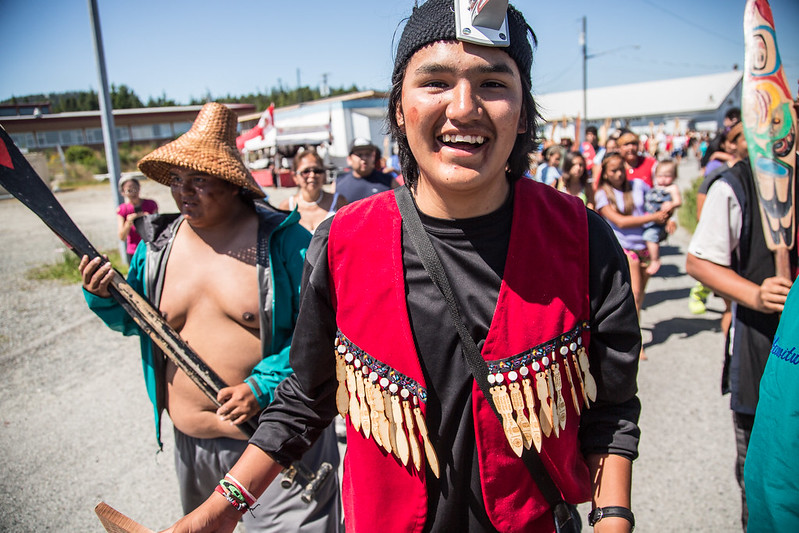
-
Article
Reserves in Canada (Plain-Language Summary)
A reserve is land set aside by the Canadian government for use by First Nations. Reserves are managed under the Indian Act. Reserves are places where First Nations often live. However, some reserves are only for practices like hunting. Not all First Nations have reserve lands. There are reserves in every province in Canada, but most are in rural or remote areas. Few reserves have been established in the territories. (This is a plain-language summary of Reserves in Canada. If you are interested in reading about this topic in more depth, please see our full-length entry, Reserves in Canada.)
"https://d3d0lqu00lnqvz.cloudfront.net/media/media/98f21d5f-b51e-4f33-8760-a876daffe0cd.jpg" // resources/views/front/categories/view.blade.php
https://d3d0lqu00lnqvz.cloudfront.net/media/media/98f21d5f-b51e-4f33-8760-a876daffe0cd.jpg
-
Article
Reserves in Manitoba
There are 376 reserves in Manitoba, held by the province's 63 First Nations (see also First Nations in Manitoba). In addition, Animakee Wa Zhing, a First Nation based in Ontario, has a reserve that straddles the Ontario-Manitoba border. As of 2020, there were 164,116 registered Indians in Manitoba, 58 per cent of whom lived on-reserve. Manitoba is also a key part of the Métis Nation’s homeland and has a large Métis population. However, for a variety of historical reasons, Métis do not hold reserves (see Métis Scrip in Canada; Manitoba Act of 1870).
"https://d3d0lqu00lnqvz.cloudfront.net/media/new_article_images/ReservesinMB/PoplarRiverFirstNation.jpg" // resources/views/front/categories/view.blade.php
https://d3d0lqu00lnqvz.cloudfront.net/media/new_article_images/ReservesinMB/PoplarRiverFirstNation.jpg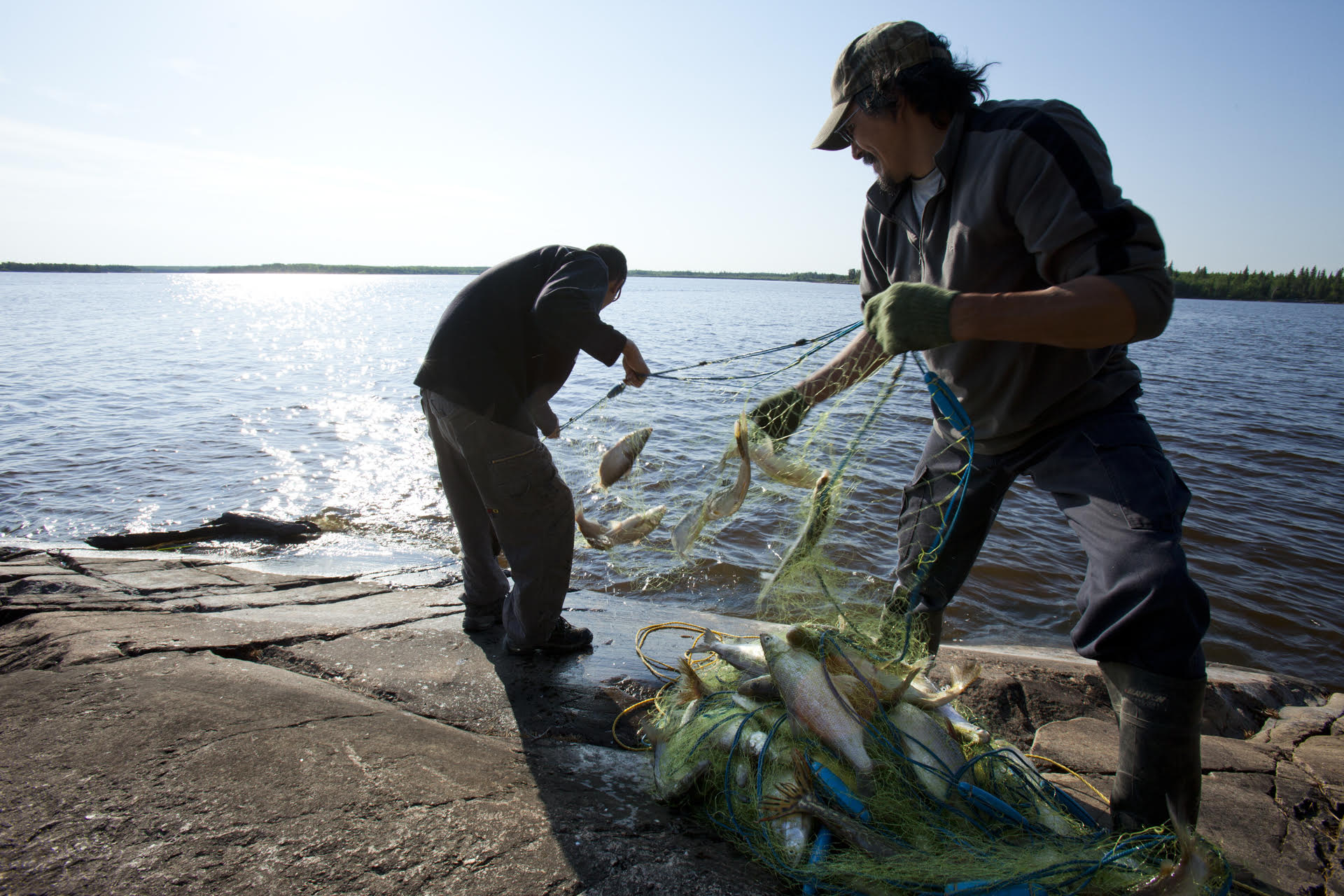
-
Article
Reserves in New Brunswick
There are 31 reserves in New Brunswick held by 15 First Nations (see alsoFirst Nations in New Brunswick). These First Nations belong to one of two larger cultural groups, namely the Mi’kmaq or Wolastoqiyik (Maliseet), who are, in turn, part of the Wabanaki Confederacy. Reserve names and boundaries have changed through time and some reserves either no longer exist or are not recognized by the provincial government. As of 2021, there were 16,985 Registered Indians in New Brunswick, about 59 per cent of whom lived on reserves.
"https://d3d0lqu00lnqvz.cloudfront.net/ReservesinNB/PotatoPickers.jpg" // resources/views/front/categories/view.blade.php
https://d3d0lqu00lnqvz.cloudfront.net/ReservesinNB/PotatoPickers.jpg
-
Article
Reserves in Newfoundland and Labrador
Newfoundland and Labrador is home to two First Nation groups: the Mi’kmaq living on the island of Newfoundland, and the Innu, living in central and northern Labrador. The province has three reserves. Two of the reserves are Innu: the Sheshatshiu and Natuashish reserves are home to the Sheshatshiu Innu First Nation and Mushuau Innu First Nation respectively. The third, Miawpukek Mi’kamawey Mawi’omi (commonly known as Miawpukek, or in English, Conne River), is Mi’kmaq. Indigenous people live in these communities, as well as in other, non-Indigenous communities throughout the province. As of March 2019, there were 28,293 registered Indians living in Newfoundland and Labrador, 12 per cent of whom lived on reserve. One reason the province has a relatively small on-reserve population is because the Qalipu Mi’kmaq, a band from the West Coast of Newfoundland and one of the largest in the country, does not have reserve lands. Labrador is also home to many Inuit communities who, like Inuit living in other parts of the country, do not have reserves.
"https://d3d0lqu00lnqvz.cloudfront.net/media/new_article_images/ReservesNL/2015 11 Mushuau Innu Girl Natuashish Ossie Michelin.jpg" // resources/views/front/categories/view.blade.php
https://d3d0lqu00lnqvz.cloudfront.net/media/new_article_images/ReservesNL/2015 11 Mushuau Innu Girl Natuashish Ossie Michelin.jpg
-
Article
Reserves in Nova Scotia
There are 42 reserves in Nova Scotia, held by 13 First Nations (see First Nations in Nova Scotia). Nova Scotia is one of just two provinces, the other being Prince Edward Island, that is part of the traditional territory of only one Indigenous people. In both cases, it is the Mi'kmaq. In 2020, there were 17,895 registered Mi’kmaq in Nova Scotia, about 63 per cent of whom (11,202 people) lived on reserve. Reserves in Nova Scotia vary in size from over 3,500 hectares to less than one, though almost every First Nation has more than one land tract.
"https://d3d0lqu00lnqvz.cloudfront.net/media/media/c46f71fe-d1d5-47bd-9ee6-bfeaa4810e03.jpg" // resources/views/front/categories/view.blade.php
https://d3d0lqu00lnqvz.cloudfront.net/media/media/c46f71fe-d1d5-47bd-9ee6-bfeaa4810e03.jpg