
Browse "Provinces & Territories"
-
"https://d3d0lqu00lnqvz.cloudfront.net/Acadians-6.jpg" // resources/views/front/categories/view.blade.php
https://d3d0lqu00lnqvz.cloudfront.net/Acadians-6.jpg
-
Article
Alberta
Alberta, the westernmost of Canada's three Prairie provinces, shares many physical features with its neighbours to the east, Saskatchewan and Manitoba. The Rocky Mountains form the southern portion of Alberta's western boundary with British Columbia. Alberta was named after Princess Louise Caroline Alberta, fourth daughter of Queen Victoria. The province is home to the country’s largest deposits of oil and natural gas.
"https://d3d0lqu00lnqvz.cloudfront.net/media/media/251b5d36-82cc-4ec1-80e8-471cfd59098a.jpg" // resources/views/front/categories/view.blade.php
https://d3d0lqu00lnqvz.cloudfront.net/media/media/251b5d36-82cc-4ec1-80e8-471cfd59098a.jpg
-
Timelines
Alberta
Alberta, the westernmost of Canada's three Prairie provinces, shares many physical features with its neighbours to the east, Saskatchewan and Manitoba. The Rocky Mountains form the southern portion of Alberta's western boundary with British Columbia.
"https://d3d0lqu00lnqvz.cloudfront.net/media/media/412a21a2-aed2-4825-9e29-83935aa5961e.jpg" // resources/views/front/categories/view.blade.php
https://d3d0lqu00lnqvz.cloudfront.net/media/media/412a21a2-aed2-4825-9e29-83935aa5961e.jpg
-
Article
Asbestos Strike of 1949 (Plain-Language Summary)
Asbestos is a mineral. It has many uses. For instance, it can be used for insulation, furnaces and brake pads. Quebec produced the most asbestos in the world by 1949, 85 per cent. In February 1949, thousands of miners in a town called Asbestos as well as Thetford Mines went on strike (see Val-des-Sources (Asbestos)). The government in Quebec was against the workers. It sided with the main employer, the American-owned Johns-Manville Company. The Catholic Church was for the workers (see Catholicism in Canada). This made the government and the Church clash. The strike is famous for two main reasons. First, it was violent. Second, it contributed to the creation of the Quiet Revolution in the 1960s. The Quiet Revolution was a time when francophones assumed more leadership positions in Quebec. This article is a plain-language summary of the Asbestos Strike of 1949. If you are interested in reading about this topic in more depth, please see our full-length entry, Asbestos Strike of 1949.
"https://d3d0lqu00lnqvz.cloudfront.net/media/new_article_images/Asbestos/Jeffrey_Mine_1944.jpg" // resources/views/front/categories/view.blade.php
https://d3d0lqu00lnqvz.cloudfront.net/media/new_article_images/Asbestos/Jeffrey_Mine_1944.jpg
-
Article
Bedard Case
R v. Bedard (1971) challenged section 12(1)(b) of the Indian Act, which concerns the rights of Status Indian women in Canada. The appellant in the case, Yvonne Bedard, took the federal government to court after losing her rights as a Status Indian because of her marriage to a Non-Status man. In 1973, before the Supreme Court of Canada, the Bedard case merged with AG v. Lavell, another case concerning gender discrimination (see Status of Women) in the Indian Act. Although Bedard ultimately lost her reinstatement claims, her case inspired future legal battles regarding women’s rights and the Indian Act, including Lovelace v. Canada (1981) (see Sandra Lovelace Nicholas) and the Descheneaux case (2015).
"https://thecanadianencyclopedia.ca/images/tce_placeholder.jpg?v=e9dca980c9bdb3aa11e832e7ea94f5d9" // resources/views/front/categories/view.blade.php
https://thecanadianencyclopedia.ca/images/tce_placeholder.jpg?v=e9dca980c9bdb3aa11e832e7ea94f5d9
-
Editorial
Editorial: The Arrival of Black Loyalists in Nova Scotia
The following article is an editorial written by The Canadian Encyclopedia staff. Editorials are not usually updated. “Freedom and a Farm.” The promise was exciting to the thousands of African Americans, most seeking to escape enslavement, who fought in British regiments during the American Revolutionary War (1775–83). Following the war, they joined tens of thousands of Loyalists — American refugees who had sided with the British. Between 80,000 and 100,000 Loyalists eventually fled the United States. About half came to British North America. The main waves arrived in 1783 and 1784. The territory that now includes the Maritime provinces became home to more than 30,000 Loyalists. Most of coastal Nova Scotia received Loyalist settlers, as did Cape Breton and Prince Edward Island (then called St. John’s Island).
"https://d3d0lqu00lnqvz.cloudfront.net/media/media/be13527b-b76d-408a-afca-30acbd4f7bfc.png" // resources/views/front/categories/view.blade.php
https://d3d0lqu00lnqvz.cloudfront.net/media/media/be13527b-b76d-408a-afca-30acbd4f7bfc.png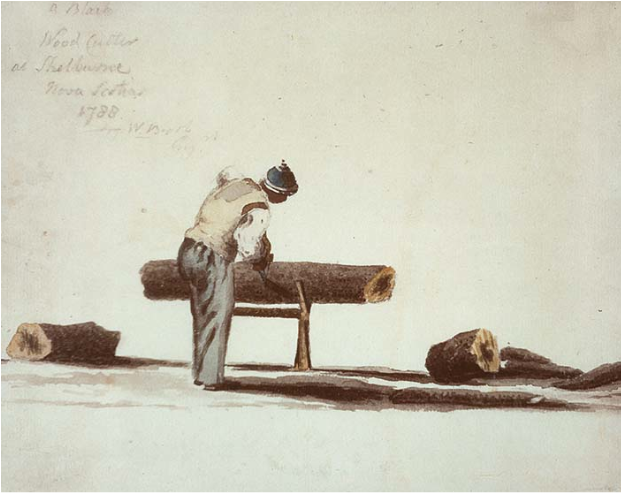
-
Timelines
British Columbia
British Columbia is Canada's most westerly province, and is a mountainous area whose population is mainly clustered in its southwestern corner. BC is Canada’s third-largest province after Québec and Ontario, making up 10 per cent of Canada’s land surface.
"https://d3d0lqu00lnqvz.cloudfront.net/media/media/08691466-f851-405a-aed3-4dae6f6e6024.jpg" // resources/views/front/categories/view.blade.php
https://d3d0lqu00lnqvz.cloudfront.net/media/media/08691466-f851-405a-aed3-4dae6f6e6024.jpg
-
Article
British Columbia and Confederation
The colony of British Columbia was founded in 1858 in response to the Fraser River Gold Rush. (See also The Fraser River Gold Rush and the Founding of British Columbia.) The colony established representative government in 1864 and merged with the colony of Vancouver Island in 1866. In May 1868, Amor De Cosmos formed the Confederation League to bring responsible government to BC and to join Confederation. In September 1868, the Confederation League passed 37 resolutions outlining the terms for a union with the Dominion of Canada. The terms were passed by both the BC assembly and the federal Parliament in 1871. The colony joined Canada as the country’s sixth province on 20 July 1871. The threat of American annexation, embodied by the Alaska purchase of 1867, and the promise of a railway linking BC to the rest of Canada, were decisive factors.
"https://d3d0lqu00lnqvz.cloudfront.net/media/media/1f3712f0-f1ac-4fba-a093-ff4c7cfec856.jpg" // resources/views/front/categories/view.blade.php
https://d3d0lqu00lnqvz.cloudfront.net/media/media/1f3712f0-f1ac-4fba-a093-ff4c7cfec856.jpg
-
Article
Canada East
In 1841, Britain united the colonies of Upper and Lower Canada into the Province of Canada. This was in response to the violent rebellions of 1837–38. The Durham Report (1839) laid out the guidelines to create the new colony with the Act of Union in 1840. The Province of Canada was made up of Canada West (formerly Upper Canada) and Canada East (formerly Lower Canada). The two regions were governed jointly until Confederation in 1867. Canada West then became Ontario and Canada East became Quebec.
"https://d3d0lqu00lnqvz.cloudfront.net/media/new_article_images/PoliticsInOntario/Map_Canada_West_East.jpg" // resources/views/front/categories/view.blade.php
https://d3d0lqu00lnqvz.cloudfront.net/media/new_article_images/PoliticsInOntario/Map_Canada_West_East.jpg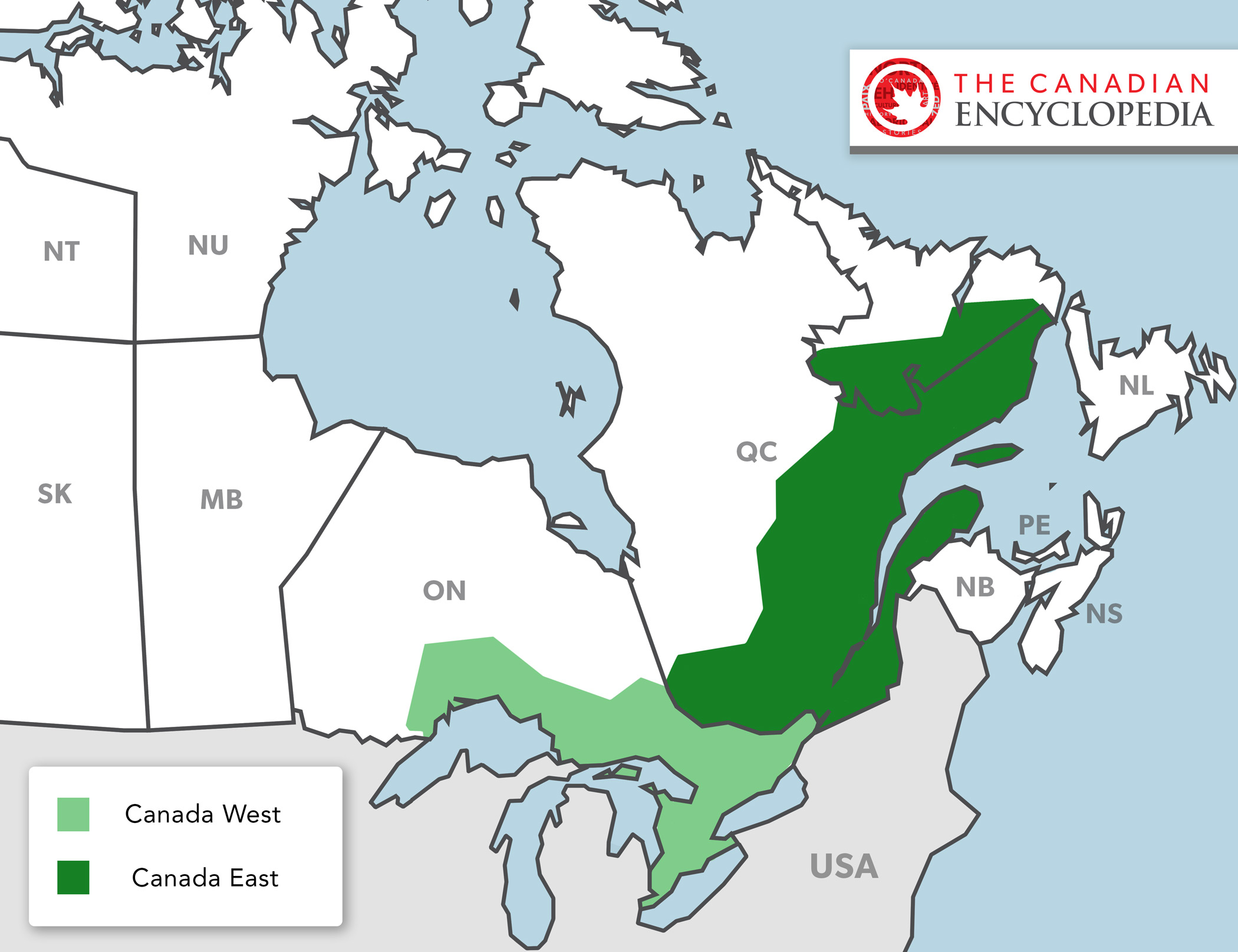
-
Article
Canada West
In 1841, Britain united the colonies of Upper and Lower Canada into the Province of Canada. This was in response to the violent rebellions of 1837–38. The Durham Report (1839) laid out the guidelines to create the new colony with the Act of Union in 1840. The Province of Canada was made up of Canada West (formerly Upper Canada) and Canada East (formerly Lower Canada). The two regions were governed jointly until Confederation in 1867. Canada West then became Ontario and Canada East became Quebec.
"https://thecanadianencyclopedia.ca/images/tce_placeholder.jpg?v=e9dca980c9bdb3aa11e832e7ea94f5d9" // resources/views/front/categories/view.blade.php
https://thecanadianencyclopedia.ca/images/tce_placeholder.jpg?v=e9dca980c9bdb3aa11e832e7ea94f5d9
-
Collection
Acadian Heritage
This collection explores the rich heritage of the Acadians through articles and exhibits, as well as quizzes on the arts, culture, history, politics, historical figures and places associated with the Acadian people.
"https://d3d0lqu00lnqvz.cloudfront.net/media/media/0988fc77-c4b5-410f-8147-ffcf8bb53fa6.jpg" // resources/views/front/categories/view.blade.php
https://d3d0lqu00lnqvz.cloudfront.net/media/media/0988fc77-c4b5-410f-8147-ffcf8bb53fa6.jpg
-
Article
Francophones of Saskatchewan (Fransaskois)
The Fransaskois are francophones living in Saskatchewan. According to the 2021 Canadian census, 1.5 per cent of the population (16,850 inhabitants) have French as their mother tongue and 1.1 per cent of the population (12,243 inhabitants) have French as their first official language. (See French language in Canada.)
"https://d3d0lqu00lnqvz.cloudfront.net/media/new_article_images/Fransaskois/Flag_Francophones_Saskatchewan_Fransaskois.png" // resources/views/front/categories/view.blade.php
https://d3d0lqu00lnqvz.cloudfront.net/media/new_article_images/Fransaskois/Flag_Francophones_Saskatchewan_Fransaskois.png
-
Article
Geography of Newfoundland and Labrador
Newfoundland and Labrador is divided by three of Canada’s seven physiographic regions. These three regions are the Canadian Shield in Labrador, and the Appalachian and Eastern St. Lawrence Lowlands on the island of Newfoundland. Labrador’s northern coastal region is mountainous, deeply fjorded, and grows only ground-level, subarctic vegetation. Its southern coast has a rugged, barren foreshore and a forested hinterland. The interior of Labrador is a well-forested, dissected plateau. Most of Labrador’s most-populous towns, including Happy-Valley Goose Bay and Labrador City, are located in its interior. On the island of Newfoundland the west coast is dominated by the table-topped Long Range Mountains. The northeast coast, with its numerous bays, islands and headlands, fronts on the Atlantic Ocean from the Great Northern Peninsula to the Avalon Peninsula. Newfoundland’s southern coast has the deeply embayed characteristics of a submerged shoreline. The inland areas of the island are generally hilly and rugged. Shallow bogs and heath vegetation covers much of the land. Most of Newfoundland’s towns and cities are located in the bays and coves of the island’s west and northeast coasts.
"https://d3d0lqu00lnqvz.cloudfront.net/media/new_article_images/GeographyofNFLD/ChurchillFalls.jpg" // resources/views/front/categories/view.blade.php
https://d3d0lqu00lnqvz.cloudfront.net/media/new_article_images/GeographyofNFLD/ChurchillFalls.jpg
-
Article
Intergenerational Trauma and Residential Schools
Historical trauma occurs when trauma caused by historical oppression is passed down through generations. For more than 100 years, the Canadian government supported residential school programs that isolated Indigenous children from their families and communities (see Residential Schools in Canada). Under the guise of educating and preparing Indigenous children for their participation in Canadian society, the federal government and other administrators of the residential school system committed what has since been described as an act of cultural genocide. As generations of students left these institutions, they returned to their home communities without the knowledge, skills or tools to cope in either world. The impacts of their institutionalization in residential school continue to be felt by subsequent generations. This is called intergenerational trauma. This is the full-length entry about Intergenerational Trauma and Residential Schools. For a plain-language summary, please see Intergenerational Trauma and Residential Schools (Plain-Language Summary).
"https://thecanadianencyclopedia.ca/images/tce_placeholder.jpg?v=e9dca980c9bdb3aa11e832e7ea94f5d9" // resources/views/front/categories/view.blade.php
https://thecanadianencyclopedia.ca/images/tce_placeholder.jpg?v=e9dca980c9bdb3aa11e832e7ea94f5d9
-
Article
Inuit Experiences at Residential School
Residential schools were government-sponsored religious schools created to assimilate Indigenous children into Euro-Canadian culture. Schools in the North were run by missionaries for nearly a century before the federal government began to open new, so-called modern institutions in the 1950s. This was less than a decade after a Special Joint Committee (see Indigenous Suffrage) found that the system was ineffectual. The committee’s recommendations led to the eventual closure of residential schools across the country.
"https://d3d0lqu00lnqvz.cloudfront.net/InuitResidentialSchool/Inuit-Residenital-School (Library and Archives Canada_PA-042133).jpg" // resources/views/front/categories/view.blade.php
https://d3d0lqu00lnqvz.cloudfront.net/InuitResidentialSchool/Inuit-Residenital-School (Library and Archives Canada_PA-042133).jpg.jpg)