
Browse "Military"
-
Article
Fort Reliance
Fort Reliance, YT, is an abandoned post, established in 1874, located on the east bank of the YUKON RIVER, 13 km downstream from DAWSON. It remained the centre of the FUR TRADE and mining on the upper Yukon River for more than a decade.
"https://thecanadianencyclopedia.ca/images/tce_placeholder.jpg?v=e9dca980c9bdb3aa11e832e7ea94f5d9" // resources/views/front/categories/view.blade.php
https://thecanadianencyclopedia.ca/images/tce_placeholder.jpg?v=e9dca980c9bdb3aa11e832e7ea94f5d9
-
Article
Fort Saint-Pierre
Fort Saint-Pierre is a French trading post spanning the years c. 1632 to 1669. It is situated on the southeastern shore of Cape Breton Island, in the village of St. Peters, on the Atlantic coast of a narrow isthmus separating the inland waterway of Lake Bras D'or from the open ocean.
"https://d3d0lqu00lnqvz.cloudfront.net/media/media/53e44654-9a96-4878-852f-9637b47db180.jpg" // resources/views/front/categories/view.blade.php
https://d3d0lqu00lnqvz.cloudfront.net/media/media/53e44654-9a96-4878-852f-9637b47db180.jpg
-
Article
Fort Selkirk
The trading post was short-lived; it shut down in the summer of its establishment after it was attacked and plundered by the Chilkat. In 1898-99 the site was the base of the YUKON FIELD FORCE. A private trading post was established by Arthur Harper around 1890.
"https://d3d0lqu00lnqvz.cloudfront.net/media/media/ed5cd90d-59e6-4f79-98c0-9d447f907a0b.jpg" // resources/views/front/categories/view.blade.php
https://d3d0lqu00lnqvz.cloudfront.net/media/media/ed5cd90d-59e6-4f79-98c0-9d447f907a0b.jpg
-
Article
Fort St Joseph National Historic Site of Canada
Fort St Joseph National Historic Site, near Sault Ste Marie, Ont, was designated by the Historic Sites and Monuments Board of Canada in 1923 to recognize Fort St Joseph's significance as the most westerly British post and for its importance to the fur trade and to the alliances with First Nations.
"https://thecanadianencyclopedia.ca/images/tce_placeholder.jpg?v=e9dca980c9bdb3aa11e832e7ea94f5d9" // resources/views/front/categories/view.blade.php
https://thecanadianencyclopedia.ca/images/tce_placeholder.jpg?v=e9dca980c9bdb3aa11e832e7ea94f5d9
-
Article
Fort Carillon (Ticonderoga)
Fort Carillon was built in 1755 on the orders of the governor of New France, Pierre de Rigaud de Vaudreuil. Situated at the junction of Lake George and Lake Champlain, the fort was intended to reinforce France's military presence in an area contested by the British colonies. In 1759, Fort Carillon was abandoned by the French and renamed Fort Ticonderoga by the British. (See Seven Years’ War.) Fort Ticonderoga later played a decisive role in the American Revolution. Since 1909, this historic site has been open to the public.
"https://d3d0lqu00lnqvz.cloudfront.net/Fort_Ticonderoga_Ticonderoga_NY.jpg" // resources/views/front/categories/view.blade.php
https://d3d0lqu00lnqvz.cloudfront.net/Fort_Ticonderoga_Ticonderoga_NY.jpg
-
Article
Fort Toulouse and Port Toulouse
The village of Port Toulouse and its fort are situated in St. Peter's, Cape Breton, Nova Scotia.
"https://d3d0lqu00lnqvz.cloudfront.net/media/media/02cde42e-b8fa-42bb-a0c6-fcbc67f53b8a.jpg" // resources/views/front/categories/view.blade.php
https://d3d0lqu00lnqvz.cloudfront.net/media/media/02cde42e-b8fa-42bb-a0c6-fcbc67f53b8a.jpg
-
Article
Fort Vancouver
Fort Vancouver, a Hudson’s Bay Company fur trade post, was originally constructed in 1825 by doctor and merchant John McLoughlin. The Oregon Treaty of 1846, which placed the fort in American territory, forced the company to transfer its depot to Fort Victoria in 1849.
"https://d3d0lqu00lnqvz.cloudfront.net/media/media/8995b1e1-60ec-48e0-8b23-d944da85cc4d.jpg" // resources/views/front/categories/view.blade.php
https://d3d0lqu00lnqvz.cloudfront.net/media/media/8995b1e1-60ec-48e0-8b23-d944da85cc4d.jpg
-
Article
Fort Whoop-Up
Fort Whoop-Up, situated at the junction of the Belly (now Oldman) and St Mary rivers, near present-day Lethbridge, Alberta, was established in 1869 by John J. Healy and Alfred B. Hamilton of Montana.
"https://thecanadianencyclopedia.ca/images/tce_placeholder.jpg?v=e9dca980c9bdb3aa11e832e7ea94f5d9" // resources/views/front/categories/view.blade.php
https://thecanadianencyclopedia.ca/images/tce_placeholder.jpg?v=e9dca980c9bdb3aa11e832e7ea94f5d9
-
Article
Fort York National Historic Site
The Fort York National Historic Site commemorates several British military installations which guarded the entrance to Toronto Harbour.
"https://d3d0lqu00lnqvz.cloudfront.net/media/media/a55f0fd3-041e-4936-ac4d-11d232bbdf0e.jpg" // resources/views/front/categories/view.blade.php
https://d3d0lqu00lnqvz.cloudfront.net/media/media/a55f0fd3-041e-4936-ac4d-11d232bbdf0e.jpg
-
Article
Happy Valley-Goose Bay
Happy Valley-Goose Bay, Newfoundland and Labrador, incorporated as a town in 1973, population 8,109 (2016 census), 7,552 (2011 census). The town of Happy Valley-Goose Bay is the result of the amalgamation of two towns situated at the western end of Hamilton Inlet, Labrador. The community began with the construction of an air base during the Second World War. It remains home to a Canadian Forces Base and a small civilian population.
"https://d3d0lqu00lnqvz.cloudfront.net/media/media/dcdb9156-1ed7-43df-b8d3-36f7d617cd41.jpg" // resources/views/front/categories/view.blade.php
https://d3d0lqu00lnqvz.cloudfront.net/media/media/dcdb9156-1ed7-43df-b8d3-36f7d617cd41.jpg
-
Collection
Heritage Minutes
The Heritage Minutes collection is a bilingual series of history-focused public service announcements. Each 60-second short film depicts a significant person, event or story in Canadian history. They are produced by Historica Canada, the not-for-profit organization that also publishes this encyclopedia. First released in 1991, the Heritage Minutes have been shown on television, in cinemas and online. They have become a recognizable part of Canadian culture. The collection currently includes 100 episodes.
"https://d3d0lqu00lnqvz.cloudfront.net/media/media/1bfa3d45-2952-4f79-b7d4-4c6cb6601164.jpg" // resources/views/front/categories/view.blade.php
https://d3d0lqu00lnqvz.cloudfront.net/media/media/1bfa3d45-2952-4f79-b7d4-4c6cb6601164.jpg
-
Article
HMCS Conestoga
HMCS Conestoga was a basic training establishment for the Women’s Royal Canadian Naval Service (WRCNS) during the Second World War. Located in Galt, Ontario, it operated from 1942 to 1945. Of nearly 6,800 women who served in the WRCNS, most trained at Conestoga.
"https://d3d0lqu00lnqvz.cloudfront.net/media/new_article_images/IsabelMacneill/WRCNS at Conestoga.jpg" // resources/views/front/categories/view.blade.php
https://d3d0lqu00lnqvz.cloudfront.net/media/new_article_images/IsabelMacneill/WRCNS at Conestoga.jpg
-
Article
Huron Brant
Huron Eldon Brant, Mohawk soldier, war hero, automobile mechanic (born 30 December 1909 in Deseronto, ON; died 14 October 1944 near Bulgaria, Italy). Brant was awarded the Military Medal (MM) for attacking a superior enemy force during the battle for Grammichele in Sicily (seeSecond World War) but was killed later during a battle on the Italian mainland (see The Italian Campaign).
"https://d3d0lqu00lnqvz.cloudfront.net/media/new_article_images/HuronBrant/Huron_Brant_image.jpg" // resources/views/front/categories/view.blade.php
https://d3d0lqu00lnqvz.cloudfront.net/media/new_article_images/HuronBrant/Huron_Brant_image.jpg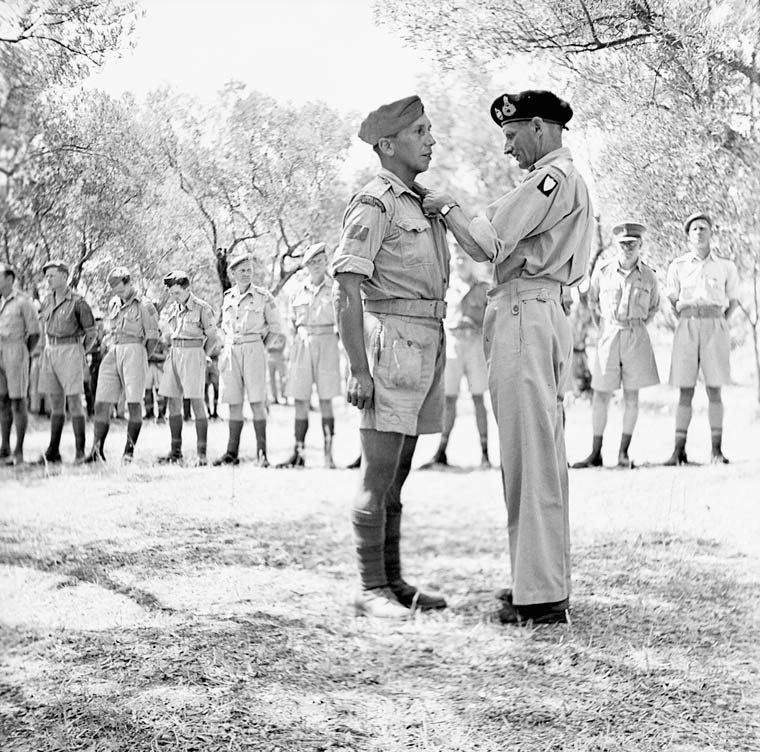
-
Memory Project Archive
Bessie Aileen Red Heaslip Strathdee (Primary Source)
Bessie Aileen Red Heaslip Strathdee served in the Royal Canadian Air Force during the Second World War. Read and listen to her testimony below. Please be advised that Memory Project primary sources may deal with personal testimony that reflect the speaker’s recollections and interpretations of events. Individual testimony does not necessarily reflect the views of the Memory Project and Historica Canada.
"https://d3d0lqu00lnqvz.cloudfront.net/The-Memory-Project/image/3191_original.jpg" // resources/views/front/categories/view.blade.php
https://d3d0lqu00lnqvz.cloudfront.net/The-Memory-Project/image/3191_original.jpg
-
Memory Project Archive
Ian Mair (Primary Source)
Mr. Mair fought with the Royal Marines during the Second World War. See below for his full testimony on the Sicilian Campaign. Please be advised that Memory Project primary sources may deal with personal testimony that reflect the speaker’s recollections and interpretations of events. Individual testimony does not necessarily reflect the views of the Memory Project and Historica Canada. Find a related article on Mr. Mair's experience during D-Day.
"https://d3d0lqu00lnqvz.cloudfront.net/The-Memory-Project/image/1337_600.jpg" // resources/views/front/categories/view.blade.php
https://d3d0lqu00lnqvz.cloudfront.net/The-Memory-Project/image/1337_600.jpg