
Browse "Historic Sites"
-
Article
Ward Effigy Archaeological Site
The Ward Effigy Archaeological Site (Borden No. EfPf-16) is located immediately north of the Siksika Nation reserve, about 100 km east of Calgary, Alberta.
"https://d3d0lqu00lnqvz.cloudfront.net/media/media/5ec4da46-ab78-4295-8399-a789f3ae1350.jpg" // resources/views/front/categories/view.blade.php
https://d3d0lqu00lnqvz.cloudfront.net/media/media/5ec4da46-ab78-4295-8399-a789f3ae1350.jpg
-
Article
Wile Carding Mill
Wile Carding Mill was established in BRIDGEWATER, NS, in 1860 and operated for over a century. In the 19th century the area around Bridgewater was an important sheep-rearing district and area farmers used the mill for carding and batting their wool. The wool was then spun or woven by farm families.
"https://thecanadianencyclopedia.ca/images/tce_placeholder.jpg?v=e9dca980c9bdb3aa11e832e7ea94f5d9" // resources/views/front/categories/view.blade.php
https://thecanadianencyclopedia.ca/images/tce_placeholder.jpg?v=e9dca980c9bdb3aa11e832e7ea94f5d9
-
Article
Wilfrid Laurier House National Historic Site of Canada
Built in 1876 in Arthabaska, Québec, this Victorian Italianate house was the personal residence of Sir Wilfrid Laurier (1841–1919). A leading national figure of his time, Laurier was the first French Canadian to become prime minister of Canada (1896 to 1911). Recognized as a National Historic Site of Canada in 1999, the house is now a museum dedicated to his memory.
"https://d3d0lqu00lnqvz.cloudfront.net/media/media/bfaa8646-486c-430f-9b6e-784a5a0488df.jpg" // resources/views/front/categories/view.blade.php
https://d3d0lqu00lnqvz.cloudfront.net/media/media/bfaa8646-486c-430f-9b6e-784a5a0488df.jpg
-
Article
Woodland Cultural Centre
The Association of Iroquois and Allied Indians (AIAI), a provincial/territorial First Nations organization in Ontario, founded the Woodland Indian Cultural Education Centre (now Woodland Cultural Centre [WCC]) in 1972. The WCC works “to preserve, promote and strengthen Indigenous language, culture, art and history; bringing the story of the Hodinohsho:ni people of the Eastern Woodlands to life through innovative exhibitions and programs.” The WCC’s board of directors includes community members from the Six Nations of the Grand River First Nation, Mohawks of the Bay of Quinte (Tyendinaga Mohawk Territory) and Wahta Mohawks. The WCC was established by repurposing the Mohawk Institute, Canada’s first Indian residential school, following its closure. In 2014, the WCC launched its Save the Evidence campaign to restore the Mohawk Institute. This effort culminated in the substantial renovation and unveiling of the Mohawk Institute on 30 September 2025, Canada’s National Day for Truth and Reconciliation.
"https://d3d0lqu00lnqvz.cloudfront.net/WoodlandCulturalCentre/Woodland-Cultural-Centre_resized.jpg" // resources/views/front/categories/view.blade.php
https://d3d0lqu00lnqvz.cloudfront.net/WoodlandCulturalCentre/Woodland-Cultural-Centre_resized.jpg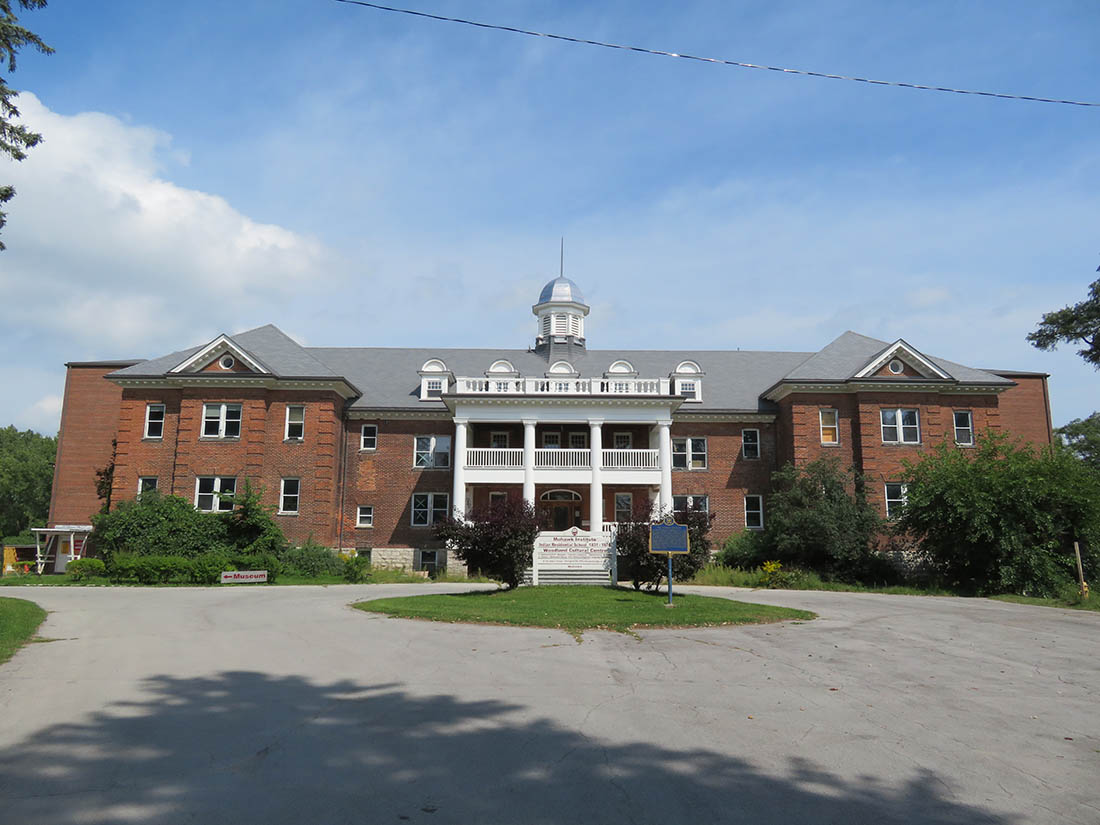
-
Article
Áísínai’pi (Writing-on-Stone)
Áísínai’pi is the location of thousands of rock art images in Writing-on-Stone Provincial Park in southern Alberta. In the Blackfoot language Áísínai’pi means “it is pictured” or “it is written.” Painted and carved onto sandstone cliffs, most of the art was created by the Siksikaitsitapi (Blackfoot Nation) around 1050 BCE. Taken together, these images represent the largest concentration of Indigenous rock art in the North American plains. Áísínai’pi was designated a National Historic Site in 2004, and a UNESCO World Heritage Site in 2019.
"https://d3d0lqu00lnqvz.cloudfront.net/media/new_article_images/WritingOnStoneProvincialPark/48208326871_e9ef42fa43_h.jpg" // resources/views/front/categories/view.blade.php
https://d3d0lqu00lnqvz.cloudfront.net/media/new_article_images/WritingOnStoneProvincialPark/48208326871_e9ef42fa43_h.jpg
-
Article
York Factory
York Factory, also known as York Fort, Fort Bourbon by the French, and Kischewaskaheegan by some Indigenous people, was a trading post on the Hayes River near its outlet to Hudson Bay, in what is now Manitoba. During its life, it served as a post and later as a major administrative centre in the Hudson’s Bay Company’s fur trade network. It also bore witness to the largest naval battle to take place in Arctic Canada, the Battle of Hudson Bay in 1697.
"https://d3d0lqu00lnqvz.cloudfront.net/YorkFactory1853.jpg" // resources/views/front/categories/view.blade.php
https://d3d0lqu00lnqvz.cloudfront.net/YorkFactory1853.jpg