Browse "Buildings & Monuments"
-
Article
LaHave
LaHave, NS, Unincorporated Place. LaHave is located at the mouth of the LaHave River, 11 km southwest of Lunenburg. The Mi'kmaq call it Pijelooeekak ("having long points"). In 1604, Pierre Du Gua de Monts gave the name La Hève to the nearby cape.
"https://d3d0lqu00lnqvz.cloudfront.net/lahave/LaHave-ferry.jpg" // resources/views/front/categories/view.blade.php
https://d3d0lqu00lnqvz.cloudfront.net/lahave/LaHave-ferry.jpg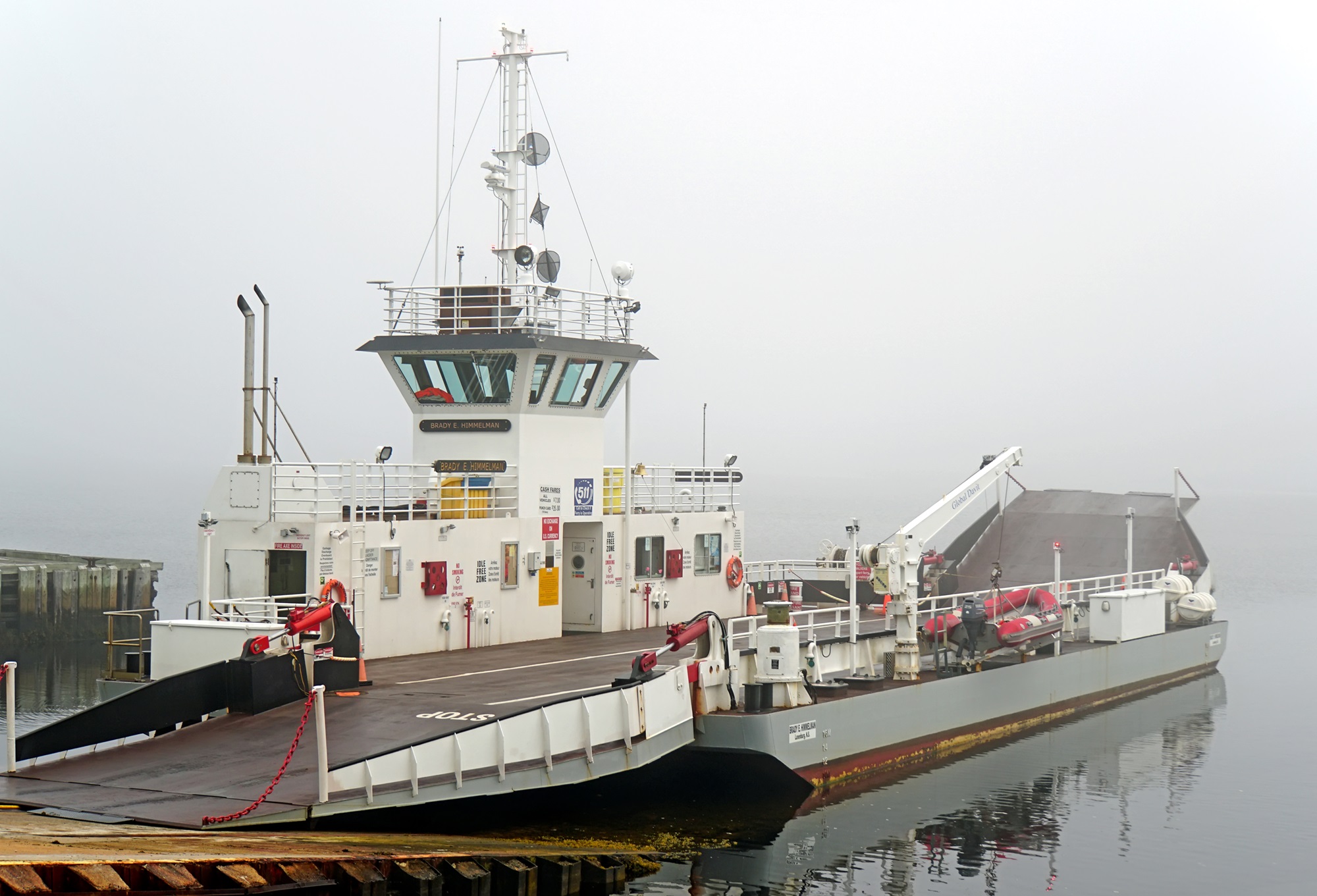
-
Article
Château Ramezay
Château Ramezay, in Old Montréal, was the first building to be designated a historic monument by the government of Québec, in 1929. Recognized as a National Historic Site of Canada in 1949, it is now a museum with permanent collections and temporary exhibits where visitors can learn about over 500 years of Montréal’s history.
"https://d3d0lqu00lnqvz.cloudfront.net/media/media/0e53d9e8-0dcd-402a-ae45-4a6207d2455e.jpg" // resources/views/front/categories/view.blade.php
https://d3d0lqu00lnqvz.cloudfront.net/media/media/0e53d9e8-0dcd-402a-ae45-4a6207d2455e.jpg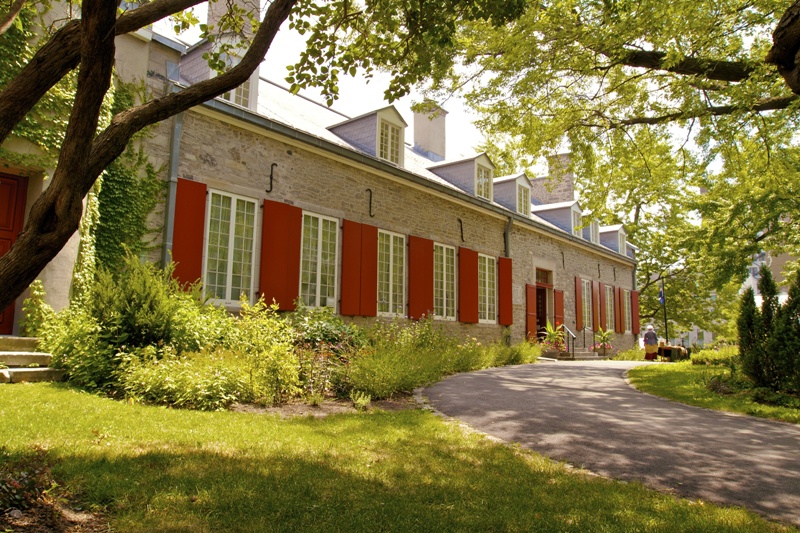
-
Article
Massey Hall
Known as “Canada’s Carnegie Hall,” Massey Hall is Canada’s oldest and most venerated concert hall. It opened in 1894 and was the home of the Toronto Symphony Orchestra and the Toronto Mendelssohn Choir until 1982. The site of many historic events and performances, it has been repeatedly voted Canada’s best live music venue over 1,500 seats and venue of the year by Canadian music industry associations. It is a National Historic Site and a heritage site in the City of Toronto. It was closed between 2 July 2018 and 24 November 2021 to allow for a $184-million renovation.
"https://d3d0lqu00lnqvz.cloudfront.net/media/media/ecd2d12a-f99b-4129-b278-e7cd6edb3318.jpg" // resources/views/front/categories/view.blade.php
https://d3d0lqu00lnqvz.cloudfront.net/media/media/ecd2d12a-f99b-4129-b278-e7cd6edb3318.jpg
-
Article
McMichael Canadian Art Collection
The McMichael Canadian Art Collection is the only public art gallery in the country that is solely devoted to Canadian art.
"https://d3d0lqu00lnqvz.cloudfront.net/media/media/18c8ebdf-0628-4594-a4e1-e1b349ae6736.jpg" // resources/views/front/categories/view.blade.php
https://d3d0lqu00lnqvz.cloudfront.net/media/media/18c8ebdf-0628-4594-a4e1-e1b349ae6736.jpg
-
Article
Mechanics' Hall (Toronto)
Mechanics’ Hall was a concert hall on the ground floor of Toronto’s Mechanics’ Institute at the corner of Church and Adelaide streets.
"https://thecanadianencyclopedia.ca/images/tce_placeholder.jpg?v=e9dca980c9bdb3aa11e832e7ea94f5d9" // resources/views/front/categories/view.blade.php
https://thecanadianencyclopedia.ca/images/tce_placeholder.jpg?v=e9dca980c9bdb3aa11e832e7ea94f5d9
-
Article
Mechanics' Hall (Montréal)
Mechanics' Hall/Salle des artisans was an assembly hall at Montréal’s Mechanics’ Institute, which opened in 1855 at the corner of what are now Saint-Pierre and Saint-Jacques streets.
"https://thecanadianencyclopedia.ca/images/tce_placeholder.jpg?v=e9dca980c9bdb3aa11e832e7ea94f5d9" // resources/views/front/categories/view.blade.php
https://thecanadianencyclopedia.ca/images/tce_placeholder.jpg?v=e9dca980c9bdb3aa11e832e7ea94f5d9
-
Article
Montmorency
The Montmorency Manoir, built in 1781 by Frederick HALDIMAND, governor general in chief of Canada, was inhabited 1791-94 by the duke of Kent, father of Queen Victoria. First known as the "Kent House," it suffered a devastating fire in 1993 but was rebuilt by the following year.
"https://thecanadianencyclopedia.ca/images/tce_placeholder.jpg?v=e9dca980c9bdb3aa11e832e7ea94f5d9" // resources/views/front/categories/view.blade.php
https://thecanadianencyclopedia.ca/images/tce_placeholder.jpg?v=e9dca980c9bdb3aa11e832e7ea94f5d9
-
Article
Montreal Arena/Aréna de Montréal
Montreal Arena/Aréna de Montréal. Covered amphitheatre, intended mainly for sporting events and horse-shows and erected in 1898 on Ste-Catherine St West at the corner of Wood Avenue.
"https://thecanadianencyclopedia.ca/images/tce_placeholder.jpg?v=e9dca980c9bdb3aa11e832e7ea94f5d9" // resources/views/front/categories/view.blade.php
https://thecanadianencyclopedia.ca/images/tce_placeholder.jpg?v=e9dca980c9bdb3aa11e832e7ea94f5d9
-
Article
Montreal Museum of Fine Arts
Canada’s oldest and one of its most important arts institutions, the Montreal Museum of Fine Arts (Musée des beaux-arts de Montréal) has been guided by a commitment to attract people from all walks of life. Established in 1847, originally under the name of Montreal Society of Artists, it became the Art Association of Montreal in 1860. In 1948-49, the association formed a new corporation under its present name. In 1972, it became a semipublic institution, largely funded by grants from different government levels.
"https://d3d0lqu00lnqvz.cloudfront.net/media/media/3aba2370-a77d-4c09-985f-f9173037b949.jpg" // resources/views/front/categories/view.blade.php
https://d3d0lqu00lnqvz.cloudfront.net/media/media/3aba2370-a77d-4c09-985f-f9173037b949.jpg
-
Article
Montreal Olympic Stadium
Primary venue of the 1976 Summer Olympics. Montreal’s Olympic Stadium is a massive, monumental, multisport complex. It serves as the largest covered amphitheatre and sports venue in Quebec and is also the largest stadium in Canada. (See Sports Facilities.) It has a permanent seating capacity of 56,000. The stadium is integrated into the Montreal Tower (the world’s tallest inclined tower), the Olympic Pool and the former Velodrome — today, the Biodome. The stadium is often referred to as the Big O by Anglo-Montrealers. The Olympic Stadium sits at the centre of the Olympic Park complex. The complex is itself located in the middle of a sprawling collection of sports facilities, attractions, venues and museums in Montreal’s East End.
"https://d3d0lqu00lnqvz.cloudfront.net/media/media/36596ad8-19a5-4395-84f8-5466225bbdaf.jpg" // resources/views/front/categories/view.blade.php
https://d3d0lqu00lnqvz.cloudfront.net/media/media/36596ad8-19a5-4395-84f8-5466225bbdaf.jpg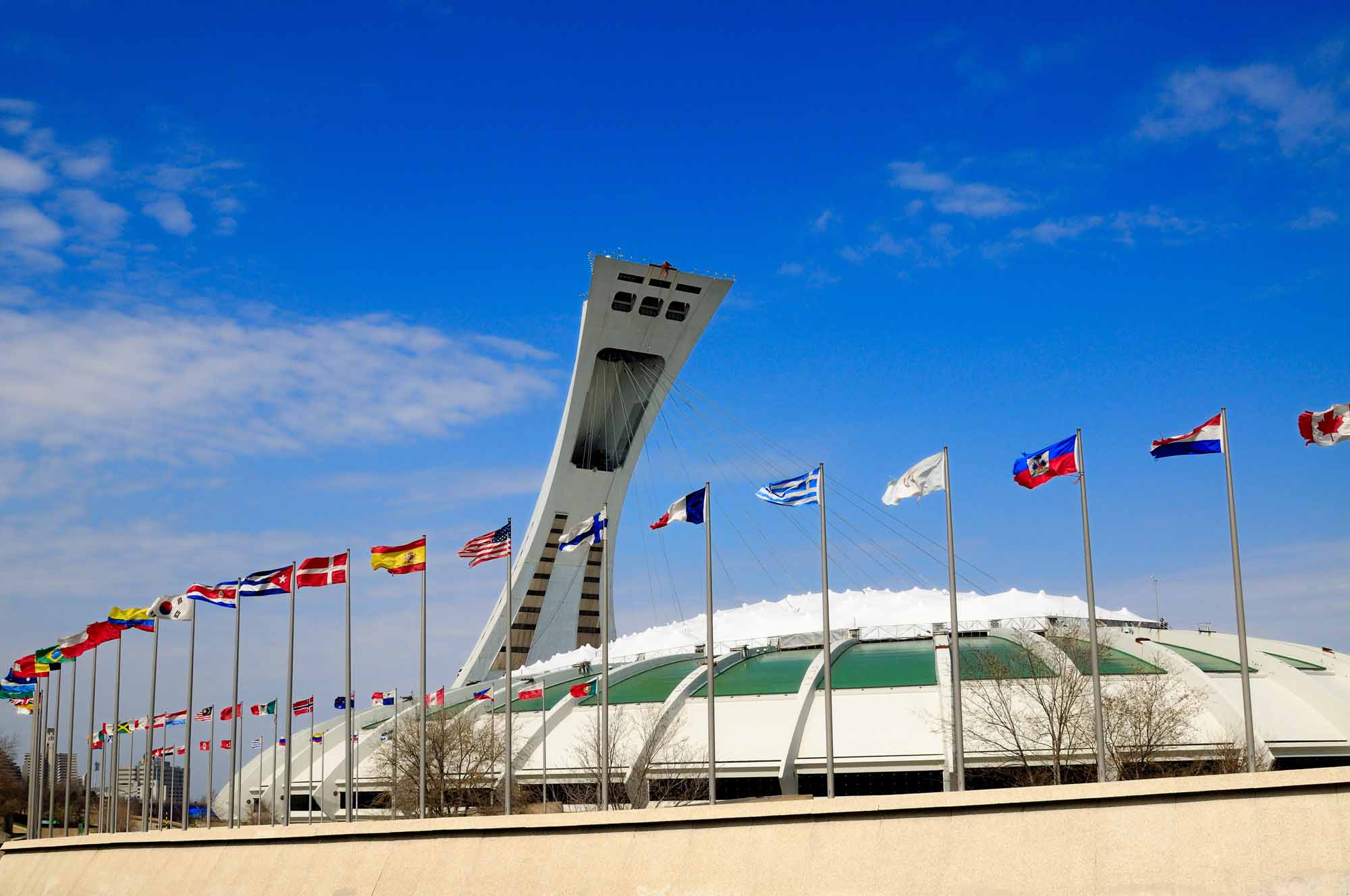
-
Article
Montréal Planetarium
Montréal’s Rio Tinto Alcan Planetarium is part of the Space for Life complex, which includes Montréal’s Biodome, Insectarium and Botanical Gardens. Space for Life is the largest natural science museum complex in Canada.
"https://d3d0lqu00lnqvz.cloudfront.net/media/media/ff14a3e3-5cf6-4523-84eb-f66716e9bb0c.JPG" // resources/views/front/categories/view.blade.php
https://d3d0lqu00lnqvz.cloudfront.net/media/media/ff14a3e3-5cf6-4523-84eb-f66716e9bb0c.JPG
-
Article
Monument
A monument is normally a freestanding, large-scale structure, often artistically embellished, which has as its primary function the commemoration of persons, events or concepts believed to have sufficient importance to merit a public, visible and permanent tribute.
"https://d3d0lqu00lnqvz.cloudfront.net/media/media/dfb21f51-d625-42ea-97e7-a7b4c5b6fb0c.jpg" // resources/views/front/categories/view.blade.php
https://d3d0lqu00lnqvz.cloudfront.net/media/media/dfb21f51-d625-42ea-97e7-a7b4c5b6fb0c.jpg
-
Article
Monument-National
Its 1620-seat theatre, which boasted an orchestra pit, was inaugurated in 1893 while still uncompleted. In the ensuing years it welcomed innumerable solo artists, opera companies, and other musical troupes and ensembles.
"https://d3d0lqu00lnqvz.cloudfront.net/media/media/2f04ca39-ea90-44c3-9c7e-08d4087df26f.jpg" // resources/views/front/categories/view.blade.php
https://d3d0lqu00lnqvz.cloudfront.net/media/media/2f04ca39-ea90-44c3-9c7e-08d4087df26f.jpg
-
Article
Monuments of the First and Second World Wars
Since the end of the First World War, monuments commemorating the lives of Canadians who died in conflicts overseas have occupied a prominent place in our urban cultural landscape. Most were erected in the 1920s and 1930s and represent a commitment never to forget Canadian lives sacrificed in the First World War. The Second World War's claims on Canadian lives reinforced this commitment. In an era when few monuments to contemporary national heroes or great historical events are erected, war monuments retain their capacity to erase time and preserve a memory of those who died for their country.
"https://d3d0lqu00lnqvz.cloudfront.net/media/media/162485bf-95f4-4d5c-a699-2dec659d831e.jpg" // resources/views/front/categories/view.blade.php
https://d3d0lqu00lnqvz.cloudfront.net/media/media/162485bf-95f4-4d5c-a699-2dec659d831e.jpg
-
Article
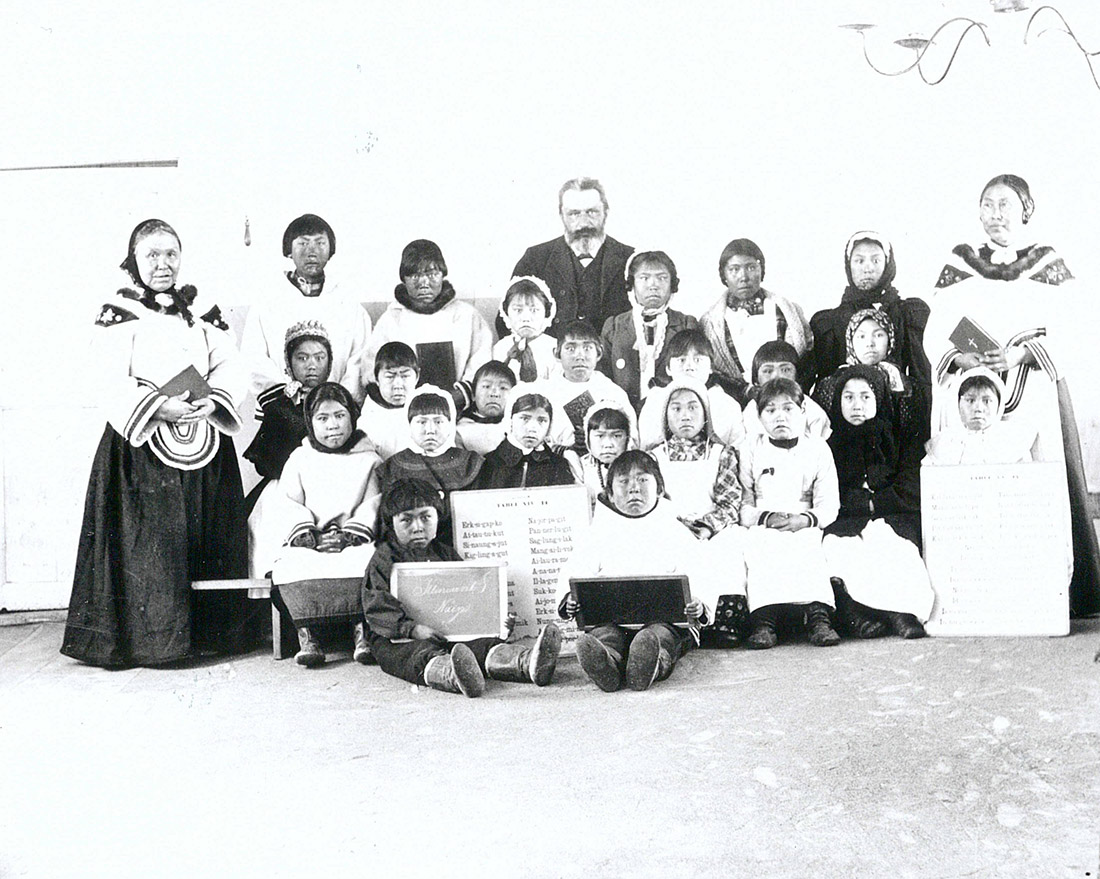
Moravian Missions in Labrador
In 1771, Moravian missionaries were the first Europeans to settle in Labrador. Over a 133-year period, they established a series of eight missions along the coast which became the focus of religious, social and economic activities for the Inuit who gradually came to settle near the communities. Moravians had a huge impact on the life and culture of Labrador Inuit. What emerged was a unique culture rooted in Inuit traditions with indigenized European practices. The last Moravian missionary left Labrador in 2005, but the Moravian church, its customs and traditions are still very much alive in Labrador.
"https://d3d0lqu00lnqvz.cloudfront.net/media/new_article_images/MoravianMissionsinCanada/Eine-Schulergrupper-in-Nain-Resized.jpg" // resources/views/front/categories/view.blade.php
https://d3d0lqu00lnqvz.cloudfront.net/media/new_article_images/MoravianMissionsinCanada/Eine-Schulergrupper-in-Nain-Resized.jpg