
Browse "People"
-
List
Canadians in Space
In 1983, the National Research Council of Canada created the Canadian Astronaut Program (now run by the Canadian Space Agency (CSA)). Since the first recruitment campaign in 1983, 14 Canadians have completed astronaut training and 10 have participated in missions to space (see Canadian Astronauts). A minority of Canadians have joined orbital or suborbital flights as citizen-astronauts or space tourists. The following list includes information about Canadians who have travelled to space as astronauts, citizen-astronauts or space tourists.
"https://d3d0lqu00lnqvz.cloudfront.net/media/media/10fef17c-ad18-43fc-90fc-db8d1389629a.jpg" // resources/views/front/categories/view.blade.php
https://d3d0lqu00lnqvz.cloudfront.net/media/media/10fef17c-ad18-43fc-90fc-db8d1389629a.jpg
-
Macleans
Canadians Succeed in Animation
This article was originally published in Maclean’s magazine on June 24, 1996. Partner content is not updated. In his blue smoking jacket, white sneakers and sandy-grey muttonchop whiskers, Clive Smith bears an eerie resemblance to one of his company's own creations.
"https://thecanadianencyclopedia.ca/images/tce_placeholder.jpg?v=e9dca980c9bdb3aa11e832e7ea94f5d9" // resources/views/front/categories/view.blade.php
https://thecanadianencyclopedia.ca/images/tce_placeholder.jpg?v=e9dca980c9bdb3aa11e832e7ea94f5d9
-
Article
Canadians in the All-American Girls Professional Baseball League (AAGPBL)
The All-American Girls Professional Baseball League (AAGPBL) operated between 1943 and 1954. A total of 68 Canadian women from six provinces signed contracts to play on the circuit. It was later immortalized by the Hollywood movie A League of Their Own (1992). Canadian players were among the best pitchers and hitters in the league. Mary “Bonnie” Baker starred on the field and appeared on the league’s behalf on TV and in magazines. Helen Fox led the league as a pitcher, Eleanor Callow was the league’s all-time best power hitter and Helen (Callaghan) Candaele St. Aubin was known as “the feminine Ted Williams.” The Canadians who played in the AAGPBL were inducted as a group into the Canadian Baseball Hall of Fame and Museum in 1998. Candaele St. Aubin was inducted individually in 2021.
"https://d3d0lqu00lnqvz.cloudfront.net/All-American_Girls_Professional_Baseball_League_circa_1945.jpg" // resources/views/front/categories/view.blade.php
https://d3d0lqu00lnqvz.cloudfront.net/All-American_Girls_Professional_Baseball_League_circa_1945.jpg
-
Article
CANO
CANO. Franco-Ontarian folk-pop collective, active 1975-85. The founding musicians were members of the Coopérative des artistes du Nouvel Ontario (CANO), an agricultural and artistic commune established in Sudbury in 1970.
"https://thecanadianencyclopedia.ca/images/tce_placeholder.jpg?v=e9dca980c9bdb3aa11e832e7ea94f5d9" // resources/views/front/categories/view.blade.php
https://thecanadianencyclopedia.ca/images/tce_placeholder.jpg?v=e9dca980c9bdb3aa11e832e7ea94f5d9
-
Article
Cantata Singers of Ottawa
Cantata Singers of Ottawa. Mixed 45-voice choir founded in 1964 by conductor Gerald Wheeler. Brian Law succeeded Wheeler in 1965 and gradually increased the choir's membership from its original 16.
"https://thecanadianencyclopedia.ca/images/tce_placeholder.jpg?v=e9dca980c9bdb3aa11e832e7ea94f5d9" // resources/views/front/categories/view.blade.php
https://thecanadianencyclopedia.ca/images/tce_placeholder.jpg?v=e9dca980c9bdb3aa11e832e7ea94f5d9
-
Article
Canuck
“Canuck” is a nickname for a Canadian — sometimes bearing a negative implication, more often wielded with pride. It goes back at least as far as the 1830s, and its meaning has changed over time. The word “Canuck” may be most familiar today as the name of a National Hockey League franchise, the Vancouver Canucks (see British Columbia). In the 20th century, the term enjoyed a much broader use.
"https://d3d0lqu00lnqvz.cloudfront.net/media/Twitter_Cards/johnny cannuck.jpg" // resources/views/front/categories/view.blade.php
https://d3d0lqu00lnqvz.cloudfront.net/media/Twitter_Cards/johnny cannuck.jpg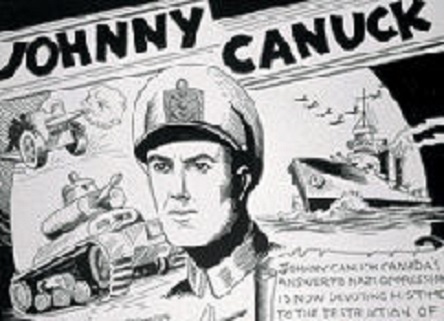
-
Article
Cap Fear
Alfred Henry Fear, "Cap," football player (b at Old Sailbury, Eng 11 June 1901; d at St Catharines, Ont 12 Feb 1978).
"https://thecanadianencyclopedia.ca/images/tce_placeholder.jpg?v=e9dca980c9bdb3aa11e832e7ea94f5d9" // resources/views/front/categories/view.blade.php
https://thecanadianencyclopedia.ca/images/tce_placeholder.jpg?v=e9dca980c9bdb3aa11e832e7ea94f5d9
-
Article
Cara Gee
Cara Gee, actor (born 18 July 1983 in Calgary, AB). Ojibwe actor Cara Gee started out in notable Toronto theatre productions before receiving an American Indian Movie Award and a Canadian Screen Award nomination for her lead role in the First Nations drama Empire of Dirt (2013). She then starred in CBC’s Strange Empire (2014–15) and Disney’s The Call of The Wild (2020). She is perhaps best known for her role as Camina Drummer on the popular science fiction series The Expanse (2015–22).
"https://d3d0lqu00lnqvz.cloudfront.net/Cara_Gee_-13-_38017549002_1.jpg" // resources/views/front/categories/view.blade.php
https://d3d0lqu00lnqvz.cloudfront.net/Cara_Gee_-13-_38017549002_1.jpg
-
Article
Cardo Smalley
Smalley, Cardo (Brooks). Violinist, violist, conductor, b London 13 Mar 1910, d Victoria, BC, 15 Sep 1977. He studied in Port Arthur (Thunder Bay), Ont, with his father, B.
"https://thecanadianencyclopedia.ca/images/tce_placeholder.jpg?v=e9dca980c9bdb3aa11e832e7ea94f5d9" // resources/views/front/categories/view.blade.php
https://thecanadianencyclopedia.ca/images/tce_placeholder.jpg?v=e9dca980c9bdb3aa11e832e7ea94f5d9
-
Article
Carey Price
Carey Price, hockey player (born 16 August 1987 in Vancouver, BC). Goaltender Carey Price has played his entire National Hockey League (NHL) career with the Montreal Canadiens. Following the 2014–15 NHL season, Price won the Hart Memorial Trophy, Ted Lindsay Award, Vezina Trophy and William M. Jennings Trophy and became the first player to win all four awards in the same season. In international competition, Price won gold medals with Canada at the 2007 IIHF Ice Hockey Junior World Championship in Sweden, the 2014 Olympic Winter Games in Sochi and the 2016 World Cup of Hockey in Toronto.
"https://d3d0lqu00lnqvz.cloudfront.net/media/media/bc8572b5-e4e8-47d7-bb78-2d66c27757a2.jpg" // resources/views/front/categories/view.blade.php
https://d3d0lqu00lnqvz.cloudfront.net/media/media/bc8572b5-e4e8-47d7-bb78-2d66c27757a2.jpg
-
Article
Caribbean Canadians
People from the Caribbean region began to settle in Canada in the late 18th century (see Jamaican Maroons in Nova Scotia and Black Canadians). In the 2016 census, 749,155 Canadians reported that they originated from the Caribbean, and most have immigrated to Canada since the 1970s.
"https://d3d0lqu00lnqvz.cloudfront.net/media/media/75602bde-4a29-4c06-b05c-bda4187ceb0b.jpg" // resources/views/front/categories/view.blade.php
https://d3d0lqu00lnqvz.cloudfront.net/media/media/75602bde-4a29-4c06-b05c-bda4187ceb0b.jpg
-
Article
Caribbean Music in Canada
Caribbean music is an important component of musical life in Canada on two grounds: firstly, significant numbers of Caribbean peoples have immigrated to Canada, particularly beginning in the 1960s, and have continued the musical traditions of their homelands in the new environment; and secondly as early as the 1920s successive styles of Caribbean-derived music began to form part of the fabric of Euro-American pop music and thus part of the musical experience of many Canadians over the years.
"https://thecanadianencyclopedia.ca/images/tce_placeholder.jpg?v=e9dca980c9bdb3aa11e832e7ea94f5d9" // resources/views/front/categories/view.blade.php
https://thecanadianencyclopedia.ca/images/tce_placeholder.jpg?v=e9dca980c9bdb3aa11e832e7ea94f5d9
-
Article
Kivallirmiut (Caribou Inuit)
The name “Caribou Inuit” stemmed from Europeans who took part in the Fifth Danish Thule Expedition (1921–24) and observed that the Kivallirmiut relied on caribou for food, clothing and shelter. Based on recent estimates, the Kivallirmiut today number about 3,000.
"https://d3d0lqu00lnqvz.cloudfront.net/media/media/d8c8c01c-6b29-4d24-bc35-05645ca9a904.jpg" // resources/views/front/categories/view.blade.php
https://d3d0lqu00lnqvz.cloudfront.net/media/media/d8c8c01c-6b29-4d24-bc35-05645ca9a904.jpg
-
Article
Carl Beam
Carl Beam (Carl Edward Migwans), artist (born 24 May 1943 in West Bay, Manitoulin Island, ON [now M’Chigeeng First Nation]; died 30 July 2005 in M’Chigeeng First Nation). The first contemporary Indigenous artist whose work was acquired by the National Gallery of Canada, Beam was one of Canada’s most ground-breaking Indigenous artists. (See also Contemporary Indigenous Art in Canada.)
"https://thecanadianencyclopedia.ca/images/tce_placeholder.jpg?v=e9dca980c9bdb3aa11e832e7ea94f5d9" // resources/views/front/categories/view.blade.php
https://thecanadianencyclopedia.ca/images/tce_placeholder.jpg?v=e9dca980c9bdb3aa11e832e7ea94f5d9
-
Article
Carl Dair
Carl Dair, typographer, typographic designer, teacher, writer (b at Welland, Ont 14 Feb 1912; d on flight from New York C to Toronto 28 Sept 1967). Dair became interested in typesetting as a child and by age 18 was doing advertising and layouts for the Stratford Beacon-Herald.
"https://thecanadianencyclopedia.ca/images/tce_placeholder.jpg?v=e9dca980c9bdb3aa11e832e7ea94f5d9" // resources/views/front/categories/view.blade.php
https://thecanadianencyclopedia.ca/images/tce_placeholder.jpg?v=e9dca980c9bdb3aa11e832e7ea94f5d9