
Browse "People"
-
Article
Wolfgang Kater
Wolfgang Kater. Instrument builder and designer; b Drangstedt, Germany, 5 Jun 1946; B MUS (McGill) 1972. He came to Canada in 1953 and lived in Toronto until 1959, when he moved to Montreal.
"https://thecanadianencyclopedia.ca/images/tce_placeholder.jpg?v=e9dca980c9bdb3aa11e832e7ea94f5d9" // resources/views/front/categories/view.blade.php
https://thecanadianencyclopedia.ca/images/tce_placeholder.jpg?v=e9dca980c9bdb3aa11e832e7ea94f5d9
-
Article
Women and the Fur Trade
An Algonquin man declared to Jesuit missionary Paul Le Jeune in 1639: “To live among us without a wife is to live without help, without home and to be always wandering.” While the importance of having a home and wife may have been lost on the itinerant and celibate Jesuit priest, for many First Nations this quote evokes the social, economic and political advantages of marriages, especially in the context of the fur trade. Indigenous women’s labour produced and mended clothing, preserved meats, harvested maple sugar and root vegetables like turnips, trapped small game, netted fish and cultivated wild rice — all crucial survival and subsistence activities in the boreal forests, prairie parklands and northern plains of fur trade society. Through intraclan marriages (see Clan), First Nations women forged extended kin lineages, established social obligations and reciprocal ties, and negotiated for the access and use of common resources across a vast and interconnected Indigenous world. Marriages between different Indigenous villages, clans and nations shaped regional politics, fostered lateral marital alliances and created a geographically diverse and widespread kinship network throughout the Great Lakes- St. Lawrence River Basin, the Hudson Bay watershed, and the Pacific Slope (see Pacific Ocean and Canada.)
"https://d3d0lqu00lnqvz.cloudfront.net/WomenFurTrade/TrappersWifeCropped.jpg" // resources/views/front/categories/view.blade.php
https://d3d0lqu00lnqvz.cloudfront.net/WomenFurTrade/TrappersWifeCropped.jpg
-
Article
Women and the Indian Act
The Indian Act has affected Indigenous cultures, systems of governance, societies and ways of life since its enactment in 1876. Gender discrimination in the Act further disadvantaged First Nations women, in particular. Until 1985, women with Indian status who married someone without status lost their status rights. Men, on the other hand, did not lose Indian status in the same way. Even after Bill C-31 reinstated the status rights of many women in 1985, the Act still discriminated against women by privileging male lines of descent. Amendments in 2011 and 2017 sought to fix these issues. In 2019, the federal government brought into force the remaining part of Bill S-3, which is meant to address lingering sex-based inequities in the Indian Act. (See also Indigenous Women’s Issues.)
"https://d3d0lqu00lnqvz.cloudfront.net/WomenandIndianAct/LavellMcIvor.jpg" // resources/views/front/categories/view.blade.php
https://d3d0lqu00lnqvz.cloudfront.net/WomenandIndianAct/LavellMcIvor.jpg
-
Article
Women Doctors in the Second World War
During the Second World War, female physicians joined the Canadian armed forces for the first time as commissioned officers. These trailblazers received the same pay and had the same ranks as men. Female physicians served as anesthetists, bacteriologist and radiologists in hospitals, both at home and overseas. (See also Women in the Canadian Armed Forces and History of the Canadian Armed Forces.)
"https://d3d0lqu00lnqvz.cloudfront.net/Women-Doctors/Shirley-Fleming.jpg" // resources/views/front/categories/view.blade.php
https://d3d0lqu00lnqvz.cloudfront.net/Women-Doctors/Shirley-Fleming.jpg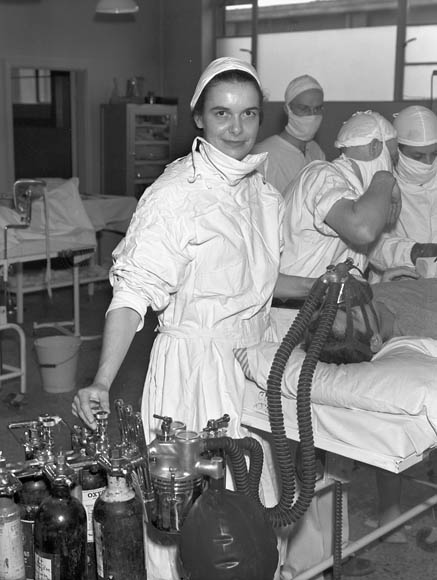
-
"https://d3d0lqu00lnqvz.cloudfront.net/TCE_placeholder.png" // resources/views/front/categories/view.blade.php
https://d3d0lqu00lnqvz.cloudfront.net/TCE_placeholder.png
-
Collection
Women in Canadian History
This collection brings together the biographies of a number of remarkable women in Canada.
"https://d3d0lqu00lnqvz.cloudfront.net/media/quizzes/Women-Military-Rettenbacher.jpg" // resources/views/front/categories/view.blade.php
https://d3d0lqu00lnqvz.cloudfront.net/media/quizzes/Women-Military-Rettenbacher.jpg
-
Collection
Women in STEM
This collection brings together the biographies of a number of remarkable women in the fields of science, technology, engineering and math.
"https://d3d0lqu00lnqvz.cloudfront.net/media/media/cce4c6dc-8b1d-48bb-b285-3ebf65f0bad0.jpg" // resources/views/front/categories/view.blade.php
https://d3d0lqu00lnqvz.cloudfront.net/media/media/cce4c6dc-8b1d-48bb-b285-3ebf65f0bad0.jpg
-
Article
Women in the Klondike Gold Rush
The Klondike Gold Rush of 1896–1899 drew about 100,000 people from around the world to the Klondike Region of Yukon. Women played a vital role in the gold rush, even though they are estimated to have made up no more than 10 per cent of Yukon’s population at the height of the stampede. While still responsible for both paid and unpaid domestic labour, women took on a variety of other roles in the Klondike, including prospecting, entrepreneurship, entertainment, sex work and nursing.
"https://d3d0lqu00lnqvz.cloudfront.net/WomenInTheKlondikeGoldRush/DanceHallGirl.jpg" // resources/views/front/categories/view.blade.php
https://d3d0lqu00lnqvz.cloudfront.net/WomenInTheKlondikeGoldRush/DanceHallGirl.jpg
-
Editorial
Women on Canadian Banknotes
The following article is an editorial written by The Canadian Encyclopedia staff. Editorials are not usually updated. Though Queen Elizabeth II has appeared on the $20 bill since she was eight years old, identifiable Canadian women have only appeared on a Canadian banknote once. In 2004, the statue of the Famous Five from Parliament Hill and Olympic Plaza in Calgary, and the medal for the Thérèse Casgrain Volunteer Award were featured on the back of the $50 note. They were the first Canadian women to appear on our currency. However, in 2011, they were replaced by an icebreaker named for a man (see Roald Amundsen). The new bill was part of a series of notes meant to highlight technical innovation and achievement, but the change sparked controversy. Other than the image of a nameless female scientist on the $100 note issued in 2011, and two female Canadian Forces officers and a young girl on the $10 bill issued in 2001 , Canadian women were absent from Canadian bills. On 8 March 2016, International Women’s Day, the Bank of Canada launched a public consultation to choose an iconic Canadian woman who would be featured on a banknote, released in the next series of bills in 2018. More than 26,000 submissions poured in. Of those, 461 names met the qualifying criteria, and the list was pared down to a long list of 12 and finally a short list of five. The final selection will be announced on 8 December 2016. But how did we get here?
"https://d3d0lqu00lnqvz.cloudfront.net/media/media/872b7e98-03f8-4457-85b8-5657ff4e4f65.jpg" // resources/views/front/categories/view.blade.php
https://d3d0lqu00lnqvz.cloudfront.net/media/media/872b7e98-03f8-4457-85b8-5657ff4e4f65.jpg
-
Article
Women's Suffrage in Canada (Plain-Language Summary)
Women’s suffrage means the right of women to vote in elections. Before Canada became a country in 1867, very few women had the right to vote. After 1867, no women had the right to vote. Only male property owners over the age of 21 had the right to vote. Women were not allowed to vote because most men believed that women should take care of the home and children. They should not get involved in politics. Politics was the realm of men. Another reason why most men did not think women should vote was that women were considered too emotional and could not serve in the military. (This article is a plain-language summary of Women’s Suffrage in Canada. If you are interested in reading about this topic in more depth, please see our full-length entry, Women’s Suffrage in Canada.)
"https://d3d0lqu00lnqvz.cloudfront.net/media/media/88bab6f6-366c-45d5-be02-092e23d46e97.jpg" // resources/views/front/categories/view.blade.php
https://d3d0lqu00lnqvz.cloudfront.net/media/media/88bab6f6-366c-45d5-be02-092e23d46e97.jpg
-
Article
Women’s Movements in Canada: 1960–85
Women’s movements (or, feminist movements) during the period 1960–85 — often referred to as second-wave feminism — included campaigns in support of peace and disarmament, equality in education and employment, birth control and an end to violence against women. This entry is the second of three histories of women’s movements in Canada. See also, Early Women’s Movements in Canada: 1867–1960 and Women’s Movements in Canada: 1985–Present.
"https://thecanadianencyclopedia.ca/images/tce_placeholder.jpg?v=e9dca980c9bdb3aa11e832e7ea94f5d9" // resources/views/front/categories/view.blade.php
https://thecanadianencyclopedia.ca/images/tce_placeholder.jpg?v=e9dca980c9bdb3aa11e832e7ea94f5d9
-
Timelines
Women's Suffrage
Women in Canada obtained the right to vote in a sporadic fashion. Federal authorities granted them the franchise in 1918, more than two years after the women of Manitoba became the first to vote at the provincial level.
"https://d3d0lqu00lnqvz.cloudfront.net/media/media/88bab6f6-366c-45d5-be02-092e23d46e97.jpg" // resources/views/front/categories/view.blade.php
https://d3d0lqu00lnqvz.cloudfront.net/media/media/88bab6f6-366c-45d5-be02-092e23d46e97.jpg
-
Timelines
Women's Suffrage in Atlantic Canada
"https://d3d0lqu00lnqvz.cloudfront.net/media/media/88bab6f6-366c-45d5-be02-092e23d46e97.jpg" // resources/views/front/categories/view.blade.php
https://d3d0lqu00lnqvz.cloudfront.net/media/media/88bab6f6-366c-45d5-be02-092e23d46e97.jpg
-
Collection
Women's Suffrage in Canada
Women’s suffrage (or franchise) is the right of women to vote in political elections; campaigns for this right generally included demand for the right to run for public office. The women’s suffrage movement was a decades-long struggle intended to address fundamental issues of equity and justice and to improve the lives of Canadians.
"https://d3d0lqu00lnqvz.cloudfront.net/media/media/569d6d96-ffeb-485f-aa88-98b968b29e2a.jpg" // resources/views/front/categories/view.blade.php
https://d3d0lqu00lnqvz.cloudfront.net/media/media/569d6d96-ffeb-485f-aa88-98b968b29e2a.jpg
-
Timelines
Women's Suffrage in the North
"https://d3d0lqu00lnqvz.cloudfront.net/media/media/8729a985-df0a-46bb-ad1f-35c35fa3cb1c.jpg" // resources/views/front/categories/view.blade.php
https://d3d0lqu00lnqvz.cloudfront.net/media/media/8729a985-df0a-46bb-ad1f-35c35fa3cb1c.jpg