
Browse "People"
-
Article
Tupiq
Historically, Inuit used a simple tent, known as a tupiq (the plural form is tupiit), while travelling or hunting during the summer months. Today, the traditional tupiq is rarely used (because modern variations have largely replaced it), but some Inuit elders and communities are working to keep the tupiq, and other Inuit traditions, alive. (See also Architectural History of Indigenous Peoples in Canada.)
"https://d3d0lqu00lnqvz.cloudfront.net/Tupiq/InuitFamilyTupiq1915.JPG" // resources/views/front/categories/view.blade.php
https://d3d0lqu00lnqvz.cloudfront.net/Tupiq/InuitFamilyTupiq1915.JPG
-
Article
Tutchone
Tutchone are an Indigenous peoples in Yukon (see also First Nations in Yukon). Their homeland is the vast plateau dissected by the Alsek and Yukon River headwaters, flanked on the southwest by the Coastal and St Elias mountains and on the northeast by the Selwyn range.
"https://d3d0lqu00lnqvz.cloudfront.net/media/media/7d2699bc-260f-4b3e-b27a-f0d430e23030.jpg" // resources/views/front/categories/view.blade.php
https://d3d0lqu00lnqvz.cloudfront.net/media/media/7d2699bc-260f-4b3e-b27a-f0d430e23030.jpg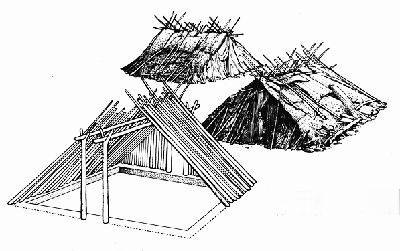
-
List
Twenty Pioneering Newspaperwomen in Canada
Did you know that Canadian women, like writer and suffragist Emily Murphy, have been writing and working for newspapers since the 19th century? The following 20 Canadian newspaperwomen include the first Black woman in North America to publish and edit a newspaper, the first female war correspondent in North America and the first female French-Canadian journalist. Others were literary and drama critics, sports journalists, agricultural writers and editors. Many wrote or edited “women’s pages,” which covered not only recipes, fashion and homemaking tips but also the women’s movement, among other issues. Several were founding members of the Canadian Women’s Press Club (1904).
"https://d3d0lqu00lnqvz.cloudfront.net/media/media/kit-coleman-tweet2.jpg" // resources/views/front/categories/view.blade.php
https://d3d0lqu00lnqvz.cloudfront.net/media/media/kit-coleman-tweet2.jpg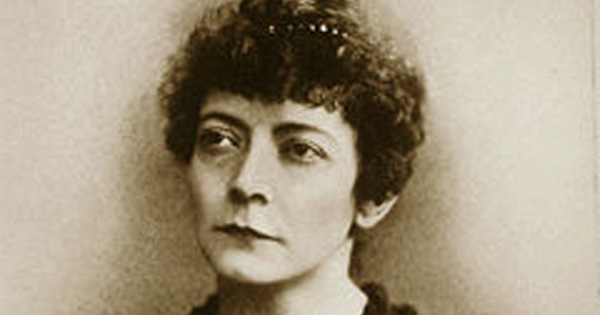
-
Article
Two-Spirit
Two-Spirit, a translation of the Anishinaabemowin term niizh manidoowag, refers to a person who embodies both a masculine and feminine spirit. The concept of two-spirit was first introduced by Elder Myra Laramee. Activist Albert McLeod helped develop the term in 1990 to broadly reference Indigenous peoples in the lesbian, gay, bisexual, transgender and queer (LGBTQ) community. Two-spirit is used by some Indigenous peoples to describe their gender, sexual and spiritual identity. (See also 2SLGBTQ+ Rights in Canada.)
"https://d3d0lqu00lnqvz.cloudfront.net/TwoSpirit/TwoSpiritCanadaPostStamp_resized.jpg" // resources/views/front/categories/view.blade.php
https://d3d0lqu00lnqvz.cloudfront.net/TwoSpirit/TwoSpiritCanadaPostStamp_resized.jpg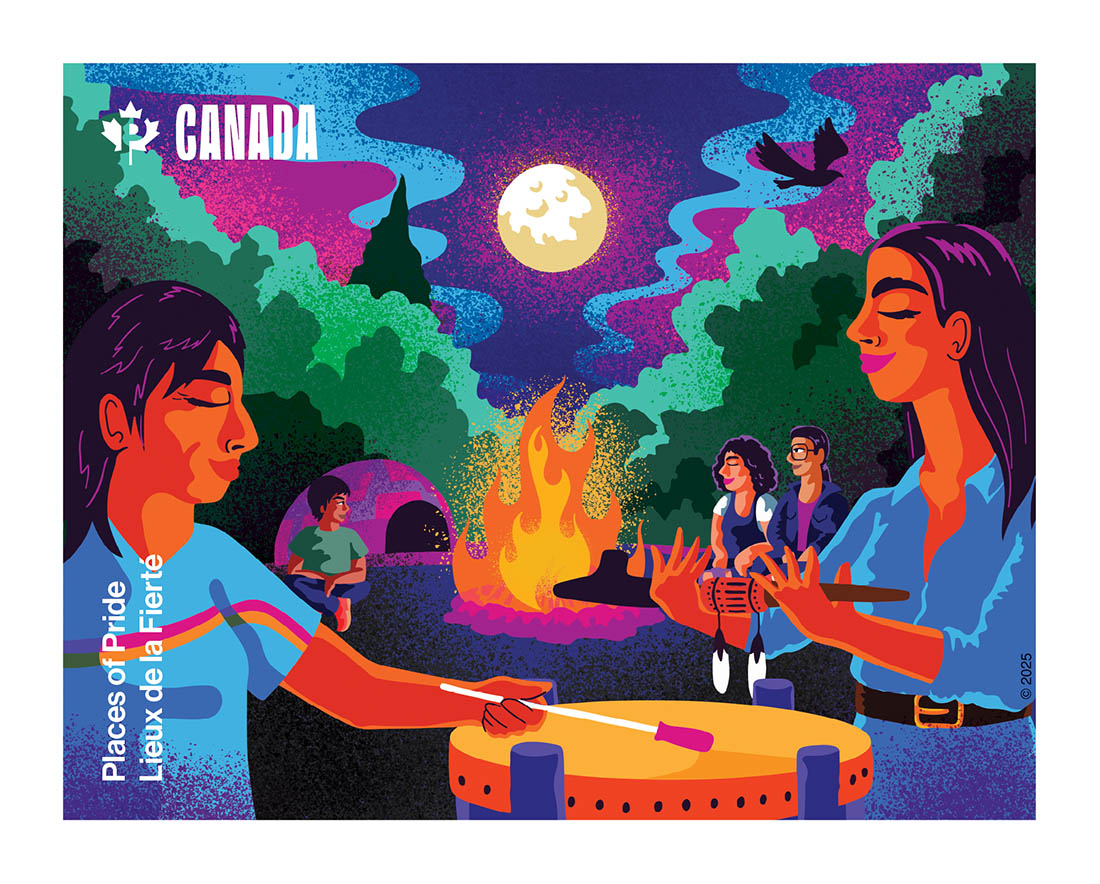
-
Article
Tyendinaga Mohawk Territory
The Mohawks of the Bay of Quinte are part of the Kanyen’kehá:ka or Mohawk Nation. Kanyen’kehá:ka means “People of the Land of Flint.” The Mohawk Nation is in turn part of the Rotinonhsyón:ni (Haudenosaunee or Six Nations Confederacy), which translates in English to “People of the Longhouse.” As of February 2026, there were 11,881 members of the Mohawks of the Bay of Quinte living on Turtle Island and beyond. At that time, 2,090 of these members lived on Tyendinaga Mohawk Territory. The Territory is located on the northeastern shore of the Bay of Quinte, just east of Belleville, Ontario.
"https://d3d0lqu00lnqvz.cloudfront.net/media/new_article_images/Tyendinaga/TyendinagaPowwow.jpg" // resources/views/front/categories/view.blade.php
https://d3d0lqu00lnqvz.cloudfront.net/media/new_article_images/Tyendinaga/TyendinagaPowwow.jpg
-
Article
Bruce Ubukata
Bruce Ubukata. Pianist, organist, harpsichordist, vocal coach, b Goderich, Ont, 3 Sep 1949; BA (Carleton) 1970. Bruce Ubukata studied privately with Greta Kraus in Toronto, Sir Peter Pears at Aldeburgh, and Pierre Bernac at St Jean de Luz, France.
"https://thecanadianencyclopedia.ca/images/tce_placeholder.jpg?v=e9dca980c9bdb3aa11e832e7ea94f5d9" // resources/views/front/categories/view.blade.php
https://thecanadianencyclopedia.ca/images/tce_placeholder.jpg?v=e9dca980c9bdb3aa11e832e7ea94f5d9
-
Article
Uchucklesaht Tribe
Uchucklesaht is a Nuu-chah-nulth First Nation of west Barkley Sound on the west coast of Vancouver Island. As of November 2025, there were 265 registered members, 233 of whom live off reserve.
"https://d3d0lqu00lnqvz.cloudfront.net/media/media/bef3cc60-b45e-4a19-b10f-b8248f21b21b.jpg" // resources/views/front/categories/view.blade.php
https://d3d0lqu00lnqvz.cloudfront.net/media/media/bef3cc60-b45e-4a19-b10f-b8248f21b21b.jpg
-
Article
Yuułuʔiłʔatḥ (Ucluelet) First Nation
Yuułuʔiłʔatḥ (formerly known as Ucluelet, Yuu-tluth-aht and Yu’lu’il’ath) are a Nuu-chah-nulth nation from west Barkley Sound, Vancouver Island. As of November 2025, there were 690 registered members, 458 of whom live off reserve. The Yuułuʔiłʔatḥ, along with several other Nuu-chah-nulth nations, have signed the Maa-nulth treaty, which has provided them with self-governance since April 2011.
"https://d3d0lqu00lnqvz.cloudfront.net/media/media/b5caad81-4e11-4466-8ae0-d9e61f5f9f5c.jpg" // resources/views/front/categories/view.blade.php
https://d3d0lqu00lnqvz.cloudfront.net/media/media/b5caad81-4e11-4466-8ae0-d9e61f5f9f5c.jpg
-
Article
Udo Kasemets
Udo Kasemets, composer, educator, writer (b at Tallinn, Estonia 16 Nov 1919, d 19 January 2014).
"https://thecanadianencyclopedia.ca/images/tce_placeholder.jpg?v=e9dca980c9bdb3aa11e832e7ea94f5d9" // resources/views/front/categories/view.blade.php
https://thecanadianencyclopedia.ca/images/tce_placeholder.jpg?v=e9dca980c9bdb3aa11e832e7ea94f5d9
-
Article
Udo Kasemets
Udo Kasemets. Composer, pianist, organist, teacher, writer, b Tallinn, Estonia, 16 Nov 1919, naturalized Canadian 1957; honorary D LITT (York) 1991.
"https://thecanadianencyclopedia.ca/images/tce_placeholder.jpg?v=e9dca980c9bdb3aa11e832e7ea94f5d9" // resources/views/front/categories/view.blade.php
https://thecanadianencyclopedia.ca/images/tce_placeholder.jpg?v=e9dca980c9bdb3aa11e832e7ea94f5d9
-
Article
Ukrainian Music in Canada
Towards the end of the 19th century large numbers of Ukrainians began to arrive in Canada; the majority settled in the Prairie provinces. By the late 1980s there were over 950,000 Ukrainian Canadians, the largest concentrations in Edmonton, Winnipeg, Toronto, and Montreal.
"https://thecanadianencyclopedia.ca/images/tce_placeholder.jpg?v=e9dca980c9bdb3aa11e832e7ea94f5d9" // resources/views/front/categories/view.blade.php
https://thecanadianencyclopedia.ca/images/tce_placeholder.jpg?v=e9dca980c9bdb3aa11e832e7ea94f5d9
-
Article
Ukrainian Internment in Canada
Canada’s first national internment operations took place during the First World War, between 1914 and 1920. More than 8,500 men, along with some women and children, were interned by the Canadian government, which acted under the authority of the War Measures Act. Most internees were recent immigrants from the Austro-Hungarian, German and Ottoman empires, and mainly from the western Ukrainian regions of Galicia and Bukovyna. Some were Canadian-born or naturalized British subjects. They were held in 24 receiving stations and internment camps across the country — from Nanaimo, BC, to Halifax, Nova Scotia. Many were used as labour in the country’s frontier wilderness. Personal wealth and property were confiscated and much of it was never returned.
"https://d3d0lqu00lnqvz.cloudfront.net/media/media/6cfa6f0b-08c0-4ec8-a739-cb994b5c312d.jpg" // resources/views/front/categories/view.blade.php
https://d3d0lqu00lnqvz.cloudfront.net/media/media/6cfa6f0b-08c0-4ec8-a739-cb994b5c312d.jpg
-
Article
Ukrainian Shumka Dancers
The Ukrainian Shumka Dancers of Edmonton are perhaps the most well known of Canada's 230 Ukrainian dance groups and schools.
"https://d3d0lqu00lnqvz.cloudfront.net/media/media/2b1030e7-9160-4e72-8640-1dab30c76c36.jpg" // resources/views/front/categories/view.blade.php
https://d3d0lqu00lnqvz.cloudfront.net/media/media/2b1030e7-9160-4e72-8640-1dab30c76c36.jpg
-
Article
Ukrainian Writing
Ukrainian Writing in Canada began in the 1890s with the first major wave of UKRAINIANS. The first story was written in 1897 by Nestor Dmytriw while he was visiting Calgary, and the first poem in 1898 by Ivan Zbura near Edmonton.
"https://thecanadianencyclopedia.ca/images/tce_placeholder.jpg?v=e9dca980c9bdb3aa11e832e7ea94f5d9" // resources/views/front/categories/view.blade.php
https://thecanadianencyclopedia.ca/images/tce_placeholder.jpg?v=e9dca980c9bdb3aa11e832e7ea94f5d9
-
Article
Ulrich Leupold
Ulrich (Siegfried) Leupold. Musicologist, Lutheran minister, administrator, b Berlin 15 Jan 1909, d Kitchener, Ont, 9 Jun 1970; PH D musicology (Berlin) 1932, honorary DD (Knox College) 1969. His father was an organist, his mother a voice teacher.
"https://thecanadianencyclopedia.ca/images/tce_placeholder.jpg?v=e9dca980c9bdb3aa11e832e7ea94f5d9" // resources/views/front/categories/view.blade.php
https://thecanadianencyclopedia.ca/images/tce_placeholder.jpg?v=e9dca980c9bdb3aa11e832e7ea94f5d9