
Browse "People"
-
List
Trailblazing Black Canadian Athletes
Athletic success, we’re told, takes grit and determination. With these strengths, an athlete can overcome any obstacle and, if they’re good enough, become the best in their sport, regardless of the challenges ahead of them. But what if the goalposts keep moving? What if the finish lines are drawn farther, the hurdles set higher, and the windows of opportunity sealed shut? The athletes in this exhibit were not only the best in their fields, but among the best in history. They were the fastest sprinters, the most agile skaters, the hardest hitters and, in many cases, the first to succeed at a high level. But though they earned the respect of their elite peers and the awestruck admiration of onlookers, there were barriers to their success — a colour bar blocking their way. Nevertheless, these courageous Black men and women persevered, and in so doing, cleared a path for future generations.
"https://d3d0lqu00lnqvz.cloudfront.net/media/media/59201294-dbe8-482f-b464-585f218993eb.png" // resources/views/front/categories/view.blade.php
https://d3d0lqu00lnqvz.cloudfront.net/media/media/59201294-dbe8-482f-b464-585f218993eb.png
-
Article
Trailer Park Boys
Trailer Park Boys, the most successful comedy series to be broadcast on Canadian cable television, began life as a 90-minute mock documentary about the lives of 2 petty felons living in a Nova Scotia trailer park.
"https://d3d0lqu00lnqvz.cloudfront.net/media/media/33ab19b8-2535-4143-9bd1-a6bcfcb4cff5.jpg" // resources/views/front/categories/view.blade.php
https://d3d0lqu00lnqvz.cloudfront.net/media/media/33ab19b8-2535-4143-9bd1-a6bcfcb4cff5.jpg
-
Article
Transgender
Transgender, often shortened to trans, is an umbrella term referring to people whose gender does not align with the sex they were assigned at birth. The first clinic in Canada dedicated to transgender health care opened in 1969. Starting in the 1970s, a wider transgender rights movement began building momentum. The last few decades have seen a greater social understanding of trans issues and advancements in trans rights. However, recent years have also seen an increase in anti-trans sentiment and discrimination. The 2021 Canadian census found that 0.33 per cent of the population over 15 — around 1 in 300 people — identified as transgender or non-binary.
"https://d3d0lqu00lnqvz.cloudfront.net/Trans_pride_flag.png" // resources/views/front/categories/view.blade.php
https://d3d0lqu00lnqvz.cloudfront.net/Trans_pride_flag.png
-
Article
Treaties with Indigenous Peoples in Canada (Plain-Language Summary)
Indigenous treaties in Canada are agreements made between the Crown and Indigenous peoples. These agreements typically concern land. Indigenous peoples agreed to share their land in exchange for payments and promises. Before Confederation, Britain controlled the treaty making process. After Confederation, the federal government took control of the treating making process. This article is a plain-language summary of Treaties with Indigenous Peoples in Canada. If you are interested in reading about this topic more in depth, please see our full-length entry, Treaties with Indigenous Peoples in Canada.
"https://d3d0lqu00lnqvz.cloudfront.net/media/media/122dc04b-d0a1-4551-a912-1bee8991746b.jpg" // resources/views/front/categories/view.blade.php
https://d3d0lqu00lnqvz.cloudfront.net/media/media/122dc04b-d0a1-4551-a912-1bee8991746b.jpg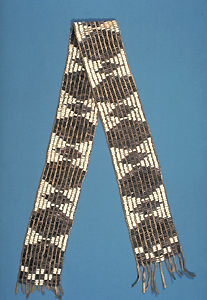
-
Article
Trevor Winston Payne
Trevor Winston Payne, conductor, composer, teacher (born 21 December ca. 1948 in Black Rock, Barbado).
"https://thecanadianencyclopedia.ca/images/tce_placeholder.jpg?v=e9dca980c9bdb3aa11e832e7ea94f5d9" // resources/views/front/categories/view.blade.php
https://thecanadianencyclopedia.ca/images/tce_placeholder.jpg?v=e9dca980c9bdb3aa11e832e7ea94f5d9
-
Article
Trey Anthony
Trey Anthony (a.k.a. trey anthony), comedian, playwright, screenwriter, producer (born 1974 in London, England). The first Black Canadian woman to have her own prime-time show on a Canadian television network, Trey Anthony is best known for her award-winning play and television series, 'da Kink in my Hair.
"https://d3d0lqu00lnqvz.cloudfront.net/media/media/1888bcab-8a6c-4e3d-a1a3-30314fce73cf.jpg" // resources/views/front/categories/view.blade.php
https://d3d0lqu00lnqvz.cloudfront.net/media/media/1888bcab-8a6c-4e3d-a1a3-30314fce73cf.jpg
-
Article
Trichy Sankaran
Sankaran, Trichy. Performer, composer, ethnomusicologist, b Poovalur, Madras State, India, 27 Jul 1942; BA (Madras), 1964; MA (Madras) 1966. He is the most distinguished performer from the gharana (circle of pupils) of Palani Subramania Pillai, with whom he studied 1954-9.
"https://thecanadianencyclopedia.ca/images/tce_placeholder.jpg?v=e9dca980c9bdb3aa11e832e7ea94f5d9" // resources/views/front/categories/view.blade.php
https://thecanadianencyclopedia.ca/images/tce_placeholder.jpg?v=e9dca980c9bdb3aa11e832e7ea94f5d9
-
Article
Trina McQueen
Catherine “Trina” Margaret McQueen (née Janitch), OC, broadcast journalist, producer, executive (born 1943 in Belleville, ON). Trina McQueen is a highly respected trailblazer for Canadian women in broadcast journalism. She was the first woman reporter for CFTO in Toronto, the first woman to host CTV’s W5, and the first woman to both report on camera for CBC’s The National and serve as its executive producer. McQueen spent 25 years at the CBC, rising to VP of television news, current affairs and CBC Newsworld and eventually to network program director for CBC English Television. She became the founding president of Canada’s Discovery Channel in 1995 and president and COO of CTV in 2001. Since retiring in 2002, she has taught at the Schulich School of Business at York University, served on the boards of numerous organizations and was vice-chair of TVO. An Officer of the Order of Canada, she has received several lifetime achievement awards and been inducted into multiple halls of fame.
"https://d3d0lqu00lnqvz.cloudfront.net/3610442478_efc1cdd885_c.jpg" // resources/views/front/categories/view.blade.php
https://d3d0lqu00lnqvz.cloudfront.net/3610442478_efc1cdd885_c.jpg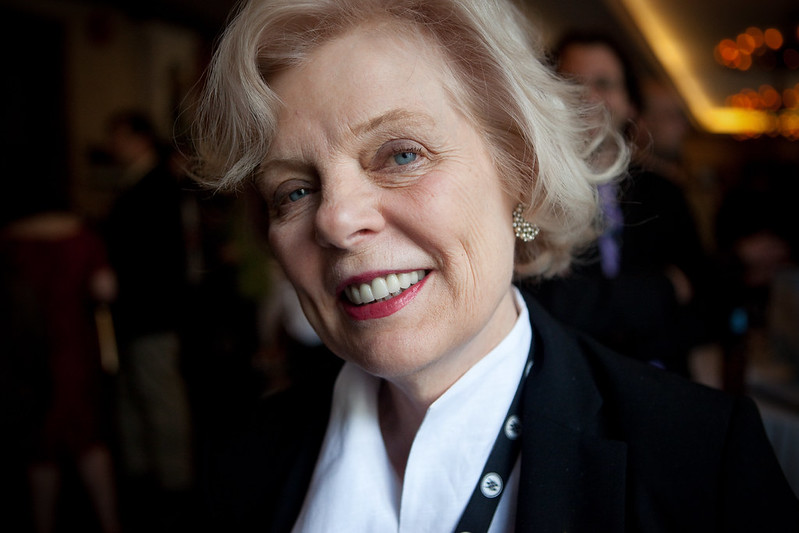
-
Article
Trivedi Vidhya Nandan Persaud
Trivedi Vidhya Nandan Persaud, anatomist (b at Pt Mourant, Guyana 19 Feb 1940). Educated at Rostock, E Ger (MD 1965, DSc 1974), and U of W Indies, Kingston, Jamaica (PhD 1970), Persaud has received international acclaim for his research in embryology, teratology and pathology.
"https://thecanadianencyclopedia.ca/images/tce_placeholder.jpg?v=e9dca980c9bdb3aa11e832e7ea94f5d9" // resources/views/front/categories/view.blade.php
https://thecanadianencyclopedia.ca/images/tce_placeholder.jpg?v=e9dca980c9bdb3aa11e832e7ea94f5d9
-
Article
Truth and Reconciliation Commission of Canada: Calls to Action
The Truth and Reconciliation Commission of Canada (TRC) was officially launched in 2008 as part of the Indian Residential Schools Settlement Agreement. This multi-faceted agreement was intended to compensate survivors for the harms they suffered in residential schools, and to work towards a more just and equitable future for Indigenous peoples. The TRC was also meant to lay the foundation for lasting reconciliation across Canada. The TRC’s six-volume final report was released on 15 December 2015. It argued that the residential school program resulted in cultural genocide and outlined 94 Calls to Action.
"https://d3d0lqu00lnqvz.cloudfront.net/media/media/a042133-v6.jpg" // resources/views/front/categories/view.blade.php
https://d3d0lqu00lnqvz.cloudfront.net/media/media/a042133-v6.jpg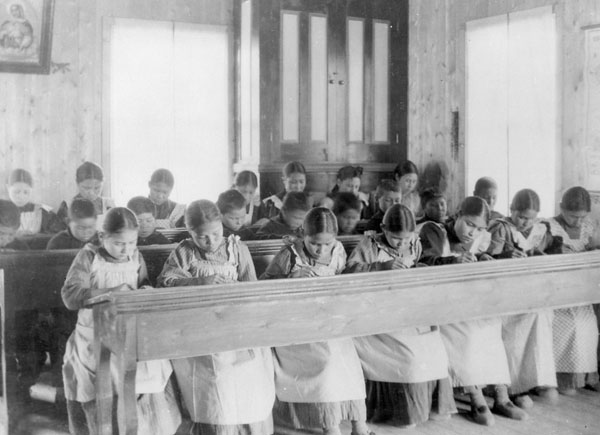
-
Article
Truth and Reconciliation Commission (Plain-Language Summary)
The Truth and Reconciliation Commission (TRC) started working in 2008. It was a result of the Indian Residential Schools Settlement Agreement (IRSSA). The IRSSA recognized the suffering and trauma experienced by Indigenous students at residential schools. It also provided financial compensation (money) to the students. The TRC performed many tasks. It created a national research centre. It collected documents from churches and government. It held events where students told their stories. Also, it did research about residential schools and issued a final report. (See also Reconciliation in Canada.)
"https://d3d0lqu00lnqvz.cloudfront.net/media/media/2bd71aaf-ebc5-44e0-9f91-e4d07b16e81d.jpg" // resources/views/front/categories/view.blade.php
https://d3d0lqu00lnqvz.cloudfront.net/media/media/2bd71aaf-ebc5-44e0-9f91-e4d07b16e81d.jpg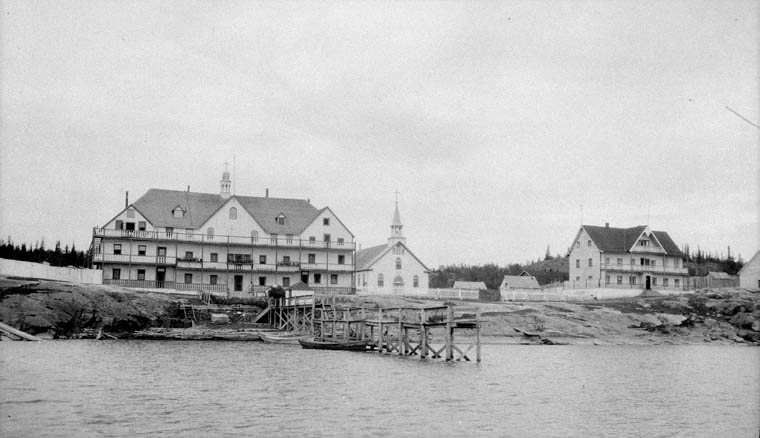
-
Article
Tseshaht (Sheshaht)
The Tseshaht (also Ts’ishaa7ath or Ć̓išaaʔatḥ; formerly Sheshaht) are a Nuu-chah-nulth First Nation living in Barkley Sound and Alberni Inlet, Vancouver Island, British Columbia. As of November 2025, the federal government counted 1,279 registered members of the Tseshaht First Nation, the majority of whom (781) live off reserve.
"https://d3d0lqu00lnqvz.cloudfront.net/media/media/d8ac030b-9728-428c-a546-17223668b49b.jpg" // resources/views/front/categories/view.blade.php
https://d3d0lqu00lnqvz.cloudfront.net/media/media/d8ac030b-9728-428c-a546-17223668b49b.jpg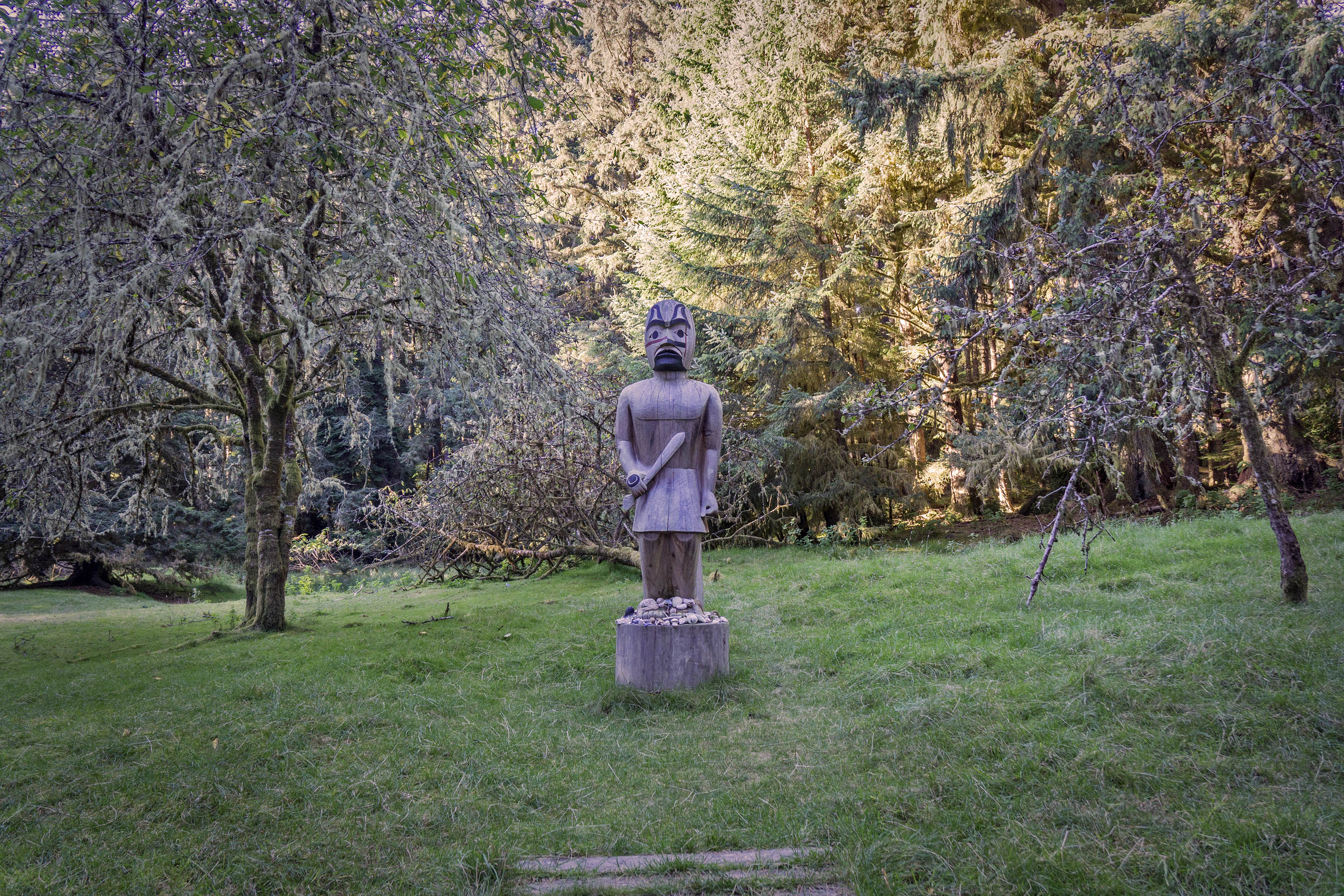
-
Article
Tsetsaut
The Tsetsaut (also known as the Wetaɬ) were a Dene people who lived inland from the Tlingit (Łingít) along the western coast of British Columbia and Southeastern Alaska. Apart from Nisga’a oral tradition and the linguistic research of anthropologist Franz Boas, who lived among the Tsetsaut in the 1890s, little is known about them. The Tsetsaut were decimated by war and disease in the 1800s, their numbers reduced to just 12 by the end of the century. It was once believed that the last of the Tsetsaut people died in 1927 and that their ancient language was no longer spoken. However, as of 2019, there are approximately 30 people from the Tsetsaut/Skii km Lax Ha Nation identifying as Tsetsaut in British Columbia.
"https://d3d0lqu00lnqvz.cloudfront.net/media/media/cce8b2c9-3dd1-46a4-9e5a-8bf2b73404b5.jpg" // resources/views/front/categories/view.blade.php
https://d3d0lqu00lnqvz.cloudfront.net/media/media/cce8b2c9-3dd1-46a4-9e5a-8bf2b73404b5.jpg
-
Article
Ts'msyen (Tsimshian)
Ts’msyen (Tsim-she-yan, meaning “Inside the Skeena River”; sometime spelled Tsimshian or Tsm’syen) is a name that is often broadly applied to Indigenous peoples of the Pacific Northwest Coast. They speak languages of the Ts’msyen language family, including Ts’msyen, Gitxsan and Nisga’a. In the 2021 census, 1,550 people claimed a Ts’msyen languages as their mother tongue and 2,590 people acclaimed knowledge of a Ts’msyen language. Of people claiming knowledge of a Ts’msyen language, 200 people reported the Ts’msyen language as their mother tongue and 445 people claimed knowledge of that specific language. In the 2021 census, 4,800 people claimed Ts’msyen ancestry.
"https://d3d0lqu00lnqvz.cloudfront.net/media/media/31938a10-8f41-41b1-92bb-8096a3025bf3.jpg" // resources/views/front/categories/view.blade.php
https://d3d0lqu00lnqvz.cloudfront.net/media/media/31938a10-8f41-41b1-92bb-8096a3025bf3.jpg
-
Article
Tudor Singers of Montreal/Ensemble vocal Tudor de Montréal
The Tudor Singers of Montreal/L'Ensemble vocal Tudor de Montréal. Mixed choir founded in 1962 by Wayne Riddell to perform unaccompanied music of the 16th and 17th centuries.
"https://thecanadianencyclopedia.ca/images/tce_placeholder.jpg?v=e9dca980c9bdb3aa11e832e7ea94f5d9" // resources/views/front/categories/view.blade.php
https://thecanadianencyclopedia.ca/images/tce_placeholder.jpg?v=e9dca980c9bdb3aa11e832e7ea94f5d9