
Browse "People"
-
Editorial
Editorial: Baldwin, LaFontaine and Responsible Government
The following article is an editorial written by The Canadian Encyclopedia staff. Editorials are not usually updated. The Baldwin–LaFontaine government of 1848 has been called the “great ministry.” In addition to establishing responsible government, it had an incomparable record of legislation. It established a public school system and finalized the founding of the University of Toronto. It set up municipal governments and pacified French-Canadian nationalism after a period of unrest. Responsible government did not transform Canada overnight into a fully developed democracy. But it was an important milestone along the road to political autonomy. Most importantly, it provided an opportunity for French Canadians to find a means for their survival through the British Constitution. The partnership and friendship between Baldwin and LaFontaine were brilliant examples of collaboration that have been all too rare in Canadian history.
"https://d3d0lqu00lnqvz.cloudfront.net/media/media/ba6bdff6-574a-4697-ac95-afdcc5ddfcc9.jpg" // resources/views/front/categories/view.blade.php
https://d3d0lqu00lnqvz.cloudfront.net/media/media/ba6bdff6-574a-4697-ac95-afdcc5ddfcc9.jpg
-
Article
The Good Brothers
The Good Brothers. Country group based in Richmond Hill, near Toronto. It was formed in 1969 as a country-folk group, James and the Good Brothers, by the guitarist James Ackroyd and the twins Bruce and Brian Good (autoharpist and guitarist respectively, b Toronto 27 Jan 1946).
"https://thecanadianencyclopedia.ca/images/tce_placeholder.jpg?v=e9dca980c9bdb3aa11e832e7ea94f5d9" // resources/views/front/categories/view.blade.php
https://thecanadianencyclopedia.ca/images/tce_placeholder.jpg?v=e9dca980c9bdb3aa11e832e7ea94f5d9
-
Article
The Great Farini
William Leonard Hunt (a.k.a. The Great Farini), performer, circus impresario, inventor, (born 10 June 1838 in Lockport, New York; died 17 January 1929 in Port Hope, Ontario). Hunt became known for high-flying stunts, most famously for crossing Niagara Falls on a tightrope. He is also credited with inventing the human cannonball circus trick.
"https://d3d0lqu00lnqvz.cloudfront.net/GreatFarini/FariniWashingMachine.jpg" // resources/views/front/categories/view.blade.php
https://d3d0lqu00lnqvz.cloudfront.net/GreatFarini/FariniWashingMachine.jpg
-
Article
The Happy Gang
The Happy Gang. Troupe of musical entertainers heard 1937-59, weekdays at lunchtime, in a CBC radio variety show of the same name.
"https://thecanadianencyclopedia.ca/images/tce_placeholder.jpg?v=e9dca980c9bdb3aa11e832e7ea94f5d9" // resources/views/front/categories/view.blade.php
https://thecanadianencyclopedia.ca/images/tce_placeholder.jpg?v=e9dca980c9bdb3aa11e832e7ea94f5d9
-
Article
The History of Canadian Women in Sport
For hundreds of years, very few sports were considered appropriate for women, whether for reasons of supposed physical frailty, or the alleged moral dangers of vigorous exercise. Since the late 19th century, however, women in Canada have participated in a growing list of sports — not only those deemed graceful and feminine, but also the sweaty, rough-and-tumble games traditionally played only by men (e.g., hockey, boxing, soccer, rugby)
"https://d3d0lqu00lnqvz.cloudfront.net/media/media/9c27e9a9-7620-4f38-b10f-d79a6c7956ce.jpg" // resources/views/front/categories/view.blade.php
https://d3d0lqu00lnqvz.cloudfront.net/media/media/9c27e9a9-7620-4f38-b10f-d79a6c7956ce.jpg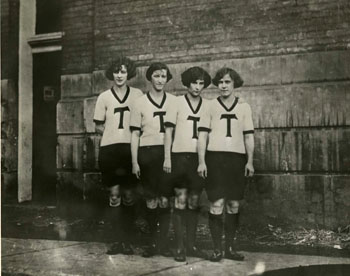
-
Timelines
The Indian Act
The Indian Act is the principal law through which the federal government administers Indian status, local First Nations governments and the management of reserve land and communal monies. The Indian Act does not include Métis or Inuit peoples. The Act came into power on 12 April 1876. It consolidated a number of earlier colonial laws that sought to control and assimilate Indigenous peoples into Euro-Canadian culture. The Indian Act has been amended many times over...
"https://d3d0lqu00lnqvz.cloudfront.net/media/media/cbcd31d1-03f6-4fba-a45d-96ee89c4617d.jpg" // resources/views/front/categories/view.blade.php
https://d3d0lqu00lnqvz.cloudfront.net/media/media/cbcd31d1-03f6-4fba-a45d-96ee89c4617d.jpg
-
Article
The Journey of Nishiyuu (The Journey of the People)
Between 16 January and 25 March 2013, six Cree youths and their guide walked 1,600 km from Whapmagoostui First Nation, the northernmost Cree village in Quebec on Hudson Bay, to Parliament Hill in Ottawa in support of the Idle No More movement. They called the trek “The Journey of Nishiyuu,” which is Cree for “people.” Known as the Nishiyuu Walkers, the group attracted national media attention and inspired Indigenous youth to be the force of change in their lives and communities. (See also Indigenous Women Activists in Canada and Indigenous Political Organization and Activism in Canada.)
"https://d3d0lqu00lnqvz.cloudfront.net/media/media/00339332-5ac9-4b3b-8578-b7200b7db6fc.jpg" // resources/views/front/categories/view.blade.php
https://d3d0lqu00lnqvz.cloudfront.net/media/media/00339332-5ac9-4b3b-8578-b7200b7db6fc.jpg
-
Macleans
‘The Karsh of his era’
Canada’s first celebrity photographer, along with a host of forgotten artists, gets his 21st-century moment.This article was originally published in Maclean's Magazine on November 12, 2014
"https://thecanadianencyclopedia.ca/images/tce_placeholder.jpg?v=e9dca980c9bdb3aa11e832e7ea94f5d9" // resources/views/front/categories/view.blade.php
https://thecanadianencyclopedia.ca/images/tce_placeholder.jpg?v=e9dca980c9bdb3aa11e832e7ea94f5d9
-
Interview
The Legacy of Terry Fox: An Interview with Bill Vigars
Bill Vigars discusses Terry Fox’s inspiration for the Marathon of Hope in a 2015 interview with Historica Canada
"https://thecanadianencyclopedia.ca/images/tce_placeholder.jpg?v=e9dca980c9bdb3aa11e832e7ea94f5d9" // resources/views/front/categories/view.blade.php
https://thecanadianencyclopedia.ca/images/tce_placeholder.jpg?v=e9dca980c9bdb3aa11e832e7ea94f5d9
-
Interview
The Legacy of Terry Fox: An Interview with Darrell Fox
Darrell Fox discusses his brother’s determination in a 2015 interview with Historica Canada
"https://d3d0lqu00lnqvz.cloudfront.net/media/media/c09ae4d7-7552-44c7-968c-de7f901a7b29.jpg" // resources/views/front/categories/view.blade.php
https://d3d0lqu00lnqvz.cloudfront.net/media/media/c09ae4d7-7552-44c7-968c-de7f901a7b29.jpg
-
Interview
The Legacy of Terry Fox: An Interview with Leslie Scrivener
Leslie Scrivener describes meeting Terry for the first time and being struck by his optimism and focus in an April 2015 interview with Historica Canada.
"https://d3d0lqu00lnqvz.cloudfront.net/media/media/64904706-0bb1-4d9f-9ad5-5b26e41dcea7.jpeg" // resources/views/front/categories/view.blade.php
https://d3d0lqu00lnqvz.cloudfront.net/media/media/64904706-0bb1-4d9f-9ad5-5b26e41dcea7.jpeg
-
Macleans
The long road back for Michael Ignatieff
Only a true foreign policy wonk would expect to be stirred up by a document called "Canada in the World: A Global Networks Strategy.This article was originally published in Maclean's Magazine on June 28, 2010
"https://thecanadianencyclopedia.ca/images/tce_placeholder.jpg?v=e9dca980c9bdb3aa11e832e7ea94f5d9" // resources/views/front/categories/view.blade.php
https://thecanadianencyclopedia.ca/images/tce_placeholder.jpg?v=e9dca980c9bdb3aa11e832e7ea94f5d9
-
Macleans
The Making of Michael Ignatieff
In the suite of Parliament Hill offices reserved for the leader of the official Opposition, a scrap of paper on a receptionist's desk one day last week seemed to have drifted ashore from a previous era. The name scrawled on it in blue ballpoint - Jim Coutts.This article was originally published in Maclean's Magazine on February 16, 2009
"https://thecanadianencyclopedia.ca/images/tce_placeholder.jpg?v=e9dca980c9bdb3aa11e832e7ea94f5d9" // resources/views/front/categories/view.blade.php
https://thecanadianencyclopedia.ca/images/tce_placeholder.jpg?v=e9dca980c9bdb3aa11e832e7ea94f5d9
-
Editorial
The Life and Meaning of Everett Klippert
The following article is an editorial written by The Canadian Encyclopedia staff. Editorials are not usually updated. Everett George Klippert (1926–1996) was a popular Calgary bus driver who was jailed for homosexuality from 1960 to 1964, and from 1965 to 1971. An unlikely martyr, he shunned the spotlight. Klippert was once described as “Canada’s most famous homosexual” due to his unjust prison sentences, which ultimately led to the decriminalization of homosexuality in Canada.
"https://d3d0lqu00lnqvz.cloudfront.net/media/media/d5d0ce81-9f5e-4938-8c53-1fdaee0b6c39.jpg" // resources/views/front/categories/view.blade.php
https://d3d0lqu00lnqvz.cloudfront.net/media/media/d5d0ce81-9f5e-4938-8c53-1fdaee0b6c39.jpg
-
Collection
The Memory Project Archive
This collection gathers together primary source testimonies of veterans from the Memory Project Archive. Please be advised that Memory Project primary sources may deal with personal testimony that reflect the speaker’s recollections and interpretations of events. Individual testimony does not necessarily reflect the views of the Memory Project and Historica Canada.
"https://d3d0lqu00lnqvz.cloudfront.net/MemoryProject/TCECollectionArchiveCollage-2.png" // resources/views/front/categories/view.blade.php
https://d3d0lqu00lnqvz.cloudfront.net/MemoryProject/TCECollectionArchiveCollage-2.png