
Browse "People"
-
Article
The Band
The Band. Rock group, internationally popular in the late 1960s and the 1970s. First known as The Hawks, it evolved from a US group taken to Ontario in 1958 by Ronnie Hawkins.
"https://thecanadianencyclopedia.ca/images/tce_placeholder.jpg?v=e9dca980c9bdb3aa11e832e7ea94f5d9" // resources/views/front/categories/view.blade.php
https://thecanadianencyclopedia.ca/images/tce_placeholder.jpg?v=e9dca980c9bdb3aa11e832e7ea94f5d9
-
Article
The Beau-Marks
The Beau-Marks. Montreal rock group established in 1958; their hit single "Clap Your Hands" was the first hit rock recording made entirely in Canada. Under the name The Del-Tones, the group first released the rockabilly single "Rockin' Blues/Moonlight Party" in April 1959.
"https://thecanadianencyclopedia.ca/images/tce_placeholder.jpg?v=e9dca980c9bdb3aa11e832e7ea94f5d9" // resources/views/front/categories/view.blade.php
https://thecanadianencyclopedia.ca/images/tce_placeholder.jpg?v=e9dca980c9bdb3aa11e832e7ea94f5d9
-
Article
Beaver Hall Group
The Beaver Hall Group (also known as the Beaver Hall Hill Group) was a group of artists (both male and female) who shared studio space at 305 Beaver Hall Hill in Montreal. A.Y. Jackson was the first president. The group, which had no manifesto, began exhibiting their works together in 1920. There is some disagreement about how long the group lasted. Most scholars agree that it disbanded in 1922 due to financial problems. Edwin Holgate described the Beaver Hall Group as a loose association of artists who had similar ideas and little money. Artists associated with the Beaver Hall Group focused mainly on figurative paintings. It was also one of the first artist groups in which women played key roles.
"https://thecanadianencyclopedia.ca/images/tce_placeholder.jpg?v=e9dca980c9bdb3aa11e832e7ea94f5d9" // resources/views/front/categories/view.blade.php
https://thecanadianencyclopedia.ca/images/tce_placeholder.jpg?v=e9dca980c9bdb3aa11e832e7ea94f5d9
-
Article
The Bells
The Bells (The Five Bells 1965-70). Montreal-based pop group active predominantly 1965-73.
"https://thecanadianencyclopedia.ca/images/tce_placeholder.jpg?v=e9dca980c9bdb3aa11e832e7ea94f5d9" // resources/views/front/categories/view.blade.php
https://thecanadianencyclopedia.ca/images/tce_placeholder.jpg?v=e9dca980c9bdb3aa11e832e7ea94f5d9
-
Article
The Brunswick Four
The Brunswick Four refers to four lesbian women — Adrienne Rosen (formerly Adrienne Potts), Pat Murphy, Sue Wells and Lamar Van Dyke (formerly Heather Elizabeth Nelson) — who were thrown out of a Toronto bar on 5 January 1974. Their expulsion and eventual detention led to charges and significant public outcry at their treatment by the bar staff and the police. The Brunswick Four case raised awareness about homophobia and harassment in Canada, and fueled Toronto’s growing 2SLGBTQ+ rights movement.
"https://d3d0lqu00lnqvz.cloudfront.net/media/home-page-images/The-Brunswick-House_Toronto.jpg" // resources/views/front/categories/view.blade.php
https://d3d0lqu00lnqvz.cloudfront.net/media/home-page-images/The-Brunswick-House_Toronto.jpg
-
Article
Quebec Film History: 1896 to 1969
This entry presents an overview of Quebec cinema, from its beginnings in the silent film era to the burgeoning of a distinctly Quebec cinema in the 1960s. It highlights the most important films, whether in terms of box office success or international acclaim, and covers both narrative features and documentaries. It also draws attention to an aspect of filmmaking that still has difficulty finding its place: women’s cinema.
"https://d3d0lqu00lnqvz.cloudfront.net/media/media/3b079b6b-0ea3-47b4-8e14-62d48630fb39.jpg" // resources/views/front/categories/view.blade.php
https://d3d0lqu00lnqvz.cloudfront.net/media/media/3b079b6b-0ea3-47b4-8e14-62d48630fb39.jpg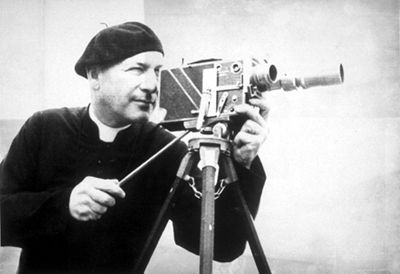
-
Article
The Coloured Corps: Black Canadians and the War of 1812
The Coloured Corps (also known as Runchey's Company of Coloured Men, or Black Corps) was a militia company of Black men raised during the War of 1812.
"https://d3d0lqu00lnqvz.cloudfront.net/media/media/ee6791f8-0e4e-40a0-b993-ad09823228ad.jpg" // resources/views/front/categories/view.blade.php
https://d3d0lqu00lnqvz.cloudfront.net/media/media/ee6791f8-0e4e-40a0-b993-ad09823228ad.jpg
-
Editorial
Editorial: The Courage of Terry Fox
The following article is an editorial written by The Canadian Encyclopedia staff. Editorials are not usually updated. Terry Fox was the boy who never gave up. His short life was devoted to achieving his goals. Obstacles just made him try harder. When he learned he had cancer and would lose his leg, he resolved to do something to help other cancer victims. When the disease claimed him on 28 June 1981, he left a legacy of hope that inspired millions to continue his cause.
"https://d3d0lqu00lnqvz.cloudfront.net/media/media/38455a56-df5d-43f1-86be-7cba02458402.jpg" // resources/views/front/categories/view.blade.php
https://d3d0lqu00lnqvz.cloudfront.net/media/media/38455a56-df5d-43f1-86be-7cba02458402.jpg
-
Article
The Crash Test Dummies
Crash Test Dummies. A folk-rock band formed in Winnipeg around 1985, the Crash Test Dummies initially played acoustic cover versions of songs by such rock and folk-pop artists as Alice Cooper and the Roches, at the Blue Note Café.
"https://d3d0lqu00lnqvz.cloudfront.net/media/media/7dffae5c-846f-4e56-af7b-5898ea71dc1f.jpg" // resources/views/front/categories/view.blade.php
https://d3d0lqu00lnqvz.cloudfront.net/media/media/7dffae5c-846f-4e56-af7b-5898ea71dc1f.jpg
-
"https://thecanadianencyclopedia.ca/images/tce_placeholder.jpg?v=e9dca980c9bdb3aa11e832e7ea94f5d9" // resources/views/front/categories/view.blade.php
https://thecanadianencyclopedia.ca/images/tce_placeholder.jpg?v=e9dca980c9bdb3aa11e832e7ea94f5d9
-
Editorial
Acadian Expulsion (the Great Upheaval)
Soldiers rounding up terrified civilians, expelling them from their land, burning their homes and crops ‒ it sounds like a 20th century nightmare in one of the world's trouble spots, but it describes a scene from Canada's early history, the Deportation of the Acadians.
"https://d3d0lqu00lnqvz.cloudfront.net/Acadian still.png" // resources/views/front/categories/view.blade.php
https://d3d0lqu00lnqvz.cloudfront.net/Acadian still.png
-
Article
The Diamonds
The Diamonds. This rock and roll vocal quartet was formed in early 1953 at the University of Toronto by baritone Phil Levitt (b 9 Jul 1935), lead Stan Fisher, tenor Ted Kowalski (b 16 May 1931; d 8 Aug 2010), and bass Bill Reed (b 11 Jan 1936, d 22 Oct 2004).
"https://thecanadianencyclopedia.ca/images/tce_placeholder.jpg?v=e9dca980c9bdb3aa11e832e7ea94f5d9" // resources/views/front/categories/view.blade.php
https://thecanadianencyclopedia.ca/images/tce_placeholder.jpg?v=e9dca980c9bdb3aa11e832e7ea94f5d9
-
Article
The Flying Bulgars
The Flying Bulgars is a folk band renowned for its presentation of Klezmer-inspired music. Originally known as The Flying Bulgar Klezmer Band, the group was founded in Toronto in 1987 by composer/trumpeter David Buchbinder.
"https://thecanadianencyclopedia.ca/images/tce_placeholder.jpg?v=e9dca980c9bdb3aa11e832e7ea94f5d9" // resources/views/front/categories/view.blade.php
https://thecanadianencyclopedia.ca/images/tce_placeholder.jpg?v=e9dca980c9bdb3aa11e832e7ea94f5d9
-
Article
The Four Kings of Canada
The Four Kings of Canada were prominent leaders from the Haudenosaunee Confederacy who traveled to London to request a British invasion of French Canada in 1710 during the War of the Spanish Succession (Queen Anne’s War). They presented Queen Anne with wampum and received numerous gifts, including the Queen Anne communion silver that is housed today in two Mohawk Chapels Royal. The high-profile reception of the Four Kings of Canada strengthened the military alliance between the Haudenosaunee Confederacy and Britain and shaped British perceptions of North American Indigenous peoples in the early 18th century.
"https://d3d0lqu00lnqvz.cloudfront.net/Four-Kings/onigoheriago-lac-c092417.jpg" // resources/views/front/categories/view.blade.php
https://d3d0lqu00lnqvz.cloudfront.net/Four-Kings/onigoheriago-lac-c092417.jpg
-
Article
The Four Lads
The Four Lads were a popular vocal quartet in the 1950s. They are perhaps best known for the song “Istanbul (Not Constantinople),” as well as “Moments to Remember,” “Standing on the Corner” and “No, Not Much.” In 1975 the Four Lads were listed by Billboard magazine as 167th of the top 200 recording acts of the previous 30 years. They were inducted into the Canadian Music Hall of Fame in 1984 and the Vocal Group Hall of Fame in 2003.
"https://d3d0lqu00lnqvz.cloudfront.net/The_Four_Lads_originals.jpg" // resources/views/front/categories/view.blade.php
https://d3d0lqu00lnqvz.cloudfront.net/The_Four_Lads_originals.jpg