Browse "People"
-
Article
Raymond Perrin
Raymond Perrin. Organist, choir director, teacher, b Cap-de-la-Madeleine, near Trois-Rivières, Que, 10 Mar 1956; premier prix organ (Cons de Trois-Rivières) 1978. He began his musical studies at six and was a member of a children's choir.
"https://thecanadianencyclopedia.ca/images/tce_placeholder.jpg?v=e9dca980c9bdb3aa11e832e7ea94f5d9" // resources/views/front/categories/view.blade.php
https://thecanadianencyclopedia.ca/images/tce_placeholder.jpg?v=e9dca980c9bdb3aa11e832e7ea94f5d9
-
Article
Raymond Ringuette
Raymond Ringuette. Educator, b Asbestos, Que, 21 Aug 1943; BA (Sherbrooke) 1966, B TH (Sherbrooke) 1970, B MUS ED (Laval) 1973, B MUS rhythmics (Laval) 1974, BES 1975, M MUS (Laval) 1976, D MUS ED (Illinois) 1980.
"https://thecanadianencyclopedia.ca/images/tce_placeholder.jpg?v=e9dca980c9bdb3aa11e832e7ea94f5d9" // resources/views/front/categories/view.blade.php
https://thecanadianencyclopedia.ca/images/tce_placeholder.jpg?v=e9dca980c9bdb3aa11e832e7ea94f5d9
-
Article
Raymond Tait Affleck
Raymond Tait Affleck, architect (b at Penticton, BC 20 Nov 1922; d at Montréal 16 Mar 1989).
"https://d3d0lqu00lnqvz.cloudfront.net/media/media/67c9034b-e7bc-4eb0-922c-b9e90c715292.jpg" // resources/views/front/categories/view.blade.php
https://d3d0lqu00lnqvz.cloudfront.net/media/media/67c9034b-e7bc-4eb0-922c-b9e90c715292.jpg
-
Article
Raymond Urgel Lemieux
Raymond Urgel Lemieux, CC, AOE, FRS, FRSC, chemist, professor (born 16 June 1920 in Lac La Biche, AB; died 22 July 2000 in Edmonton, AB). Raymond Lemieux is internationally recognized for his fundamental and innovative contributions to organic chemistry, especially in the area of carbohydrates. (See also Chemistry; Chemistry Subdisciplines.)
"https://d3d0lqu00lnqvz.cloudfront.net/media/media/d5706bba-60fd-4ca7-bdc5-9f91096c31ef.jpg" // resources/views/front/categories/view.blade.php
https://d3d0lqu00lnqvz.cloudfront.net/media/media/d5706bba-60fd-4ca7-bdc5-9f91096c31ef.jpg
-
Article
Raymonde April
April, Raymonde Raymonde April, photographer (b at Moncton, NB 23 June 1953). Since the early 1970s, April's practice has influenced the development of photography in Québec and Canada as she has explored the influence of narrative on photographic images. Long photographic series constructed in an evocative mode, micro-events taken from everyday experience and transformed into fabulous storylines, and series of familiar portraits and landscapes make up her body of work. If the photographer tackles the...
"https://d3d0lqu00lnqvz.cloudfront.net/media/media/42ad68d5-6ed0-4a7a-8295-36451baffac4.jpg" // resources/views/front/categories/view.blade.php
https://d3d0lqu00lnqvz.cloudfront.net/media/media/42ad68d5-6ed0-4a7a-8295-36451baffac4.jpg
-
Article
Raymonde Martin
Raymonde Martin. Cellist, teacher, b Montreal 27 Apr 1923. She enrolled at the CMM in 1943 and studied solfège and harmony with her sister Gilberte and cello with Jean Belland and later with Roland Leduc. At the same time she improved her knowledge of chamber and orchestral music.
"https://thecanadianencyclopedia.ca/images/tce_placeholder.jpg?v=e9dca980c9bdb3aa11e832e7ea94f5d9" // resources/views/front/categories/view.blade.php
https://thecanadianencyclopedia.ca/images/tce_placeholder.jpg?v=e9dca980c9bdb3aa11e832e7ea94f5d9
-
Article
Raynald Arseneault
Raynald Arseneault. Composer, organist, b Quebec City, 9 Jun 1945, d Montreal 27 Jan 1995; premier prix (CMM) 1973, premier prix (Metz Conservatory) 1976.
"https://thecanadianencyclopedia.ca/images/tce_placeholder.jpg?v=e9dca980c9bdb3aa11e832e7ea94f5d9" // resources/views/front/categories/view.blade.php
https://thecanadianencyclopedia.ca/images/tce_placeholder.jpg?v=e9dca980c9bdb3aa11e832e7ea94f5d9
-
Article
RCAF Flyers
The RCAF (Royal Canadian Air Force) Flyers was a men’s amateur hockey team comprised mostly of RCAF personnel that was assembled quickly to represent Canada at the 1948 Winter Olympics. After losing exhibition games in Canada, the media declared the team a national embarrassment. Several roster changes improved the team and it won the Gold Medal at the Olympic Winter Games in St. Moritz, Switzerland.
"https://d3d0lqu00lnqvz.cloudfront.net/media/media/f5cb5d73-b4a3-4a09-8459-abd349f2005d.jpg" // resources/views/front/categories/view.blade.php
https://d3d0lqu00lnqvz.cloudfront.net/media/media/f5cb5d73-b4a3-4a09-8459-abd349f2005d.jpg
-
Article
RCAF Para-Belles
Between 1951 and 1957 the Royal Canadian Air Force (RCAF) had seven nursing sisters who were trained to perform the duties of para-rescue specialists, the early version of today’s search and rescue technicians. Admiringly referred to as “para-belles” or “para-pets” in the press, the nurses were part of a small group of medical professionals trained for para-rescue in the 1950s. No other women would undertake para-rescue/SAR tech training until 1997.
"https://d3d0lqu00lnqvz.cloudfront.net/SAR/PC-676.jpeg" // resources/views/front/categories/view.blade.php
https://d3d0lqu00lnqvz.cloudfront.net/SAR/PC-676.jpeg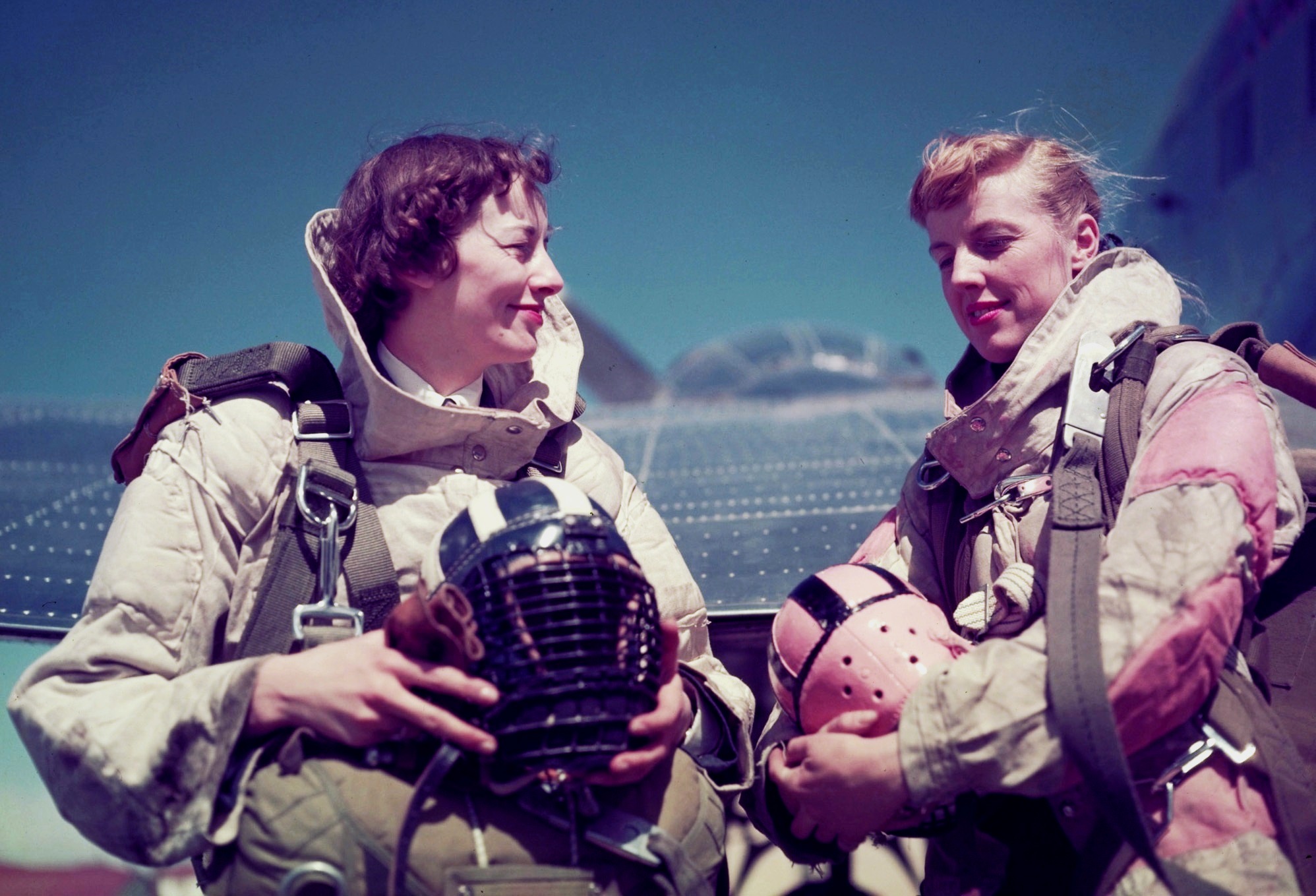
-
Article
RCAF Women's Division
Members of the Women’s Division (WD) of the Royal Canadian Air Force (RCAF) were wartime pioneers. Thousands of young Canadian women volunteered to serve at home and abroad during the Second World War as part of the air force. By replacing men in aviation support roles, they lived up to their motto — "We Serve that Men May Fly” — and, through their record of service and sacrifice, ensured themselves a place in Canadian history.
"https://d3d0lqu00lnqvz.cloudfront.net/7ac67f20-60f1-4812-b162-7c429e5e8950.jpg" // resources/views/front/categories/view.blade.php
https://d3d0lqu00lnqvz.cloudfront.net/7ac67f20-60f1-4812-b162-7c429e5e8950.jpg
-
Article
RCMP Troop 17
On 16 September 1974, thirty-two women from across Canada made history when they were sworn in as the first female officers in the Royal Canadian Mounted Police (RCMP). Known as Troop 17, they paved the way for equal opportunity in national law enforcement. In 2023, approximately 22 per cent of RCMP officers are women.
"https://d3d0lqu00lnqvz.cloudfront.net/media/media/1703ee6f-bab8-4f7e-9f0d-9ff5c82dfea3.jpg" // resources/views/front/categories/view.blade.php
https://d3d0lqu00lnqvz.cloudfront.net/media/media/1703ee6f-bab8-4f7e-9f0d-9ff5c82dfea3.jpg
-
Article
Réal Gagnier
Réal Gagnier. Oboist, teacher, b Montreal 24 Mar 1905, d there 19 Mar 1984. Like his brothers, he had his initial training from his father, Joseph; he then studied successively with his brother Ernest for six years, with Alexandre Laurendeau 1926-32, and with Fernand Gillet 1947-53.
"https://d3d0lqu00lnqvz.cloudfront.net/media/media/76a1ebb0-ef40-4c78-a5ec-db136fc92012.jpg" // resources/views/front/categories/view.blade.php
https://d3d0lqu00lnqvz.cloudfront.net/media/media/76a1ebb0-ef40-4c78-a5ec-db136fc92012.jpg
-
Article
Rebecca Belmore
Increasingly recognized as one of the most important artists of her generation, Rebecca Belmore's performances, videos, sculptures, and photographs starkly confront the ongoing history of oppression of Indigenous peoples in Canada.
"https://thecanadianencyclopedia.ca/images/tce_placeholder.jpg?v=e9dca980c9bdb3aa11e832e7ea94f5d9" // resources/views/front/categories/view.blade.php
https://thecanadianencyclopedia.ca/images/tce_placeholder.jpg?v=e9dca980c9bdb3aa11e832e7ea94f5d9
-
Article
Rebecca Jenkins
In 1988, Rebecca Jenkins secured a small part in Anne WHEELER's Cowboys Don't Cry, which generated four Genie Award nominations and a win for best original song. Wheeler cast Jenkins as the lead in her next film, BYE BYE BLUES (1989).
"https://d3d0lqu00lnqvz.cloudfront.net/media/media/54a78195-06ea-4ad1-92bf-a45a4cb40af6.jpg" // resources/views/front/categories/view.blade.php
https://d3d0lqu00lnqvz.cloudfront.net/media/media/54a78195-06ea-4ad1-92bf-a45a4cb40af6.jpg
-
Article
Rechie Valdez
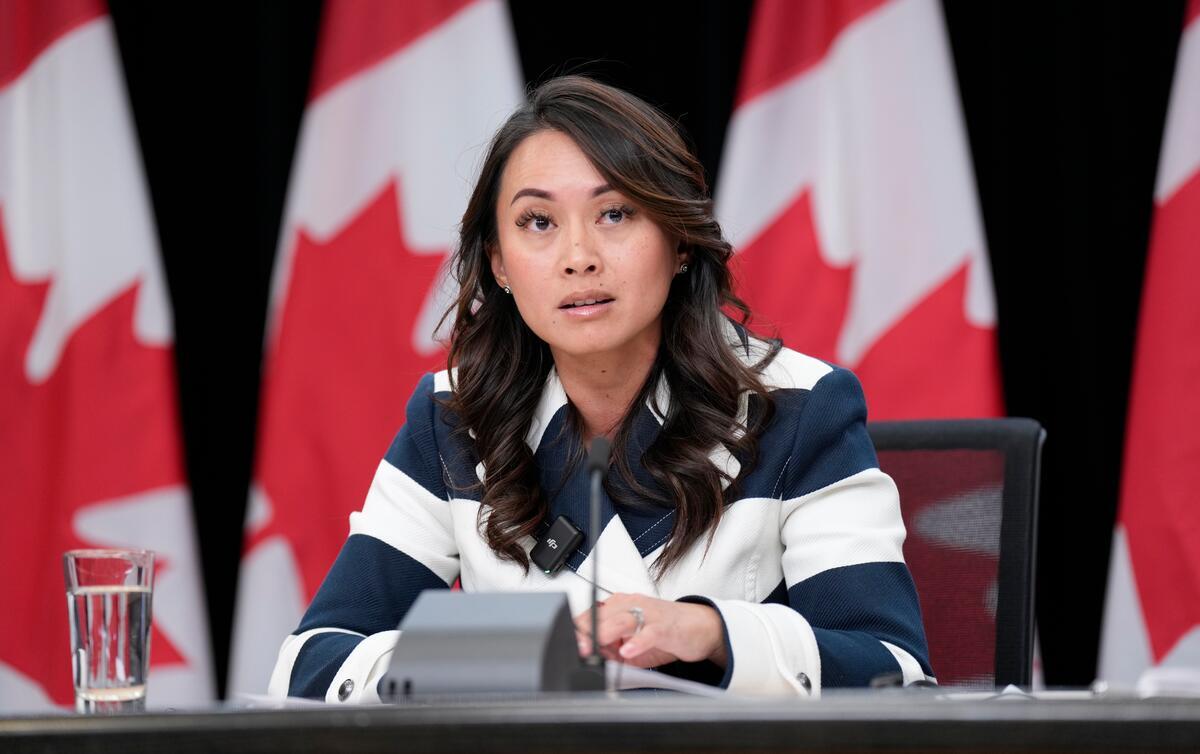
Rechie Valdez, PC, politician, entrepreneur (born 17 September 1980 in Kitwe, Zambia). In the 2021 federal election, she became the first federally elected Filipina Canadian member of Parliament. She represents the riding of Mississauga―Streetsville in Ontario as a member of the Liberal Party of Canada. In 2023, she became the first woman from the Philippine community to serve as a Cabinet minister. She was the minister of Small Business until March 2025. After the 2025 election, Prime Minister Mark Carney appointed her as minister of Women and Gender Equality. She also occupies the position of secretary of state (Small Business and Tourism).
"https://d3d0lqu00lnqvz.cloudfront.net/Rechie-Valdez-2024.jpg" // resources/views/front/categories/view.blade.php
https://d3d0lqu00lnqvz.cloudfront.net/Rechie-Valdez-2024.jpg