
Browse "People"
-
Article
Onondaga
The Onondaga are an Indigenous nation in Canada. They make up one-sixth of the Haudenosaunee Confederacy; the rest include the Kanyen’kehà:ka (Mohawk), Cayuga, Seneca, Oneida and Tuscarora. Onondaga traditional territory is located outside Syracuse, New York. Onondaga peoples also live on Six Nations territory near Brantford, Ontario. According to the Government of Canada, in January 2024, there were 711 registered members of the Bearfoot Onondaga First Nation and 892 registered members of the Onondaga Clear Sky First Nation. (See also First Nations.)
"https://d3d0lqu00lnqvz.cloudfront.net/3546949418_5e04fd2103_b.jpg" // resources/views/front/categories/view.blade.php
https://d3d0lqu00lnqvz.cloudfront.net/3546949418_5e04fd2103_b.jpg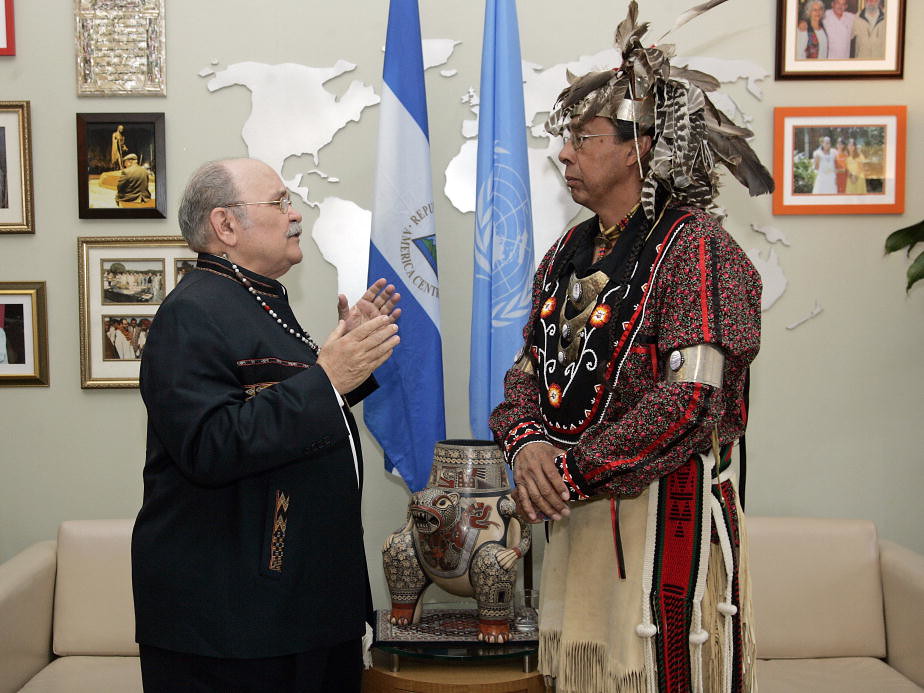
-
Article
Ontario Schools Question
The Ontario schools question was the first major schools issue to focus on language rather than religion. In Ontario, French or French-language education remained a contentious issue for nearly a century, from 1890 to 1980, with English-speaking Catholics and Protestants aligned against French-speaking Catholics.
"https://d3d0lqu00lnqvz.cloudfront.net/media/media/0bbc7423-f097-4fac-8e20-9663a9419422.jpg" // resources/views/front/categories/view.blade.php
https://d3d0lqu00lnqvz.cloudfront.net/media/media/0bbc7423-f097-4fac-8e20-9663a9419422.jpg
-
Article
Onye Nnorom
Onyenyechukwu (Onye) Nnorom, family physician, specialist in public health and preventive medicine (born 27 February 1981 in Montreal, Quebec). Dr. Nnorom is an assistant professor at the University of Toronto and the first Black associate chief medical officer of health for the province of Ontario. In addition to safeguarding public health her portfolio includes a focus on Black health. Throughout her career, Nnorom’s work has addressed the health inequities that racialized and immigrant communities face in Canada.
"https://d3d0lqu00lnqvz.cloudfront.net/media/new_article_images/OnyeNnorom/Onye_Nnorom2.JPG" // resources/views/front/categories/view.blade.php
https://d3d0lqu00lnqvz.cloudfront.net/media/new_article_images/OnyeNnorom/Onye_Nnorom2.JPG
-
Article
Hupacasath (Opetchesaht)
The Hupacasath (Hupač̓asatḥ, formerly Opetchesaht) are a Nuu-chah-nulth First Nation residing in the Alberni Valley, Vancouver Island, British Columbia. According to the nation, Hupacasath means “people residing above the water.” In November 2025, the federal government reported that there were 384 registered members of the Hupacasath First Nation.
"https://d3d0lqu00lnqvz.cloudfront.net/media/media/cf5e52a1-4a54-4901-abb6-ec059335c13a.jpg" // resources/views/front/categories/view.blade.php
https://d3d0lqu00lnqvz.cloudfront.net/media/media/cf5e52a1-4a54-4901-abb6-ec059335c13a.jpg
-
Article
Orange Order in Canada
The Orange Order was a political and religious fraternal society in Canada. From the early 19th century, members proudly defended Protestantism and the British connection while providing mutual aid. The Order had a strong influence in politics, particularly through patronage at the municipal level, and developed a reputation for sectarianism and rioting.
"https://d3d0lqu00lnqvz.cloudfront.net/media/media/d5c87930-81f5-4775-8e06-bdef546856e2.jpg" // resources/views/front/categories/view.blade.php
https://d3d0lqu00lnqvz.cloudfront.net/media/media/d5c87930-81f5-4775-8e06-bdef546856e2.jpg
-
Article
Order-in-Council P.C. 1911-1324 — the Proposed Ban on Black Immigration to Canada
Order-in-Council P.C. 1324 was approved on 12 August 1911 by the Cabinet of Prime Minister Sir Wilfrid Laurier. The purpose of the order was to ban Black persons from entering Canada for a period of one year because, it read, “the Negro race…is deemed unsuitable to the climate and requirements of Canada.” The order-in-council was the culmination of what researcher R. Bruce Shepard has called Canada’s “campaign of diplomatic racism.” Though the order never became law, the actions of government officials made it clear that Black immigrants were not wanted in Canada (see Immigration).
"https://d3d0lqu00lnqvz.cloudfront.net/media/media/9d43e9db-d903-4447-a4a6-ad497d99685f.jpg" // resources/views/front/categories/view.blade.php
https://d3d0lqu00lnqvz.cloudfront.net/media/media/9d43e9db-d903-4447-a4a6-ad497d99685f.jpg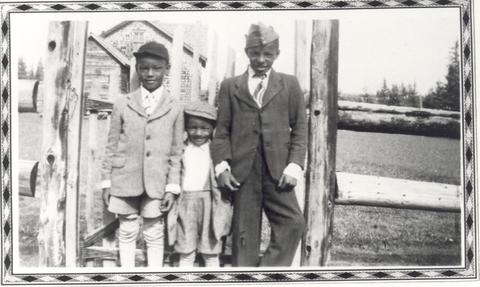
-
Article
Ordre de Bon Temps
Ordre de Bon Temps ("Order of Good Cheer"), was founded at Port-Royal in 1606 by Samuel de Champlain .
"https://d3d0lqu00lnqvz.cloudfront.net/media/media/eae4b142-cd6b-4c86-a303-32da3140b207.jpg" // resources/views/front/categories/view.blade.php
https://d3d0lqu00lnqvz.cloudfront.net/media/media/eae4b142-cd6b-4c86-a303-32da3140b207.jpg
-
Article
Ordre de Jacques-Cartier
The Ordre de Jacques-Cartier (OJC), commonly known as “La Patente,” was a secret society founded in 1926 in Vanier (now Ottawa), Ontario, to further the religious, social and economic interests of French Canadians. At the forefront of the conflicts over language and nationalism until the 1960s, it discreetly wielded its influence by infiltrating various associations, and it mobilized its members within a strict authoritarian structure. The rise of Québécois nationalism and internal tensions led to its dissolution in 1965.
"https://d3d0lqu00lnqvz.cloudfront.net/media/media/4b2db646-824c-461d-acf7-30a5d5095b35.jpg" // resources/views/front/categories/view.blade.php
https://d3d0lqu00lnqvz.cloudfront.net/media/media/4b2db646-824c-461d-acf7-30a5d5095b35.jpg
-
Article
Oren Lyons
Oren R. Lyons Jr. (Onondaga name Jo-Ag-Quis-Ho), lacrosse player, faithkeeper, political leader (born 5 March 1930 in Onondaga Nation, New York). A star lacrosse goaltender on the field and in the box, Oren Lyons is an advocate for the rights of Indigenous peoples around the world. A faithkeeper of the Turtle Clan of the Onondaga Nation, he serves the Grand Council of the Haudenosaunee Confederacy. During the Kanesatake Resistance (Oka Crisis), he served as a negotiator between Indigenous protestors and Canadian authorities. He has received many honours for his advocacy and his athleticism, including induction into Canada’s Sports Hall of Fame.
"https://d3d0lqu00lnqvz.cloudfront.net/OrenLyons/oren_lyons_speaking_with_wampum_resized.jpg" // resources/views/front/categories/view.blade.php
https://d3d0lqu00lnqvz.cloudfront.net/OrenLyons/oren_lyons_speaking_with_wampum_resized.jpg
-
Article
Orest Semchishen
Orest Semchishen, photographer (b at Mundare, Alta 1932). A radiologist by profession, Semchishen took up photography initially as a hobby.
"https://thecanadianencyclopedia.ca/images/tce_placeholder.jpg?v=e9dca980c9bdb3aa11e832e7ea94f5d9" // resources/views/front/categories/view.blade.php
https://thecanadianencyclopedia.ca/images/tce_placeholder.jpg?v=e9dca980c9bdb3aa11e832e7ea94f5d9
-
Article
Orkneymen
The first Orkneymen were brought out in the first decade of the 18th century, but the practice did not become regular until the 1730s. At the peak of their involvement with the HBC in 1800, Orkneymen comprised 80% of a labour force of almost 500.
"https://d3d0lqu00lnqvz.cloudfront.net/media/media/95512382-eee8-4a7d-a54c-492b588099a8.jpg" // resources/views/front/categories/view.blade.php
https://d3d0lqu00lnqvz.cloudfront.net/media/media/95512382-eee8-4a7d-a54c-492b588099a8.jpg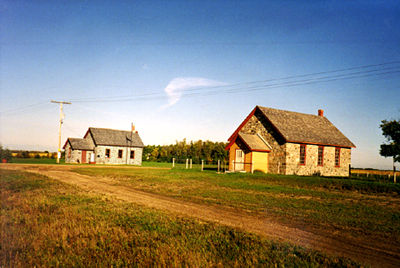
-
Article
Oronhyatekha
Oronhyatekha (pronounced O-RON-ya-day-ga, meaning "Burning Sky" or “Burning Cloud”), also known as Peter Martin, a Kanyen'kehà:ka (Mohawk) medical doctor and businessman (born 10 August 1841 on the Six Nations of the Grand River reserve near Brantford, Canada West [now Ontario]; died 3 March 1907 in Savannah, Georgia, US). In 1867, Oronhyatekha became the second Indigenous person in Canada to earn a medical degree. Passionate about Indigenous issues, he was elected to the Grand General Indian Council of Ontario and Quebec in 1872, where he fought against the restrictive measures of the Indian Act. Oronhyatekha was also a businessman and, in 1881, headed the Independent Order of Foresters.
"https://d3d0lqu00lnqvz.cloudfront.net/oronhyatekha_tweetonly2.jpg" // resources/views/front/categories/view.blade.php
https://d3d0lqu00lnqvz.cloudfront.net/oronhyatekha_tweetonly2.jpg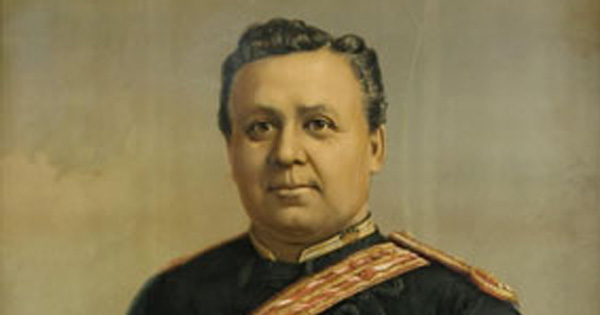
-
Article
Orpha-F Deveaux
Orpha-F. Deveaux. Organist, pianist, teacher, b Saginaw, Mich, 24 Jul 1872, d Hartford, Conn, December 1933. His teachers in Montreal were Alexis Contant and Percival J. Illsley. He also studied at the New York College of Music with Mat Schmidt, among others.
"https://thecanadianencyclopedia.ca/images/tce_placeholder.jpg?v=e9dca980c9bdb3aa11e832e7ea94f5d9" // resources/views/front/categories/view.blade.php
https://thecanadianencyclopedia.ca/images/tce_placeholder.jpg?v=e9dca980c9bdb3aa11e832e7ea94f5d9
-
Article
Orpheus Club
Orpheus Club (Regina). Women's organization founded in 1915 as the Eva Clare Studio Club and known 1917-19 as the Clare Music Study Club. Renamed the Orpheus Club in 1919, it incorporated art, literature, and architecture in its study program. It has at times supported a string quartet and a choir.
"https://thecanadianencyclopedia.ca/images/tce_placeholder.jpg?v=e9dca980c9bdb3aa11e832e7ea94f5d9" // resources/views/front/categories/view.blade.php
https://thecanadianencyclopedia.ca/images/tce_placeholder.jpg?v=e9dca980c9bdb3aa11e832e7ea94f5d9
-
Article
Orpheus Club of Halifax
Orpheus Club of Halifax. The second major choir to emerge in Halifax (see Halifax Harmonic Society). It was formed in 1882, with about 75 trained and amateur male voices.
"https://thecanadianencyclopedia.ca/images/tce_placeholder.jpg?v=e9dca980c9bdb3aa11e832e7ea94f5d9" // resources/views/front/categories/view.blade.php
https://thecanadianencyclopedia.ca/images/tce_placeholder.jpg?v=e9dca980c9bdb3aa11e832e7ea94f5d9