
Browse "People"
-
Article
Odette de Foras
Odette de Foras. Soprano, teacher, b Savoie, France, ca 1895, d Calgary 31 Dec 1976 or 1 Jan 1977. She spent her youth in Paris and at the Château de Thuyset, near Lake Geneva. With her family, she settled ca 1903 in High River, south of Calgary.
"https://thecanadianencyclopedia.ca/images/tce_placeholder.jpg?v=e9dca980c9bdb3aa11e832e7ea94f5d9" // resources/views/front/categories/view.blade.php
https://thecanadianencyclopedia.ca/images/tce_placeholder.jpg?v=e9dca980c9bdb3aa11e832e7ea94f5d9
-
Article
Offenbach
One of Québec’s most influential and popular rock bands, the progressive blues-rock group Offenbach have been credited with successfully adapting the French language to the hard rhythms of American rock.
"https://thecanadianencyclopedia.ca/images/tce_placeholder.jpg?v=e9dca980c9bdb3aa11e832e7ea94f5d9" // resources/views/front/categories/view.blade.php
https://thecanadianencyclopedia.ca/images/tce_placeholder.jpg?v=e9dca980c9bdb3aa11e832e7ea94f5d9
-
Article
Chief Electoral Officer of Canada
The Chief Electoral Officer of Canada (CEO) is an officer of Parliament. They oversee Elections Canada, the non-partisan agency that administers Canada’s federal elections and referendums. The position was created in 1920 under the Dominion Elections Act. The goal was to put an end to political partisanship in the administration of federal elections. Before 1920, election officials were appointed by the governing regime of the day. The role is now independent of the government, or any political parties. The Chief Electoral Officer is appointed by a resolution of the House of Commons. The CEO reports directly to the House. The CEO can only be removed for cause, by the governor general following a joint meeting of the House of Commons and the Senate.
"https://d3d0lqu00lnqvz.cloudfront.net/media/media/3fcad776-7e8d-47da-86aa-c77b5a9d2744.jpg" // resources/views/front/categories/view.blade.php
https://d3d0lqu00lnqvz.cloudfront.net/media/media/3fcad776-7e8d-47da-86aa-c77b5a9d2744.jpg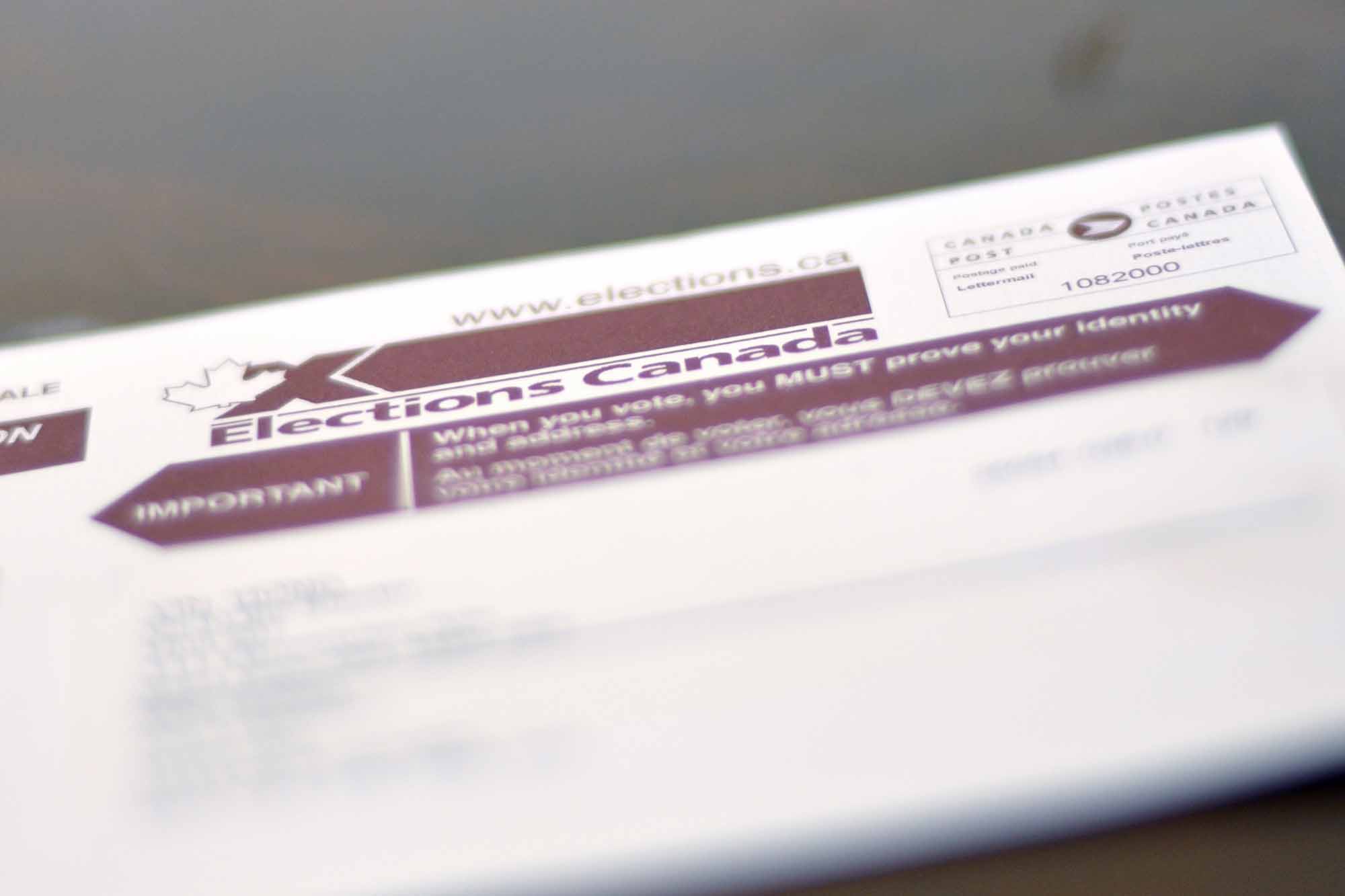
-
Article
Official Languages Act (1988) (Plain-Language Summary)
The Official Languages Act of 1969 made English and French the two official languages in Canada. The Official Languages Act of 1988 offered more detail about how the policies of bilingualism should be put into practice. It highlighted the responsibilities of federal institutions with respect to official languages in Canada. An important goal of the Official Languages Act is to ensure the equality of English and French in federal institutions and in Canadian society. (This article is a plain-language summary of the Official Languages Act of 1988. If you are interested in reading about this topic in more depth, please see our full-length entry on The Official Languages Act (1988).)
"https://thecanadianencyclopedia.ca/images/tce_placeholder.jpg?v=e9dca980c9bdb3aa11e832e7ea94f5d9" // resources/views/front/categories/view.blade.php
https://thecanadianencyclopedia.ca/images/tce_placeholder.jpg?v=e9dca980c9bdb3aa11e832e7ea94f5d9
-
"https://d3d0lqu00lnqvz.cloudfront.net/media/media/bd478ea0-a00c-450d-8d0f-d4846ca13d66.jpg" // resources/views/front/categories/view.blade.php
https://d3d0lqu00lnqvz.cloudfront.net/media/media/bd478ea0-a00c-450d-8d0f-d4846ca13d66.jpg
-
Article
Ofra Harnoy
Harnoy premiered the newly discovered Cello Concerto in G by Offenbach with the Cincinnati SO in 1983, and gave the North American premiere of the Bliss Cello Concerto in Santa Barbara, Cal in 1984.
"https://d3d0lqu00lnqvz.cloudfront.net/media/media/bd478ea0-a00c-450d-8d0f-d4846ca13d66.jpg" // resources/views/front/categories/view.blade.php
https://d3d0lqu00lnqvz.cloudfront.net/media/media/bd478ea0-a00c-450d-8d0f-d4846ca13d66.jpg
-
Article
Ogreta McNeill
Ogreta McNeill (b Ormiston). Librarian, teacher, b Gabarus, Cape Breton Island, NS, 2 Aug 1903, d East York, Ont, 21 Apr 1993; ATCM 1932, B MUS (Toronto) 1952, BLS (Toronto) 1953. She was raised in Victoria, BC, where she studied and taught piano. The young John Beckwith was one of her pupils.
"https://thecanadianencyclopedia.ca/images/tce_placeholder.jpg?v=e9dca980c9bdb3aa11e832e7ea94f5d9" // resources/views/front/categories/view.blade.php
https://thecanadianencyclopedia.ca/images/tce_placeholder.jpg?v=e9dca980c9bdb3aa11e832e7ea94f5d9
-
Article
O.J. Abbott
O.J. (Oliver John) Abbott. Folksinger, b Enfield, England, 1872, d Hull, Que, 3 Mar 1962. He worked on several farms in an Irish community in the Ottawa Valley and in lumber camps in northern Ontario and Quebec before settling in Hull.
"https://thecanadianencyclopedia.ca/images/tce_placeholder.jpg?v=e9dca980c9bdb3aa11e832e7ea94f5d9" // resources/views/front/categories/view.blade.php
https://thecanadianencyclopedia.ca/images/tce_placeholder.jpg?v=e9dca980c9bdb3aa11e832e7ea94f5d9
-
Article
Ojibwe
The Ojibwe (also Ojibwa and Ojibway) are an Indigenous people in Canada and the United States who are part of a larger cultural group known as the Anishinaabeg. Chippewa and Saulteaux people are also part of the Ojibwe and Anishinaabe ethnic groups. The Ojibwe are closely related to the Odawa and Algonquin peoples, and share many traditions with neighbouring Cree people, especially in the north and west of Ontario, and east of Manitoba. Some Cree and Ojibwe peoples have merged to form Oji-Cree communities. In their traditional homelands in the Eastern Woodlands, Ojibwe people became integral parts of the early fur trade economy. Ojibwe culture, language (Anishinaabemowin) and activism have persisted despite assimilative efforts by federal and provincial governments, and in many cases are representative of the enduring First Nations presence in Canada.
"https://d3d0lqu00lnqvz.cloudfront.net/media/Twitter_Cards/Autumn Peltier.png" // resources/views/front/categories/view.blade.php
https://d3d0lqu00lnqvz.cloudfront.net/media/Twitter_Cards/Autumn Peltier.png
-
Article
Oka
Oka, Quebec, incorporated as a municipality in 1875, population 3,968 (2021 census), 3,824 (2016 census). Oka is located on Lac des Deux Montagnes, just west of Île de Montréal.
"https://d3d0lqu00lnqvz.cloudfront.net/media/media/af36926e-717c-45ef-91cc-f00a20c1faeb.jpg" // resources/views/front/categories/view.blade.php
https://d3d0lqu00lnqvz.cloudfront.net/media/media/af36926e-717c-45ef-91cc-f00a20c1faeb.jpg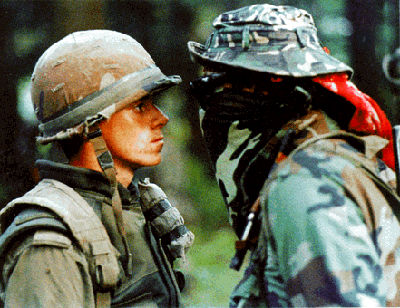
-
Article
Kanesatake Resistance (Oka Crisis)
The Kanesatake Resistance, also known as the Oka Crisis or the Mohawk Resistance at Kanesatake, was a 78-day standoff (11 July–26 September 1990) between Kanyen'kehà:ka (Mohawk) protesters, Quebec police, the RCMP and the Canadian Army. It took place in the community of Kanesatake, near the Town of Oka, on the north shore of Montreal. Related protests and violence occurred in the Kahnawá:ke reserve, to the south of Montreal. The crisis was sparked by the proposed expansion of a golf course and the development of townhouses on disputed land in Kanesatake that included a Kanyen'kehà:ka burial ground. Tensions were high, particularly after the death of Corporal Marcel Lemay, a Sûreté du Québec police officer. Eventually, the army was called in and the protest ended. The golf course expansion was cancelled, and the land was purchased by the federal government. However, it did not establish the land as a reserve, and there has since been no organized transfer of the land to the Mohawks of Kanesatake. This article is a full-length entry about the Kanesatake Resistance (Oka Crisis). For a plain-language summary, please see Kanesatake Resistance (Oka Crisis) (Plain-Language Summary).
"https://d3d0lqu00lnqvz.cloudfront.net/media/new_article_images/OkaCrisis/1990_C_35_7 (003).jpg" // resources/views/front/categories/view.blade.php
https://d3d0lqu00lnqvz.cloudfront.net/media/new_article_images/OkaCrisis/1990_C_35_7 (003).jpg.jpg)
-
Article
Olaf Sveen
Olaf Sveen. Accordionist, composer, b Surndal, Norway, l8 Apr l9l9, naturalized Canadian l954. Taught to play the accordion by his father and grandfather and by noted Norwegian players, Sveen moved to Canada in l949.
"https://thecanadianencyclopedia.ca/images/tce_placeholder.jpg?v=e9dca980c9bdb3aa11e832e7ea94f5d9" // resources/views/front/categories/view.blade.php
https://thecanadianencyclopedia.ca/images/tce_placeholder.jpg?v=e9dca980c9bdb3aa11e832e7ea94f5d9
-
Article
Old Believers
Old Believers, also known as Old Ritualists, are descendants of conservative members of the Russian Orthodox Church who refused to accept a reform imposed in the mid-17th century by the patriarch Nikon.
"https://thecanadianencyclopedia.ca/images/tce_placeholder.jpg?v=e9dca980c9bdb3aa11e832e7ea94f5d9" // resources/views/front/categories/view.blade.php
https://thecanadianencyclopedia.ca/images/tce_placeholder.jpg?v=e9dca980c9bdb3aa11e832e7ea94f5d9
-
Article
Olivar Asselin
Olivar Asselin, journalist, soldier, philanthropist (born 8 Nov 1874 in Saint-Hilarion de Charlevoix, Québec; died 18 April 1937 in Montréal, Québec). Olivar Asselin was a writer, journalist, philanthropist and public intellectual in Québec at the turn of the 20th century. He was widely regarded as a giant in the world of Québec journalism and had a remarkable talent for recruiting and mentoring young writers during his extended career. As a fervent French Canadian nationalist and fierce polemist, he was deeply engaged in virtually every public issue of his day.
"https://d3d0lqu00lnqvz.cloudfront.net/media/media/5bfe94b6-718a-43e9-808b-4b2e2095b74d.jpg" // resources/views/front/categories/view.blade.php
https://d3d0lqu00lnqvz.cloudfront.net/media/media/5bfe94b6-718a-43e9-808b-4b2e2095b74d.jpg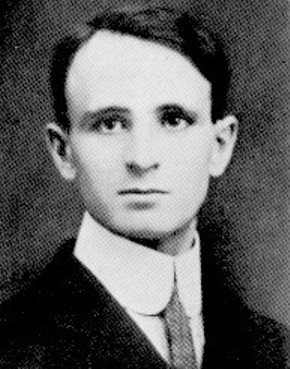
-
Article
Olive Dickason
Olive Patricia Dickason (née Williamson), CM, Métis journalist, historian, university professor, author (born 6 March 1920 in Winnipeg, MB; died 12 March 2011 in Ottawa, ON). Dickason was the first scholar in Canada to receive a PhD in Indigenous history. Her ground-breaking research and books about Indigenous and Métis history and culture transformed how Canadians perceive the origin of their country and Indigenous peoples. Dickason’s work inspired a new generation of scholars, helping to launch Indigenous studies as an area of scholarly research. She received an Order of Canada in recognition of her achievements.
"https://d3d0lqu00lnqvz.cloudfront.net/media/new_article_images/OliveDickason/Canada's First Nations.jpg" // resources/views/front/categories/view.blade.php
https://d3d0lqu00lnqvz.cloudfront.net/media/new_article_images/OliveDickason/Canada's First Nations.jpg