
Browse "People"
-
List
Influential Indigenous Actors from Canada
For most of the 20th century, theatre, movies and television portrayed Indigenous nations and people in a manner that often perpetuated negative stereotypes. Indigenous actors from Canada were among those who fought the stereotypes and whose talents are continuing to contribute to Canadian and Indigenous cultures.
"https://d3d0lqu00lnqvz.cloudfront.net/media/media/176ca208-962c-45ad-8387-d4c8456aa636.jpg" // resources/views/front/categories/view.blade.php
https://d3d0lqu00lnqvz.cloudfront.net/media/media/176ca208-962c-45ad-8387-d4c8456aa636.jpg
-
List
Influential Indigenous Filmmakers in Canada
Indigenous filmmakers have been creating award-winning films and shows for decades. Through documentaries and works of fiction, Indigenous filmmakers have created space for representations of Indigenous peoples that more accurately reflect their lived realities and help to counter stereotypes.
"https://d3d0lqu00lnqvz.cloudfront.net/AletheaArnaquq-Baril/Alethea_Arnaquq-Baril_in_front_of_camera_resized.jpg" // resources/views/front/categories/view.blade.php
https://d3d0lqu00lnqvz.cloudfront.net/AletheaArnaquq-Baril/Alethea_Arnaquq-Baril_in_front_of_camera_resized.jpg
-
List
Influential Indigenous Musicians in Canada
Music entertains and soothes, but it can also educate and challenge. These talented artists are among many popular Indigenous musicians in Canada. Their work celebrates Indigenous cultures and shines a light on important issues concerning Indigenous people in Canada.
"https://d3d0lqu00lnqvz.cloudfront.net/1024px-Kashtin_2019.jpg" // resources/views/front/categories/view.blade.php
https://d3d0lqu00lnqvz.cloudfront.net/1024px-Kashtin_2019.jpg
-
Article
Ingemar Korjus
Ingemar Korjus. Bass-baritone, teacher, adjudicator, b Stockholm, of Estonian parents, 8 Apr 1950, naturalized Canadian 1960; ARCT (Associate, Royal Conservatory of Music) performance 1970, ARCT teaching 1971.
"https://thecanadianencyclopedia.ca/images/tce_placeholder.jpg?v=e9dca980c9bdb3aa11e832e7ea94f5d9" // resources/views/front/categories/view.blade.php
https://thecanadianencyclopedia.ca/images/tce_placeholder.jpg?v=e9dca980c9bdb3aa11e832e7ea94f5d9
-
Article
Ingrid Veninger
Ingrid Veninger, producer, director, actor, writer (born 21 August 1968 in Bratislava, Slovakia). The "DIY queen of Canadian filmmaking," Ingrid Veninger is a multitalented filmmaker.
"https://d3d0lqu00lnqvz.cloudfront.net/media/media/9ae9880d-b773-4969-843e-f66573b6dbaf.jpg" // resources/views/front/categories/view.blade.php
https://d3d0lqu00lnqvz.cloudfront.net/media/media/9ae9880d-b773-4969-843e-f66573b6dbaf.jpg
-
Article
Tlingit
The Tlingit (sometimes also known as the Łingít) are Indigenous peoples of the Pacific Northwest Coast of North America who share a common cultural heritage. Tlingit means “people of the tides.” In the 2021 Census, 1,770 people identified as having Tlingit ancestry.
"https://d3d0lqu00lnqvz.cloudfront.net/media/media/348a644b-e1d0-4f53-b1ec-8076569b0a5d.jpg" // resources/views/front/categories/view.blade.php
https://d3d0lqu00lnqvz.cloudfront.net/media/media/348a644b-e1d0-4f53-b1ec-8076569b0a5d.jpg
-
Article
Innu (Montagnais-Naskapi)
Innu, which means “people” in the Innu language, is the predominant term used to describe all Innu. Some groups maintain the use of one of two older terms: Montagnais (French for “mountain people”), usually applied to groups in forested, more southern communities, and Naskapi, which refers to far northern groups who inhabit the barren lands of the subarctic. In the 2021 census, 18,620 people identified as having Innu ancestry, with 17,970 people claiming Innu/Montagnais ancestry and 735 people claiming Naskapi ancestry.
"https://d3d0lqu00lnqvz.cloudfront.net/media/media/innu essipit first nation.jpg" // resources/views/front/categories/view.blade.php
https://d3d0lqu00lnqvz.cloudfront.net/media/media/innu essipit first nation.jpg
-
Article
Intendant
Intendant of New France, office created in 1663 when Louis XIV established a system of colonial government, including a Gouverneur and Sovereign council.
"https://thecanadianencyclopedia.ca/images/tce_placeholder.jpg?v=e9dca980c9bdb3aa11e832e7ea94f5d9" // resources/views/front/categories/view.blade.php
https://thecanadianencyclopedia.ca/images/tce_placeholder.jpg?v=e9dca980c9bdb3aa11e832e7ea94f5d9
-
Article
Interculturalism
Interculturalism is a model for living together developed in Quebec during the 1980s and represents its approach regarding the integration of newcomers and minority groups. (See Immigration to Canada.) This approach is the Quebec response to the federal government model, i.e., Canadian multiculturalism. The philosophy behind interculturalism is based on the idea that equality between the cultures in Quebec requires francisation and secularization of the public domain. Due to the controversies and debates surrounding the policies regarding reasonable accommodation, an official policy regarding the concept of interculturalism has become essential. The report from the Bouchard-Taylor Commission continues to represent the most significant consultation effort regarding interculturalism. The Charte de la langue française is one of the major pillars of the intercultural approach. (See also Quebec Immigration Policy.) This article is a full-length entry about interculturalism. For a plain-language summary, please see Interculturalism (Plain-Language Summary).
"https://d3d0lqu00lnqvz.cloudfront.net/Gerard_Bouchard/Gerard-Bouchard-QC.jpg" // resources/views/front/categories/view.blade.php
https://d3d0lqu00lnqvz.cloudfront.net/Gerard_Bouchard/Gerard-Bouchard-QC.jpg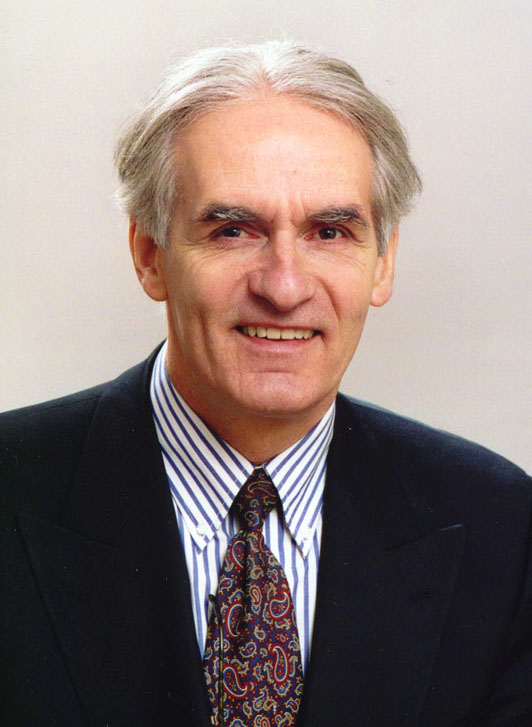
-
Article
Intergenerational Trauma and Residential Schools
Historical trauma occurs when trauma caused by historical oppression is passed down through generations. For more than 100 years, the Canadian government supported residential school programs that isolated Indigenous children from their families and communities (see Residential Schools in Canada). Under the guise of educating and preparing Indigenous children for their participation in Canadian society, the federal government and other administrators of the residential school system committed what has since been described as an act of cultural genocide. As generations of students left these institutions, they returned to their home communities without the knowledge, skills or tools to cope in either world. The impacts of their institutionalization in residential school continue to be felt by subsequent generations. This is called intergenerational trauma. This is the full-length entry about Intergenerational Trauma and Residential Schools. For a plain-language summary, please see Intergenerational Trauma and Residential Schools (Plain-Language Summary).
"https://thecanadianencyclopedia.ca/images/tce_placeholder.jpg?v=e9dca980c9bdb3aa11e832e7ea94f5d9" // resources/views/front/categories/view.blade.php
https://thecanadianencyclopedia.ca/images/tce_placeholder.jpg?v=e9dca980c9bdb3aa11e832e7ea94f5d9
-
Article
Interior Salish
The Interior Salish peoples include the Lillooet (or Lil’wat, see also Lillooet, British Columbia), Shuswap (now Secwepemc), Thompson (now Nlaka'pamux), Sinixt and Okanagan (Syilx) First Nations. These First Nations occupy territory in the interior of British Columbia(although some territory extends into the state of Washington in the United States). They speak languages belonging to the Interior Salish division of the Salishan language family. In the 2016 Census (Canada), 5,620 peoples identified themselves as Salish speakers, including 1,290 that speak Shuswap (Secwepemctsin). (See also Indigenous Languages in Canada).
"https://d3d0lqu00lnqvz.cloudfront.net/media/media/99144a52-aa7d-447b-86e4-3b03248f412d.jpg" // resources/views/front/categories/view.blade.php
https://d3d0lqu00lnqvz.cloudfront.net/media/media/99144a52-aa7d-447b-86e4-3b03248f412d.jpg
-
Article
International Workers' Day (May Day) in Canada
Recognized on the first day of May every year, International Workers’ Day, or May Day, commemorates the struggles of workers around the world through the labour movements and the political left. Although established in Canada since the beginning of the 20th century, this day is not deemed a statutory holiday, as opposed to Labour Day, celebrated on the first Monday in September.
"https://d3d0lqu00lnqvz.cloudfront.net/media/MayDay/3495633291_fbc5a004e3_z.jpg" // resources/views/front/categories/view.blade.php
https://d3d0lqu00lnqvz.cloudfront.net/media/MayDay/3495633291_fbc5a004e3_z.jpg
-
Interview
Interned in Canada: an Interview with Pat Adachi
Pat Adachi was born and raised in Vancouver, the daughter of Japanese immigrants. She grew up in the heart of the city’s Little Tokyo neighbourhood, within walking distance of the local grounds where her father would take her on Sundays to watch her favourite baseball team, the Vancouver Asahi. Adachi and her family lived normal lives, until she and her community were uprooted in 1942, when the federal government ordered Japanese Canadians to internment camps in rural British Columbia (see Internment of Japanese Canadians). In this interview, Adachi shares her story and relates the experiences of the 22,000 Japanese Canadians who were interned in Canada during the Second World War. This interview has been edited for length and clarity.
"https://d3d0lqu00lnqvz.cloudfront.net/media/new_article_images/Pat Adachi.jpg" // resources/views/front/categories/view.blade.php
https://d3d0lqu00lnqvz.cloudfront.net/media/new_article_images/Pat Adachi.jpg
-
Article
Internment of Japanese Canadians
The forcible expulsion and confinement of Japanese Canadians during the Second World War is one of the most tragic sets of events in Canada’s history. Some 21,000–22,000 Japanese Canadians were taken from their homes on Canada’s West Coast, without any charge or due process. Beginning 24 February 1942, they were exiled to remote areas of British Columbia and elsewhere. The federal government stripped them of their property and pressured many of them to accept mass deportation after the war. Those who remained were not allowed to return to the West Coast until 1 April 1949. In 1988, the federal government officially apologized for its treatment of Japanese Canadians. A redress payment of $21,000 was made to each survivor, and more than $12 million was allocated to a community fund and human rights projects. This article is the full-length text on Japanese Internment in Canada. For a plain-language summary, see Internment of Japanese Canadians (Plain-Language Summary).
"https://d3d0lqu00lnqvz.cloudfront.net/media/media/0bec6156-0467-4a97-909f-da599383381d.jpg" // resources/views/front/categories/view.blade.php
https://d3d0lqu00lnqvz.cloudfront.net/media/media/0bec6156-0467-4a97-909f-da599383381d.jpg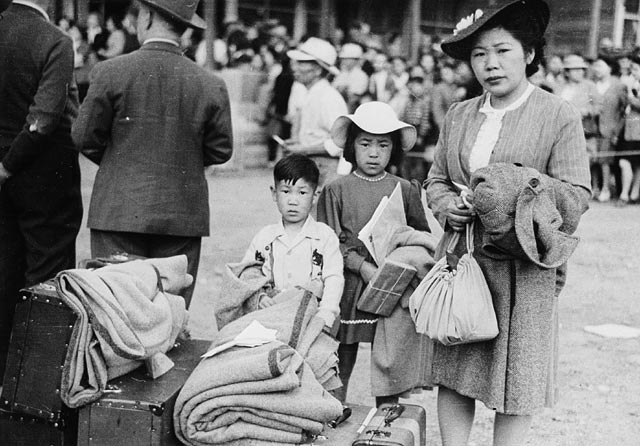
-
Article
Inuit
Inuit — Inuktitut for “the people” — are an Indigenous people, the majority of whom inhabit the northern regions of Canada. An Inuit person is known as an Inuk. The Inuit homeland is known as Inuit Nunangat, which refers to the land, water and ice contained in the Arctic region.
"https://d3d0lqu00lnqvz.cloudfront.net/media/media/f34a93b3-60ab-47d0-879b-1d1e7460f199.jpg" // resources/views/front/categories/view.blade.php
https://d3d0lqu00lnqvz.cloudfront.net/media/media/f34a93b3-60ab-47d0-879b-1d1e7460f199.jpg