
Browse "People"
-
Article
Chinese Head Tax in Canada
The Chinese head tax was enacted to restrict immigration after Chinese labour was no longer needed to build the Canadian Pacific Railway. Between 1885 and 1923, Chinese immigrants had to pay a head tax to enter Canada. The tax was levied under the Chinese Immigration Act (1885). It was the first legislation in Canadian history to exclude immigration on the basis of ethnic background. With few exceptions, Chinese people had to pay at least $50 to come to Canada. The tax was later raised to $100, then to $500. During the 38 years the tax was in effect, around 82,000 Chinese immigrants paid nearly $23 million in tax. The head tax was removed with the passing of the Chinese Immigration Act in 1923. Also known as the Chinese Exclusion Act, it banned all Chinese immigrants until its repeal in 1947. In 2006, the federal government apologized for the head tax and its other racist immigration policies targeting Chinese people. This is the full-length entry about the Chinese Head Tax. For a plain-language summary, please see Chinese Head Tax in Canada (Plain-Language Summary).
"https://d3d0lqu00lnqvz.cloudfront.net/media/media/d0c5f1d6-6030-4a96-900c-3efed6463116.jpg" // resources/views/front/categories/view.blade.php
https://d3d0lqu00lnqvz.cloudfront.net/media/media/d0c5f1d6-6030-4a96-900c-3efed6463116.jpg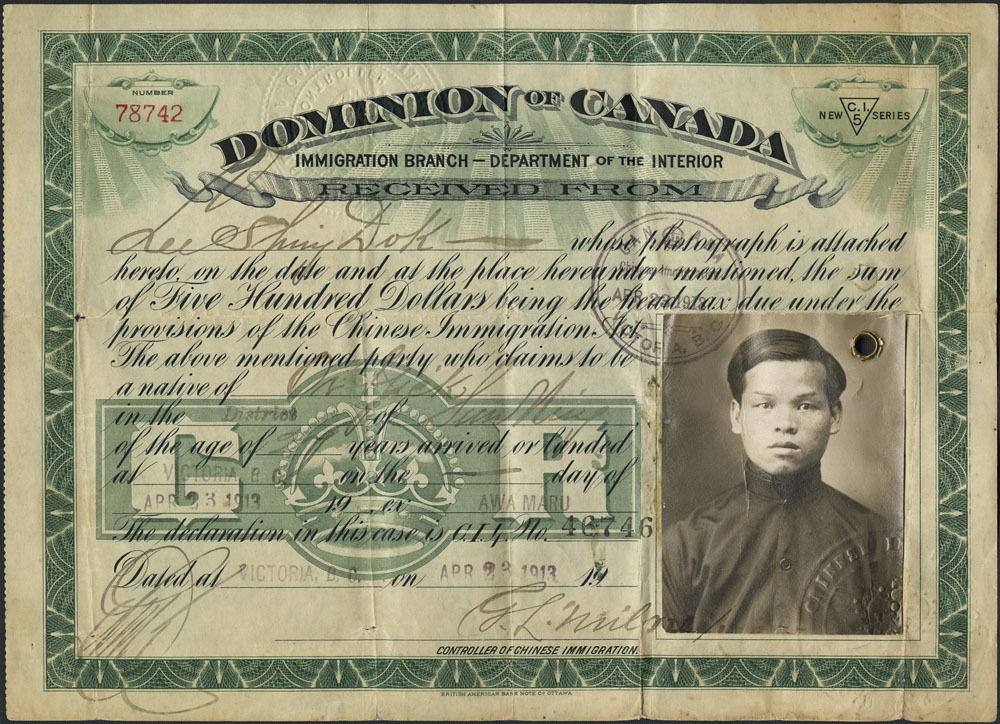
-
Article
Chinese Immigration Act
The Chinese Immigration Act of 1923, known also as the Chinese Exclusion Act, banned the entry of virtually all Chinese immigrants for 24 years. Although migration into Canada from most countries was controlled or restricted in some way, only Chinese people were singled out completely from entering on the basis of race. The four exceptions to the exclusion were students, merchants (excluding laundry, restaurant and retail operators), diplomats and Canadian-born Chinese returning from education in China. The limit on absence from Canada was two years, and the consequence for not returning on time was being barred re-entry. Additionally, every person of Chinese descent, whether Canadian-born or naturalized, was required to register for an identity card within 12 months. The penalty for noncompliance was imprisonment or a fine of up to $500. Though the Act was repealed in 1947, immigration restrictions on the basis of race and national origin were not fully scrubbed until 1967. (See Anti-Chinese Immigration Policies in Canada.) This article is a full-length entry about the Chinese Immigration Act of 1923. For a plain-language summary, please see Chinese Immigration Act (Plain-Language Summary).
"https://d3d0lqu00lnqvz.cloudfront.net/media/media/d0c5f1d6-6030-4a96-900c-3efed6463116.jpg" // resources/views/front/categories/view.blade.php
https://d3d0lqu00lnqvz.cloudfront.net/media/media/d0c5f1d6-6030-4a96-900c-3efed6463116.jpg
-
Article
Chinese Languages in Canada
There are over 300 Chinese languages in total. Today, across the world, more than 1.3 billion people are native speakers of a Chinese language. Chinese immigration to Canada began in earnest in the mid-1800s. A long immigration history has led to Chinese languages being some of the most commonly spoken mother tongues in Canada. In the 2021 census, the most common Chinese mother tongues were Mandarin (730,125 people) and Cantonese (610,420 people). Mandarin, with 987,300 speakers, was also the second most spoken non-official language after Spanish. Cantonese was the seventh most spoken non-official language with 724,925 speakers.
"https://d3d0lqu00lnqvz.cloudfront.net/chinese-language.jpg" // resources/views/front/categories/view.blade.php
https://d3d0lqu00lnqvz.cloudfront.net/chinese-language.jpg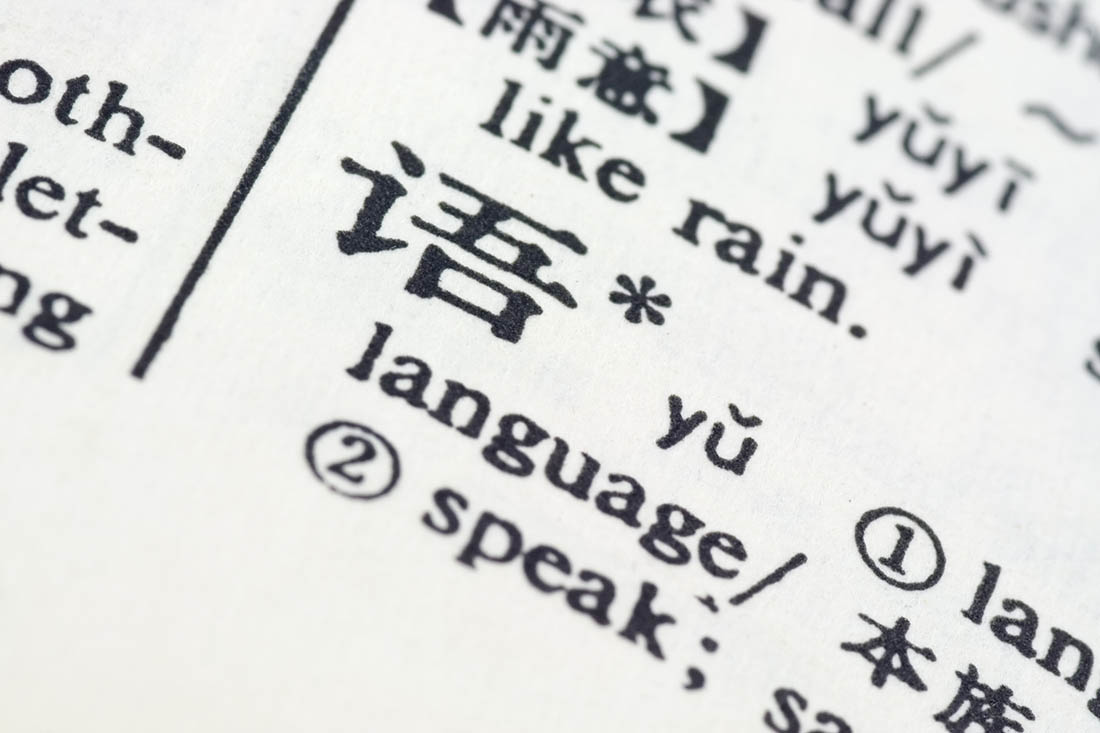
-
Article
Lunar New Year in Canada
The Lunar New Year — also known as the Spring Festival, Chinese New Year, Tet for Vietnamese Canadians, or Solnal for Korean Canadians — is celebrated in Canada and several other countries. It is one of the largest celebrations for Canada’s Chinese population, it is also celebrated by Canadians from Vietnam, Korea and Southeast Asia. Although it is not a statutory holiday in Canada, many Asian Canadian businesses are closed or have reduced hours for the occasion. Since 1 June 2016, this celebration has been recognized as an official holiday in Canada.
"https://d3d0lqu00lnqvz.cloudfront.net/media/media/e1474526-547c-47b7-90e4-afda069c28bf.jpg" // resources/views/front/categories/view.blade.php
https://d3d0lqu00lnqvz.cloudfront.net/media/media/e1474526-547c-47b7-90e4-afda069c28bf.jpg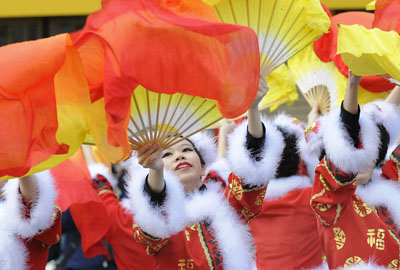
-
Article
Denesuline (Chipewyan)
The Denesuline (also known as Chipewyan) are Indigenous Peoples in the Subarctic region of Canada, with communities in Manitoba, Saskatchewan, Alberta and the Northwest Territories. The Denesuline are Dene, and share many cultural and linguistic similarities with neighbouring Dene communities. The 2021 census reported that 4,815 people claimed to be of Denesuline ancestry. However, the registered population of Denesuline First Nations may be higher. Denesuline are closely associated with other Dene groups as well as northern Cree and Métis, who may share their communities and also speak Denesuline. As such, population and language numbers are approximations.
"https://d3d0lqu00lnqvz.cloudfront.net/media/media/d042a7cd-8095-4a4a-b112-ef4791bf04c6.jpg" // resources/views/front/categories/view.blade.php
https://d3d0lqu00lnqvz.cloudfront.net/media/media/d042a7cd-8095-4a4a-b112-ef4791bf04c6.jpg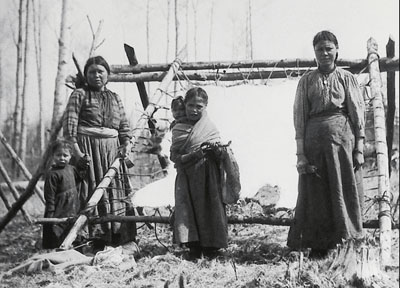
-
Article
Chloe Cooley
Chloe Cooley was one of hundreds of Black women enslaved in the French and British colonies that became Canada. Although little is known about Chloe Cooley, who was enslaved in Upper Canada, her struggles against her enslaver, Sergeant Adam Vrooman, precipitated the Act to Limit Slavery in Upper Canada of 1793. The Act was the first legislation in the British colonies to restrict the slave trade. (See also Black Enslavement in Canada.) Click here for definitions of key terms used in this article.
"https://d3d0lqu00lnqvz.cloudfront.net/media/media/22ace4cd-cd9c-4de9-b8dd-db1ad6c4a64b.jpg" // resources/views/front/categories/view.blade.php
https://d3d0lqu00lnqvz.cloudfront.net/media/media/22ace4cd-cd9c-4de9-b8dd-db1ad6c4a64b.jpg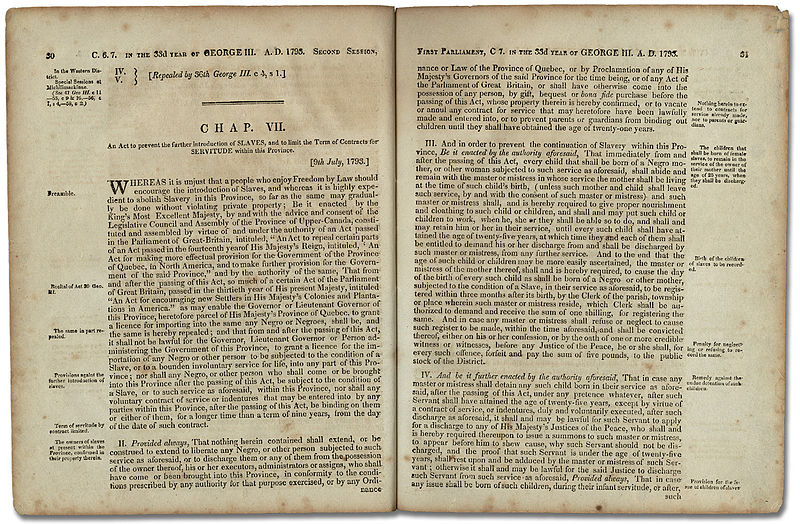
-
Article
Choeur Kattialine
Choeur Kattialine. Choir founded in 1962 in Montreal by its conductor, Jean-François Sénart. Made up of some 30 young amateurs, it made its name in a repertoire of Renaissance madrigals and motets and of folksongs of all countries. The name Kattialine is the Basque equivalent of Catherine.
"https://thecanadianencyclopedia.ca/images/tce_placeholder.jpg?v=e9dca980c9bdb3aa11e832e7ea94f5d9" // resources/views/front/categories/view.blade.php
https://thecanadianencyclopedia.ca/images/tce_placeholder.jpg?v=e9dca980c9bdb3aa11e832e7ea94f5d9
-
Article
Choeur Pie X
Choeur Pie X. Founded in Montreal in 1936 by its first director, Éthelbert Thibault, and Eugène Lapierre. It was the regular choir on the CKAC radio program 'L'Heure catholique,' but was disbanded after less than two years.
"https://thecanadianencyclopedia.ca/images/tce_placeholder.jpg?v=e9dca980c9bdb3aa11e832e7ea94f5d9" // resources/views/front/categories/view.blade.php
https://thecanadianencyclopedia.ca/images/tce_placeholder.jpg?v=e9dca980c9bdb3aa11e832e7ea94f5d9
-
Article
Choeur V'là l'bon vent
Choeur V'là l'bon vent. Founded in Quebec City in 1958 by Gilles Julien, president, and François Provencher, music director 1958-73. Diane Lapierre became conductor and music director in 1973. In 1960 the choir became affiliated with the French choral movement À Coeur Joie.
"https://thecanadianencyclopedia.ca/images/tce_placeholder.jpg?v=e9dca980c9bdb3aa11e832e7ea94f5d9" // resources/views/front/categories/view.blade.php
https://thecanadianencyclopedia.ca/images/tce_placeholder.jpg?v=e9dca980c9bdb3aa11e832e7ea94f5d9
-
Article
Choirs Ontario
Choirs Ontario (previously known as the Ontario Choral Federation). Organization established in 1971 to promote choral activities in Ontario, with an elected voluntary board, a paid executive secretary, and offices in Toronto.
"https://thecanadianencyclopedia.ca/images/tce_placeholder.jpg?v=e9dca980c9bdb3aa11e832e7ea94f5d9" // resources/views/front/categories/view.blade.php
https://thecanadianencyclopedia.ca/images/tce_placeholder.jpg?v=e9dca980c9bdb3aa11e832e7ea94f5d9
-
Article
Chor Leoni Men's Choir
Vancouver's Chor Leoni Men's Choir and Diane Loomer, C.M., artistic director, in front of the Vancouver Art Gallery (photo by William Ting).\r\nChor Leoni Men's Choir Chor Leoni Men's Choir. Vancouver-based amateur choir of 54 voices, formed in 1992 by director Diane Loomer. Initially 20 voices, Chor Leoni Men's Choir made its debut in Nov 1992 and in 1993 initiated a popular four-concert series for spring, summer, Remembrance Day and Christmas. Concerts, often repeated to accommodate...
"https://d3d0lqu00lnqvz.cloudfront.net/media/media/dc080df5-9fb3-4564-bb31-eb290b410781.jpg" // resources/views/front/categories/view.blade.php
https://d3d0lqu00lnqvz.cloudfront.net/media/media/dc080df5-9fb3-4564-bb31-eb290b410781.jpg
-
Article
Choral Singing and Choirs
Canada's choirs have contributed significantly to religious, educational, and concert activities within the country, and some have earned high reputations abroad. Choral singing in Canada became immensely popular in the second half of the 19th century, reached its first peak -- unsurpassed, certainly, in the quantity of choristers relative to the total population -- in the years preceding the First World War, and entered a new period of vigour and expansion after the middle of the 20th century.
"https://d3d0lqu00lnqvz.cloudfront.net/1280px-Mendelssohn_choir_Photo_B_HS85-10-23604.jpg" // resources/views/front/categories/view.blade.php
https://d3d0lqu00lnqvz.cloudfront.net/1280px-Mendelssohn_choir_Photo_B_HS85-10-23604.jpg
-
Article
Chorale de l'Université de Moncton
Chorale de l'Université de Moncton 1963-87 (Chorale de l'Université Saint-Joseph, 1946-63). Male choir founded by Father Léandre Brault in 1946 in Memramcook, NB, with the aim of developing interest in Gregorian chant.
"https://thecanadianencyclopedia.ca/images/tce_placeholder.jpg?v=e9dca980c9bdb3aa11e832e7ea94f5d9" // resources/views/front/categories/view.blade.php
https://thecanadianencyclopedia.ca/images/tce_placeholder.jpg?v=e9dca980c9bdb3aa11e832e7ea94f5d9
-
Macleans
Chrétien, a Closet Autocrat?
It did not take an Ottawa insider to know George Baker was on slippery ground with his own government.This article was originally published in Maclean's Magazine on October 19, 1998
"https://thecanadianencyclopedia.ca/images/tce_placeholder.jpg?v=e9dca980c9bdb3aa11e832e7ea94f5d9" // resources/views/front/categories/view.blade.php
https://thecanadianencyclopedia.ca/images/tce_placeholder.jpg?v=e9dca980c9bdb3aa11e832e7ea94f5d9
-
Macleans
Chrétien Accused of Lying
This article was originally published in Maclean’s magazine on December 23, 1996. Partner content is not updated. Inside his third-floor Parliament Hill office last Thursday, Prime Minister Jean CHRÉTIEN spent part of the morning signing some of the 1,000 Christmas cards that will be sent out with his personal signature.
"https://thecanadianencyclopedia.ca/images/tce_placeholder.jpg?v=e9dca980c9bdb3aa11e832e7ea94f5d9" // resources/views/front/categories/view.blade.php
https://thecanadianencyclopedia.ca/images/tce_placeholder.jpg?v=e9dca980c9bdb3aa11e832e7ea94f5d9