
Browse "Politics & Law"
-
Article
Margaret Trudeau
Margaret Joan (née Sinclair) Trudeau (Kemper), author, actor, photographer, mental health advocate (born 10 September 1948 in North Vancouver, BC). Margaret Trudeau’s marriage to Prime Minister Pierre Trudeau in 1971 made her a public figure overnight. The dissolution of their union occurred under withering public scrutiny at a time when traditional roles, for homemakers and political wives alike, were being challenged. As the wife of one prime minister and the mother of another — Justin Trudeau — Margaret Trudeau carved out a public role for herself after revealing her diagnosis with bipolar disorder. In two books and in well-received public speeches, she has been an outspoken advocate for people with mental health issues.
"https://d3d0lqu00lnqvz.cloudfront.net/media/new_article_images/MargaretTrudeau/Margaret_Trudeau_bandana.jpg" // resources/views/front/categories/view.blade.php
https://d3d0lqu00lnqvz.cloudfront.net/media/new_article_images/MargaretTrudeau/Margaret_Trudeau_bandana.jpg
-
Article
Marie-Anne Day Walker-Pelletier
Marie-Anne Day Walker-Pelletier, CM, chief (born 15 April 1954 in Regina, SK). Day Walker-Pelletier is the longest-serving elected chief in Canadian history. She was chief of Okanese First Nation, located near Fort Qu’Appelle, Saskatchewan, from 1981 to 2020. During her long career, Day Walker-Pelletier accomplished many goals, including establishing the structure, instruments and policies of governance for Okanese First Nation. She also took part in numerous projects related to wellness, social reform and education, focusing primarily on providing support to vulnerable women and children. Day Walker-Pelletier has been a strong advocate for preserving the language, traditions, and treaty rights of Okanese First Nation.
"https://d3d0lqu00lnqvz.cloudfront.net/MarieAnneDayWalkerPelletier/CanadaPostDayWalkerPelletier.png" // resources/views/front/categories/view.blade.php
https://d3d0lqu00lnqvz.cloudfront.net/MarieAnneDayWalkerPelletier/CanadaPostDayWalkerPelletier.png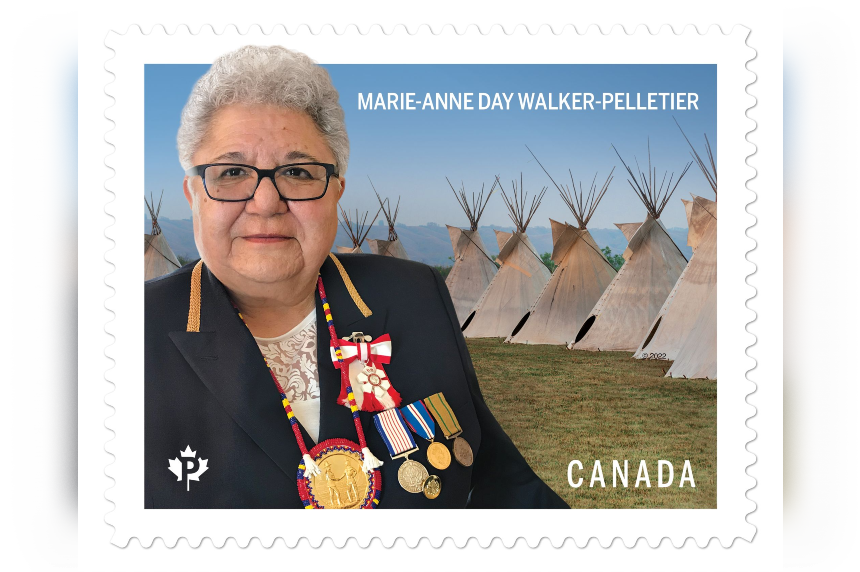
-
Article
Marilyn Buffalo
Marilyn Buffalo, leader, educator, advocate, Indigenous rights policy analyst (born in 1950 in Maskwacis, AB). A member of the Samson Cree Nation, Marilyn Buffalo became the first Indigenous person appointed Advisor on Native Affairs at the University of Alberta. She was also formerly the president of the Native Women’s Association of Canada (NWAC). Buffalo has been heavily involved in advocating for Indigenous rights her entire life, including her work on the Truth and Reconciliation Commission (TRC) and in advocating for Missing and Murdered Indigenous Women and Girls (MMIWG). One of her children is professional skateboarder Joe Buffalo.
"https://d3d0lqu00lnqvz.cloudfront.net/MarilynBuffalo/Marilyn-Buffalo_resized.jpg" // resources/views/front/categories/view.blade.php
https://d3d0lqu00lnqvz.cloudfront.net/MarilynBuffalo/Marilyn-Buffalo_resized.jpg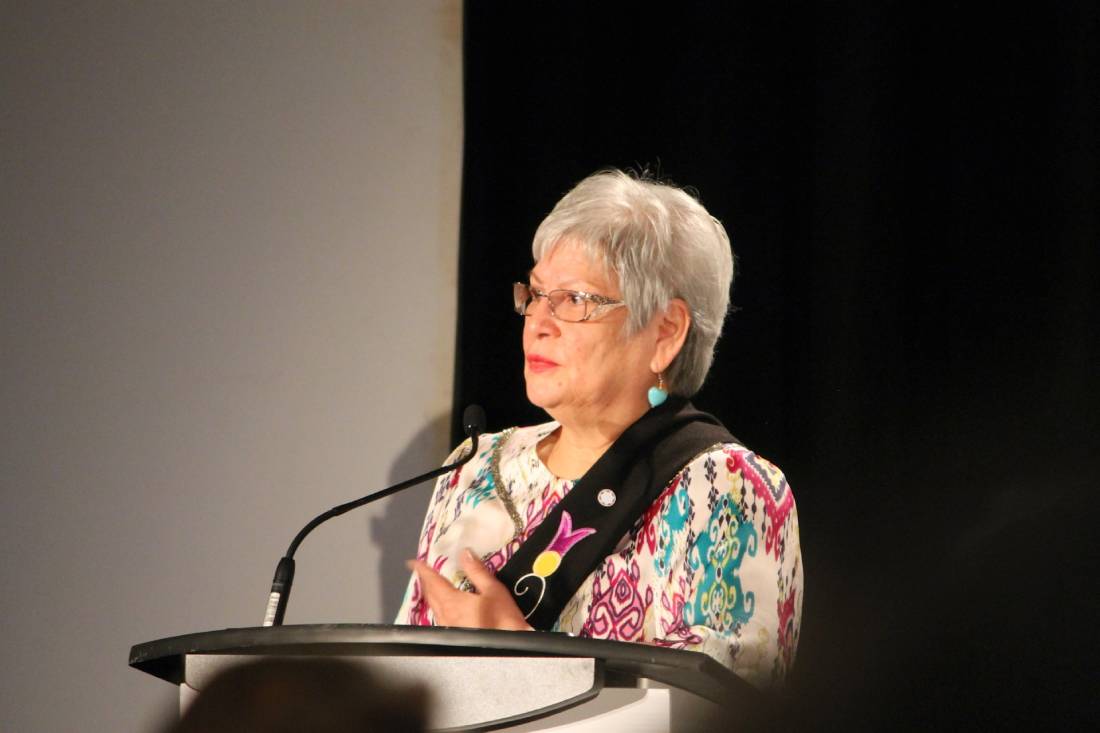
-
Article
Mary John Batten
Mary John Batten (née Fodchuk), lawyer, politician, justice and chief justice of the Saskatchewan Court of Queen’s Bench (born 30 August 1921 in Sifton, MB; died 9 October 2015). Mary John Batten was the first Ukrainian Canadian woman elected to a Canadian legislature. She served as an MLA in Saskatchewan from 1956 until 1964. That year, she became the first woman to be appointed as a federal judge in Saskatchewan, and only the second in Canada. In 1983, she became Saskatchewan’s first female chief justice. She also chaired a Saskatchewan royal commission. She retired from the bench in 1989.
"https://d3d0lqu00lnqvz.cloudfront.net/DCI-images/Mary-John-Batten-final.jpg" // resources/views/front/categories/view.blade.php
https://d3d0lqu00lnqvz.cloudfront.net/DCI-images/Mary-John-Batten-final.jpg
-
Article
Mary Simon
Mary Jeannie May Simon (Ningiukudluk), CC, OQ 30th governor general of Canada, diplomat, civil servant, (born 21 August 1947 in Kangiqsualujjuaq, Nunavik, QC). Mary Simon is an advocate for international cooperation in the Arctic and Indigenous education and rights. She has held multiple roles in the civil service, including secretary and co-director of policy of the Royal Commission on Aboriginal Peoples, secretary to the board of directors of the Northern Quebec Inuit Association, and member of the Nunavut Implementation Commission. She was also the first vice president of the Makivik Corporation and the first Inuk in Canada to hold the rank of ambassador. Simon has served as the president of Inuit Tapiriit Kanatami and of what is now the Inuit Circumpolar Council. From 26 July 2021 to June 2026, Simon served as Canada’s 30th governor general and the first Indigenous person to serve in that role.
"https://d3d0lqu00lnqvz.cloudfront.net/MarySimon.jpg" // resources/views/front/categories/view.blade.php
https://d3d0lqu00lnqvz.cloudfront.net/MarySimon.jpg
-
Article
Vincent Massey
Charles Vincent Massey, PC, CC, governor general 1952-59, historian, business executive, politician, diplomat, royal commissioner, patron of the arts (born 20 February 1887 in Toronto; died 30 December 1967 in London, England). Massey was the country’s first Canadian-born governor general. He helped create the Order of Canada in 1967, and as a champion of the arts in Canada laid the groundwork for the Canada Council, the National Library of Canada and the National Arts Centre.
"https://d3d0lqu00lnqvz.cloudfront.net/media/media/192ab9c4-8241-4b0d-bb1c-d675696b89f7.jpg" // resources/views/front/categories/view.blade.php
https://d3d0lqu00lnqvz.cloudfront.net/media/media/192ab9c4-8241-4b0d-bb1c-d675696b89f7.jpg
-
Article
Massey Commission
The Massey Commission was formally known as the Royal Commission on National Development in the Arts, Letters and Sciences. It was officially appointed by Prime Minister Louis St-Laurent on 8 April 1949. Its purpose was to investigate the state of arts and culture in Canada. Vincent Massey chaired the Commission. It issued its landmark report, the Massey Report, on 1 June 1951. The report advocated for the federal funding of a wide range of cultural activities. It also made a series of recommendations that resulted in the founding of the National Library of Canada (now Library and Archives Canada), the creation of the Canada Council for the Arts, federal aid for universities, and the conservation of Canada’s historic places, among other initiatives. The recommendations that were made by the Massey Report, and enacted by the federal government, are generally seen as the first major steps to nurture, preserve and promote Canadian culture.
"https://d3d0lqu00lnqvz.cloudfront.net/media/media/6dc56c29-5a10-4fff-ad08-000dc347c1e4.jpg" // resources/views/front/categories/view.blade.php
https://d3d0lqu00lnqvz.cloudfront.net/media/media/6dc56c29-5a10-4fff-ad08-000dc347c1e4.jpg
-
Article
Masumi Mitsui
Masumi Mitsui, MM, farmer, soldier, Canadian Legion official (born 7 October 1887 in Tokyo, Japan; died 22 April 1987 in Hamilton, ON). Masumi Mitsui immigrated to Canada in 1908 and served with distinction in the First World War. In 1931, he and his comrades persuaded the BC government to grant Japanese Canadian veterans the right to vote, a breakthrough for Japanese and other disenfranchised Canadians. Nevertheless, Matsui and more than 22,000 Japanese Canadians were displaced, detained and dispossessed by the federal government during the Second World War (see Internment of Japanese Canadians).
"https://d3d0lqu00lnqvz.cloudfront.net/media/new_article_images/MasumiMitsui/2010-23-2-4-551.jpg" // resources/views/front/categories/view.blade.php
https://d3d0lqu00lnqvz.cloudfront.net/media/new_article_images/MasumiMitsui/2010-23-2-4-551.jpg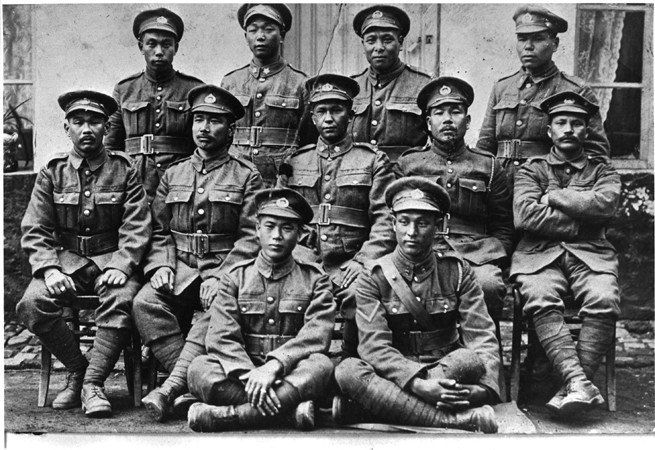
-
Article
McIvor Case
The McIvor v. Canada case was about gender discrimination in section 6 of the 1985 Indian Act, which deals with Indian status. Sharon McIvor — a woman who regained status rights after the passing of Bill C-31 in 1985 — was not able to pass on those rights to her descendants in the same way that a man with status could. In her case against the federal government, the British Columbia Supreme Court ruled in 2007 that section 6 did, in fact, deny McIvor’s equality rights under the Canadian Charter of Rights and Freedoms. In response to this case, the federal government introduced new legislation (Bill C-3) in 2011 to counter gender discrimination in the Indian Act.
"https://d3d0lqu00lnqvz.cloudfront.net/McIvorCase/McIvor.jpg" // resources/views/front/categories/view.blade.php
https://d3d0lqu00lnqvz.cloudfront.net/McIvorCase/McIvor.jpg
-
Article
Member of Parliament (MP) (Plain-Language Summary)
A member of Parliament (MP) is elected to represent a single district, or “riding,” in the House of Commons. MPs have three main duties: passing laws and crafting policies in Parliament, representing their riding and political party, and serving the people in their riding. MPs have different roles and levels of influence. They can be backbenchers, Cabinet ministers, opposition critics or the prime minister. They typically serve four-year terms. They hold office until Parliament is dissolved. They have no term limits and can be re-elected any number of times. The number of MPs changes every 10 years. There are currently 343 MPs. This article is a plain-language summary of member of Parliament (MP). If you are interested in reading about this topic in more depth, please see our full-length entry: Member of Parliament (MP).
"https://d3d0lqu00lnqvz.cloudfront.net/P060471-362871.jpg" // resources/views/front/categories/view.blade.php
https://d3d0lqu00lnqvz.cloudfront.net/P060471-362871.jpg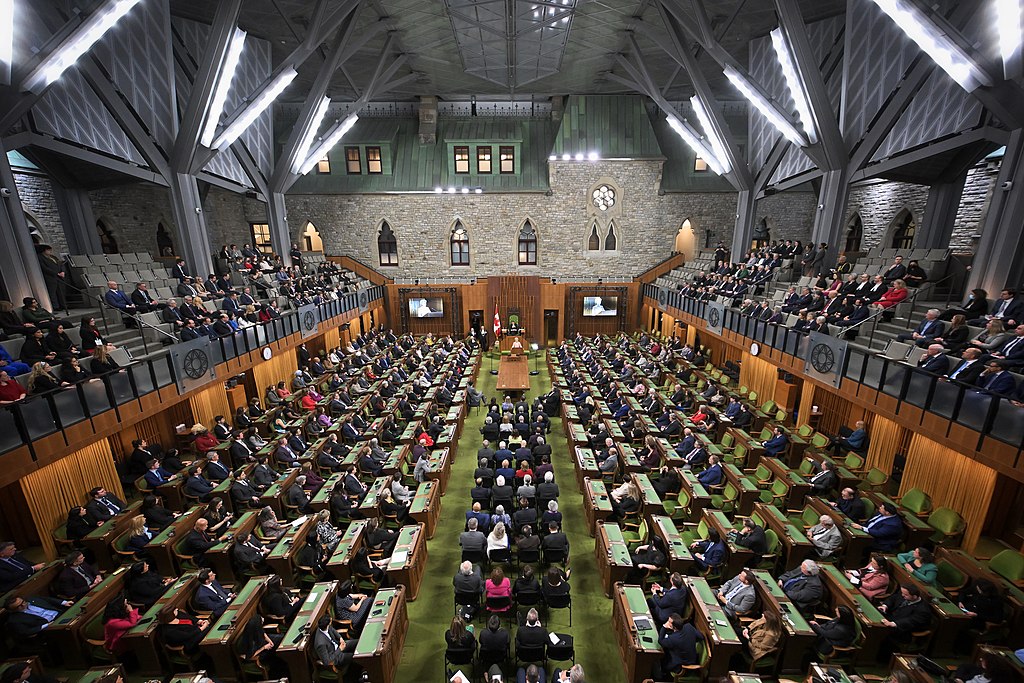
-
Article
Michael Luchkovich
Michael Luchkovich, teacher, politician, author (born 13 November 1892 in Shamokin, Pennsylvania; died 21 April 1973 in Edmonton, AB). In 1926, Michael Luchkovich became the first Ukrainian Canadian to be elected to Parliament. A member of the United Farmers of Alberta (UFA), he was re-elected in 1930 but defeated in 1935, when he ran as part of the Co-operative Commonwealth Federation (CCF). A staunch defender of minority rights in Canada, Luchkovich was an early advocate for multiculturalism. He later translated books from Ukrainian into English.
"https://d3d0lqu00lnqvz.cloudfront.net/Michael_Luchkovich_-_1930_16661079827.jpg" // resources/views/front/categories/view.blade.php
https://d3d0lqu00lnqvz.cloudfront.net/Michael_Luchkovich_-_1930_16661079827.jpg
-
Article
Michelle O’Bonsawin
Michelle O’Bonsawin, justice of the Supreme Court of Canada, lawyer, law professor (born in 1974 in Hanmer, Ontario). Michelle O’Bonsawin was appointed to the Supreme Court of Canada on 1 September 2022, making her the first Indigenous justice to serve on the Court. An Abenaki member of the Odanak First Nation, O’Bonsawin is also Franco-Ontarian. She is known for her expertise on matters relating to Indigenous law and legal issues — in particular the Gladue principles — as well as labour, mental health and privacy issues.
"https://d3d0lqu00lnqvz.cloudfront.net/michelle-obonsawin-rr-hr.jpg" // resources/views/front/categories/view.blade.php
https://d3d0lqu00lnqvz.cloudfront.net/michelle-obonsawin-rr-hr.jpg
-
Article
Michelle Stilwell
Michelle “Mikey” Stilwell (née Bauknecht), wheelchair basketball player, wheelchair racer, politician (born 4 July 1974 in Winnipeg, MB). Michelle Stilwell is the only Canadian woman to win gold medals in two sports at the Paralympic Games. She and the Canadian team won gold in women’s wheelchair basketball at the 2000 Paralympic Games in Sydney. Stilwell also won gold in women’s wheelchair racing at the 2008, 2012 and 2016 Paralympic Games. From 2006 to 2016, she was the fastest wheelchair racer in the world in the T52-class; she currently holds world records in the women’s 100 m and 200 m. She also served as a BC MLA for Parksville-Qualicum from 2013 to 2020.
"https://d3d0lqu00lnqvz.cloudfront.net/MichelleStilwellTweetOnly.jpg" // resources/views/front/categories/view.blade.php
https://d3d0lqu00lnqvz.cloudfront.net/MichelleStilwellTweetOnly.jpg
-
Article
Missing and Murdered Indigenous Women and Girls in Canada
Missing and murdered Indigenous women and girls in Canada (MMIWG) refers to a human rights crisis that has only recently become a topic of discussion within national media. Indigenous women and communities, women’s groups and international organizations have long called for action into the high and disproportionate rates of violence and the appalling numbers of missing and murdered Indigenous women and girls in Canada. Prior to the launch of the national public inquiry on 8 December 2015, these calls were continually ignored by the federal government. Described by some as a hidden crisis, Dawn Lavell-Harvard, former president of the Native Women’s Association of Canada, refers to MMIWG as a national tragedy and a national shame. In 2015, the Truth and Reconciliation Commission of Canada supported the call for a national public inquiry into the disproportionate victimization of Indigenous women and girls. The National Inquiry’s Final Report was completed and presented to the public on 3 June 2019.
"https://d3d0lqu00lnqvz.cloudfront.net/media/media/2a243145-5d5c-42f2-a98f-bcda497ab7dc.jpg" // resources/views/front/categories/view.blade.php
https://d3d0lqu00lnqvz.cloudfront.net/media/media/2a243145-5d5c-42f2-a98f-bcda497ab7dc.jpg
-
Memory Project Archive
Hugh Bartley (Primary Source)
"Mainly you’re so busy you don’t have time to get scared. You’re trying to get out of whatever kind of a problem you got into, and in this case the airplane made it simple for us."Hugh Bartley served in the Royal Canadian Air Force during the Second World War. See his full testimony below.Please be advised that Memory Project primary sources may deal with personal testimony that reflect the speaker’s recollections and interpretations of events. Individual testimony does not necessarily reflect the views of the Memory Project and Historica Canada.
"https://d3d0lqu00lnqvz.cloudfront.net/mpsb/vimy/HughBartley/567_resize.jpg" // resources/views/front/categories/view.blade.php
https://d3d0lqu00lnqvz.cloudfront.net/mpsb/vimy/HughBartley/567_resize.jpg